Maya Huipil Embroidery: A Living Tapestry of Guatemalan Heritage
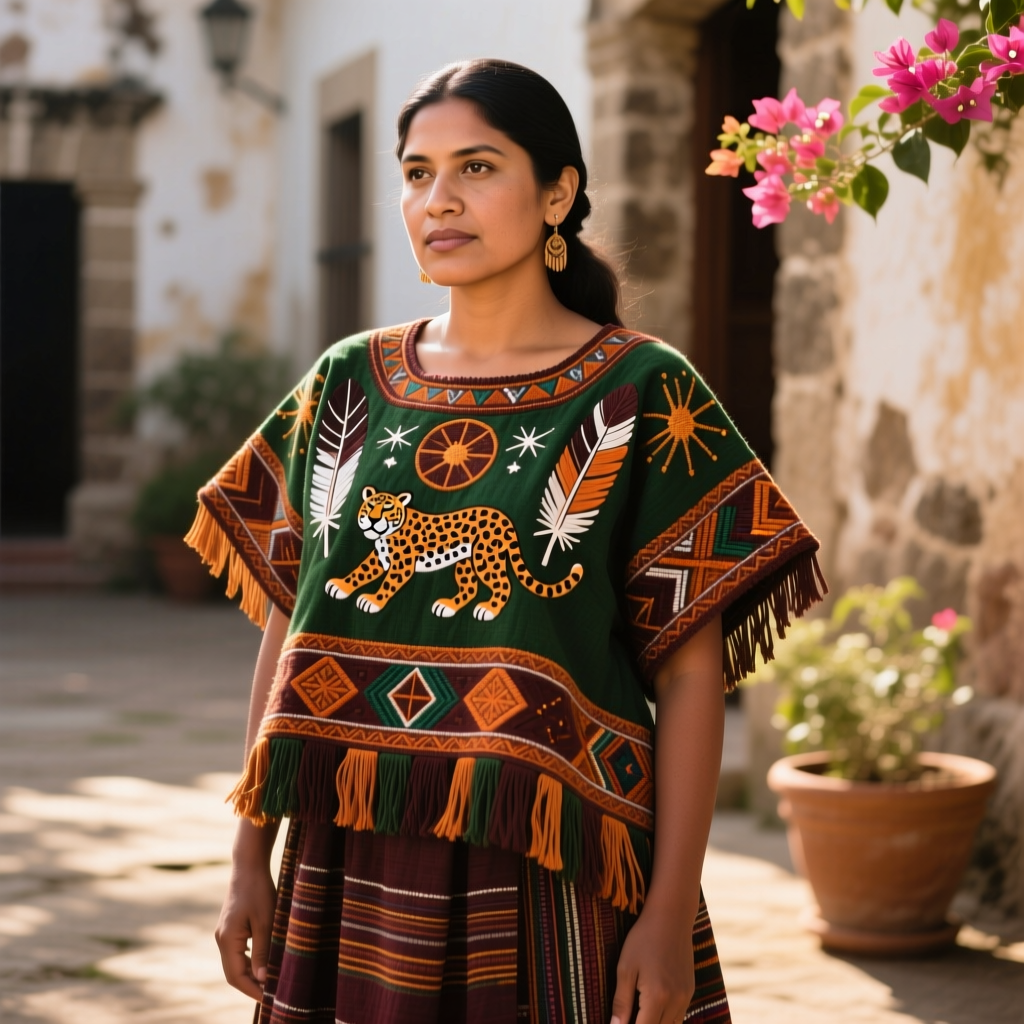
The highlands of Guatemala hold a textile tradition so deeply woven into the fabric of indigenous identity that each stitch tells a story of ancestors, cosmology, and community. The huipil — a traditional blouse worn by Maya women for centuries — is far more than a garment. It is a visual language, a map of belonging, and an act of cultural resistance that has survived colonization, civil war, and the relentless pressures of globalization. To study the huipil is to study the soul of Maya civilization itself.
Across the villages and towns of Guatemala's western highlands, from the shores of Lake Atitlán to the markets of Chichicastenango, women continue to sit at their backstrap looms, creating textiles that encode generations of knowledge. The embroidery and brocade work adorning each huipil reveals the wearer's village of origin, social standing, spiritual beliefs, and even her personal aspirations. In a world increasingly dominated by mass-produced fast fashion, the Maya huipil stands as a profound testament to the power of slow, intentional, and deeply meaningful craftsmanship.
This article explores the extraordinary heritage of Maya huipil embroidery — its historical roots, cultural significance, regional variations, and the ongoing efforts to preserve this living art form for future generations. For those interested in how traditional garments influence contemporary wardrobes, our guide to traditional garments around the world offers a broader perspective on heritage dress.
The Ancient Roots of the Huipil: A Garment Older Than Colonization
The word huipil derives from the Nahuatl word huīpīlli, but the garment itself predates the arrival of both the Aztecs and the Spanish in Maya territory. Archaeological evidence, including ceramic figurines, murals, and textile fragments preserved in the dry caves of the Guatemalan highlands, suggests that the basic form of the huipil — a rectangular, loose-fitting tunic — has been worn by Maya women for well over two thousand years. The classic Maya civilization, which flourished between approximately 250 and 900 CE, left behind artistic depictions of noblewomen wearing elaborately decorated huipiles, confirming that the garment was already a canvas for artistic expression and social signaling in pre-Columbian times.
Before the Spanish conquest, Maya weavers worked exclusively with native cotton — both white and naturally colored brown varieties known as ixcaco — and used natural dyes derived from indigo, cochineal insects, tree bark, flowers, and minerals. The most prized dye was a deep red extracted from the cochineal bug (Dactylopius coccus), which fed on prickly pear cacti and produced a colorfast pigment so valuable that it became one of Guatemala's most important exports during the colonial period.
The Spanish conquest of the sixteenth century brought profound changes to Maya textile traditions. European missionaries and colonial administrators attempted to impose Western dress on indigenous populations, but the huipil proved remarkably resilient. Rather than disappearing, it adapted. Maya weavers incorporated European-introduced materials — silk threads, metallic yarns, and eventually synthetic fibers — into their existing aesthetic frameworks. The backstrap loom, a pre-Columbian technology that remains the primary weaving tool for huipil production today, was never replaced despite the introduction of the European treadle loom. This selective adaptation is a hallmark of Maya cultural survival: absorbing outside influences while maintaining the core structures of indigenous identity.
The introduction of European embroidery techniques, particularly cross-stitch and satin stitch, expanded the decorative vocabulary available to Maya artisans. These techniques were layered onto existing traditions of brocade weaving, creating the rich, multi-textured surfaces that characterize antique and vintage huipiles. For collectors and enthusiasts of vintage textiles, understanding these historical layers is essential to appreciating the depth of each piece.
Cultural Significance and Spiritual Symbolism in Every Stitch
To understand the huipil is to understand Maya cosmology. The garment is not simply decorated — it is encoded. Every color choice, geometric pattern, and figurative motif carries meaning that would have been legible to members of the community for generations. While some of this symbolic knowledge has been lost or diluted over time, much of it remains actively understood and intentionally deployed by contemporary weavers.
Color Symbolism
Color in Maya textile tradition is never arbitrary. Red, associated with the east and the rising sun, symbolizes life, vitality, and the blood of ancestors. Black represents the west and the night sky, often associated with death but also with the fertile darkness from which new life emerges. Yellow, connected to the south, evokes the sun, corn, and prosperity. White, linked to the north, signifies purity, hope, and the bones of the ancestors. Green represents the royal quetzal bird and the living, breathing earth. These color associations vary somewhat between communities, but the underlying principle — that color communicates cosmological and spiritual information — is universal across the Maya highlands.
Figurative and Geometric Motifs
The motifs woven and embroidered into huipiles form a vast symbolic lexicon. Some of the most common include:
- The Quetzal Bird: Guatemala's national bird and a sacred symbol in Maya mythology, representing freedom, beauty, and the divine connection between earth and sky.
- The Double-Headed Eagle: Known as kot in K'iche' Maya, this motif predates European contact but was reinforced by the Habsburg coat of arms introduced during colonization. It symbolizes duality — past and future, earth and sky — and the ability to see in all directions.
- The Diamond (Rombo): One of the most ubiquitous motifs, representing the four corners of the universe, the sun's path across the sky, and the cycle of life, death, and rebirth.
- Serpents and Serpentine Patterns: Associated with water, fertility, and the feathered serpent deity Kukulkan (the Maya counterpart to Quetzalcoatl).
- Flowers and Vegetal Forms: Representing the natural world, femininity, and the life-giving properties of the earth.
- Stars and Celestial Bodies: Reflecting the Maya's sophisticated astronomical knowledge and the importance of celestial cycles in agricultural and spiritual life.
These motifs are not merely decorative. A huipil worn during a religious ceremony may feature different symbols than one worn for daily market visits. A wedding huipil will incorporate motifs of fertility and union, while a huipil made for a community leader might display more complex cosmological imagery. The garment functions as a kind of wearable prayer, a textile meditation on the wearer's place within the larger order of the universe.
The spiritual dimension of weaving itself should not be overlooked. For many Maya women, the act of weaving is a form of devotion. The rhythmic motion of the shuttle, the tension of the warp threads, and the gradual emergence of pattern from plain cloth mirror the Maya understanding of time as cyclical and creation as an ongoing, participatory process. The weaver is not merely making a garment; she is engaging in a dialogue with tradition, with the spiritual world, and with the generations of women who sat at their looms before her. This deep connection between craft and spirituality is something we explore further in our article on artisan craftsmanship in modern fashion.
The Craftsmanship: Backstrap Looms, Brocade, and Embroidery Techniques
The creation of a single huipil is an act of extraordinary patience and skill. Depending on the complexity of the design and the fineness of the thread, a huipil can take anywhere from three to twelve months to complete, with the most elaborate ceremonial examples requiring even longer. The process encompasses every stage of textile production, from the preparation of raw fibers to the final joining of woven panels.
The Backstrap Loom
The backstrap loom is the defining technology of Maya weaving. Deceptively simple in construction — consisting of a set of wooden rods, a shed stick, a batten, and a strap that passes around the weaver's lower back — this loom gives the artisan complete control over warp tension through the movement of her own body. The weaver leans forward and backward to adjust tension, creating a physical intimacy between maker and textile that is impossible to achieve on a rigid frame loom. This embodied knowledge, passed from mother to daughter across countless generations, means that the weaver's body literally shapes the cloth.
The backstrap loom is portable, requiring no fixed infrastructure, which historically allowed Maya women to weave in any setting — in the courtyard of the home, in the fields during harvest season, or while traveling. This portability was crucial during periods of displacement and conflict, when the ability to carry one's loom meant the ability to maintain cultural practice under the most difficult circumstances.
Brocade vs. Embroidery
It is important to distinguish between two techniques that are often confused by outside observers. Brocade (known as trama suplementaria in Spanish) is a weaving technique in which decorative threads are woven directly into the fabric as it is being created on the loom. The weaver manually manipulates supplementary weft threads to build patterns row by row, integrating the design into the structure of the cloth itself. This is the older and more traditionally prestigious technique, and the finest examples of brocade huipiles display a level of complexity that rivals any textile tradition in the world.
Embroidery, by contrast, is applied to the surface of already-woven fabric using a needle and thread. While embroidery has a long history in Maya textile arts, it became more prominent after the Spanish conquest, when European needlework techniques were introduced. Many contemporary huipiles combine both brocade weaving and surface embroidery, creating layered, richly textured designs that reward close examination.
Some communities also practice jaspe (ikat) dyeing, in which warp threads are tie-dyed before being placed on the loom, creating blurred, luminous patterns in the ground fabric. The combination of jaspe-dyed warp threads with brocaded or embroidered supplementary weft creates huipiles of extraordinary visual depth. For more on dyeing traditions and their role in heritage garments, our guide to natural dyeing techniques provides an in-depth look at these ancient processes.
Construction and Assembly
A traditional huipil is constructed from one, two, or three rectangular panels woven on the backstrap loom and then joined together with decorative stitching called randa. The randa seam is itself an art form, with elaborate joining stitches that become part of the garment's overall decorative scheme. The neck opening is cut or left open during weaving, and the garment is worn loose, falling to anywhere from hip-length to floor-length depending on the community's tradition.
The dimensions of each panel are determined by the reach of the weaver's arms and the width of her loom, which means that huipiles are inherently sized to the body of their maker. When a huipil is made for someone else or for sale, the weaver must estimate dimensions — but the most valued huipiles have always been those made by a woman for her own use, imbued with her personal aesthetic choices and spiritual intentions.
Regional Variations: A Map of Identity Woven in Thread
One of the most remarkable aspects of the huipil tradition is its extraordinary regional diversity. Each Maya community in Guatemala has developed its own distinctive style of huipil, characterized by specific color palettes, motif repertoires, weaving techniques, and garment proportions. For those familiar with the tradition, a woman's huipil immediately reveals her community of origin — making the garment a powerful marker of geographic and cultural identity.
San Juan Comalapa
The huipiles of San Juan Comalapa, in the department of Chimaltenango, are renowned for their fine brocade work featuring rows of diamond motifs, stylized birds, and geometric patterns in vibrant reds, purples, and yellows against a white or cream ground. The ceremonial huipiles of this community are among the most technically accomplished in Guatemala, with dense, all-over brocade that covers nearly the entire surface of the garment.
San Antonio Aguas Calientes
This community, near the colonial city of Antigua, is famous for its exquisite jaspe (ikat) huipiles. The warp threads are meticulously tie-dyed before weaving to produce delicate, feathered patterns in indigo blue, brown, and white. The jaspe sections are often combined with bands of fine brocade featuring bird and animal motifs. San Antonio Aguas Calientes huipiles are highly prized by collectors and are considered among the finest examples of the weaver's art in the Americas.
Santa María de Jesús
Huipiles from Santa María de Jesús are distinguished by their bold use of color — deep magentas, electric blues, and vivid greens — and their distinctive figurative motifs, including large-scale depictions of birds, horses, and human figures. The embroidery in this community tends to be heavier and more sculptural than the fine brocade of neighboring towns, creating a tactile, three-dimensional surface.
Nahualá and Sololá
The K'iche' Maya community of Nahualá produces huipiles characterized by dark ground colors — deep browns, navies, and blacks — enlivened with bright brocaded bands featuring geometric and animal motifs. Sololá, a major market town on the shores of Lake Atitlán, has a tradition of huipiles featuring elaborate embroidered collars and multi-colored striped grounds. The diversity of styles around Lake Atitlán alone — including the distinctive purple-and-green huipiles of San Juan La Laguna and the finely woven pieces from Santiago Atitlán — illustrates the micro-regional variation that makes Guatemalan textile culture so endlessly fascinating.
Todos Santos Cuchumatán
In the remote highland community of Todos Santos Cuchumatán, the huipil tradition is among the most visually striking in all of Guatemala. Women wear deep red huipiles with wide horizontal bands of purple, blue, and green brocade, creating a bold, almost modernist aesthetic. The community's relative isolation has helped preserve distinctive weaving traditions that have been diluted in more accessible areas. Exploring how geography shapes garment traditions is a theme we revisit in our heritage collection on highland textile traditions.
This regional diversity is not static. Styles evolve as weavers experiment with new color combinations, incorporate motifs from neighboring communities, and respond to changing aesthetic preferences. However, the core principle — that a huipil should reflect its maker's community identity — remains remarkably stable, even as the specific visual vocabulary shifts over time.
Modern Challenges and the Fight to Preserve a Living Tradition
The Maya huipil tradition faces a complex web of challenges in the modern era. Economic pressures, cultural appropriation, shifting generational attitudes, and the global flood of cheap manufactured clothing all threaten the continuity of this ancient craft. Yet the story is not one of simple decline — it is also a story of resilience, innovation, and determined cultural advocacy.
Economic Pressures and the Time Cost of Tradition
A hand-woven huipil represents hundreds of hours of skilled labor, yet the prices that weavers can command in local markets often fail to reflect this investment. Many Maya women face economic pressure to abandon the time-intensive practices of backstrap weaving and hand embroidery in favor of machine-made alternatives or to seek wage labor outside the home. Young women, in particular, may view the huipil tradition as economically impractical, leading to a generational gap in the transmission of weaving knowledge.
Several cooperatives and fair-trade organizations have emerged to address this problem by connecting weavers directly with international buyers who are willing to pay prices that reflect the true value of the work. Organizations such as Trama Textiles, the Weaving Futures initiative, and various women's cooperatives in the Lake Atitlán region provide weavers with market access, business training, and a measure of economic security that makes continued practice of the craft viable.
Cultural Appropriation and the Fashion Industry
In recent years, the huipil has become a flashpoint in broader conversations about cultural appropriation in the fashion industry. International designers and fast-fashion brands have frequently copied Maya textile designs without attribution, permission, or compensation to the originating communities. These mass-produced imitations undercut the market for authentic hand-woven huipiles while stripping the designs of their cultural and spiritual significance.
Maya weavers and activists have responded with growing organizational sophistication. In Guatemala, the Women's Association for the Development of Sacred Textiles (AFET) and similar groups have advocated for intellectual property protections for indigenous textile designs. Some communities have begun documenting their traditional patterns in formal registries, creating a legal basis for challenging unauthorized commercial use. This movement intersects with broader global efforts to protect the intellectual property rights of indigenous artisans — a topic of growing importance in the heritage fashion world that we discuss in our guide to ethical fashion and cultural heritage.
Generational Transmission and Education
Perhaps the most fundamental challenge facing the huipil tradition is the question of whether young Maya women will continue to learn and practice the craft. Formal education, migration to urban areas, and the pervasive influence of global media have all contributed to a shift in aspirations among younger generations. Some young women view traditional dress as incompatible with modern professional life, while others simply lack access to the patient, multi-year apprenticeship that mastery of backstrap weaving requires.
Counteracting this trend, a growing number of cultural organizations and community-based schools have established formal weaving education programs. These initiatives recognize that the transmission of weaving knowledge is not merely a matter of technical skill but involves the transfer of an entire worldview — an understanding of color symbolism, cosmological principles, community history, and spiritual practice. The most successful programs integrate weaving instruction with broader cultural education, helping young women understand the huipil not as a relic of the past but as a living, evolving expression of Maya identity.
The Huipil in Contemporary Fashion and Daily Life
Despite these challenges, the huipil remains a vibrant part of daily life for hundreds of thousands of Maya women. In many highland communities, it is still the standard daily dress for women of all ages, worn to the market, to church, to school, and to work in the fields. The huipil has also found new audiences and new contexts. Maya women who have migrated to Guatemala City or to the United States often continue to wear their huipiles as an assertion of cultural pride and a connection to home.
Within the world of ethical and sustainable fashion, the huipil has gained recognition as an exemplar of slow, meaningful, and environmentally responsible garment production. Conscious consumers increasingly value the story behind their clothing — who made it, how it was made, and what it represents — and the huipil tradition offers a powerful model of what fashion can be when it is rooted in community, spirituality, and respect for the natural world. For those building a wardrobe that honors heritage craftsmanship, our guide to building a heritage-inspired wardrobe offers practical advice on incorporating artisan-made textiles into everyday style.
Frequently Asked Questions About Maya Huipil Embroidery
What is the difference between a huipil and other traditional Latin American garments?
The huipil is specifically a Maya women's garment, consisting of one to three rectangular panels woven on a backstrap loom and joined together, with a neck opening but no tailored sleeves. It differs from the Mexican quechquémitl (a poncho-like garment), the Andean aguayos (carrying cloths), and other Latin American textile traditions in its construction methods, symbolic vocabulary, and cultural context. While the word "huipil" is used broadly across Mesoamerica, the Guatemalan Maya huipil is distinguished by its extraordinary regional diversity and the density of its brocade and embroidery work. The huipil is always a women's garment, while the corresponding men's garment in Maya tradition is typically a woven shirt or camisa, which follows different design conventions.
How can I tell what community a huipil comes from?
Identifying the community of origin requires familiarity with the distinctive color palettes, motif repertoires, and construction techniques associated with each town. For example, huipiles from Chichicastenango typically feature deep red and purple tones with elaborate floral and bird embroidery around the neckline, while those from San Juan La Laguna are known for their use of natural dyes and stylized geometric patterns. Experienced collectors, dealers, and Maya weavers themselves can often identify a huipil's origin at a glance. For those beginning to learn, reference books such as Guatemalan Textiles: A Guide to Traditional Techniques by Linda Asturias de Barrios and Carol Ventura, as well as museum collections at the Ixchel Museum of Indigenous Dress in Guatemala City, provide invaluable visual guides. When purchasing a huipil, always ask the seller about its provenance — reputable dealers will know the community of origin and often the name of the weaver.
How should I care for a vintage or hand-woven huipil?
Hand-woven huipiles, particularly vintage pieces, require gentle care to preserve their structural integrity and color vibrancy. Hand-washing in cool water with a mild, pH-neutral detergent is generally recommended, though some older pieces with fragile fibers or unstable dyes should be dry-cleaned by a specialist familiar with ethnographic textiles. Never wring or twist a huipil — instead, press out excess water gently between clean towels and lay flat to dry away from direct sunlight, which can fade natural dyes. Store huipiles flat or loosely folded with acid-free tissue paper, and avoid hanging them for long periods, as the weight of the fabric can stress the hand-woven fibers. For detailed guidance on caring for heritage garments, our textile care guide covers best practices for a wide range of traditional fabrics.
Is it culturally appropriate for non-Maya people to wear or own a huipil?
This is a nuanced question that deserves a thoughtful answer. Many Maya weavers and cultural advocates welcome the appreciation of their textile traditions by people from outside their communities, provided that this appreciation is respectful and supports the continuation of the craft. Purchasing huipiles directly from weavers or through fair-trade cooperatives provides economic support that helps sustain the tradition. Wearing a huipil or incorporating huipil fabric into one's wardrobe is generally considered acceptable when done with understanding and respect for its cultural significance — treating it as the meaningful cultural artifact it is, rather than as a mere fashion accessory. What is widely considered inappropriate is the unauthorized reproduction of huipil designs by commercial fashion brands, the wearing of ceremonial huipiles without understanding their sacred context, or the misrepresentation of mass-produced imitations as authentic indigenous craft. The key principle is to approach the huipil with the same respect you would extend to any deeply meaningful cultural tradition.
Where can I purchase authentic Maya huipiles?
The most direct way to purchase authentic huipiles is to visit the highland markets of Guatemala, where weavers sell their work in person. The Thursday and Sunday markets at Chichicastenango, the daily market in Sololá, and the weaving cooperatives around Lake Atitlán are among the best places to find a wide selection of huipiles at fair prices. Outside of Guatemala, fair-trade textile importers, specialized galleries, and online platforms connected to weaving cooperatives offer authentic pieces with transparent provenance. When purchasing, look for sellers who can identify the community of origin, provide information about the weaver, and confirm that the piece is hand-woven on a backstrap loom rather than machine-made. Prices vary enormously depending on the age, condition, complexity, and community of origin — a simple everyday huipil might cost a modest sum, while a finely woven ceremonial piece with dense brocade can command significant prices reflecting the months of labor invested in its creation.
The Enduring Legacy of the Huipil
The Maya huipil is more than a garment. It is a repository of astronomical knowledge, a map of community identity, a medium of spiritual expression, and a testament to the creative genius of indigenous women across millennia. Each huipil carries within its threads the accumulated wisdom of generations — knowledge of plants and dyes, of loom mechanics and pattern mathematics, of cosmological cycles and social relationships.
In an age of disposable fashion and cultural homogenization, the huipil offers a radically different vision of what clothing can mean. It asks us to slow down, to look closely, to consider the human hands and human stories behind every textile we wear. It reminds us that the most beautiful garments are those that carry meaning — not just for the person who wears them, but for the community that created them and the tradition that sustains them.
The future of the huipil tradition will depend on the choices made by Maya communities themselves, supported by a global community of consumers, collectors, and advocates who value cultural diversity and artisanal excellence. By learning about these traditions, supporting ethical purchasing practices, and sharing the stories embedded in these extraordinary textiles, we each play a small part in ensuring that the backstrap loom continues to click in the highland courtyards of Guatemala for generations to come.
For further exploration of heritage textiles and the garments that connect us to the world's living traditions, browse our complete heritage collection and our garment guides for in-depth articles on craftsmanship, culture, and style from around the globe.