Miao Silver Ornament Craftsmanship: A Living Heritage of Artistry & Identity
Miao Silver Ornament Craftsmanship: A Living Heritage of Artistry & Identity
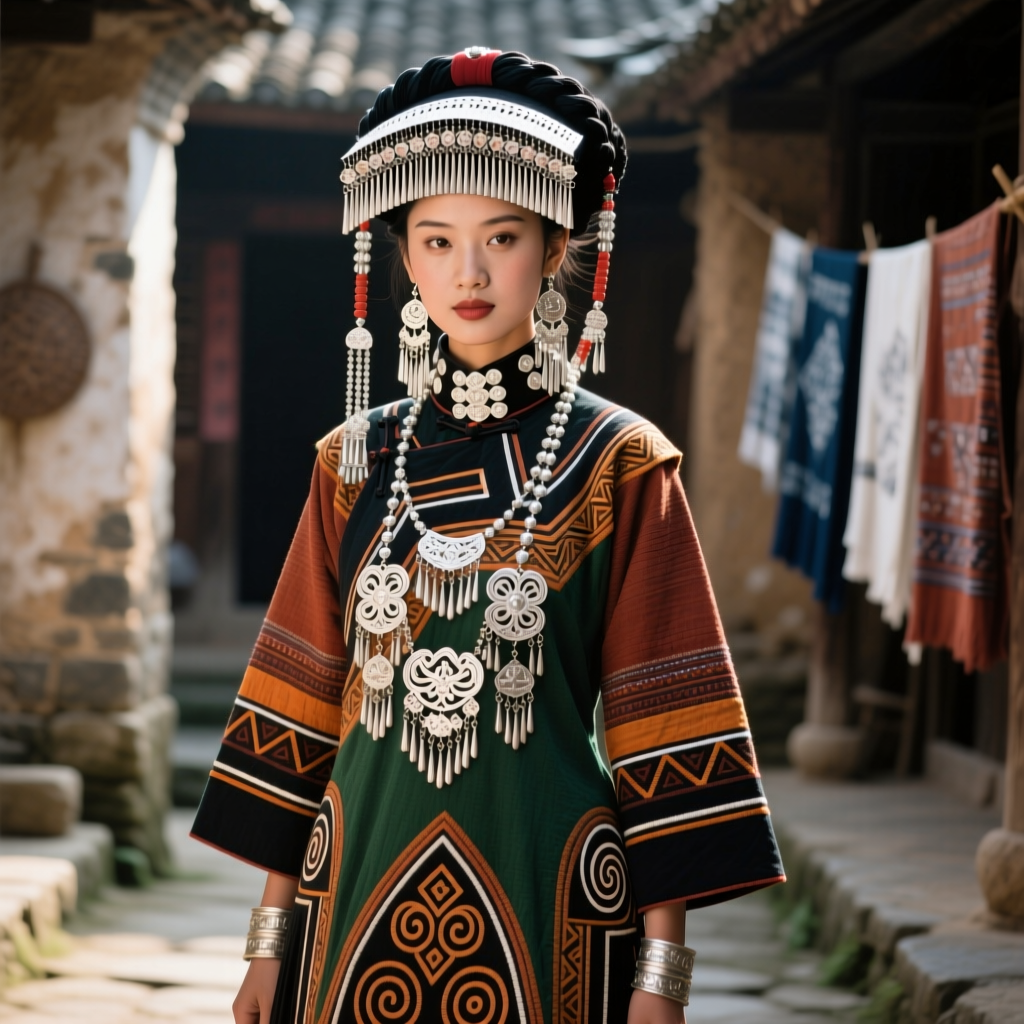
In the misty highlands of southwestern China, where terraced rice paddies cascade down mountain slopes and villages cling to steep ridgelines, the Miao people have cultivated one of the most extraordinary metalworking traditions on Earth. For centuries, Miao silversmiths have transformed raw silver into breathtaking ornaments — towering headdresses, intricately layered necklaces, chest plates adorned with mythological creatures, and delicate hairpins that chime softly with every movement. These are not mere accessories. They are wearable archives of a culture that has survived migration, conflict, and the relentless pressure of assimilation, carrying within their filigree patterns the stories, beliefs, and identity of an entire people.
The Miao, known in Southeast Asia as the Hmong, constitute one of the largest ethnic minority groups in China, with a population exceeding ten million spread primarily across the provinces of Guizhou, Hunan, Yunnan, Guangxi, and Sichuan. Among the many cultural expressions that define Miao identity — from their legendary embroidery traditions to their indigo-dyed textiles — silver ornamentation holds a place of singular reverence. A complete set of Miao silver jewelry can weigh upwards of ten kilograms and represent not only a family's accumulated wealth but also generations of spiritual and artistic continuity.
This article explores the deep roots of Miao silver ornament craftsmanship, examining the cultural forces that shaped it, the meticulous techniques that sustain it, the regional variations that distinguish it, and the ongoing efforts to preserve it for future generations. Whether you are a student of material culture, a collector of artisan jewelry, or simply someone drawn to the intersection of craft and identity, the story of Miao silver is one that rewards close attention.
The Cultural Significance of Silver in Miao Society
To understand Miao silver ornament craftsmanship, one must first understand the profound cultural weight that silver carries within Miao society. Unlike many cultures where precious metals serve primarily as displays of economic wealth, silver among the Miao functions simultaneously as currency, spiritual armor, historical record, and marker of social identity. It is, in the truest sense, a multidimensional cultural medium.
Silver as Spiritual Protection
In Miao cosmology, silver possesses inherent protective qualities. It is believed to ward off evil spirits, deflect negative energy, and safeguard the wearer from illness and misfortune. This belief is not abstract — it is woven into the very design of the ornaments. Many silver pieces feature motifs of dragons, phoenixes, butterflies, and water buffalo, all of which hold specific spiritual significance within Miao mythology. The dragon, for instance, is not the fearsome creature of Western folklore but a benevolent water spirit associated with rainfall, fertility, and ancestral protection. When a Miao woman wears a silver dragon necklace, she is not merely adorning herself; she is cloaking herself in spiritual guardianship.
Children in Miao communities are often given small silver locks, bracelets, or caps from infancy. These pieces serve as talismans, their weight and metallic quality thought to anchor the child's soul to the physical world and prevent it from wandering into dangerous spiritual realms. The practice reflects a broader Miao understanding of silver as a bridge between the material and the metaphysical.
Silver as Historical Archive
The Miao people, historically, did not possess a widely used written language. Their history, genealogies, mythologies, and migration narratives were preserved through oral tradition and, crucially, through visual culture. Silver ornaments, alongside the community's renowned textile patterns, became one of the primary vehicles for encoding and transmitting cultural memory across generations.
Certain motifs on Miao silver pieces reference specific historical events — the great migrations that pushed the Miao from the eastern plains into the southwestern highlands, the battles fought against imperial armies, and the founding of ancestral villages. A trained reader of these motifs can, quite literally, read a family's history in the ornaments they wear. This function transforms the silversmith from a mere artisan into a custodian of collective memory, a role that carries immense responsibility within the community.
Silver as Social Currency and Bridal Wealth
In traditional Miao society, silver ornaments constitute a family's most important material assets. Unlike land or livestock, silver is portable — a critical consideration for a people whose history is defined by repeated displacement and migration. Families accumulate silver over generations, adding pieces for births, coming-of-age ceremonies, and especially weddings.
A Miao bride's silver trousseau is among the most spectacular expressions of this tradition. On her wedding day, a bride may wear a complete set of silver ornaments — headdress, earrings, multiple necklaces, chest plate, shoulder pieces, bracelets, and rings — that collectively weigh between eight and fifteen kilograms. The quantity and quality of silver she wears communicates her family's social standing, their diligence and prosperity, and the depth of their love for their daughter. The groom's family, in turn, contributes silver pieces as bride price, cementing the economic and social bonds between the two families.
This system of silver accumulation and exchange has historically functioned as a form of intergenerational wealth transfer, a social safety net, and a mechanism for maintaining community cohesion. It is, in essence, a financial system expressed through art.
The Craftsmanship: Techniques Passed Through Generations
The creation of Miao silver ornaments is a demanding discipline that requires years of apprenticeship, exceptional manual dexterity, and deep knowledge of metallurgical principles. Traditional Miao silversmithing encompasses more than a dozen distinct techniques, many of which have been refined over centuries and are rarely found in combination outside of Miao workshops.
Smelting and Alloying
Traditional Miao silversmithing begins with the raw material itself. Historically, silver was sourced from local mines or obtained through trade, often in the form of silver ingots, coins, or reclaimed older pieces. The silversmith melts the silver in a crucible using a charcoal-fired furnace, carefully controlling the temperature to achieve a workable consistency. Pure silver is often alloyed with small amounts of copper to increase hardness and durability, though the silver content traditionally remains very high — frequently above ninety percent. This commitment to high-purity silver distinguishes Miao work from many other silversmithing traditions and contributes to the characteristic luster and weight of the finished pieces.
Filigree and Wire Drawing
Perhaps the most technically demanding of all Miao silverworking techniques is filigree — the creation of delicate, lace-like patterns from extremely fine silver wire. The silversmith draws silver through a series of progressively smaller holes in a steel draw plate, sometimes producing wire as thin as a human hair. These wires are then shaped, curled, twisted, and soldered into intricate patterns that may depict flowers, vines, insects, or geometric forms.
Miao filigree is distinguished by its extraordinary density and complexity. A single butterfly motif may contain hundreds of individual wire components, each soldered into place with minute precision. The best Miao filigree work achieves a quality that has been described as "frozen lace" — metal so finely worked that it appears to defy its own materiality. This technique shares conceptual similarities with other global filigree traditions, though the specific motifs and compositional approaches remain uniquely Miao. For those interested in how different cultures approach delicate textile and metalwork artistry, our global craft traditions guide offers a broader perspective.
Repoussé and Chasing
Repoussé — the technique of hammering a design into relief from the reverse side of a metal sheet — is another cornerstone of Miao silverworking. Combined with chasing, which refines the design from the front, repoussé allows the silversmith to create dramatic three-dimensional forms: roaring dragons, blooming peonies, and stylized scenes from Miao mythology emerge from flat sheets of silver through thousands of precisely placed hammer strikes.
The Miao approach to repoussé is notable for its boldness and depth of relief. Where some silversmithing traditions favor subtle, low-relief designs, Miao craftsmen frequently push their forms to dramatic heights, creating pieces that catch light and shadow with theatrical intensity. This boldness reflects the Miao aesthetic preference for visual abundance and maximalist composition — an ornament should be rich, layered, and alive with detail.
Granulation and Cloisonné-Inspired Techniques
Granulation — the application of tiny silver spheres to a silver surface to create texture and pattern — appears frequently in Miao silverwork, often in combination with filigree. The silversmith creates uniform silver beads by melting small fragments of silver, which naturally form spheres due to surface tension. These granules are then arranged in patterns and soldered onto the base piece. The effect is one of shimmering texture, as each tiny sphere catches and reflects light independently.
Some Miao silversmiths, particularly in Guizhou province, have also developed techniques that echo cloisonné enameling, using thin silver wires to create compartments that are then filled with colored enamel or resin. While this technique is less common than filigree or repoussé, it demonstrates the adaptive creativity of Miao craftsmen and their willingness to incorporate and reinterpret influences from neighboring cultures, including the Han Chinese metalworking tradition.
Engraving and Incising
Engraving — the cutting of lines and patterns directly into the silver surface with sharp steel tools — serves both decorative and narrative functions in Miao silverwork. Fine engraved lines add detail and texture to larger repoussé forms, while broader incised patterns can carry symbolic or storytelling content. Some Miao silversmiths use engraving to inscribe auspicious phrases, family names, or clan symbols into their pieces, further reinforcing the connection between silver and identity.
The engraving tools used by Miao craftsmen are often handmade and maintained by the silversmiths themselves. The burins, gravers, and punches that define their toolkit are passed down through generations, their handles worn smooth by decades of use. This intimate relationship between craftsman and tool is itself a form of heritage — one that cannot be easily replicated by industrial manufacturing processes.
Regional Variations Across Miao Communities
The Miao are not a monolithic group. They encompass numerous subgroups, each with distinct dialects, customs, dress traditions, and artistic styles. This diversity is vividly reflected in their silver ornament traditions, which vary significantly from region to region. Understanding these variations is essential for anyone seeking to appreciate the full breadth of Miao silver craftsmanship.
Guizhou Province: The Heartland of Miao Silver
Guizhou province, particularly the Qiandongnan Miao and Dong Autonomous Prefecture in the province's southeastern corner, is widely regarded as the epicenter of Miao silver ornament production. Villages such as Xijiang, Shidong, and Leishan are home to concentrations of master silversmiths whose work sets the standard for the entire tradition.
Guizhou Miao silver is characterized by its monumental scale and extraordinary complexity. The headdresses worn by women in this region are among the most spectacular objects in all of Chinese material culture — towering structures of silver horns, flowers, butterflies, and dragons that can extend more than a meter across and weigh several kilograms. The necklaces are equally impressive, often consisting of multiple rigid torques stacked one above another, each decorated with repoussé dragons, fish, and floral motifs. The aesthetic here is one of magnificent excess: more silver, more detail, more visual impact.
The silversmiths of Shidong village, in particular, are renowned for their filigree work, which they apply to everything from hairpins to entire headdress components. Their technique produces pieces of almost unbelievable delicacy, with wire-thin silver threads forming patterns that seem too fragile to exist in metal. For a deeper exploration of how regional dress traditions vary across East Asian cultures, our East Asian garments guide provides valuable context.
Hunan Province: Refined Elegance
The Miao communities of western Hunan province, particularly in the Xiangxi region, have developed silver ornament traditions that differ noticeably from those of Guizhou. Hunan Miao silver tends to be somewhat more restrained in scale, with an emphasis on refined elegance rather than monumental impact. The motifs are often more naturalistic, featuring delicately rendered flowers, birds, and insects executed with precise, clean lines.
Hunan Miao silversmiths are particularly skilled in the integration of silver with other materials. It is common to see Hunan pieces that incorporate turquoise, coral, jade, or colored glass beads alongside the silver, creating a polychromatic effect that contrasts with the predominantly monochromatic silver tradition of Guizhou. This willingness to combine materials may reflect the greater proximity of Hunan Miao communities to Han Chinese and Tujia trading networks, which provided access to a wider range of decorative materials.
Yunnan Province: Cross-Cultural Influences
The Miao communities of Yunnan province, many of whom live in close proximity to Yi, Bai, and Dai communities, have developed silver traditions that show clear evidence of cross-cultural exchange. Yunnan Miao silver ornaments often incorporate motifs and techniques found in the metalwork of neighboring groups — the bold geometric patterns associated with Yi silverwork, for example, or the delicate floral forms favored by Bai craftsmen.
The scale of Yunnan Miao silver tends to be more modest than that of Guizhou, with an emphasis on wearable, everyday pieces rather than the spectacular ceremonial sets of the eastern Miao. Hairpins, small earrings, and single-strand necklaces are more common than towering headdresses or heavy chest plates. This practicality may reflect the more mobile lifestyle of Yunnan's mountain-dwelling Miao communities, for whom lighter, more portable ornaments were better suited to daily life.
Guangxi and Sichuan: Distinctive Minority Styles
The Miao populations of Guangxi and Sichuan provinces, though smaller than those of Guizhou, Hunan, and Yunnan, maintain their own distinctive silver traditions. Guangxi Miao silver often features bold, simplified forms with strong geometric elements — large, flat silver discs, heavy bangles with incised patterns, and chunky spiral earrings. Sichuan Miao silverwork, by contrast, tends toward smaller, more finely detailed pieces, with an emphasis on intricate engraving and delicate chain work.
These regional differences are not merely aesthetic — they reflect deeper variations in social structure, economic conditions, spiritual beliefs, and historical experience. Each subgroup's silver tradition tells a specific story about who they are, where they have been, and how they have adapted to their particular environment. Understanding these distinctions enriches our appreciation of the tradition as a whole, revealing it not as a single, uniform practice but as a diverse and dynamic family of related crafts. Our heritage collection features more stories of how regional identity shapes artisan traditions around the world.
Modern Preservation: Challenges and Renewal
Like many traditional crafts worldwide, Miao silver ornament craftsmanship faces significant pressures in the modern era. Industrialization, urbanization, changing social values, and the economics of mass production have all conspired to threaten the continuity of this ancient tradition. Yet the story of Miao silver is not one of simple decline — it is also a story of remarkable resilience, adaptation, and renewal.
The Threat of Mass Production
The most immediate threat to traditional Miao silversmithing comes from the proliferation of machine-made imitations. Factories in coastal Chinese cities can produce silver-colored alloy jewelry that mimics the appearance of Miao designs at a fraction of the cost and weight. These mass-produced pieces flood tourist markets and online platforms, undercutting the livelihoods of village-based silversmiths who cannot compete on price. For consumers unfamiliar with the tradition, the difference between a handmade Miao filigree necklace and a stamped alloy copy may not be immediately apparent — but the difference in cultural authenticity, material quality, and artisanal value is immense.
This challenge is not unique to Miao silverwork. Across the global artisan sector, from handwoven textiles to hand-thrown ceramics, traditional makers face similar pressures from industrial competitors. The survival of these crafts depends on educating consumers about the value of authentic handmade work and creating economic models that fairly compensate artisans for their skill and time.
Apprenticeship and Knowledge Transmission
Traditional Miao silversmithing knowledge is transmitted through a master-apprentice model, typically within families. A young silversmith begins training in early adolescence, spending years observing, assisting, and gradually mastering each technique under the guidance of an experienced elder. This model ensures not only technical proficiency but also the transmission of cultural knowledge — the meanings of specific motifs, the protocols for creating ceremonial pieces, and the ethical standards of the craft.
However, this transmission model is under strain. As young Miao people increasingly pursue education and employment in cities, fewer are willing to commit to the long, demanding apprenticeship required to become a master silversmith. The aging population of skilled craftsmen means that irreplaceable knowledge risks being lost with each generation that passes without adequate succession. Several villages in Guizhou have reported that their remaining master silversmiths are in their seventies and eighties, with no young apprentices in training.
Government and Institutional Support
Recognizing the cultural importance of Miao silver craftsmanship, Chinese government agencies and cultural heritage organizations have implemented a range of preservation initiatives. Miao silverwork has been included in China's national list of Intangible Cultural Heritage, a designation that provides both recognition and funding for preservation efforts. Specific master silversmiths have been designated as official "inheritors" of the tradition, receiving stipends and support to train apprentices and document their techniques.
Cultural tourism has emerged as a double-edged sword in this context. On one hand, tourism provides economic incentives for communities to maintain their silverworking traditions and creates markets for authentic handmade pieces. Villages like Xijiang in Guizhou have built thriving cultural tourism economies centered partly on the spectacle and sale of Miao silver ornaments. On the other hand, the demands of tourism can distort traditional practices, encouraging the production of simplified, quickly made pieces designed for tourist consumption rather than the complex, time-intensive work that defines the tradition at its best.
Contemporary Innovation and Global Recognition
Perhaps the most encouraging development in Miao silver preservation is the emergence of a new generation of silversmiths and designers who are finding ways to honor the tradition while adapting it for contemporary contexts. Some young Miao artisans are creating pieces that incorporate traditional techniques and motifs into modern jewelry forms — earrings, pendants, and bracelets that appeal to younger, urban consumers while maintaining the integrity of the craft. Others are collaborating with fashion designers, galleries, and museums to bring Miao silverwork to international audiences.
International exhibitions, academic research, and documentary filmmaking have all contributed to growing global awareness of Miao silver craftsmanship. Museum collections in Europe, North America, and Asia have acquired significant holdings of Miao silver ornaments, ensuring their physical preservation and providing platforms for public education. Academic studies of Miao metalworking techniques, motif symbolism, and cultural context have deepened scholarly understanding and provided a foundation for informed conservation efforts.
The integration of Miao silver elements into contemporary fashion and design has also opened new avenues for the tradition's survival. Designers who appreciate the artistry and cultural depth of Miao silverwork are incorporating its motifs and techniques into modern styling contexts, creating demand for authentic pieces and introducing the tradition to audiences who might otherwise never encounter it. This kind of respectful, knowledgeable engagement — rather than superficial appropriation — represents the most promising path toward sustainable preservation.
Community-Led Preservation Efforts
Ultimately, the most important preservation efforts are those led by Miao communities themselves. Across Guizhou, Hunan, and Yunnan, village cooperatives, family workshops, and grassroots cultural organizations are working to sustain the practice of traditional silversmithing on their own terms. These efforts often combine practical economic strategies — establishing fair-trade sales channels, creating workshop cooperatives, developing quality certification systems — with cultural programming that reinforces the social and spiritual significance of silver within the community.
Festivals play a particularly important role in this ecosystem. Annual celebrations such as the Miao New Year, the Sisters' Meal Festival, and various harvest festivals provide occasions for community members to wear their finest silver ornaments, reinforcing the connection between the objects and the cultural practices they serve. When a young Miao woman dances in her grandmother's silver headdress at a village festival, she is not merely performing a tradition — she is embodying it, ensuring its continuity through lived experience rather than museum preservation alone.
Frequently Asked Questions
What materials are used in authentic Miao silver ornaments?
Authentic Miao silver ornaments are traditionally made from high-purity silver, typically with a silver content of ninety percent or higher. The silver may be alloyed with small amounts of copper to improve hardness and workability. Some regional variations incorporate additional materials such as turquoise, coral, jade, colored glass beads, or enamel. The silver is traditionally sourced from local mines, trade networks, or recycled from older pieces that have been melted down and reworked. Buyers should be cautious of pieces marketed as "Miao silver" that are made from silver-plated base metals or low-silver alloys, as these do not represent the authentic tradition.
How long does it take to create a complete set of Miao silver ornaments?
The time required to create a complete set of Miao silver ornaments varies enormously depending on the complexity of the design, the number of pieces included, and the techniques employed. A simple set consisting of a necklace, pair of earrings, and hairpin might require several weeks of dedicated work. A full ceremonial bridal set — including a large headdress, multiple necklaces, a chest plate, shoulder pieces, bracelets, and rings — can require six months to over a year of full-time work by a skilled silversmith. The most elaborate sets, featuring extensive filigree work and deeply sculpted repoussé, represent thousands of hours of meticulous handwork. This time investment is a key factor in the cost and value of authentic pieces.
How can one distinguish handmade Miao silver from mass-produced imitations?
Several characteristics can help distinguish authentic handmade Miao silver from factory-produced copies. First, examine the weight and material — genuine pieces are made from high-purity silver and feel substantial in the hand. Second, look closely at the details — handmade filigree will show slight variations and organic irregularities that machine-stamped pieces lack. Third, check the soldering — hand-soldered joints may be slightly visible, whereas machine-made pieces often have perfectly uniform connections. Fourth, assess the motifs — authentic pieces feature traditional Miao symbolic elements rendered with cultural specificity, while imitations often use generic or inaccurate decorative patterns. Finally, consider the source — purchasing directly from Miao artisan cooperatives, established cultural heritage dealers, or reputable galleries provides much greater assurance of authenticity than buying from undifferentiated online marketplaces or tourist shops.
What are the most common symbolic motifs found in Miao silver ornaments?
Miao silver ornaments feature a rich vocabulary of symbolic motifs drawn from the community's mythology, natural environment, and historical experience. The dragon is among the most prominent, representing water, fertility, and ancestral protection. The butterfly mother — a central figure in Miao creation mythology — appears frequently, symbolizing the origin of life and maternal care. The phoenix represents beauty, virtue, and the feminine principle. Fish, which reproduce abundantly, symbolize fertility and prosperity. The water buffalo, essential to Miao agricultural life, represents strength, diligence, and the bond between humans and the natural world. Floral motifs — particularly peonies, lotuses, and pomegranate blossoms — convey wishes for wealth, purity, and numerous offspring. Geometric patterns, including spirals and interlocking forms, often carry cosmological significance, representing the movement of celestial bodies or the structure of the spirit world.
Where can one see or purchase authentic Miao silver ornaments?
The most direct way to experience authentic Miao silver craftsmanship is to visit the silversmithing villages of Guizhou province, particularly in the Qiandongnan region. Villages such as Xijiang, Shidong, and Leishan have active workshops where visitors can observe silversmiths at work and purchase pieces directly from the makers. Several museums in China, including the Guizhou Provincial Museum in Guiyang and the National Museum of China in Beijing, hold significant collections of historical Miao silver ornaments. Internationally, museums with strong Asian textile and decorative arts collections — such as the Metropolitan Museum of Art, the Victoria and Albert Museum, and the Musée du Quai Branly — occasionally display Miao silverwork. For those seeking to purchase authentic pieces without traveling to China, reputable galleries specializing in Asian ethnographic art, certified fair-trade artisan cooperatives, and established auction houses with Asian art departments are the most reliable sources. Always request documentation of provenance and material composition when purchasing.
The heritage of Miao silver ornament craftsmanship is far more than a collection of beautiful objects. It is a living system of knowledge, meaning, and identity that has sustained a people through centuries of change. Every filigree curl, every repoussé dragon, every engraved line carries within it the accumulated wisdom of generations of artisans who understood that their work served a purpose greater than adornment. As we look to the future, the preservation of this tradition depends not only on the dedication of Miao silversmiths and their communities but also on the informed appreciation of a global audience that recognizes the irreplaceable value of authentic human craftsmanship. To wear, study, or simply admire Miao silver is to participate in the ongoing story of one of humanity's most remarkable artistic traditions — a story that deserves to be told, and retold, for generations to come.