Plains Indian Ribbon Work Appliqué: A Living Textile Heritage of Color, Kinship, and Craft
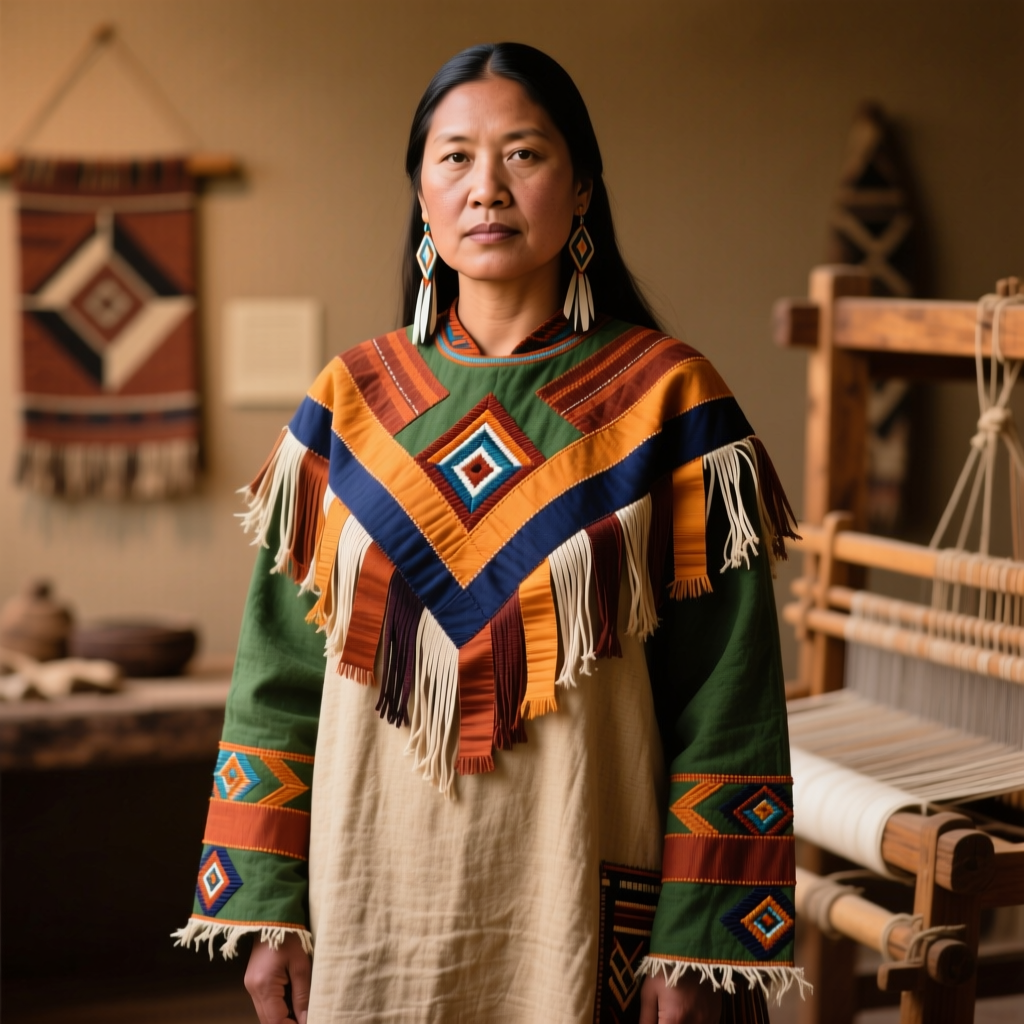
Long before bolts of trade cloth arrived on the Great Plains, Indigenous peoples adorned their garments with porcupine quillwork, painted designs, and natural pigments applied to tanned hides. But when European silk ribbons entered Native trade networks in the late eighteenth century, a remarkable artistic transformation began. Plains and Prairie tribes took these imported materials and invented something entirely new: ribbon work appliqué, a textile art form of astonishing complexity, vivid color, and deep cultural meaning. What began as an adaptive response to new materials became one of the most distinctive and enduring decorative traditions in North American Indigenous art.
Ribbon work — sometimes called ribbon appliqué — is far more than ornamental needlework. It is a language of identity, a marker of tribal affiliation, and a living practice that connects generations of makers across the Osage, Ponca, Kaw, Potawatomi, Miami, Delaware, Shawnee, and other nations. To understand ribbon work is to understand something essential about Indigenous resilience, aesthetic innovation, and the way material culture carries memory forward through time.
In this in-depth heritage guide, The Garment Atlas explores the origins, techniques, regional variations, and contemporary revival of Plains Indian ribbon work appliqué — one of the most visually stunning and culturally significant textile traditions on the continent.
Origins and Historical Development of Ribbon Work
The story of ribbon work begins at the intersection of Indigenous artistic genius and global trade. French and British fur traders introduced silk ribbons to the Great Lakes and Plains regions as early as the mid-eighteenth century. These ribbons, produced in European silk-weaving centers, were traded as luxury goods and quickly captured the imagination of Native artists who recognized their potential as a decorative medium.
Before ribbons, the primary decorative techniques on the Plains and in the adjacent Prairie woodlands were porcupine quillwork, moosehair embroidery, and painted designs on tanned hides. These traditions required immense skill and carried deep ceremonial significance. When silk ribbons became available, they did not simply replace these older arts — they were absorbed into existing aesthetic systems and transformed through Indigenous creative vision.
The earliest documented examples of ribbon appliqué date to the late 1700s among Great Lakes tribes, particularly the Potawatomi, Miami, and Delaware. As trade networks expanded westward, the technique spread to Prairie and Southern Plains tribes including the Osage, Ponca, Kaw (Kansa), Otoe-Missouria, and Pawnee. By the mid-nineteenth century, ribbon work had become a defining feature of ceremonial and everyday dress across a vast geographic area stretching from the western Great Lakes to the Southern Plains.
The transition from hide to trade cloth as a base material occurred gradually. Wool broadcloth, cotton calico, and later satin and taffeta became the foundation fabrics upon which ribbon designs were applied. This shift did not diminish the artistry — if anything, the new materials allowed for greater complexity and more vibrant color combinations than had been possible with natural dyes on hide.
Craftsmanship and Technique: The Art Beneath the Surface
Ribbon work appliqué is technically demanding. At its most basic level, the process involves cutting silk ribbons into precise shapes, folding and layering them, and stitching them onto a base fabric to create intricate patterns. But the simplicity of that description belies the extraordinary skill required to execute the work at a high level.
Materials and Tools
Traditional ribbon work uses silk ribbons of varying widths, typically ranging from one-eighth of an inch to several inches wide. The ribbons are prized for their lustrous sheen, their ability to hold crisp folds, and their rich color saturation. Artisans historically selected ribbons based on availability through traders, but over time, specific color palettes became associated with particular tribes and families.
The base fabrics vary by era and region. Early works appear on wool stroud cloth — a coarse, felted wool named after the English town of Stroud where it was manufactured. Later pieces use cotton, satin, and modern synthetic blends. Thread, needles, and sharp scissors or, historically, very fine blades complete the toolkit. Some makers also use templates cut from cardboard or stiff paper to ensure consistency in repeated motifs.
Core Techniques
Several distinct techniques define ribbon work construction:
Standard appliqué involves cutting ribbon into shapes and stitching them directly onto the surface of the base fabric. This is the most straightforward method and is often used for bold, graphic designs.
Reverse appliqué is a more complex technique in which a top layer of fabric or ribbon is cut away to reveal a contrasting color beneath. The raw edges are then turned under and stitched, creating clean, precise lines. This method is particularly associated with Prairie and Southern Plains ribbon work.
Folded ribbon technique involves folding ribbons into narrow strips and arranging them in parallel lines or geometric configurations. The folds create subtle dimensional effects and allow for extremely fine detail work.
Layered construction uses multiple ribbons stacked on top of one another, each cut to a slightly different size, creating a stepped or terraced effect. This technique produces some of the most visually complex ribbon work and is a hallmark of advanced Osage and Ponca artists.
For a broader exploration of appliqué methods across cultures, see our guide to global appliqué techniques.
Design Principles
Ribbon work designs are governed by principles that balance symmetry, rhythm, and contrast. Most traditional patterns are organized around a central axis, with motifs mirrored on either side. Borders and framing elements define the edges of the decorated area, while the interior field is filled with repeating or interlocking motifs.
Color contrast is paramount. Ribbon work achieves its visual impact through the juxtaposition of complementary or strongly contrasting hues — deep red against bright green, navy blue against vivid yellow, black against white. The silk's natural sheen amplifies these contrasts, making the designs appear almost luminous.
Cultural Significance and Symbolic Meaning
Ribbon work is never merely decorative. Within the communities that practice it, the art form carries layers of meaning that connect the wearer to family, clan, community, and the spiritual world. Understanding this significance requires moving beyond the surface beauty of the work to appreciate the cultural systems it embodies.
Identity and Tribal Affiliation
One of the most important functions of ribbon work is the communication of identity. Experienced observers can often identify a wearer's tribal affiliation — and sometimes even their specific family — by the patterns, color choices, and construction techniques visible in their regalia. Osage ribbon work, for instance, tends toward bold geometric compositions with strong vertical and horizontal axes, while Potawatomi work often features flowing, curvilinear floral motifs that reflect Great Lakes aesthetic traditions.
This visual language of identity became especially important during periods of forced relocation and cultural disruption. As tribes were removed from their ancestral lands and confined to reservations, ribbon work served as a portable, visible assertion of cultural continuity. Grandmothers taught granddaughters; mothers taught sons. The knowledge embedded in each stitch was a form of resistance against assimilation.
Ceremonial and Social Context
Ribbon work adorns garments worn during some of the most important ceremonies and social gatherings in Plains and Prairie communities. Dance regalia for the Inlonschka (Osage war dance), the Ponca Hethuska, and various powwow dance styles frequently feature elaborate ribbon work on skirts, aprons, leggings, shawls, and shirts. Wedding garments, naming ceremony outfits, and funeral dress may also incorporate ribbon work of particular significance.
In many traditions, the act of making ribbon work is itself culturally meaningful. The time, care, and intention invested in each piece is understood as a form of prayer or devotion. A grandmother who spends months creating a ribbon work skirt for her granddaughter's first dance is not simply making a garment — she is wrapping that young woman in love, protection, and cultural belonging.
Gift Economy and Social Bonds
Ribbon work has traditionally circulated within gift economies rather than commercial markets. A skilled ribbon worker might create pieces for family members, for community leaders, or as gifts to honor individuals at ceremonies. This practice strengthens social bonds and reinforces the communal values that underpin Plains and Prairie cultures. The exchange of ribbon work is an exchange of relationship — a material expression of kinship obligations and mutual respect.
Regional and Tribal Variations
While ribbon work is practiced across a broad geographic area, distinct regional and tribal styles have emerged over generations. These variations reflect differences in aesthetic preference, available materials, historical experience, and cultural contact between neighboring peoples.
Osage Ribbon Work
Among all ribbon work traditions, Osage work is perhaps the most widely recognized and the most extensively documented. Osage ribbon work is characterized by its bold geometric vocabulary: stepped diamonds, terraced triangles, parallel bands, and interlocking rectilinear forms. The color palette tends toward high-contrast combinations — red, blue, green, yellow, black, and white arranged in compositions that read as almost architectural in their precision.
Osage ribbon work appears most prominently on women's traditional dress, particularly the layered skirts and cloth leggings worn for Inlonschka and other community dances. Men's ribbon shirts, while less common historically, have become increasingly popular in contemporary practice. The Osage Nation has been particularly active in preserving and teaching ribbon work through community workshops, museum exhibitions, and intergenerational mentorship programs.
Ponca and Kaw Traditions
The Ponca and Kaw (Kansa) peoples, culturally and linguistically related to the Osage as Dhegiha Siouan-speaking nations, share certain design elements with Osage work while maintaining their own distinct styles. Ponca ribbon work often features slightly more organic, flowing forms alongside geometric elements, and may incorporate floral motifs that suggest contact with Great Lakes traditions. Kaw work, though less widely documented due to the smaller size of the Kaw community, exhibits similar geometric sensibilities with unique color preferences and compositional approaches.
Both Ponca and Kaw ribbon workers have played important roles in the Hethuska dance tradition, and their regalia reflects the ceremonial context in which the work is worn.
Prairie and Great Lakes Traditions
Moving eastward from the Plains into the Prairie peninsula and the western Great Lakes, ribbon work takes on a markedly different character. Among the Potawatomi, Miami, Shawnee, Delaware, and related tribes, the dominant design vocabulary is floral and curvilinear rather than geometric. Vine-like stems, stylized blossoms, and scrolling leaf forms create compositions that echo the floral beadwork traditions of the same region.
This stylistic difference reflects deeper cultural and ecological distinctions. Great Lakes and Prairie peoples lived in more heavily forested environments where floral imagery was a natural part of the visual landscape. The curvilinear aesthetic also connects to older quillwork and birchbark biting traditions that predated ribbon work by centuries.
Potawatomi ribbon work, in particular, is renowned for its delicate, flowing designs and its sophisticated use of layered color. Contemporary Potawatomi artists continue to produce some of the finest ribbon work in North America, and their influence can be seen in the work of makers from many other nations.
Southern Plains and Cross-Cultural Influences
Among Southern Plains tribes — including the Comanche, Kiowa, and Cheyenne — ribbon work was adopted somewhat later and often appears in combination with other decorative techniques such as beadwork and fringe. The Southern Plains aesthetic tends to favor larger, bolder design elements with generous use of negative space, reflecting the influence of hide painting traditions and the visual culture of nomadic life.
Cross-cultural exchange has always been a feature of Plains artistic life. Intertribal marriages, trade fairs, powwows, and shared ceremonial practices have facilitated the movement of ideas and techniques between communities. Today, many ribbon workers draw on multiple traditions, creating hybrid styles that honor their complex heritage while pushing the art form in new directions.
Modern Preservation, Revival, and Contemporary Practice
Like many Indigenous art forms, ribbon work faced significant threats during the twentieth century. Forced assimilation policies, the suppression of ceremonial practices, the disruption of intergenerational knowledge transfer, and the simple economics of survival all contributed to a decline in the practice. By the mid-twentieth century, the number of active ribbon workers in some communities had dwindled to a handful of elders.
The revival that began in the 1970s and continues today is a testament to the determination of Indigenous communities to reclaim and sustain their cultural heritage. Several factors have contributed to this resurgence.
Institutional Support and Documentation
Museums, tribal cultural centers, and academic researchers have played important roles in documenting surviving examples of historical ribbon work and making this knowledge accessible to contemporary makers. Institutions such as the Osage Nation Museum, the Gilcrease Museum, the National Museum of the American Indian, and the Field Museum hold significant collections that serve as vital references for artists studying historical techniques and designs.
Documentation projects — including photography, oral history recordings, and published research — have helped preserve the knowledge of elder makers who might otherwise have taken their expertise with them. These resources are increasingly available online, allowing artists in remote communities to access information that was once difficult to obtain.
Community-Based Teaching
The most important preservation work happens at the community level, where experienced makers teach younger generations through formal workshops, informal mentorship, and family-based transmission. Tribal cultural programs, powwow committees, and community organizations regularly sponsor ribbon work classes that introduce new makers to the art form. These programs emphasize not only technical skill but also the cultural values and protocols that surround the practice.
Many contemporary ribbon workers describe their practice as a form of cultural activism — a deliberate choice to maintain a tradition that was nearly lost. For these artists, every piece of ribbon work is an act of sovereignty, a declaration that Indigenous knowledge systems remain vital and relevant.
Contemporary Innovation
While historical accuracy and traditional technique remain important values in ribbon work, contemporary makers are also innovating in exciting ways. New materials — including synthetic ribbons with improved colorfastness, modern base fabrics, and machine-assisted construction — have expanded the possibilities of the form. Some artists incorporate ribbon work into contemporary fashion, home décor, and fine art contexts, bringing the tradition to new audiences.
The powwow circuit has been a particularly important venue for the display and evolution of ribbon work. Dance regalia has become increasingly elaborate, and ribbon work features prominently in categories such as Women's Traditional, Jingle Dress, and Fancy Shawl competition. The social visibility of powwows has helped generate broader appreciation for ribbon work and has created economic opportunities for skilled makers.
For those interested in exploring how traditional textile techniques inform contemporary fashion, our heritage-inspired style guide offers additional context and inspiration.
Challenges and the Path Forward
Despite the encouraging revival, ribbon work faces ongoing challenges. The cost of quality silk ribbons has risen significantly, making the art form expensive to practice. The time required to produce fine work — often hundreds of hours for a single garment — means that few makers can support themselves through ribbon work alone. And as elder masters pass on, there is an urgent need to ensure that their knowledge is transmitted to the next generation.
Addressing these challenges requires sustained investment from tribal governments, cultural organizations, and the broader community. Apprenticeship programs, artist fellowships, and market development initiatives all have roles to play in ensuring that ribbon work remains a living practice rather than a museum artifact.
Frequently Asked Questions
What is the difference between ribbon work and ribbon appliqué?
The terms are often used interchangeably, though some makers and scholars draw distinctions. "Ribbon work" is the broader term that encompasses all techniques involving the decorative use of ribbons on textiles, including folded, layered, and applied methods. "Ribbon appliqué" refers more specifically to the technique of cutting ribbon into shapes and stitching them onto a base fabric. In practice, most Plains Indian ribbon work involves some form of appliqué, so the terms are functionally synonymous in most contexts. The choice of terminology often reflects regional preference rather than a strict technical distinction.
Which tribes are most closely associated with ribbon work traditions?
Ribbon work is practiced by many Indigenous nations, but it is most closely associated with the Osage, Ponca, Kaw (Kansa), Otoe-Missouria, Pawnee, Potawatomi, Miami, Delaware, Shawnee, and other Prairie and Southern Plains tribes. Each of these nations has developed its own distinctive style, and within each nation, individual families and communities may have their own recognized patterns and color preferences. The Osage are perhaps the most widely recognized practitioners, but the art form is a shared heritage across a broad intertribal network.
How long does it take to create a traditional ribbon work garment?
The time required varies enormously depending on the size of the piece, the complexity of the design, the techniques used, and the experience level of the maker. A simple ribbon-appliquéd skirt might take forty to eighty hours of focused work. A fully decorated dance outfit — including skirt, leggings, shawl, and accessories — can require several hundred hours spread over many months. Fine, museum-quality pieces with intricate layered designs may represent a year or more of dedicated effort. This investment of time is part of what gives ribbon work its cultural value; the hours spent in creation are understood as a form of devotion and commitment.
Is it appropriate for non-Indigenous people to practice ribbon work?
This is a question that invites careful consideration. Ribbon work is a living cultural tradition with deep spiritual and communal significance for the Indigenous nations that practice it. While some makers and communities welcome respectful engagement from non-Indigenous learners — particularly in educational contexts — others view the practice as belonging exclusively to their communities. Anyone interested in learning ribbon work should approach the tradition with humility, seek guidance from Indigenous teachers and community members, and be prepared to respect whatever boundaries are set. Purchasing ribbon work directly from Indigenous artists is always an appropriate and supportive way to engage with the tradition.
Where can I see examples of historical and contemporary ribbon work?
Significant collections of historical ribbon work are held by the National Museum of the American Indian (Smithsonian), the Osage Nation Museum in Pawhuska, Oklahoma, the Gilcrease Museum in Tulsa, the Field Museum in Chicago, and the Denver Art Museum. Contemporary ribbon work can be seen at powwows across the Plains and Midwest, at Native art markets such as the Santa Fe Indian Market and the Heard Museum Guild Indian Fair, and through the work of individual artists who share their practice on social media and through gallery exhibitions. Many tribal cultural centers also maintain displays of ribbon work and offer educational programming for visitors interested in learning more about this remarkable textile heritage.
For further exploration of Indigenous textile traditions, visit our heritage archive or browse our complete collection of garment and technique guides.