The Omani Kumma: A Heritage of Embroidered Cap Craftsmanship
The Omani Kumma: A Heritage of Embroidered Cap Craftsmanship
The Sultanate of Oman, a nation where the golden dunes of the Wahiba Sands meet the azure waters of the Arabian Sea, possesses a cultural tapestry as rich and intricate as its geography. Among the most striking visual elements of Omani daily life is the traditional attire worn by its people, a sartorial expression of modesty, elegance, and deep-rooted heritage. At the very crown of this ensemble sits the Kumma, a masterfully embroidered cap that serves as far more than a mere accessory. It is a canvas of history, a marker of identity, and a testament to the enduring legacy of Omani craftsmanship.
For generations, the Kumma has been an indispensable component of the Omani male wardrobe, worn with quiet pride in the bustling souqs of Muscat, the serene mountain villages of Jebel Akhdar, and the coastal towns of the Dhofar region. To understand the Kumma is to delve into the Middle Eastern textile heritage that has shaped the Arabian Peninsula. This article explores the profound history, the meticulous artistry, and the cultural resonance of the Omani Kumma, illuminating why this embroidered cap remains a vital symbol of national identity in the modern era.
The Historical Roots of the Omani Kumma
The origins of the Kumma are inextricably linked to Oman’s storied maritime history. As a seafaring nation with a strategic position at the crossroads of the Indian Ocean, Oman established a vast trade network that stretched from the shores of East Africa to the Indian subcontinent and beyond. This maritime empire, which once included territories such as Zanzibar and Gwadar, facilitated a vibrant exchange of goods, ideas, and artistic traditions. The maritime trade textiles that flowed through Omani ports heavily influenced local garments, bringing new materials, dyes, and embroidery techniques to the Sultanate.
Historically, headwear in the Arabian Peninsula served practical purposes, protecting the wearer from the harsh desert sun and the shifting sands. However, as Omani society flourished through trade and the lucrative frankincense routes, clothing evolved to reflect social standing and cultural sophistication. The Kumma emerged as a distinct alternative to the turbans and headcloths worn in neighboring regions. While the Mussar (turban) is also widely worn in Oman, the Kumma carved out its own niche, particularly favored for its structured form and the opportunity it provided for intricate, localized artistic expression.
The influence of Indian and East African artisans is evident in the early iterations of the Kumma. Merchants returning from the Malabar Coast and Gujarat often brought back fine cottons and metallic threads, which local Omani artisans adapted to suit their own aesthetic sensibilities. Over centuries, these external influences were synthesized into a uniquely Omani art form. The geometric patterns and floral motifs that adorn the Kumma today are the result of generations of refinement, representing a harmonious blend of imported techniques and indigenous creativity.
The Art of Craftsmanship: Weaving and Embroidery
The creation of a traditional, handcrafted Kumma is a masterclass in patience, precision, and artistic vision. The process begins with the foundation of the cap itself. Artisans typically use high-quality, breathable cotton, which is essential for comfort in Oman’s warm climate. The base of the Kumma is often woven on small, specialized looms or meticulously crocheted to create a firm yet flexible structure. This base must be sturdy enough to hold the weight of heavy embroidery while remaining comfortable enough for daily wear.
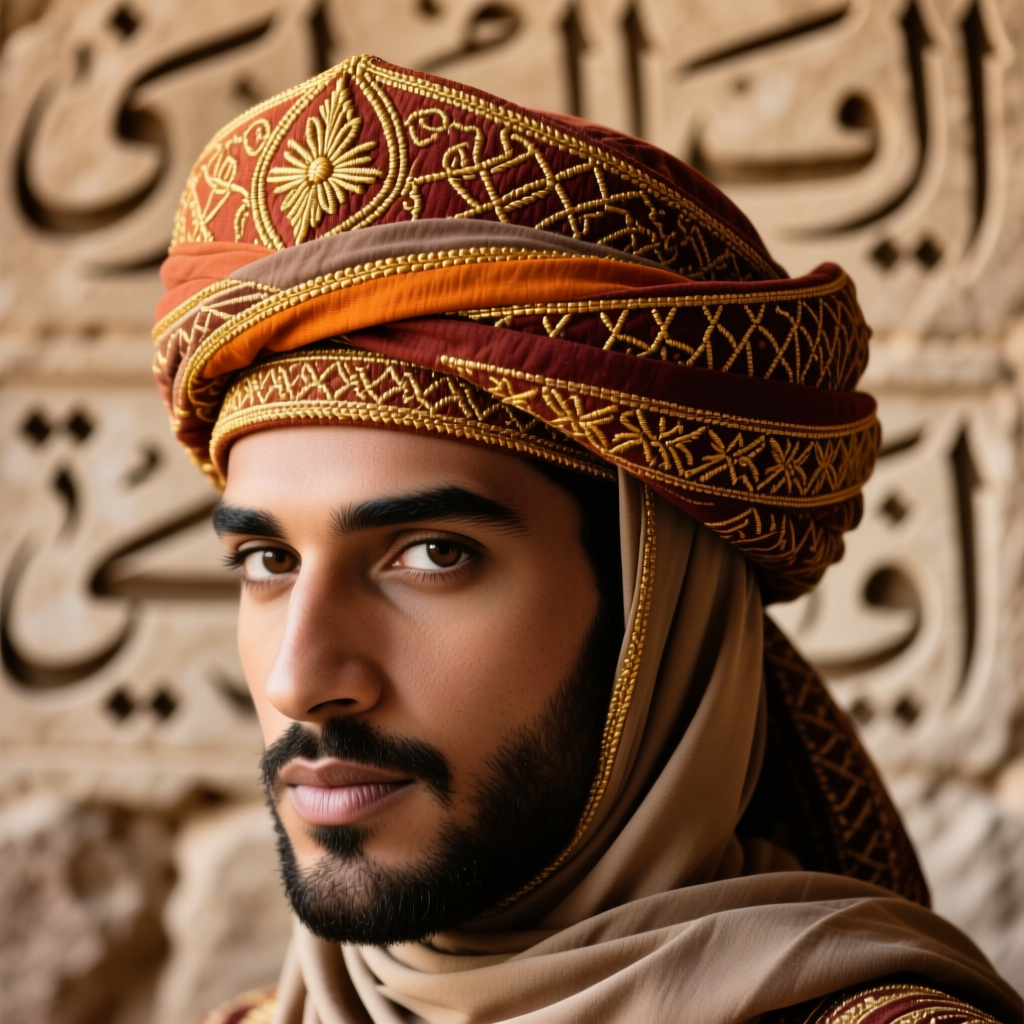
Once the foundation is prepared, the true artistry begins with the embroidery. The hand embroidery techniques employed in Kumma making are highly specialized, requiring years of apprenticeship to master. Artisans use fine needles to stitch intricate geometric patterns, interlocking stars, and stylized floral motifs across the surface of the cap. The most prized Kummas feature metallic threads, known as zari, which are spun from silver or gold. These threads catch the light beautifully, giving the cap a subtle, dignified shimmer that elevates the wearer’s attire during formal occasions and religious festivals.
The color palette of a traditional Kumma is deeply symbolic. While white and cream bases are popular for their versatility and cooling properties, the embroidery threads introduce a vibrant spectrum of meaning. Deep indigos, rich saffrons, emerald greens, and striking crimsons are frequently used. The choice of colors and the complexity of the patterns often dictate the formality of the cap. A Kumma densely packed with silver thread and complex, multi-layered motifs is reserved for weddings, national celebrations, and official state functions, whereas simpler, cotton-threaded designs are favored for everyday wear and casual gatherings.
The time investment required for a single, high-quality, hand-embroidered Kumma is staggering. A master artisan may spend several weeks, or even months, completing a single cap, working under natural light to ensure the tension of every stitch is perfect. This dedication to perfection is a hallmark of Omani craftsmanship, reflecting a cultural ethos that values longevity, quality, and the beauty of slow, deliberate creation.
Cultural Significance and Social Identity
In Omani society, clothing is a profound communicator of social values, respect, and identity. The national dress for Omani men, consisting of the ankle-length Dishdasha, the Kumma or Mussar, and the ceremonial Khanjar (dagger), is a source of immense national pride. The traditional menswear of Oman is notable for its egalitarian nature; while the quality of the fabric and the intricacy of the embroidery may vary based on personal wealth, the fundamental silhouette remains the same for all citizens, from the Sultan to the everyday laborer. This fosters a powerful sense of unity and shared heritage.
The Kumma plays a specific role in the socialization and maturation of Omani boys. While young children may wear simple caps or go bareheaded, the transition to wearing a formal Kumma and a full-sized Dishdasha is often seen as a rite of passage into manhood. It signifies a boy’s readiness to take on adult responsibilities, participate fully in community affairs, and uphold the honor of his family. When an Omani man adjusts his Kumma before entering a mosque, a government office, or a majlis (gathering place), he is engaging in a ritual of respect and self-presentation that has been practiced for centuries.
Furthermore, the Kumma serves as a subtle indicator of regional identity and personal taste. Because the patterns and color combinations can vary by locality and artisan, an astute observer can often deduce a man’s regional origins or his family’s historical trade connections based on the style of his cap. In this way, the Kumma is not merely a uniform piece of clothing, but a personalized artifact that tells a story about the wearer’s lineage and community.
During the holy month of Ramadan and the subsequent Eid celebrations, the demand for new, exquisitely crafted Kummas surges. It is customary for men to commission or purchase new headwear to mark the joyous occasion, leading to a vibrant seasonal economy for local artisans and tailors. The exchange of finely embroidered Kummas as gifts between family members and friends is also a cherished tradition, reinforcing social bonds and mutual appreciation for the nation’s artisanal heritage.
Regional Variations Across the Sultanate
While the Kumma is a unifying national symbol, the vast and geographically diverse landscape of Oman has given rise to fascinating regional variations in its design. The garments of the Middle East often reflect local climates and resources, and the Omani Kumma is no exception. From the coastal capital to the southern monsoon-swept mountains, the cap adapts to its environment while maintaining its core identity.
In the capital region of Muscat and the surrounding Al Batinah coast, the Kumma tends to be highly structured, often featuring a slightly rounded crown and a dense, uniform band of embroidery around the base. The motifs here are heavily influenced by historical maritime trade, frequently incorporating complex, lace-like geometric patterns that mimic the rigging of ancient dhows or the architectural filigree found in Omani forts. Silver thread is particularly dominant in the capital, reflecting the historical wealth and cosmopolitan nature of the port city.
Traveling south to the Dhofar region, where the city of Salalah is blessed with the seasonal Khareef (monsoon), the Kumma takes on a different character. The caps here are often slightly softer in structure and feature a more vibrant, diverse color palette. The embroidery in Dhofar frequently incorporates brighter silks alongside metallic threads, with motifs that sometimes echo the lush, tropical flora of the region. The influence of East African trade routes, which were heavily trafficked by Dhofari merchants dealing in frankincense, is also visible in the bolder, more rhythmic patterns favored by southern artisans.
In the interior regions, such as Nizwa and the Jebel Akhdar mountains, the Kumma often reflects the earthy, grounded nature of the agrarian and Bedouin communities. The embroidery may be less reliant on expensive metallic threads and more focused on intricate cotton stitch-work in deep reds, browns, and greens. These caps are designed for durability and comfort in the rugged mountain terrain, showcasing a rustic elegance that speaks to the resilience and self-sufficiency of the interior populations.
Modern Preservation and Global Appreciation
As globalization accelerates and mass-produced textiles flood international markets, the traditional, hand-embroidered Kumma faces the dual challenges of mechanization and a shrinking pool of master artisans. Machine-made caps, imported from overseas factories, offer a cheaper and faster alternative, threatening the livelihoods of local craftspeople and the survival of authentic techniques. However, the Omani people, supported by government initiatives and cultural organizations, are fiercely committed to preserving textile heritage.
The Omani government has implemented various programs to safeguard intangible cultural heritage, recognizing that traditional crafts are vital to the nation’s soul and its growing tourism industry. Workshops and vocational training centers have been established to teach the art of Kumma embroidery to younger generations, ensuring that the intricate stitches and complex loom techniques are not lost to time. These initiatives often provide financial stipends and exhibition opportunities for master artisans, elevating their status within the community and making the craft a viable career path for young Omanis.
The bustling souqs, particularly the famous Souq Muttrah in Muscat, remain the beating heart of the Kumma trade. Here, visitors and locals alike can navigate narrow, incense-filled alleys to find shops dedicated entirely to headwear. In these spaces, the distinction between a factory-made cap and a hand-embroidered masterpiece is immediately apparent. Artisans can often be seen working in the back of their shops, their needles flashing in the dim light, offering a living museum experience for those interested in the heritage archive of Omani craftsmanship.
Globally, the Omani Kumma has begun to attract the attention of textile collectors, fashion historians, and curators of traditional headwear. Its unique blend of structural engineering and delicate embroidery makes it a subject of fascination in exhibitions dedicated to Islamic art and Arabian Peninsula culture. By celebrating the Kumma on both a local and international stage, Oman ensures that this embroidered cap will continue to crown the heads of its people, serving as a proud, enduring emblem of a rich and resilient heritage.
Frequently Asked Questions
What is the difference between a Kumma and a Mussar?
The Kumma is a structured, embroidered cap that sits directly on the head, often featuring a rounded or slightly flat crown and intricate geometric patterns. The Mussar, on the other hand, is a turban made from a long piece of fine fabric, typically cotton or cashmere, which is wrapped around the head. While the Kumma is worn on its own or as a base, the Mussar can be wrapped over a simple cap or directly on the hair. Both are acceptable and widely worn in Oman, with the choice often depending on personal preference, regional customs, and the formality of the occasion. The Mussar is generally considered slightly more formal for state events, while the Kumma is universally worn for daily life, religious prayers, and casual gatherings.
How long does it take to hand-embroider a traditional Kumma?
The time required to hand-embroider a traditional Kumma varies significantly based on the complexity of the design, the materials used, and the skill level of the artisan. A simple, everyday cap with basic cotton thread embroidery might take a skilled artisan a few days to complete. However, a highly intricate, formal Kumma featuring dense, multi-layered geometric patterns stitched with fine silver or gold zari thread can take anywhere from three weeks to several months of dedicated work. The meticulous nature of the stitch-work requires frequent breaks to prevent eye strain, meaning the creation of a masterwork Kumma is a slow, deliberate process that commands a premium price in the souqs.
Can women wear the Omani Kumma?
Traditionally, the Kumma is an exclusively male garment, forming an integral part of the Omani man’s national dress alongside the Dishdasha and the Khanjar. Omani women have their own distinct and equally rich traditions of dress, which include the vibrant Lihaf (headscarf), the Thobe (dress), and the Abaya, often adorned with different styles of embroidery, beadwork, and silver jewelry. While women do not wear the Kumma as part of their traditional attire, they are deeply involved in its creation; historically and presently, many of the most skilled embroiderers and weavers of the Kumma are Omani women who practice the craft in their homes or in cooperative workshops, passing the skills down to their daughters.
How should one care for and clean an embroidered Kumma?
Caring for a hand-embroidered Kumma requires a gentle touch, especially if it features delicate metallic threads or silk embroidery. The cap should never be machine-washed or submerged in harsh detergents, as this can cause the metallic threads to tarnish, the silk to bleed, and the structured base to lose its shape. For minor stains or general dust, a soft, dry brush or a slightly damp cloth can be used to gently dab the affected area. If the cap becomes heavily soiled, it is highly recommended to take it to a specialized dry cleaner in Oman who has experience handling traditional garments. When not in use, the Kumma should be stored in a cool, dry place, ideally in a breathable cotton bag, to protect it from moisture, direct sunlight, and dust.
Where can one purchase authentic, handcrafted Kummas?
To purchase an authentic, handcrafted Kumma, one must look beyond the standard tourist souvenir shops and seek out specialized haberdasheries and traditional tailors. In Muscat, the historic Souq Muttrah and the older districts of Ruwi are home to generations-old shops dedicated to Omani menswear, where artisans can often be seen working on the premises. In the interior, the Friday cattle market and souq in Nizwa offer excellent opportunities to find caps crafted by local mountain artisans. When purchasing, buyers should closely inspect the reverse side of the embroidery; a true handcrafted piece will show slight irregularities and the complex knots of hand-stitching, whereas a machine-made cap will have a uniform, perfectly flat backing. Engaging with the shopkeeper and asking about the artisan and the origin of the cap is not only a good way to verify authenticity but also a respected part of the Omani bargaining and purchasing culture.