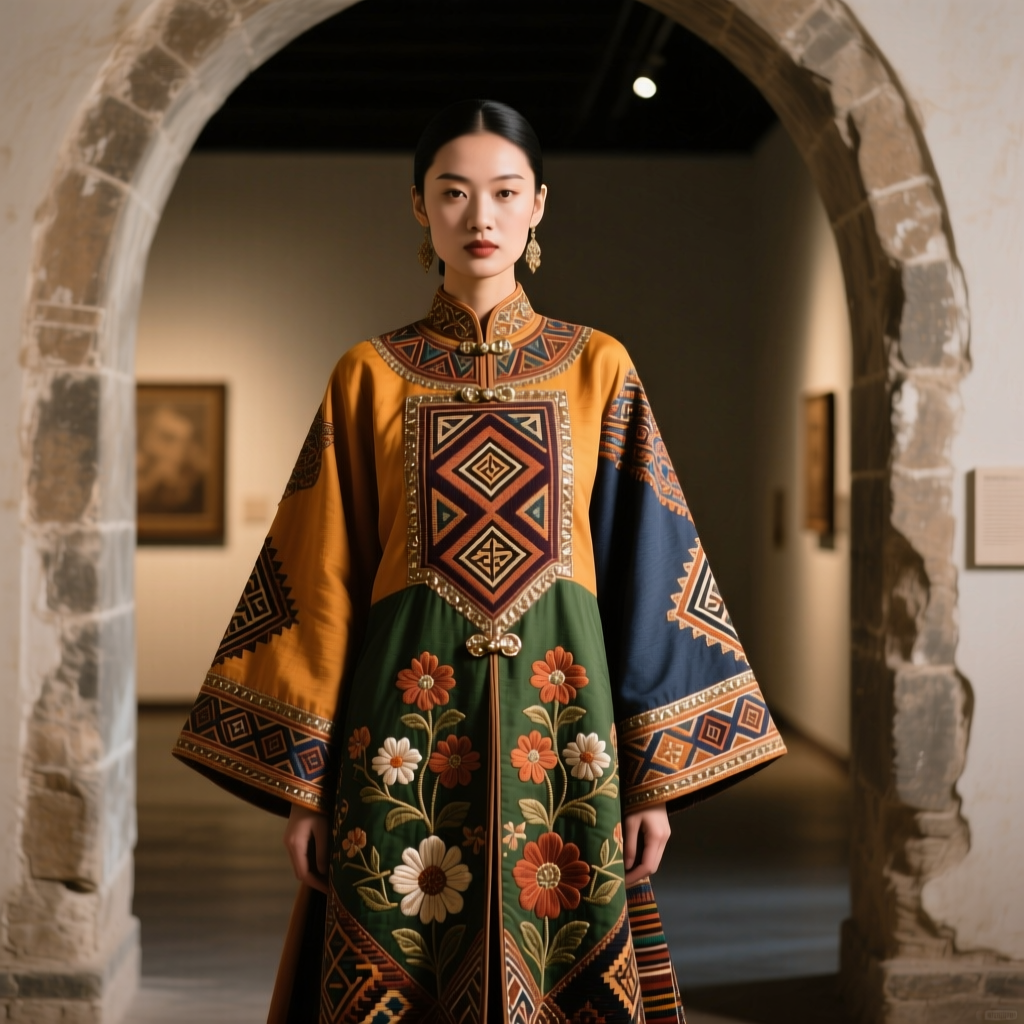
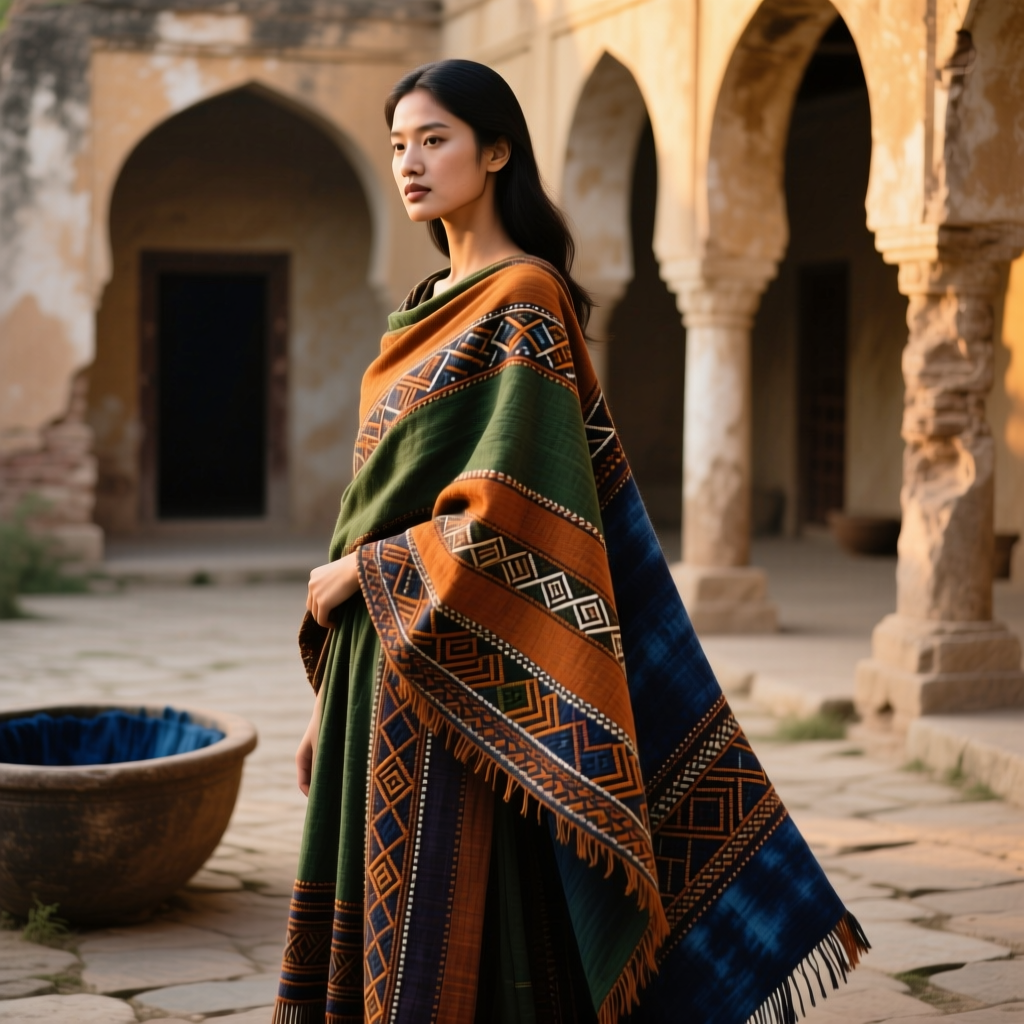
Lao Sinh Skirt Weaving Patterns: A Living Heritage of Southeast Asian Textile Art
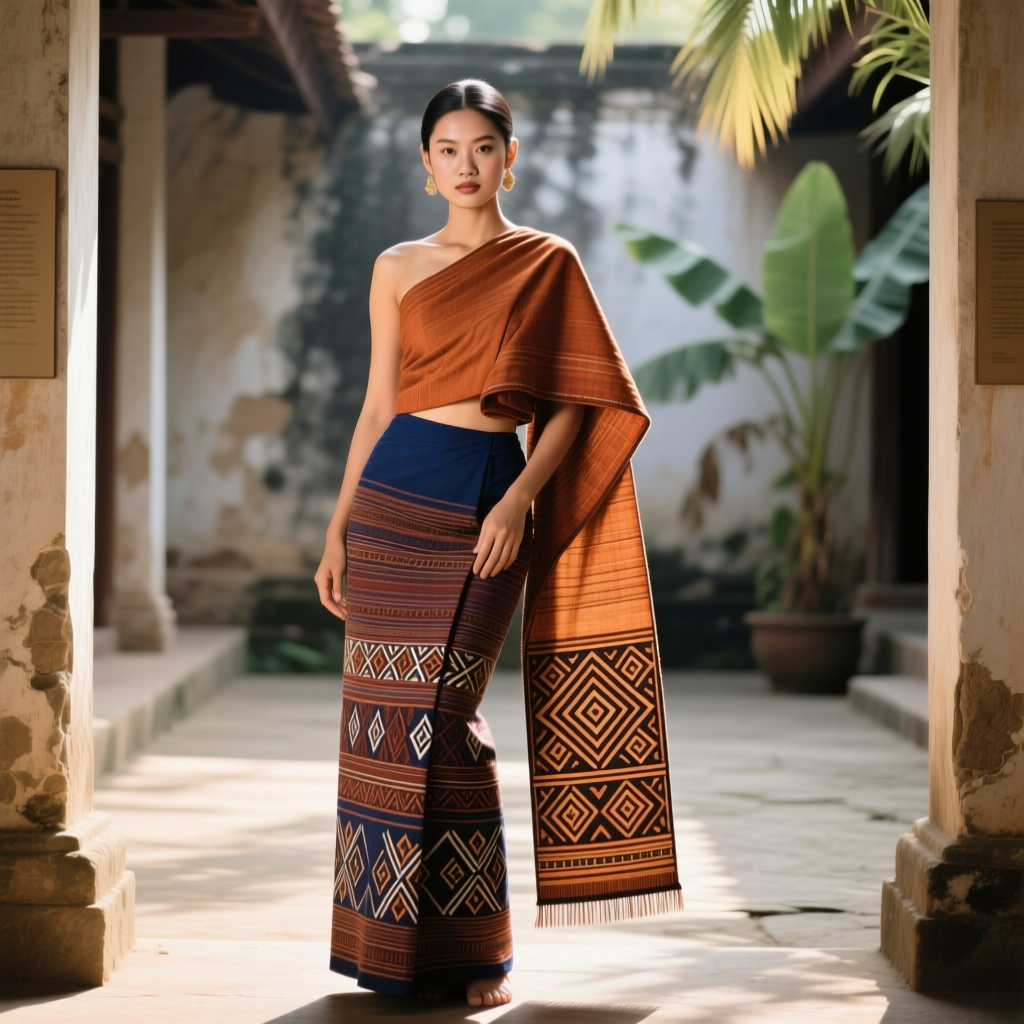
Lao Sinh Skirt Weaving Patterns: A Living Heritage of Southeast Asian Textile Art
In the quiet villages along the Mekong River and across the highlands of Laos, the rhythmic clatter of wooden looms has echoed for centuries. The sinh — a traditional tubular skirt worn by Lao women — is far more than a garment. It is a woven manuscript of identity, a textile language that encodes the history, spirituality, and artistry of an entire civilization. Every thread carries meaning, every pattern tells a story, and every skirt represents months of patient, meticulous craftsmanship passed down through countless generations.
The Lao sinh stands as one of Southeast Asia's most sophisticated textile traditions. Unlike mass-produced clothing that floods global markets, each handwoven sinh is a unique expression of its maker's skill, her community's aesthetic heritage, and her ethnic group's symbolic vocabulary. To understand the weaving patterns of the Lao sinh is to understand the soul of Lao culture itself — a culture that has preserved its artistic identity through periods of colonization, conflict, and rapid modernization.
This article explores the profound heritage behind Lao sinh skirt weaving patterns, examining their cultural significance, the extraordinary craftsmanship required to create them, the fascinating regional variations that distinguish communities from one another, and the modern efforts underway to preserve this irreplaceable textile tradition for future generations.
Cultural Significance: More Than a Garment
The sinh occupies a central position in Lao society that extends well beyond its function as clothing. In traditional Lao culture, a woman's skill at the loom was — and in many communities still is — considered one of her most important attributes. Mothers begin teaching their daughters to weave at a young age, often starting with simple patterns before progressing to the extraordinarily complex motifs that distinguish master weavers. This transmission of knowledge from mother to daughter represents one of the most intimate and enduring forms of cultural inheritance in Southeast Asia.
The sinh serves as a powerful marker of ethnic and regional identity. In a country home to dozens of distinct ethnic groups, the patterns, colors, and weaving techniques of a woman's skirt immediately communicate her origins, her community, and often her social status. A Tai Dam woman's sinh is instantly recognizable to a Tai Daeng woman, and each can read the other's textile language with the fluency of a native speaker reading a familiar script. This visual communication system has historically been essential in a country where many communities had no written language of their own.
Spiritual and ceremonial dimensions infuse every aspect of sinh weaving. Many patterns are believed to carry protective powers, invoking the guardianship of mythical beings, ancestral spirits, and natural forces. The nak (naga or serpent) motif, for instance, is not merely decorative — it is a talisman woven into the fabric to shield the wearer from harm. Certain patterns are reserved exclusively for religious ceremonies, temple visits, or merit-making occasions, while others are appropriate for daily wear. The choice of which sinh to wear on a given occasion reflects a deep understanding of cultural protocol and spiritual propriety.
In Lao Buddhist tradition, the act of weaving itself carries spiritual merit. Women who weave cloth for monks' robes or temple hangings accumulate spiritual benefits, and the patience, discipline, and mindfulness required for fine weaving are seen as expressions of Buddhist virtue. The loom becomes a site of meditation, where the weaver's concentration and intention are literally woven into the fabric. This spiritual dimension elevates sinh weaving from a domestic craft to a sacred practice.
The sinh also plays a crucial role in life-cycle ceremonies. At weddings, the bride's trousseau traditionally includes numerous handwoven sinhs, and the quality and quantity of these skirts reflect both her weaving skill and her family's standing. Funerals, too, involve specific textile traditions, with particular patterns and colors associated with mourning and remembrance. From birth to death, the sinh accompanies Lao women through every significant moment of their lives, making it an inseparable part of the cultural fabric.
For those interested in how traditional garments function within broader cultural contexts, our heritage collection explores similar textile traditions from around the world, each revealing how clothing serves as a vessel for cultural memory and identity.
The Art of Craftsmanship: Techniques Passed Through Generations
The creation of a fine Lao sinh is an extraordinary feat of textile engineering that can require anywhere from several weeks to over a year of dedicated work, depending on the complexity of the patterns involved. The process begins long before the weaver sits at her loom — it begins with the cultivation, harvesting, and preparation of raw materials.
Traditional sinh weaving employs several distinct techniques, each requiring specialized knowledge and years of practice to master:
Mat Mii (Ikat) Weaving
The mat mii technique, known internationally as ikat, is perhaps the most celebrated of all Lao weaving methods. This process involves tie-dyeing the threads before they are placed on the loom. The weaver bundles and binds sections of warp or weft threads with resist material — traditionally palm leaf strips or plastic string — then immerses them in dye baths. The bound sections resist the dye, creating precise patterns when the threads are finally woven together.
The extraordinary challenge of mat mii lies in the weaver's ability to visualize the final pattern before a single thread is dyed. She must calculate exactly where each color will fall in the finished cloth, accounting for the tension of the loom and the slight shifting that occurs during weaving. Master mat mii weavers achieve remarkable precision, producing patterns with crisp, clearly defined edges that seem almost impossibly exact given the organic nature of the process. The characteristic soft blurring at the edges of ikat patterns — often called the "breath" of the cloth — is prized as evidence of authentic handcraft.
Continuous Supplementary Weft (Kit)
The kit technique involves adding decorative patterns by inserting supplementary weft threads that float across the surface of the base cloth. These additional threads create geometric patterns — often diamonds, zigzags, or stylized floral forms — that appear to be embroidered but are actually integral to the woven structure. Kit weaving is particularly associated with the Tai Daeng and Tai Nua peoples of northeastern Laos, whose kit textiles are renowned for their bold geometric precision.
Kit weaving requires a complex loom setup with multiple pattern heddles that control which warp threads are raised for each pass of the supplementary weft. Setting up these pattern heddles — a process called "programming the loom" — can take days or even weeks, as each heddle corresponds to one row of the repeating pattern. Once programmed, the loom can produce repeating patterns with remarkable speed, but the initial setup demands extraordinary technical knowledge.
Discontinuous Supplementary Weft (Chok)
The chok technique is the most labor-intensive and highly prized of all Lao weaving methods. Unlike kit, which uses continuous supplementary threads that span the full width of the cloth, chok involves adding small, discrete sections of colored thread only where the pattern requires them. The weaver works with a small bamboo stick or shuttle, painstakingly placing each colored thread by hand, building the pattern one tiny section at a time.
Chok weaving allows for far greater design complexity and color variety than either mat mii or kit. The most elaborate chok sinhs feature intricate pictorial motifs — elephants, temple stupas, mythical creatures, and elaborate floral borders — rendered in dozens of colors. A single chok sinh of the highest quality can represent a year or more of daily work, and such pieces are treasured as family heirlooms, passed from mother to daughter across multiple generations.
Tapestry Weave (Khit and Raised Weave Variations)
Several communities across Laos practice variations of tapestry weave, in which the weft threads completely cover the warp, creating a dense, reversible fabric with bold pattern areas. These techniques are often combined with other methods within a single sinh, with the weaver switching between techniques for different sections of the skirt — the waistband (hua sinh), the body (phuen sinh), and the hem (tin sinh).
The hem section, or tin sinh, is traditionally the most elaborately decorated part of the garment and serves as the primary canvas for the weaver's most ambitious artistic expression. It is here that the most complex chok or mat mii patterns are concentrated, creating a border of extraordinary visual richness that frames the wearer's lower legs. For a broader look at how decorative hems and borders function in traditional garments worldwide, our traditional skirt styles guide offers comparative insights into global skirt-making traditions.
Natural dyeing remains an essential component of traditional sinh craftsmanship. Indigo, derived from the leaves of Indigofera tinctoria, produces the deep blues that dominate many sinh palettes. Red dyes come from lac insects, sappanwood bark, and the roots of various plants. Yellow is extracted from turmeric and jackfruit heartwood, while rich browns and blacks come from ebony fruits and iron-rich mud. The knowledge of which plants produce which colors, how to mordant fibers for colorfastness, and how to achieve specific shades through multiple dye baths represents a vast body of botanical and chemical knowledge accumulated over centuries.
Regional Variations: A Map Woven in Thread
Laos is a country of remarkable ethnic and geographic diversity, and this diversity is vividly reflected in the regional variations of sinh weaving patterns. Travel from one province to another, and the skirts change — sometimes subtly, sometimes dramatically — revealing the distinct aesthetic sensibilities and cultural histories of each community.
Luang Prabang: The Royal Tradition
The former royal capital of Luang Prabang is widely regarded as the heartland of fine Lao weaving. Sinhs from this region are characterized by their elegance, refinement, and sophisticated use of gold and silver metallic threads woven alongside silk. The Luang Prabang style favors flowing, organic motifs — stylized lotus blossoms, graceful vine patterns, and mythical creatures rendered with a delicacy that reflects the city's aristocratic heritage.
The pha sin dok kaew, a particularly celebrated Luang Prabang pattern, features intricate floral medallions arranged in horizontal bands across the hem, separated by narrow geometric borders. The overall effect is one of restrained opulence — rich without being ostentatious, complex without being chaotic. This aesthetic reflects the influence of the royal court, where weavers created sinhs for queens and princesses whose garments needed to project dignity and grace.
The Tai Daeng and Tai Nua of Houaphan Province
In the remote highlands of Houaphan province, the Tai Daeng (Red Tai) and Tai Nua peoples produce some of the most visually striking sinhs in all of Laos. Their textiles are characterized by bold geometric patterns executed in vivid reds, blacks, and whites, with a graphic quality that has drawn comparison to modernist art. The Tai Daeng are particularly renowned for their kit weaving, producing sinhs with diamond and zigzag patterns of extraordinary precision and visual impact.
Tai Daeng sinhs often feature the hong (mythical swan) motif, which carries deep spiritual significance related to the soul's journey after death. Other common motifs include stylized elephants, geometric flowers, and abstract representations of ancestral spirits. The boldness of Tai Daeng patterns reflects a cultural confidence and artistic independence that has persisted despite centuries of external pressure to assimilate.
Champasak and the Southern Tradition
The southern provinces of Laos, particularly Champasak, produce sinhs with a distinctly different character from their northern counterparts. Southern sinhs tend to favor mat mii (ikat) techniques, with flowing, curvilinear patterns that evoke the water landscapes of the Mekong Delta. The color palettes are often softer and more varied, incorporating greens, purples, and ochres alongside the more common blues and reds.
Mat mii sinhs from Champasak frequently feature the siho motif — a mythical creature with the body of a lion and the trunk of an elephant — as well as stylized temple stupas, lotus flowers, and geometric interpretations of river currents. These patterns reflect the cultural influence of the ancient Khmer civilization, whose monumental temple complex at Wat Phu still stands in Champasak province as a testament to the region's deep historical roots.
The Tai Lue of the Northern Borders
The Tai Lue people, whose communities span the borders of Laos, Thailand, Myanmar, and China's Yunnan province, maintain a distinctive weaving tradition that reflects their history of cross-cultural exchange. Tai Lue sinhs often combine multiple techniques within a single garment, featuring mat mii body sections with chok-woven hems and kit-woven waistbands. Their patterns incorporate motifs from Chinese, Burmese, and Thai artistic traditions, creating a syncretic visual vocabulary that tells the story of a people who have always lived at the crossroads of civilizations.
Understanding how regional textile variations reflect cultural geography is a theme explored throughout our heritage articles, where we examine how landscapes, trade routes, and migration patterns shape the clothing traditions of communities around the world.
Symbolism in Every Thread: Decoding the Pattern Language
To the untrained eye, the patterns on a Lao sinh may appear purely decorative — beautiful arrangements of color and form designed to please the senses. But to those literate in the textile language of Laos, every motif carries layers of meaning that connect the wearer to a vast cosmological and cultural framework.
The naga (nak) is perhaps the most ubiquitous and powerful symbol in Lao textile art. This mythical serpent, believed to inhabit the Mekong River and control the waters that sustain Lao agriculture, appears in countless variations on sinh hems and borders. A naga motif is simultaneously a prayer for rain, a request for protection, and an acknowledgment of the wearer's connection to the water spirits that govern fertility and prosperity. The number of naga heads depicted — three, five, seven, or nine — carries specific symbolic significance, with odd numbers considered auspicious and higher numbers indicating greater spiritual power.
The elephant motif reflects the animal's historical importance in Lao society as a symbol of royal power, military strength, and spiritual wisdom. In Buddhist cosmology, the white elephant is associated with the birth of the Buddha, and elephant motifs on sinhs worn to temple ceremonies carry this sacred association. Stylized elephant patterns — often reduced to their essential geometric forms — appear frequently in the work of Tai Daeng and Tai Nua weavers.
Floral and vegetal motifs dominate many sinh patterns, reflecting the agrarian society from which they emerged. The lotus flower, sacred in Buddhist tradition, represents purity and spiritual awakening. Stylized rice stalks symbolize abundance and sustenance. Vine and tendril patterns, which flow continuously across the fabric, represent the unbroken connection between generations and the eternal cycle of life, death, and rebirth. The dok kaew (jasmine flower) motif, particularly associated with Luang Prabang, evokes fragrance, beauty, and the gentle virtues expected of women in traditional Lao society.
Geometric patterns — diamonds, zigzags, hooks, and key patterns — often carry meanings that have been partially obscured by time. Some scholars interpret diamond shapes as representations of the third eye or spiritual vision, while zigzag patterns may symbolize lightning, river currents, or the boundary between the human and spirit worlds. Hook motifs, common in the textiles of many Southeast Asian cultures, are thought to "catch" good fortune and hold it close to the wearer.
The hong (swan) motif, particularly prevalent in Tai Daeng textiles, represents the human soul in its journey between incarnations. According to Tai Daeng cosmology, the soul takes the form of a hong after death, and wearing this motif on one's sinh ensures safe passage through the spirit world. This belief imbues the act of weaving hong patterns with profound spiritual significance — the weaver is not merely decorating cloth but preparing spiritual provisions for the afterlife.
Color symbolism adds another layer of meaning to sinh patterns. Red represents vitality, courage, and the life force. Indigo blue symbolizes wisdom, depth, and the vast sky. Yellow and gold are associated with Buddhism, monks' robes, and spiritual enlightenment. Black represents the earth and the ancestors who dwell beneath it. Green evokes the fertility of the natural world. The specific combination of colors in a sinh is never arbitrary — it reflects the weaver's intention, the occasion for which the skirt is intended, and the spiritual energies she wishes to invoke.
Modern Preservation: Sustaining a Living Tradition
The Lao sinh weaving tradition faces challenges that are, in many ways, existential. Globalization, urbanization, and the availability of cheap factory-made clothing have reduced the everyday demand for handwoven sinhs. Young women in cities increasingly wear Western-style clothing for work and daily life, reserving sinhs for special occasions. The years of dedicated practice required to master complex weaving techniques can seem impractical to a generation drawn to education and employment opportunities far from the family loom.
Yet the story of Lao sinh weaving is not one of decline alone — it is also a story of remarkable resilience and creative adaptation. Across Laos and within the Lao diaspora, a growing movement of weavers, scholars, entrepreneurs, and cultural advocates is working to ensure that this textile tradition not only survives but thrives in the modern world.
Fair trade cooperatives have emerged in many weaving communities, connecting village weavers directly with international markets that value handcraft and are willing to pay premium prices for authentic, high-quality textiles. These cooperatives provide weavers with a sustainable income that makes continued practice of their craft economically viable, while also preserving traditional techniques and natural dyeing methods that might otherwise be abandoned in favor of faster, cheaper alternatives.
Cultural documentation projects are racing to record the knowledge held by elderly master weavers before it is lost. Organizations dedicated to textile preservation are photographing historic sinhs, recording oral histories about pattern meanings and weaving techniques, and creating comprehensive archives that future generations of weavers can consult. These efforts are critical because much of the knowledge embedded in sinh weaving has never been written down — it exists only in the memories and muscle memory of practicing weavers.
Educational initiatives are integrating weaving instruction into school curricula and community programs, introducing young people to their textile heritage in structured, supportive environments. Some programs pair experienced weavers with apprentices in formal mentorship arrangements, ensuring that the most advanced techniques — particularly chok weaving and complex mat mii — are transmitted to a new generation. Government cultural policies in Laos have increasingly recognized traditional weaving as a form of national heritage worthy of institutional support and protection.
The contemporary fashion world has also begun to take notice of Lao textiles, with designers incorporating sinh patterns and techniques into modern garments that appeal to international audiences. This cross-pollination presents both opportunities and risks: while it generates income and visibility for weaving communities, it also raises questions about cultural appropriation, intellectual property, and the dilution of sacred symbols for commercial purposes. The most successful collaborations are those that center the voices and agency of Lao weavers themselves, ensuring that they benefit from — and retain creative control over — the use of their cultural heritage.
Tourism has created new markets for handwoven sinhs, with visitors to Laos seeking authentic, high-quality textiles as meaningful souvenirs. Weaving villages near Luang Prabang and Vientiane now welcome tourists for demonstrations and workshops, generating income while educating outsiders about the depth and complexity of their craft. These cultural tourism experiences foster appreciation and understanding that translates into stronger market demand for genuine handwoven textiles over mass-produced imitations.
The preservation of Lao sinh weaving patterns is ultimately about more than saving a craft technique — it is about sustaining a complete system of cultural knowledge, spiritual practice, and community identity. Every time a young woman sits at a loom and begins to weave a pattern her grandmother taught her, she is participating in an act of cultural continuity that stretches back centuries. The threads she works with connect her not only to her ancestors but to the living community of weavers across Laos and beyond who share her commitment to keeping this extraordinary tradition alive.
For readers interested in exploring how other cultures have navigated the tension between tradition and modernity in their textile practices, our artisan textile care guide offers practical advice on preserving and caring for handwoven garments from traditions around the world.
Frequently Asked Questions
What are the three main sections of a traditional Lao sinh?
A traditional Lao sinh is composed of three distinct sections, each with its own name and design conventions. The hua sinh (waistband) is the upper portion, typically woven in a simple, solid color or narrow striped pattern and often hidden beneath a blouse. The phuen sinh (body) forms the main section of the skirt and may feature stripes, mat mii patterns, or subtle geometric motifs. The tin sinh (hem or foot) is the most elaborately decorated section, featuring the weaver's most complex and ambitious patterns. The tin sinh is considered the artistic centerpiece of the garment and is where master weavers display their full range of technical skill and creative vision. The relative width and complexity of the tin sinh often indicates the formality of the occasion for which the sinh is intended.
How long does it take to weave a traditional Lao sinh by hand?
The time required to weave a traditional Lao sinh varies enormously depending on the techniques used, the complexity of the patterns, the fineness of the silk or cotton threads, and the skill level of the weaver. A simple everyday sinh with basic stripe or mat mii patterns might be completed in two to four weeks of steady work. A sinh featuring elaborate chok weaving on the hem can require three to six months of daily effort. The most exceptional pieces — museum-quality sinhs with multiple techniques, dozens of colors, and extraordinarily fine detail — can take a year or more to complete. This time does not include the additional weeks or months needed for fiber preparation, natural dyeing, and loom setup, all of which are integral parts of the weaving process.
What is the difference between mat mii, kit, and chok weaving techniques?
These three techniques represent the primary methods used in Lao sinh weaving, and each produces visually distinct results. Mat mii (ikat) involves dyeing patterns into the threads before weaving by binding sections of thread to resist dye penetration, resulting in characteristic soft-edged, slightly blurred patterns. Kit (continuous supplementary weft) adds decorative patterns by weaving additional colored threads that float across the surface of the base cloth in continuous horizontal lines, producing crisp geometric designs. Chok (discontinuous supplementary weft) is the most complex technique, where colored threads are added only in specific pattern areas using a small stick or shuttle, allowing for the greatest design complexity and color variety. Many master weavers combine two or more of these techniques within a single sinh, using each method for the section of the garment where it is most effective.
How can I identify an authentic handwoven Lao sinh?
Several characteristics distinguish authentic handwoven sinhs from machine-made imitations. First, examine the reverse side of the fabric: handwoven chok and kit patterns will show loose threads or a mirror image of the front pattern, while printed imitations will look identical on both sides. Second, look for the slight irregularities that are natural in handwork — minor variations in thread spacing, subtle color shifts, and the characteristic soft blurring of mat mii patterns are all signs of genuine handcraft. Third, authentic sinhs made with natural dyes will have a depth and complexity of color that synthetic dyes cannot replicate; natural indigo, for example, has a living quality that shifts subtly in different lighting. Finally, the weight and drape of handwoven silk or cotton differ noticeably from factory-made fabrics — authentic sinhs have a substantial, luxurious hand-feel that comes from high-quality natural fibers worked on a traditional loom. Purchasing directly from weaving communities or reputable fair trade organizations is the best way to ensure authenticity.
Are Lao sinh patterns specific to certain ethnic groups or occasions?
Yes, Lao sinh patterns are deeply specific to both ethnic identity and occasion. Different ethnic groups — including the Lao Loum (Lowland Lao), Tai Dam, Tai Daeng, Tai Nua, Tai Lue, and many others — maintain distinct pattern vocabularies that serve as visual markers of group identity. Within each group, specific patterns are designated for particular occasions: certain motifs and color combinations are worn exclusively to temple ceremonies, others are reserved for weddings, and still others are appropriate for funerals or mourning periods. A woman's choice of sinh for any given occasion communicates her understanding of cultural protocol and her respect for tradition. Wearing a wedding sinh to a funeral, for example, would be considered deeply inappropriate. This contextual specificity is one reason why the knowledge of pattern meanings is so culturally valuable — and why its loss would represent such a significant erosion of Lao cultural heritage.