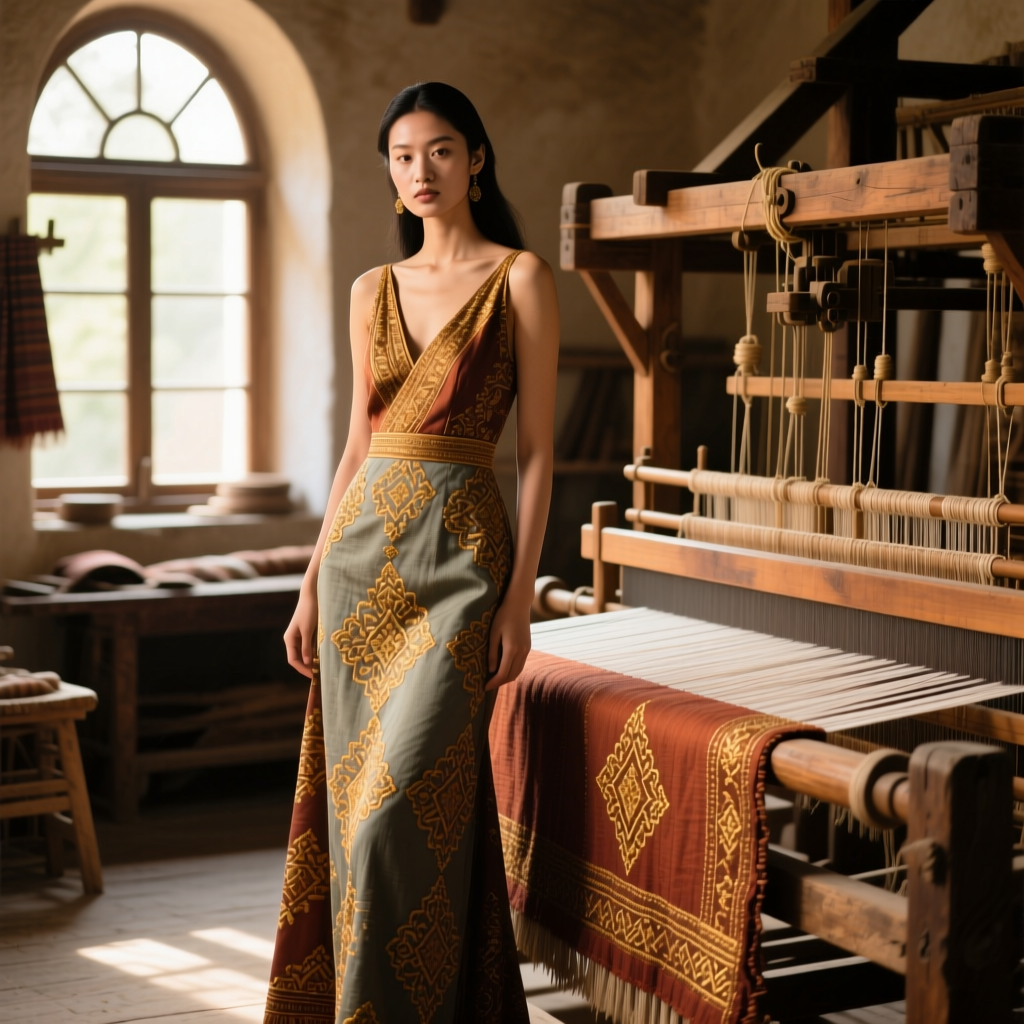
Ethiopian Shemma: Handwoven Cotton Art
The National Cloth
The shemma (also shama) is Ethiopia's traditional handwoven cotton textile — a large rectangular cloth draped over the body as a shawl, toga-like wrap, or head covering. It's the foundation of Ethiopian traditional dress, worn by women and men for everyday life and elevated with elaborate borders for ceremonies.
The Shemane Weavers
Shemma weaving is practiced by shemane — hereditary artisans, often from the Beta Israel (Ethiopian Jewish) community. Using a horizontal pit loom, a shemane weaves narrow strips of cotton (about 90cm wide) that are then sewn together to create the full cloth. The base fabric is typically white or off-white cotton, providing a canvas for the decorative borders.
Tibeb: The Art of the Border
The tibeb is the decorative border woven into the shemma's edges — often the most elaborate and time-consuming part of production. Traditional tibeb features geometric patterns in red, green, gold, and blue threads. For weddings and holidays, tibeb can be several inches wide with complex cross-stitch-like patterns that tell stories or convey social status.
- Base cloth: white handwoven cotton strips
- Tibeb borders: colorful geometric patterns
- Netela: women's lightweight shemma shawl
- Gabi: thicker, blanket-weight men's version
- Modern: machine-woven alternatives and designer tibeb