Māori Kākahu: The Sacred Art of Cloak Weaving Heritage
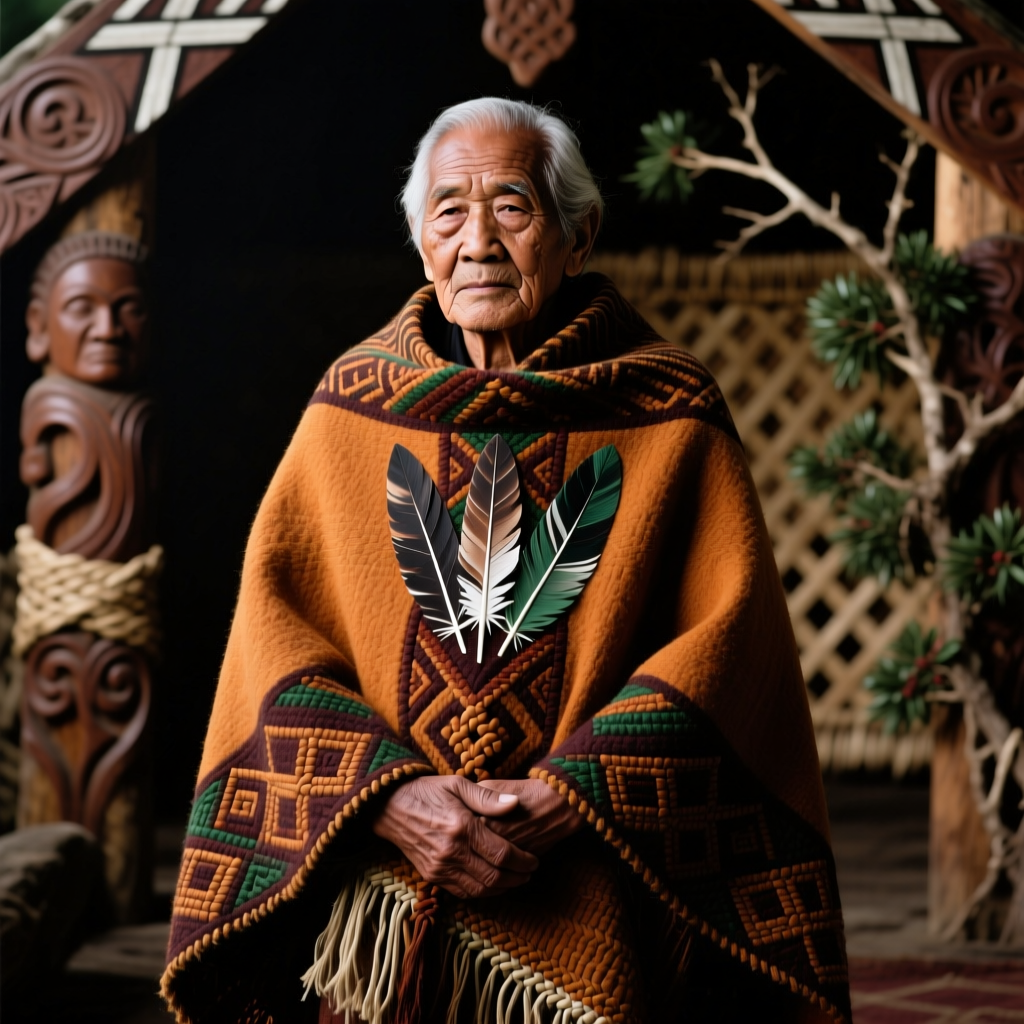
The art of Māori kākahu — handwoven cloaks — represents one of the most profound textile traditions in the world. Far more than garments worn for warmth or adornment, kākahu are taonga (treasures) imbued with mana (spiritual authority), whakapapa (genealogy), and the living essence of the ancestors who first twisted flax fibers between their fingers centuries ago. Each cloak tells a story woven into its very fabric: a story of land, lineage, loss, and resilience. To understand kākahu is to understand the soul of Aotearoa New Zealand and the enduring genius of Māori material culture.
When early Polynesian navigators arrived in Aotearoa, they encountered a climate far cooler than the tropical islands they had departed. The plants they brought — such as aute (paper mulberry), used for bark cloth in warmer Polynesian societies — struggled to thrive. This environmental challenge sparked one of the great adaptive achievements in textile history: the transformation of harakeke (New Zealand flax, Phormium tenax) into extraordinarily refined garments through the technique of whatu, or finger weaving. Over generations, Māori weavers developed a repertoire of techniques, patterns, and adornments that elevated cloak-making from survival craft to high art form, recognized today as one of the most sophisticated indigenous textile traditions on Earth.
At The Garment Atlas, we believe that understanding the deep roots of clothing traditions enriches our relationship with what we wear. The story of kākahu invites us to consider garments not as disposable commodities but as vessels of identity, memory, and cultural continuity.
Cultural Significance: Kākahu as Living Ancestors
In te ao Māori — the Māori worldview — a kākahu is never merely an object. It is a taonga tuku iho, a treasure handed down through generations, carrying the wairua (spirit) of every person who has worn it, touched it, or contributed to its creation. When a weaver sits at her loom — or more accurately, when she suspends her warp threads from a traditional frame and begins the rhythmic work of whatu — she enters into a relationship with the materials, the patterns, and the ancestors who established those patterns before her.
The concept of mana is central to understanding kākahu. A cloak worn by a rangatira (chief) at significant events absorbs and radiates the mana of that person and those occasions. Korowai, the prestigious cloaks adorned with hukahuka (tassels) or feathers, were worn during ceremonies of great import: weddings, tangihanga (funerals), the welcoming of distinguished visitors, and the conferring of titles. To be wrapped in a kākahu of high status was to be enveloped in the collective strength and dignity of one's whānau (family), hapū (sub-tribe), and iwi (tribe).
Kākahu also played critical roles in diplomacy and peacemaking. The presentation of a fine cloak could seal an alliance, honor a treaty, or express grief and reconciliation. In some traditions, a cloak laid upon the ground before an adversary signaled a desire for peace — the garment serving as an offering of vulnerability and trust. The famous metaphor "Te kākahu o te whakaaro" — the cloak of thought — reminds us that ideas and intentions, like garments, can shelter or expose, protect or constrain.
The relationship between weaver and cloak is deeply personal and governed by tikanga (customary protocols). Many weavers observe spiritual practices during creation: karakia (prayers) may be recited when harvesting harakeke, certain foods may be avoided during weaving, and completed cloaks are often named — sometimes after ancestors, events, or natural phenomena. A named cloak becomes a person in its own right, with its own whakapapa and its own story to carry forward. This perspective stands in stark contrast to Western notions of clothing as interchangeable, mass-produced, and disposable. For those exploring the world's traditional garments, few cultures invest as much spiritual meaning into a single woven piece.
The Craftsmanship of Whatu: Materials, Methods, and Mastery
The creation of a kākahu begins long before the first thread is twisted. It begins in the harakeke swamp, where the weaver selects leaves with care, knowledge, and reverence. Not all flax is equal: different cultivars — known to Māori by specific names such as Tihore, Paretaniwha, and Hīnani — yield fibers of varying length, strength, softness, and color. A master weaver knows which cultivar suits which purpose, much as a vintner understands the character of different grape varieties.
The process of extracting fiber from the leaf is called haro. The weaver uses a mussel shell or a sharp edge to scrape away the green outer layer of the leaf, revealing the long, pale fibers within — the muka. These fibers are then washed, beaten, and sometimes sun-bleached to achieve the desired softness and whiteness. For finer cloaks, the muka is rolled against the leg in a technique called miro, creating fine, strong threads of remarkable consistency. This preparatory work alone can take weeks or months, and it is considered as essential to the artistry as the weaving itself.
The weaving technique known as whatu is a form of finger twining — distinct from the loom weaving developed in Europe and Asia. The weaver works without a conventional loom, suspending the warp threads (whenu) from a frame or between two upright poles. Using only her fingers, she twists pairs of weft threads (aho) around the warp in patterns that create the fabric's structure. The fundamental technique, whatu aho rua (two-pair twining), produces a strong, flexible fabric. More complex variations — whatu aho toru (three-pair twining) and intricate decorative techniques — allow the weaver to create patterns, textures, and shaped forms.
The creation of a fine kākahu is a feat of patience and precision. A large korowai may require over a year of dedicated work. The weaver must maintain consistent tension across hundreds of warp threads, execute thousands of twining movements with uniform accuracy, and integrate decorative elements — feathers, tags, dyed fibers — at precisely calculated intervals. The physical toll is significant: weavers often speak of aching hands, strained eyes, and the meditative discipline required to sustain focus across countless hours of repetitive motion.
Dyeing techniques added further dimension to kākahu artistry. Traditional dyes were derived from native plants and minerals: the bark of the tanekaha tree produced rich reds and browns, while paru (iron-rich mud) created deep blacks prized for their permanence and depth. The process of dyeing muka with paru — involving soaking, oxidation, and careful monitoring — required chemical knowledge refined over generations. The striking black-and-white geometric patterns seen in tāniko borders (decorative bands woven using a related finger-weaving technique) showcase the aesthetic sophistication achievable with these natural dyes. Readers interested in natural dyeing traditions may also enjoy our exploration of indigo dyeing heritage across cultures.
Types and Regional Variations of Kākahu
The term "kākahu" encompasses a remarkable diversity of cloak types, each with distinct characteristics, purposes, and regional associations. Understanding this variety reveals the depth and adaptability of Māori textile tradition.
Korowai
Perhaps the most widely recognized kākahu, korowai are cloaks adorned with hukahuka — rolled and dyed tassels that create a dramatic, textured surface. The hukahuka are formed by twisting dyed muka threads into elongated tags, which are then incorporated into the weaving at regular intervals. A fully adorned korowai, sometimes called a korowai karure, presents a surface alive with movement and light. Regional variations exist in the length, density, and coloring of the hukahuka, with some East Coast weavers favoring particularly long and abundant tassels.
Kahu Huruhuru (Feather Cloaks)
Feather cloaks represent the pinnacle of kākahu prestige. Individual feathers — traditionally from native birds such as the kererū (wood pigeon), kākā (brown parrot), tūī, and kiwi — are woven into the fabric base, each feather secured by its quill within the twining structure. The most revered of these is the kahu kiwi, cloaked entirely in the soft, hair-like feathers of the kiwi bird. Because kiwi feathers are extremely fine and must be gathered with great care — often from birds found deceased in the forest — a full kahu kiwi represents years of patient collection and months of weaving. These cloaks are among the most sacred taonga in Māori culture, often held in tribal collections and brought forth only for occasions of the highest significance.
Kahu Kurī (Dog Skin Cloaks)
Before European contact, Māori kept kurī — Polynesian dogs — whose pelts were used to create kahu kurī, cloaks of extraordinary warmth and status. Strips of dog skin, sometimes with the fur intact, were woven or attached to a woven base. These cloaks were worn by high-ranking individuals and were prized for both their practical insulation and their visual impact. The tradition of kahu kurī declined following the extinction of the kurī breed after European arrival, making surviving examples exceptionally rare and culturally precious.
Parawai and Kaitaka
Parawai are fine, plain cloaks woven from meticulously prepared muka, prized for their softness and the quality of their weave rather than surface adornment. A closely related form, the kaitaka, features a distinctive border of tāniko weaving — the geometric, colorful finger-woven bands that are among the most recognizable elements of Māori textile art. Kaitaka are considered among the most refined and technically demanding of all kākahu forms, requiring exceptional skill in both the body weaving and the tāniko borders. Regional styles of tāniko patterns — such as the niho taniwha (teeth of the taniwha), pātiki (flounder), and kaokao (rib pattern) — serve as markers of tribal identity, with certain patterns strongly associated with specific iwi.
Rain Cloaks and Practical Garments
Not all kākahu were created for ceremony. Practical rain cloaks, known variously as pākē or hīnau cloaks, were woven with overlapping tags of raw flax or hīnau bark that shed water effectively, functioning much like thatch on a roof. These working garments demonstrate the pragmatic intelligence of Māori textile tradition — the ability to engineer functional clothing from natural materials without sacrificing the aesthetic sensibility that pervades all Māori craft. For more on how different cultures engineered garments for protection, see our guide to outerwear heritage and evolution.
Disruption, Survival, and Modern Preservation
The colonization of Aotearoa New Zealand brought profound disruption to Māori textile traditions. The introduction of European woolen blankets and mass-produced clothing reduced the everyday necessity of kākahu, while land confiscation, population decline, and forced assimilation eroded the social structures through which weaving knowledge was transmitted. Missionaries discouraged many traditional practices, and the intergenerational transmission of complex weaving techniques — always dependent on close, sustained teacher-student relationships — was interrupted in many communities.
Yet the art of kākahu never died. Throughout the colonial period and into the modern era, dedicated weavers — predominantly women, as weaving has traditionally been a wāhine (women's) domain — preserved and transmitted their knowledge in the face of enormous pressure. The Māori Women's Welfare League, founded in the mid-twentieth century, played a crucial role in organizing weaving workshops and encouraging the revival of traditional techniques. Master weavers such as Diggeress Te Kanawa (of Ngāti Maniapoto and Ngāti Kinohaku descent) became national treasures, training new generations and demonstrating that kākahu weaving was not a relic of the past but a living, evolving art form.
Today, kākahu weaving is experiencing a powerful renaissance. Māori fashion designers incorporate kākahu elements and principles into contemporary garments, bringing the tradition to international runways and galleries. Institutions such as Te Papa Tongarewa (the Museum of New Zealand) hold significant kākahu collections and have invested in conservation research to preserve fragile historical cloaks. Academic programs in Māori visual arts now include weaving as a serious discipline, and marae (tribal meeting grounds) across Aotearoa continue to commission new kākahu for ceremonial use.
The digital age has introduced both opportunities and tensions. Online platforms allow weavers to share techniques, connect across distances, and reach global audiences. However, issues of cultural appropriation — the use of kākahu patterns, forms, or imagery by non-Māori designers without understanding, permission, or respect — remain a significant concern. Many Māori advocates emphasize that kākahu are not merely aesthetic resources to be borrowed freely but taonga protected by the principles of tino rangatiratanga (self-determination) and the Treaty of Waitangi.
Conservation of historical kākahu presents its own challenges. Natural fibers degrade over time, particularly when exposed to light, humidity fluctuations, and pests. Museums worldwide are developing specialized storage and display protocols informed by both Western conservation science and Māori tikanga — recognizing, for instance, that a taonga kākahu may need to be treated differently than a textile artifact in a purely material sense. Some iwi have repatriated ancestral cloaks from overseas institutions, bringing taonga home to their communities and restoring the spiritual connections that physical separation had strained. Those interested in how cultural garments are preserved globally may find our article on textile conservation of heritage garments illuminating.
Kākahu in Contemporary Life and Global Recognition
In contemporary Aotearoa, kākahu occupy a unique space where ancient tradition meets modern identity. They are worn at graduations, weddings, political inaugurations, and international events — visible assertions of Māori presence, pride, and continuity. When Māori leaders and dignitaries wear kākahu on the world stage, they carry with them the mana of their ancestors and the message that indigenous culture is not a historical curiosity but a vital, evolving force.
The global fashion and textile community has increasingly recognized the sophistication of Māori weaving. Exhibitions in major international museums have showcased kākahu alongside the world's finest textile arts, prompting new appreciation for the technical complexity and aesthetic power of whatu. Textile scholars have documented the mathematical precision underlying tāniko patterns — geometric systems that encode tribal histories and cosmological concepts in woven form. The relationship between kākahu and other world textile traditions — from West African kente cloth to Andean backstrap weaving — reveals both the universality of human textile impulse and the extraordinary specificity of each cultural expression. Our coverage of kente cloth weaving heritage offers a compelling parallel worth exploring.
For those who wish to engage respectfully with kākahu tradition, the path begins with education and relationships. Supporting Māori weavers through ethical purchase, attending public exhibitions, studying the cultural context of garments, and deferring to Māori voices on matters of protocol and meaning are all meaningful forms of engagement. The story of kākahu is, ultimately, a story about what clothing can be at its most profound: a medium through which a people expresses who they are, where they come from, and what they value most deeply.
As the threads of harakeke continue to pass through the fingers of new generations of weavers, the kākahu tradition endures — not as a museum piece but as a living practice, evolving with each cloak created, each story woven, each ancestor remembered. In a world increasingly aware of the environmental and spiritual costs of fast fashion, the philosophy embedded in kākahu — that garments should be made with intention, imbued with meaning, and treasured across lifetimes — offers wisdom that extends far beyond the borders of Aotearoa.
Frequently Asked Questions
What is the difference between a kākahu and a korowai?
Kākahu is the general Māori term for cloak or garment, encompassing all types of woven cloaks. Korowai is a specific type of kākahu distinguished by its adornment with hukahuka — rolled and dyed tassels woven into the fabric. While korowai are the most widely recognized style internationally, they represent just one category within the broader kākahu tradition. Other types include kahu huruhuru (feather cloaks), kaitaka (fine cloaks with tāniko borders), and parawai (plain fine cloaks). Using "korowai" to describe all Māori cloaks is a common oversimplification that overlooks the rich diversity of the tradition.
How long does it take to weave a traditional kākahu?
The time required varies enormously depending on the type, size, and complexity of the cloak. A simple rain cloak might be completed in several weeks, while a fine kahu kiwi (kiwi feather cloak) can take several years from the initial gathering of feathers to the final finishing. A korowai with extensive hukahuka typically requires many months of dedicated work. This timeline does not include the preparatory stages — harvesting and processing flax, preparing and dyeing fibers, and collecting feathers — which can add months or even years before weaving begins. The investment of time is considered an essential part of the cloak's value and mana.
Can non-Māori wear or own a kākahu?
This question involves nuanced cultural considerations. Kākahu are taonga — cultural treasures — with deep spiritual significance. While some Māori weavers have gifted or sold cloaks to non-Māori individuals, and kākahu have been presented to dignitaries of all backgrounds as marks of respect, the wearing and ownership of kākahu by non-Māori should always be approached with sensitivity, understanding, and ideally, direct guidance from Māori communities. Purchasing mass-produced imitations or wearing kākahu-inspired garments without understanding their significance is generally considered disrespectful. The most important principle is to listen to Māori voices on this matter and to prioritize relationships and respect over acquisition.
What materials are used in traditional kākahu weaving?
The primary material is muka — the prepared fiber of harakeke (New Zealand flax, Phormium tenax). Different cultivars of harakeke are selected for specific purposes based on their fiber characteristics. Additional materials include native bird feathers (kiwi, kererū, kākā, tūī, and others), traditional dyes from tanekaha bark (red-brown) and paru (iron-rich mud for black), dog skin (historically, for kahu kurī), and various plant materials for tags and decorative elements. Contemporary weavers sometimes incorporate modern materials alongside traditional ones, reflecting the living, evolving nature of the art form while maintaining deep respect for customary practices.
Where can I learn more about or see authentic kākahu?
Several institutions hold significant kākahu collections and offer educational resources. Te Papa Tongarewa in Wellington, New Zealand, houses one of the most important collections and provides both physical exhibitions and online resources. The Auckland War Memorial Museum and regional museums throughout Aotearoa also hold notable collections. For those interested in learning the craft, organizations such as Te Roopu Raranga Whatu o Aotearoa (the national Māori weavers' collective) offer workshops and connections to master weavers. Online resources through Māori arts organizations and academic publications on Māori textile arts provide further avenues for respectful study. Always seek out sources created by or in partnership with Māori communities to ensure accuracy and cultural integrity.