Ceremonial Headwear: Cultural Significance
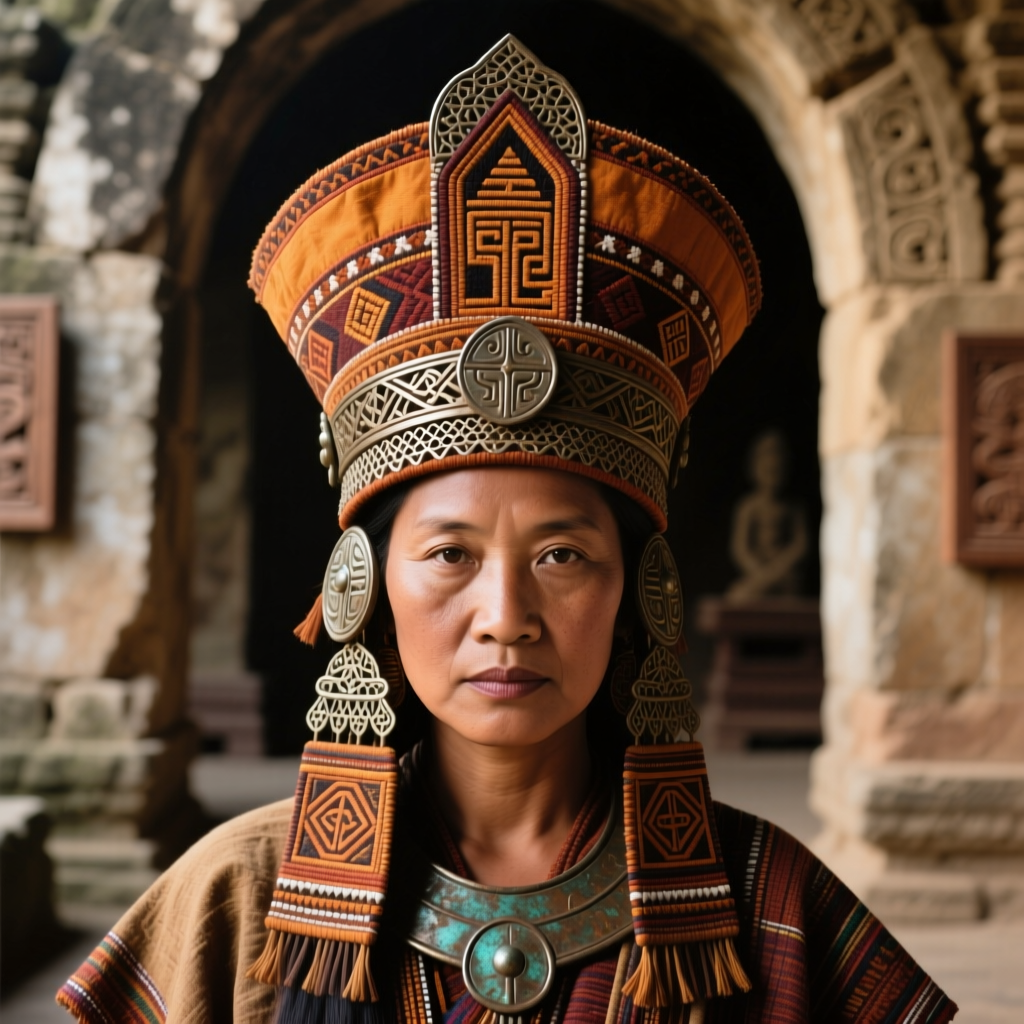
The human head has long been revered across global cultures as the seat of the soul, the intellect, and the divine spark. Because of this profound anatomical and spiritual elevation, the act of adorning the head is rarely a mere exercise in vanity or fashion. Throughout human history, ceremonial headwear has served as a powerful visual language, communicating a wearer’s spiritual authority, social rank, marital status, and connection to the ancestral realm. From the intricate beadwork of West African royal crowns to the sweeping feathered bonnets of the North American Plains, the garments we place upon our heads during moments of deep significance carry the weight of entire cosmologies.
Anthropologists and historians of dress have long noted that while clothing protects the body and signals general societal roles, headwear operates on a different axis. It reaches upward, drawing the eye toward the heavens and acting as a conduit between the earthly plane and the divine. To understand ceremonial headwear is to understand the very architecture of human belief systems. This comprehensive guide explores the multifaceted significance of traditional headdresses, the masterful craftsmanship required to create them, and the ongoing efforts to preserve these sacred garments for future generations.
The Spiritual and Cultural Weight of the Crown
In many traditional societies, the head is considered the most sacred part of the body, often viewed as the point of contact with the divine. This concept, sometimes referred to in anthropological terms as the axis mundi or the center of the world, positions the crown of the head as a spiritual antenna. Ceremonial headwear is designed to amplify this connection, serving as a physical manifestation of spiritual power, divine right, or ancestral blessing.
Consider the beaded crowns, or Ade, of the Yoruba people in West Africa. These magnificent conical crowns are not simply symbols of political power; they are deeply spiritual vessels. The intricate beadwork, often featuring stylized faces and geometric patterns, represents the ancestors and the divine authority of the Orishas (deities). Crucially, many Yoruba crowns feature a veil of beads that hangs over the wearer’s face. This veil is not meant to hide the monarch’s identity, but rather to shield onlookers from the overwhelming spiritual power and divine energy that radiates from the ruler’s gaze during sacred rites.
Similarly, among the Indigenous peoples of the North American Plains, the eagle feather war bonnet is a garment of immense spiritual gravity. Eagles are revered as messengers to the Creator, flying higher than any other bird and thus possessing a closer relationship with the divine. A feather is not merely taken; it must be earned through acts of profound bravery, leadership, or spiritual devotion, and it must be gifted by a respected elder. The headdress, therefore, is a living resume of a leader’s spiritual and communal merit. To wear such a headdress without having earned the right is considered a deep spiritual transgression, highlighting how ceremonial headwear is inextricably linked to moral and ethical standing within the community.
For a deeper dive into how spiritual beliefs dictate the creation of sacred garments, explore our extensive guide on symbolism in royal dress, which unpacks the hidden meanings woven into historical regalia.
Masterful Craftsmanship and Sacred Materials
The creation of ceremonial headwear is rarely a mundane manufacturing process; it is, in itself, a ritual. The artisans tasked with crafting these pieces are often viewed as spiritual conduits, individuals who possess the rare ability to transform raw, earthly materials into vessels of divine power. The materials chosen are never arbitrary. They are selected for their rarity, their durability, and their inherent spiritual properties.
In pre-Columbian Mesoamerica, the art of featherworking, or amantecayotl, was elevated to a sacred science. The most prized material was the iridescent green feather of the Resplendent Quetzal. Because the quetzal was associated with the feathered serpent deity Quetzalcoatl, its feathers were considered more valuable than gold. Artisans spent countless hours carefully harvesting, sorting, and tying these delicate feathers onto intricate netting or wooden armatures to create towering headdresses for rulers and priests. The craftsmanship required to ensure the feathers caught the light in specific ways during ritual dances demonstrates a profound understanding of both material science and theatrical spirituality.
In East Asia, particularly during the Ming Dynasty in China, the Fengguan (Phoenix Crown) worn by empresses and noblewomen during coronations and weddings was a masterpiece of metallurgical and textile engineering. These crowns were adorned with intricate filigree gold, thousands of seed pearls, and carved jade. Jade, in Chinese culture, represents purity, moral integrity, and immortality. The inclusion of jade in a ceremonial headdress was believed to protect the wearer from malevolent spirits and ensure a harmonious, enduring lineage. The application of tian-tsui, the delicate art of inlaying vibrant kingfisher feathers into gold settings, required a level of patience and precision that took years to master.
The creation of these garments often involved strict taboos. Artisans might be required to fast, abstain from certain activities, or recite specific prayers while working on a sacred crown. The physical labor was inseparable from the spiritual intent. To learn more about the historical techniques used to create these breathtaking pieces, visit our archive on heritage textile craftsmanship, where we detail the ancestral methods passed down through generations of master artisans.
Regional Variations and Symbolic Motifs
While the impulse to crown the head during moments of significance is a universal human trait, the aesthetic expressions and symbolic motifs vary wildly across different geographies and climates. These regional variations offer a fascinating window into the local environments, historical migrations, and unique cosmological views of diverse cultures.
The Americas: Feathers, Gold, and Woven Earth
Beyond the Mesoamerican feathered headdresses, the Indigenous peoples of the Amazon basin utilize a stunning array of natural materials to create ceremonial headpieces. Woven palm fibers, vibrant macaw feathers, jaguar teeth, and carved bone are combined to create crowns that connect the wearer to the spirit of the jungle and the animal kingdom. In the Andean regions, ceremonial headwear often takes the form of elaborately woven hats and llautus (braided headbands) that denote specific village affiliations, agricultural cycles, and participation in syncretic festivals that blend Indigenous Andean beliefs with Catholic traditions.
Asia: The Weight of Heaven and Earth
In Japan, the Shinto and imperial courts utilize the Kanmuri, a stiff, silk-lacquered headpiece with a distinctive forward-leaning pennon. Unlike the towering, heavy crowns of other cultures, the Kanmuri is understated, reflecting the Shinto emphasis on purity, subtlety, and harmony with nature. Conversely, in the Indian subcontinent, the ceremonial turban, or Safa, particularly within Rajput and Sikh traditions, is a voluminous, brightly colored garment that signifies honor, martial prowess, and spiritual devotion. The meticulous wrapping of the turban is a meditative process, with every fold carrying specific cultural meaning. Discover the intricate wrapping techniques and regional differences in our dedicated guide to the history and styling of the turban.
Europe and the Mediterranean: Diadems, Mitres, and Wreaths
European ceremonial headwear has historically been dominated by the metallurgical arts, with gold, silver, and precious gemstones forged into diadems and crowns that signify divine right and feudal authority. However, in ecclesiastical contexts, the mitre of the bishop or the tiara of the pope utilizes stiffened linen, silk, and gold thread to represent the flames of the Holy Spirit and the dual authority over spiritual and temporal realms. In folk traditions across the Mediterranean and Eastern Europe, ceremonial headwear takes a more ephemeral form: the floral wreath. Worn during midsummer festivals and weddings, crowns of woven myrtle, olive, or wildflowers symbolize fertility, the cyclical nature of the seasons, and the wearer’s connection to the earth.
Africa: Beadwork, Basketry, and Ancestral Threads
African ceremonial headwear is as diverse as the continent itself. In East Africa, the woven basketry hats of various pastoralist groups are adorned with cowrie shells and ostrich feathers, serving as markers of age-sets and initiation status. In Southern Africa, beaded headbands and crowns communicate complex messages regarding marital status, wealth, and clan identity, utilizing a highly developed color-coded language where specific combinations of beads convey specific social realities.
Rites of Passage and Matrimonial Headpieces
Ceremonial headwear plays a pivotal role in rites of passage—the transitional moments in a human life where an individual moves from one social or spiritual state to another. Anthropologist Victor Turner described this transitional phase as liminality, a threshold state where the individual is neither what they were nor what they will become. During this vulnerable and sacred threshold, headwear acts as a protective shield and a public declaration of transformation.
Nowhere is this more evident than in matrimonial ceremonies. Across the globe, the bridal headpiece is a focal point of the wedding ritual. In Western traditions, the bridal veil has roots in ancient Roman and Greek customs, where the flammeum (a flame-colored veil) was used to protect the bride from evil spirits and signify her modesty and transition into a new family lineage. In Eastern European folk traditions, the vinok, a crown woven from fresh flowers and herbs, is worn by unmarried women and plays a central role in wedding divination rituals and the ceremonial unbraiding of the bride’s hair, marking her passage into married life.
Coming-of-age ceremonies also rely heavily on headwear to signal a shift in societal responsibility. In various Indigenous cultures of the Pacific Northwest, the gifting of a carved wooden frontlet or a woven cedar bark headband during a potlatch signifies a young person’s assumption of adult responsibilities and their right to inherit ancestral names and privileges. In Jewish tradition, the donning of the kippah or the wrapping of the tefillin (phylacteries, which include a head tefillin) during a Bar Mitzvah physically marks the transition into religious adulthood and the acceptance of the commandments.
The garments worn during these profound life transitions are rarely discarded; they become cherished heirlooms, carrying the emotional and spiritual resonance of the ritual long after the event has concluded. For a closer look at how these transitional garments are styled and preserved, explore our comprehensive resource on traditional bridal attire and heritage wedding customs.
Modern Preservation, Repatriation, and Cultural Respect
Today, the legacy of ceremonial headwear sits at the complex intersection of museum curation, cultural revitalization, and the ongoing movement for indigenous rights. For over a century, countless sacred headdresses, crowns, and ritual masks were removed from their communities of origin, often under coercive or colonial circumstances, and placed behind glass in Western institutions. In these sterile environments, stripped of their context, movement, and the living bodies they were meant to adorn, these garments were reduced to mere ethnographic curiosities.
The modern repatriation movement seeks to correct this historical injustice. Indigenous communities and sovereign nations are increasingly demanding the return of their sacred headwear, arguing that these items are not static artifacts of a dead past, but living entities that require specific care, handling, and ceremonial use to maintain the spiritual health of the community. When a sacred war bonnet or a royal beaded crown is returned to its rightful custodians, it is often not placed in a local museum, but rather reintegrated into active ceremonial life, fulfilling the purpose for which it was originally created.
Simultaneously, there is a powerful movement of cultural revitalization among indigenous and traditional artisans. Recognizing that the knowledge required to harvest specific feathers, carve traditional woods, or weave ancestral patterns was nearly lost due to assimilation policies, a new generation of makers is actively researching, recovering, and practicing these heritage techniques. They are creating new ceremonial headwear that honors the past while serving the spiritual needs of their contemporary communities.
For the broader public, engaging with the heritage of ceremonial headwear requires a posture of deep respect and an understanding of the boundary between cultural appreciation and cultural appropriation. Wearing a mass-produced imitation of a sacred headdress as a festival costume strips the garment of its earned spiritual weight and reduces a profound cultural heritage to a mere aesthetic. True appreciation involves learning the history, supporting indigenous artisans, and respecting the sacred boundaries that surround these extraordinary garments.
Frequently Asked Questions
What defines a piece of headwear as "ceremonial"?
Ceremonial headwear is defined by its context of use and its symbolic intent rather than just its physical appearance. A garment is considered ceremonial if it is specifically designed and reserved for rituals, rites of passage, religious observances, or the exercise of sacred authority. Unlike everyday hats meant for weather protection or general fashion, ceremonial headpieces are often crafted from rare, sacred materials, require specific rituals to put on or take off, and carry deep spiritual or societal meanings that are recognized by the community.
Why are certain feathers or materials restricted in traditional headdresses?
In many traditional belief systems, materials are not viewed as inert objects but as living entities with their own spiritual agency. Feathers from specific birds of prey, pelts from apex predators, or metals mined from sacred mountains are believed to carry the spirit and power of their source. Access to these materials is often restricted to individuals who have undergone specific initiations, proven their moral character, or earned the right through acts of service. Wearing restricted materials without the proper spiritual authorization is believed to invite misfortune, spiritual imbalance, or communal disharmony.
How are museums addressing the repatriation of sacred headpieces?
Museums are increasingly adopting ethical frameworks that prioritize the spiritual and cultural rights of source communities over the desire to retain objects for public display. This involves conducting provenance research to identify how items were acquired, consulting with indigenous elders and cultural custodians, and facilitating the physical return of sacred headwear. In cases where immediate repatriation is legally complex, museums may establish shared stewardship agreements, allowing communities to access the items for ceremonial use, dictate how the items are stored, and control the narrative and imagery associated with the garments.
What is the historical difference between a crown, a diadem, and a tiara?
While often used interchangeably in modern parlance, these terms have distinct historical and structural origins. A crown typically encircles the entire head and often features vertical elements (like spikes, arches, or fleurs-de-lis) that reach upward, symbolizing ultimate sovereign or divine authority. A diadem, originating in antiquity, was originally a simple silk ribbon or band tied around the head to denote royal status, which later evolved into a solid metal band encircling the brow without the towering verticality of a crown. A tiara is generally a semi-circular ornament worn on the front of the head, historically associated with high-ranking women, papal regalia (the triple tiara), or specific courtly presentations, rather than absolute sovereign rule.
The study of ceremonial headwear reveals a profound truth about the human experience: our deepest beliefs, our most vital social structures, and our most sacred transitions are inextricably linked to the garments we create. By honoring the craftsmanship, the spiritual weight, and the cultural contexts of these extraordinary pieces, we ensure that the crowns of our global heritage continue to inspire and educate for generations to come.