The Heritage of Embroidery: Threads of History, Culture, and Craftsmanship
The Heritage of Embroidery: Threads of History, Culture, and Craftsmanship
Long before the advent of modern textile manufacturing, the needle was a tool of profound expression, storytelling, and survival. Embroidery—the art of decorating fabric or other materials using a needle to apply thread, yarn, or supplementary embellishments—is one of the oldest and most universally practiced crafts in human history. It is a discipline that transcends mere decoration, serving as a visual language that records the triumphs, beliefs, and social structures of civilizations across the globe. From the intricate silk workings of ancient dynasties to the rugged, utilitarian stitches of working-class garments, the heritage of embroidery is woven into the very fabric of human culture.
The archaeological record provides breathtaking glimpses into this ancient art form. Discoveries in the Pazyryk tombs of the Altai Mountains have revealed felt and wool textiles adorned with complex chain stitches and animal motifs, preserved in permafrost for millennia. Similarly, ancient Egyptian tombs have yielded fragments of embroidered linen, demonstrating that the desire to elevate the warp & weft of basic cloth into something extraordinary is a fundamental human impulse. To study embroidery heritage is to study the history of trade, the evolution of textile symbolism, and the tireless dedication of countless artisans whose names have been lost to time, but whose work remains immortalized in thread.
The Cultural Significance of Embroidered Garments
In many historical societies, embroidered garments were far more than aesthetic choices; they were rigid indicators of social stratification, wealth, and power. During various medieval and Renaissance periods in Europe, sumptuary laws strictly dictated who was permitted to wear specific types of embellishments. Goldwork and silver-gilt threads were reserved almost exclusively for royalty, the high clergy, and the uppermost echelons of the nobility. The sheer cost of materials, combined with the hundreds of hours of skilled labor required to produce a single heavily embroidered mantle or doublet, made these garments the ultimate display of economic and political might.
Beyond the royal courts, embroidery served as a vital medium for storytelling and mythological preservation. The most famous example is the Bayeux Tapestry, which, despite its name, is actually a masterful work of wool embroidery on linen. This monumental piece chronicles the events leading up to the Norman conquest of England, proving that the needle was often used as a historical pen. In folk traditions worldwide, embroidered motifs acted as a visual archive of local legends, agricultural cycles, and spiritual beliefs, passing down generational knowledge without the need for written text.
Spiritual protection is another cornerstone of embroidery heritage. In numerous global cultures, it was believed that evil spirits could enter the body through its openings. Consequently, the collars, cuffs, and hems of garments were heavily fortified with intricate, often red, geometric embroidery to act as spiritual armor. This practice is evident in the traditional folk dress of Eastern Europe, the Caucasus, and parts of Asia, where the global folk fashion silhouette is defined by these protective, talismanic borders. Furthermore, embroidery played a central role in rites of passage; a young woman’s trousseau, filled with hand-embroidered linens and garments, was a testament to her skill, patience, and readiness for marriage.
The Craftsmanship and Techniques of the Needle
To truly appreciate embroidery heritage, one must understand the intersection of material and method. The craftsmanship required to execute historical embroidery is staggering, demanding an intimate knowledge of tension, fabric grain, and color theory. Unlike weaving, which creates the structural foundation of a textile, embroidery is an additive process. It relies on the underlying fabric types—be it tightly woven linen, lustrous silk, or sturdy wool—to support the weight and movement of the decorative stitches.
The repertoire of hand embroidery techniques is vast and highly specialized. Surface embroidery, such as the crewelwork popular in the Jacobean era, utilizes a variety of stitches like the stem stitch, chain stitch, and long-and-short stitch to create shaded, painterly effects. Counted thread techniques, including cross-stitch and blackwork, rely on the precise geometry of the fabric’s weave, creating mathematical, repeating patterns that were highly favored in Tudor England. Stumpwork, a raised embroidery technique, incorporates wire, padding, and detached buttonhole stitches to create three-dimensional flora & fauna that literally stand off the surface of the fabric.
Perhaps the most revered and complex of all historical techniques is goldwork. Originating in the Middle East and perfected in medieval Europe as Opus Anglicanum (English Work), goldwork involves the application of metal threads to velvet or heavy silk. Because pure gold wire is too brittle and expensive to be pulled through fabric, artisans developed 'couching'—laying the metal thread on the surface of the fabric and securing it with tiny, nearly invisible silk stitches. Underside couching, a hallmark of Opus Anglicanum, pulls the metal thread slightly through the fabric, creating a flexible, shimmering surface that catches the light & shadow in a way that flat threads cannot. The incorporation of seed pearls, coral, and semi-precious stones further elevated these pieces into wearable treasures.
The preparation of materials was an art form in itself. Silk threads were dyed using complex recipes derived from natural dyes like madder root, indigo, and weld, resulting in colors that possessed a depth and vibrancy rarely matched by modern synthetics. Metallic threads were crafted by hammering gold or silver into impossibly thin leaves, cutting them into microscopic strips, and winding them around a silk or linen core. This meticulous preparation highlights the profound respect historical artisans held for their materials.
Regional Variations: A Global Tapestry of Stitches
The global tapestry of embroidery is defined by distinct regional variations, each shaped by local climate, available materials, and cultural philosophy. In Asia, the heritage of embroidery is deeply intertwined with philosophical concepts and imperial patronage. Chinese silk embroidery, particularly the Suzhou style, is renowned for its double-sided technique, where the image is perfectly rendered on both sides of a translucent silk gauze, with all knots and thread ends hidden. Motifs such as the dragon, the phoenix, and the lotus are not merely decorative; they are potent symbols of cosmic balance, imperial authority, and spiritual purity.
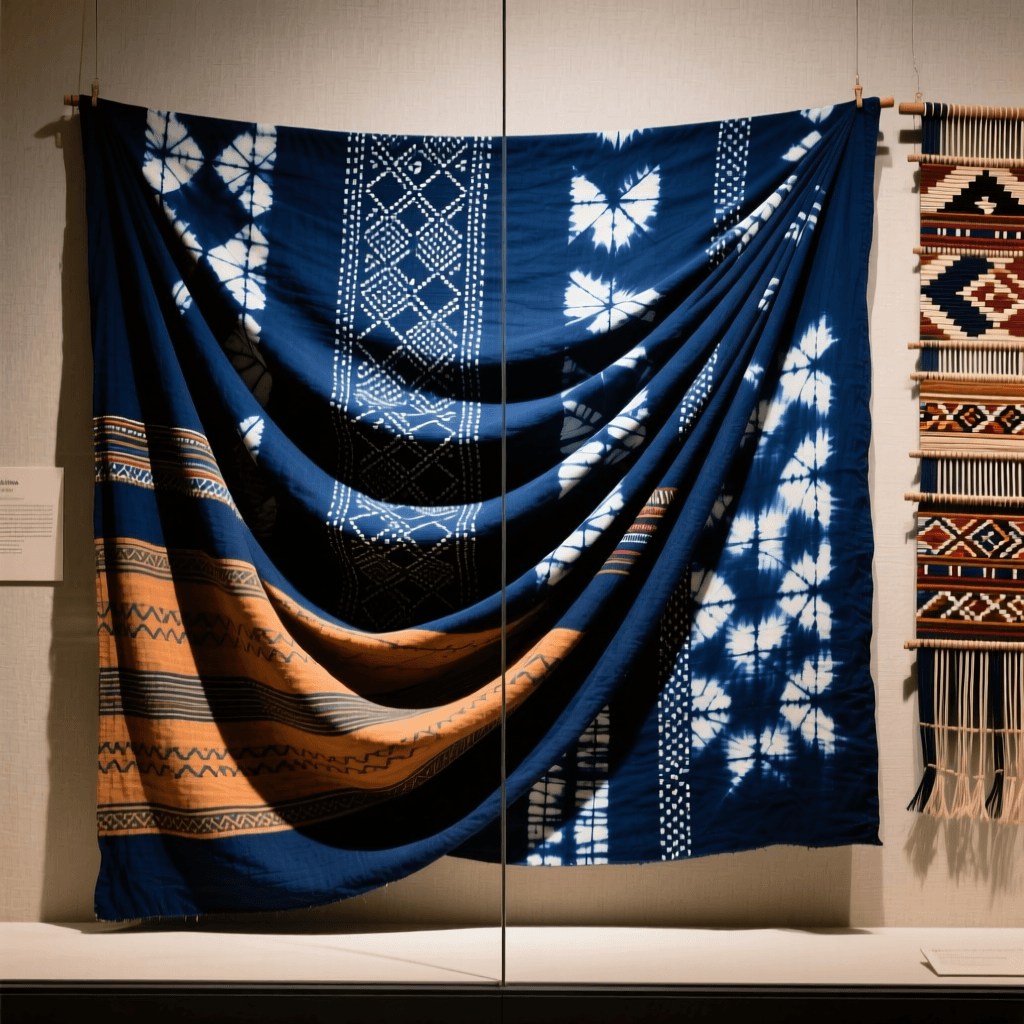
In Japan, embroidery takes on both highly formal and deeply utilitarian forms. Shishu, the traditional Japanese embroidery used on kimonos and obi sashes, employs silk and metallic threads to create elegant, nature-inspired motifs that reflect the changing seasons. Conversely, the sashiko heritage represents the ingenuity of the working class. Originating as a method to reinforce and insulate the cotton garments of farmers and fishermen, sashiko uses a simple running stitch in white thread on indigo-dyed cloth. What began as a necessity evolved into a stunning geometric art form, embodying the Japanese aesthetic of finding beauty in utility and imperfection.
In the Indian subcontinent, embroidery is a riot of color, texture, and opulence. Zardozi, a heavy metal embroidery technique introduced by the Mughal emperors, utilizes gold and silver wires, sequins, and beads to create lavish designs on velvet and silk, traditionally used for royal attire and ceremonial horse trappings. In stark contrast is Kantha, originating in the Bengal region. Kantha is born from the ethos of upcycling; old, soft cotton saris are layered together and quilted with thousands of tiny running stitches. The artisan then embroiders narrative scenes, folk motifs, and geometric borders, transforming discarded rags into cherished, multi-generational heirlooms.
Europe’s embroidery heritage is equally diverse. While the courts favored goldwork, rural communities developed distinct folk traditions. The Vyshyvanka of Eastern Europe features complex geometric and floral cross-stitch patterns, with specific color palettes and motifs acting as a regional identifier, much like a woven tartan. In Scandinavia, techniques like Hedebo from Denmark and Hardanger from Norway evolved to decorate household linens and traditional dress, utilizing drawn-thread work and cutwork to create delicate, lace-like effects that mimicked the intricate frost patterns of the northern winters.
In the Middle East and the Americas, embroidery serves as a powerful marker of identity and resistance. Palestinian Tatreez is a highly codified cross-stitch tradition where the motifs, colors, and placement of the embroidery on a woman’s thobe (dress) historically identified her specific village, marital status, and social standing. Similarly, the Otomi (or Tenango) embroidery of central Mexico features vibrant, fantastical flora & fauna on a white cotton background. These designs are deeply rooted in indigenous cosmology and the natural environment, serving as a vibrant assertion of cultural survival and artistic sovereignty.
The Evolution and Modern Preservation of Embroidery
The advent of the Industrial Revolution brought profound changes to the world of textiles. The invention of the sewing machine and, subsequently, computerized multi-head embroidery machines, democratized access to decorated garments. What was once the exclusive domain of the wealthy or the product of countless hours of domestic labor could now be mass-produced. While this made embellished clothing accessible to the general public, it also threatened the survival of traditional hand-embroidery techniques, pushing many regional styles to the brink of extinction.
However, the heritage of embroidery found a powerful ally in the realm of haute couture. In the fashion capitals of the world, specialized ateliers dedicated to the preservation of hand-embroidery became essential to the creation of high fashion. Techniques like Lunéville embroidery—a method of tambour beading performed from the reverse side of the fabric using a specialized hook—were kept alive by the demands of elite fashion houses. These ateliers act as living museums, where master artisans pass down the secrets of manipulating feathers, bugle beads, and silk ribbons to a new generation of craftsmen, ensuring that the pinnacle of haute couture details remains rooted in historical handcraft.
In recent times, the slow fashion movement has sparked a massive resurgence of interest in traditional embroidery. As consumers become increasingly disillusioned with the environmental and ethical costs of mass-produced clothing, there is a growing appreciation for the slow, deliberate, and deeply human process of hand embroidery. Artisan cooperatives around the world are finding new, global markets for their traditional work, allowing them to preserve their cultural heritage while achieving economic independence. Building a slow fashion wardrobe often involves seeking out these hand-embroidered pieces, valuing the slight irregularities and unique character that only a human hand can provide.
Preservation also extends to the physical care of historical garments. Museums and textile conservators employ rigorous scientific methods to stabilize fragile threads, halt the degradation of metallic yarns, and protect ancient dyes from light damage. For the individual collector or enthusiast, understanding vintage garment care is crucial. Proper storage, gentle cleaning methods, and an understanding of the specific vulnerabilities of different embroidery styles ensure that these tangible links to our past survive for future generations to study and admire.
Frequently Asked Questions
What is the oldest known example of embroidery?
While textiles are highly biodegradable and rarely survive in the archaeological record without specific environmental conditions, some of the oldest known examples of embroidery were discovered in the Pazyryk burials in the Altai Mountains of Siberia. Preserved in permafrost, these felt and wool textiles date back over two millennia and feature intricate chain stitching and animal motifs. Other ancient fragments have been found in Egyptian tombs and Scythian burial mounds, proving that the decorative use of the needle & thread was widespread in the ancient world.
How does hand embroidery differ from machine embroidery in heritage garments?
Hand embroidery possesses a distinct three-dimensional quality and organic irregularity that machines cannot replicate. A human artisan adjusts the tension of every single stitch based on the drape of the fabric and the desired texture, allowing for nuanced shading and complex, raised techniques like stumpwork or underside couching. Machine embroidery, while incredibly precise and efficient, tends to lie flat and possesses a uniform, synthetic sheen. In heritage garments, hand embroidery is also a historical record; the slight variations in stitch length and thread twist reveal the individual hand of the maker, adding a layer of intimacy and historical value to the piece.
Why are certain embroidery patterns specific to certain regions?
Regional embroidery patterns are the result of a complex interplay between local environment, available materials, and cultural belief systems. Historically, artisans used the flora & fauna native to their immediate surroundings as inspiration for their motifs. Furthermore, before the advent of global trade, communities were limited to the natural dyes that could be foraged or grown locally, resulting in distinct regional color palettes. Over centuries, these motifs and colors became codified, serving as a visual dialect that communicated a wearer’s village, social status, and spiritual beliefs to anyone who understood the local textile language.
How can I care for and preserve vintage embroidered garments?
Preserving vintage embroidered garments requires careful handling and specific storage conditions. Always store embroidered textiles flat or rolled in acid-free tissue paper to prevent the weight of the embroidery from distorting or tearing the base fabric. Avoid wire hangers, which can cause stress points. Keep the garments in a cool, dark, and dry environment, as ultraviolet light will rapidly fade historical dyes, and humidity can cause metallic threads to tarnish or mold to develop. When cleaning is necessary, consult a professional textile conservator, as the water-soluble dyes and delicate fibers used in historical embroidery can be easily destroyed by modern detergents and agitation.
Is traditional embroidery still relevant in modern fashion?
Absolutely. Traditional embroidery remains highly relevant, serving as a bridge between historical craftsmanship and contemporary design. Many modern designers collaborate directly with artisan cooperatives, integrating ancient techniques like Indian Zardozi, Mexican Otomi, or Palestinian Tatreez into modern silhouettes. This not only provides vital economic support to traditional craft communities but also enriches modern fashion with a depth of narrative and texture that digital printing and mass manufacturing cannot achieve. As the fashion industry increasingly values sustainability and artisanal authenticity, the heritage of embroidery continues to evolve, proving that the language of the needle is truly timeless.