The Art of the Stitch: Exploring Traditional Tailoring Methods
The Art of the Stitch: Exploring Traditional Tailoring Methods
The transformation of flat, two-dimensional woven fabric into a three-dimensional sculpture that contours the human body is one of the most enduring alchemies in human history. Long before the advent of automated cutting machines and fused synthetic interlinings, the creation of a garment was a deeply intimate, labor-intensive art form. The word "tailor" itself is rooted in the French tailleur, meaning "to cut," and the Latin sartor, meaning "to mend or patch." Yet, traditional tailoring methods encompass far more than the mere cutting of cloth; they represent a symphony of geometry, engineering, and artisanal handwork passed down through generations.
At The Garment Atlas, we believe that understanding the heritage of how our clothes are made is just as important as appreciating how they look. To wear a traditionally tailored garment is to wear a piece of living history. In this comprehensive exploration, we delve into the cultural significance, the meticulous craftsmanship, the distinct regional variations, and the modern preservation of traditional tailoring methods that continue to define the pinnacle of menswear and womenswear.
The Cultural Significance of the Tailor's Craft
Historically, the tailor was not merely a tradesperson but a confidant, an architect of social identity, and a guardian of sartorial codes. In the grand tailoring houses of London, Paris, and Naples, the relationship between a tailor and their client was built on decades of trust. A tailor understood the client's posture, their idiosyncrasies, their professional ambitions, and their social standing. The garment produced was a physical manifestation of the wearer's place in the world.
The foundation of this craft was laid by the ancient guild systems. Guilds protected the secrets of the trade, ensuring that knowledge of pattern drafting, fabric manipulation, and hand-stitching was transferred strictly from master to apprentice. This rigorous system of mentorship meant that a tailor spent years simply learning to sew a single type of buttonhole or properly press a seam before they were ever permitted to cut into expensive worsted wool. This reverence for the learning process instilled a deep cultural respect for the garments produced. Clothing was not disposable; it was an investment, an heirloom, and a testament to the artisan's skill.
Furthermore, traditional tailoring methods were inherently sustainable long before the term became a modern buzzword. Garments were constructed with generous inlays and seams, allowing them to be let out or taken in as the client's body changed over the decades. The philosophy was one of permanence and longevity, a stark contrast to the ephemeral nature of contemporary fast fashion.
The Anatomy of Craftsmanship: Core Traditional Techniques
To truly appreciate heritage tailoring, one must look beneath the surface of the fabric. The soul of a traditionally tailored jacket lies in its internal architecture and the handwork that brings it to life. For a deeper dive into the structural elements of menswear, our suit construction guide offers a detailed visual breakdown, but the core tenets of the craft can be summarized in three foundational pillars: canvas, ironwork, and hand-stitching.
The Living Canvas
In traditional tailoring, the lapel and front panels of a jacket are never fused with glue. Instead, they are supported by a floating canvas typically made from a blend of horsehair, camel hair, and cotton. This canvas acts as the skeletal structure of the garment. Through a technique known as pad stitching, the tailor sews the canvas to the wool using thousands of tiny, diagonal hand stitches. This allows the canvas to move independently of the outer fabric, creating a soft, rolling lapel that molds to the wearer's chest over time. A fused jacket will eventually bubble and stiffen, but a hand-canvassed garment only improves with age, taking on the unique shape of its owner.
The Magic of Ironwork
While cutting creates the basic shape, it is the heavy tailor's iron that sculpts the final silhouette. Traditional ironwork involves the strategic shrinking and stretching of wool fibers using heat, moisture, and pressure. A master tailor will stretch the fabric around the armhole to allow for forward movement, shrink the back neck to hug the collarbone, and mold the chest to create a three-dimensional drape that flat cutting simply cannot achieve. This manipulation of the warp and weft is what gives a bespoke jacket its celebrated "memory" and comfort.
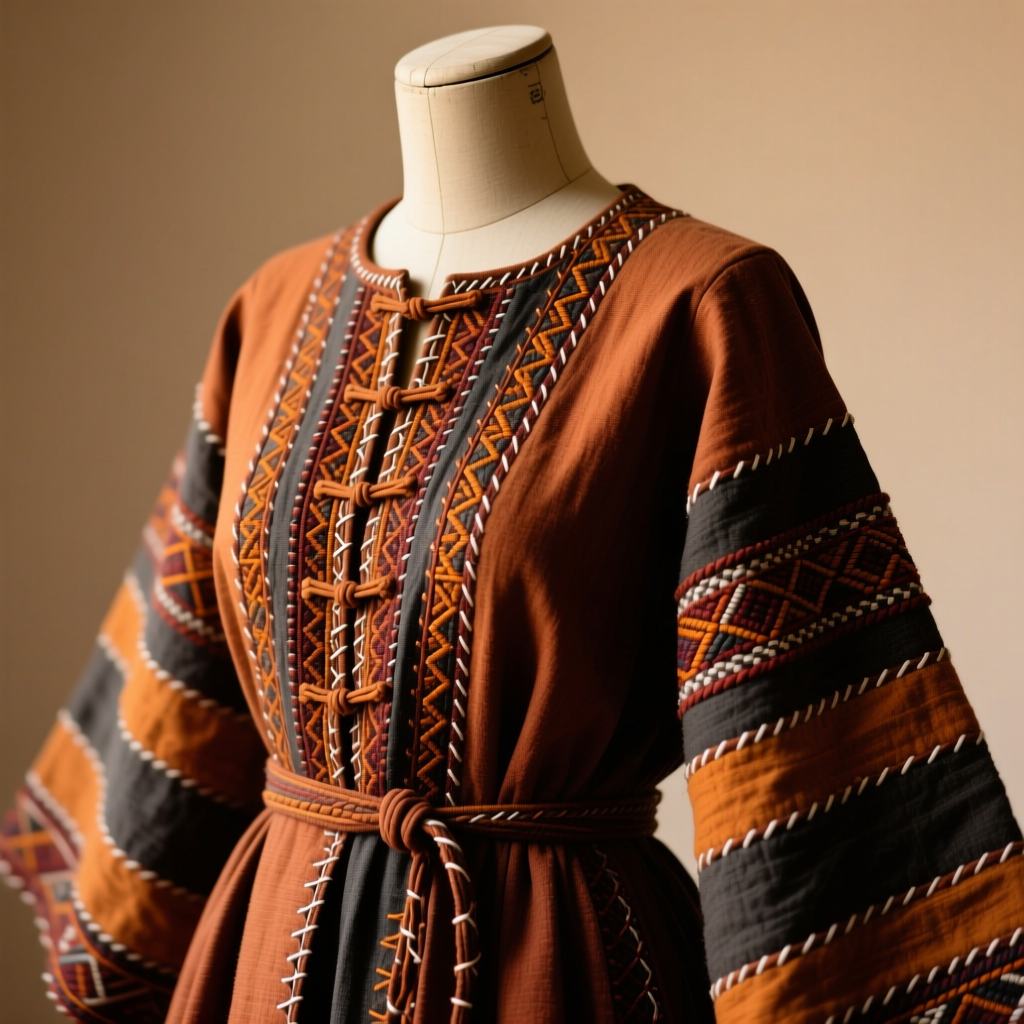
Machines are designed for speed and uniformity, but the human hand is capable of nuance and tension control that a machine cannot replicate. Traditional tailoring relies on a variety of specialized hand stitches. The pick stitch secures the edges of the lapel with a nearly invisible thread, while the fell stitch attaches the lining to the jacket's interior with a flexible, invisible bond. Perhaps the most celebrated display of handwork is the Milanese buttonhole, a painstaking process where a single piece of gimp thread is wrapped and stitched over the edge of the buttonhole, creating a raised, durable, and beautifully textured finish that is the hallmark of true artisanal quality.
Regional Variations in Traditional Tailoring
Tailoring did not develop in a vacuum; it evolved in response to local climates, cultural attitudes, and historical necessities. The three dominant schools of traditional tailoring—British, Neapolitan, and American—offer a fascinating study in how geography influences garment architecture.
The British Silhouette: Structure and Armor
Originating in the heart of London and immortalized on Savile Row, the British tailoring tradition is heavily influenced by military uniforms and the damp, chilly climate of the United Kingdom. The traditional British jacket is a fortress of structure. It features a heavy, stiff canvas, pronounced roped shoulders, and a nipped waist that creates a dramatic, hourglass silhouette. The armholes are cut high and tight to allow the wearer to move their arms without lifting the entire body of the jacket. The fabrics used are typically heavier, tightly woven worsteds and tweeds designed to repel wind and rain. It is a style that projects authority, rigidity, and timeless elegance.
The Neapolitan Silhouette: Softness and Sprezzatura
In stark contrast, the Neapolitan approach to tailoring was born out of the sweltering heat of southern Italy and a cultural desire for relaxed elegance. As explored in our guide to Neapolitan tailoring, this method strips away the heavy armor of the British style. The jacket is entirely unstructured, often featuring no shoulder padding and a very lightweight, unlined interior. The crown of the sleeve is characterized by the famous spalla camicia (shirt shoulder), where the fabric is gathered into tiny pleats, or grinze, allowing for a wide range of motion. The lapels are wide and soft, rolling naturally down to the top button. It is a garment that feels like a second skin, embodying the Italian concept of sprezzatura—a studied carelessness that masks immense artisanal effort.
The American Silhouette: Pragmatism and the Sack Suit
The traditional American style, heavily popularized by heritage brands in the Ivy League circuit, prioritized comfort, mass-production viability, and a democratic approach to style. The classic "sack suit" featured a natural, unpadded shoulder, a straight, undarted front, and a single center vent. While it lacked the dramatic shaping of the British cut or the romantic softness of the Neapolitan cut, it offered a rugged, practical elegance that defined American Ivy style. The American method relied heavily on high-quality, resilient fabrics and a looser fit that accommodated a wide variety of body types without the need for extensive bespoke alterations.
The Bespoke Process: A Symphony of Fittings
The term "bespoke" originates from the verb "to bespeak," meaning to speak for something or to order in advance. When a client commissions a traditional bespoke garment, the cloth is said to "be spoken for." The journey from a bolt of fabric to a finished garment is a rigorous process that requires dozens of hours of labor and multiple in-person fittings. For a comprehensive comparison of commissioning methods, our article on bespoke versus made-to-measure outlines the distinct boundaries of these services.
The process begins with the consultation and the taking of measurements. A master tailor does not merely measure the circumference of the chest or the length of the inseam; they observe the client's stance, the slope of their shoulders, the prominence of their shoulder blades, and the way they carry their weight. From these observations, a unique paper pattern is drafted from scratch.
The first fitting is the "basted fitting." The garment is loosely assembled using white basting thread, with no internal pockets, linings, or finished edges. This allows the tailor to assess the fundamental balance and proportion of the garment on the client's body. The jacket is taken apart, the pattern is adjusted, and the garment is reassembled for the "forward fitting." At this stage, the pockets are set, the lapels are padded, and the sleeves are partially attached. Only after the forward fitting is approved does the garment move to the final finishing stage, where the buttonholes are worked, the lining is felled by hand, and the final pressing is applied. This iterative process ensures a fit that is mathematically and aesthetically perfect.
Modern Preservation and the Future of Heritage Tailoring
In an era dominated by algorithmic trend cycles and automated laser-cutting, the survival of traditional tailoring methods is an act of cultural defiance. The mid-to-late twentieth century saw a dramatic decline in the number of master tailors, as the rise of fused, mass-produced clothing made traditional handwork seem economically unviable. However, the modern era has witnessed a profound renaissance in the appreciation of artisanal crafts.
A new generation of consumers, disillusioned by the environmental and ethical costs of fast fashion, is seeking out the permanence and transparency of heritage tailoring. This shift has led to the establishment of new tailoring academies and the revitalization of historic apprenticeship programs in London, Naples, and Tokyo. Young artisans are combining centuries-old techniques with modern sensibilities, experimenting with innovative fabric weights and weaves while maintaining the structural integrity of hand-pad stitching and ironwork.
Preserving these methods is not about resisting progress; it is about maintaining a vital link to our material history. Every time a tailor picks up a needle to sew a floating canvas or wields a heavy iron to shrink a wool shoulder, they are participating in an unbroken chain of human ingenuity. The traditional tailored garment remains a testament to the belief that true luxury is not found in a logo, but in the time, skill, and humanity invested in its creation.
Frequently Asked Questions
What is the difference between bespoke and made-to-measure tailoring?
Bespoke tailoring involves creating a completely unique paper pattern from scratch based on the client's individual measurements and posture, accompanied by multiple fittings (basted, forward, and final) using a loosely stitched garment. Made-to-measure (MTM), on the other hand, takes an existing, pre-designed block pattern and adjusts it to the client's measurements. MTM usually involves only a final fitting and does not offer the same level of structural customization or handwork as true bespoke tailoring.
Why is hand-pad stitching preferred in traditional tailoring?
Hand-pad stitching allows the tailor to control the tension of every single stitch, creating a three-dimensional roll in the lapel and chest that conforms to the wearer's body. Because the stitches are not locked in a straight line by a machine, the horsehair canvas can flex, breathe, and move independently of the outer wool fabric. Over time, this handwork allows the jacket to mold to the client, whereas machine-stitched or glued (fused) interlinings remain rigid and can eventually separate from the fabric.
How long does it take to create a traditional bespoke garment?
The creation of a traditional bespoke suit is a labor-intensive process that typically requires between fifty to eighty hours of skilled handwork. Factoring in the scheduling of multiple fittings and the meticulous adjustments made between each session, the entire commissioning process usually takes anywhere from eight to twelve weeks from the initial consultation to the final delivery.
What role does ironwork play in traditional garment construction?
Ironwork is the secret weapon of the master tailor. Using a heavy iron, steam, and a wooden clapper, the tailor physically alters the weave of the wool. By stretching the fabric in areas like the armhole and elbow, and shrinking it in areas like the back neck and shoulder blade, the tailor creates a three-dimensional shape that mirrors the human anatomy. This ensures the garment drapes cleanly without pulling or wrinkling, providing superior comfort and a flawless silhouette.
Can traditional tailoring methods be applied to womenswear?
Absolutely. While the heritage of bespoke tailoring is often discussed in the context of menswear, the foundational techniques—such as floating canvas construction, ironwork, and hand-finishing—are equally vital in high-end womenswear. Traditional methods allow for a level of sculptural shaping, particularly around the bust, waist, and hips, that mass-production cannot achieve. Many historic and contemporary tailoring houses apply the exact same rigorous sartorial standards to womenswear, resulting in garments of unparalleled fit, drape, and longevity.
Explore more of our sartorial archives by visiting our anatomy of a suit jacket guide, or delve into the rich history of global textiles in our heritage section.