Ainu Attush: Japan's Sacred Bark Cloth
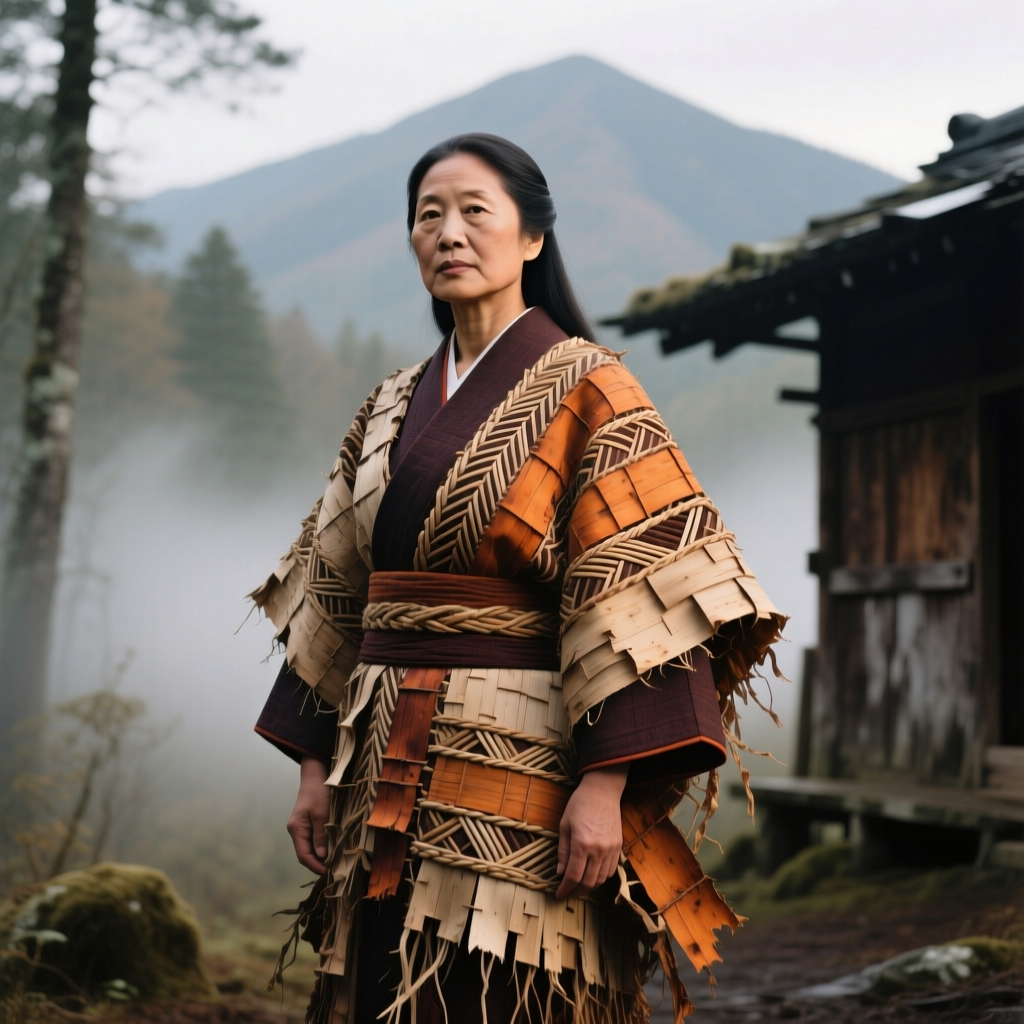
In the misty forests of Hokkaido, the northernmost island of Japan, an ancient textile tradition has endured for centuries. The Ainu people, Japan's indigenous inhabitants, developed one of the most remarkable fiber arts in the world: attush, a distinctive bark cloth woven from the inner bark of elm trees. This extraordinary garment tradition represents far more than mere clothing—it embodies a profound spiritual relationship between the Ainu people and the natural world, a philosophy encapsulated in the concept of kamuy, the belief that spirits reside in all things.
For generations, Ainu women transformed raw tree bark into garments of remarkable durability and beauty, employing techniques passed down through countless generations. The attush tradition stands as a testament to human ingenuity, demonstrating how deep ecological knowledge and artistic vision can merge to create textiles that are simultaneously functional, beautiful, and spiritually resonant. Today, as interest in heritage textiles and indigenous craftsmanship grows worldwide, the story of attush offers invaluable lessons about sustainability, cultural identity, and the enduring power of traditional knowledge.
The Origins and Historical Context of Attush Weaving
The Ainu people have inhabited the islands of Hokkaido, Sakhalin, and the Kuril archipelago for thousands of years, developing a culture deeply intertwined with the boreal forests and coastal ecosystems of northeastern Asia. Among their many material traditions—including intricate woodcarving, metalwork, and the celebrated art of embroidery—the creation of bark cloth garments holds a place of particular significance. The word attush (アットゥㇱ) derives from the Ainu language, where at refers to elm bark and tush denotes the act of weaving or working fiber.
Archaeological evidence suggests that bark cloth production in the broader region dates back millennia, with fiber-processing tools found at Jōmon-period sites across northern Japan. However, the attush tradition as practiced by the Ainu represents a distinct evolution of these ancient techniques, refined over centuries to suit the specific materials and climatic conditions of Hokkaido. The Ainu relied primarily on the inner bark (bast fiber) of several elm species, particularly the Japanese elm (Ulmus davidiana var. japonica) and related species abundant in the island's river valleys and mixed forests.
Historically, attush garments served as the primary everyday clothing for Ainu men and women. These robes—typically cut in a straight, T-shaped silhouette similar in basic form to the Japanese kimono but distinct in construction and decoration—provided essential protection against Hokkaido's harsh winters while remaining breathable enough for summer wear. The natural properties of elm bark fiber, which is both strong and somewhat water-resistant, made it ideally suited to the demands of a semi-nomadic hunting and gathering lifestyle.
Trade relations between the Ainu and neighboring peoples—including the ethnic Japanese (Wajin) to the south and various Siberian peoples to the north—influenced certain aspects of garment design over time. Cotton fabrics obtained through trade gradually supplemented bark cloth, particularly for decorative appliqué work. Yet attush remained the foundational textile of Ainu culture, valued not only for its practical qualities but for its deep connection to the forest ecosystem that sustained Ainu life. Understanding this historical context enriches our appreciation for traditional garment construction methods found across cultures worldwide.
Craftsmanship: From Forest to Finished Garment
The creation of an attush garment is a process of extraordinary labor and skill, typically spanning several months from the initial harvesting of bark to the completion of a finished robe. This work was traditionally the domain of Ainu women, who possessed specialized knowledge of fiber processing, weaving, and garment construction. The mastery required to produce high-quality attush was considerable, and skilled weavers held positions of great respect within their communities.
Harvesting and Preparing the Bark
The attush-making process begins in the forest, typically during late spring or early summer when the sap is flowing and the bark separates most easily from the wood. A mature elm tree is selected and felled—always with prayers and offerings to the tree's kamuy (spirit), acknowledging the sacrifice of its life for human benefit. This ritual dimension of harvesting underscores the Ainu worldview, in which all materials are received as gifts from spiritual beings and must be treated with gratitude and reverence.
Once the tree is felled, the outer bark is carefully stripped away to reveal the precious inner bark beneath. This inner layer, known as the bast or phloem, is peeled from the trunk in long sheets. The harvested bark is then soaked in water—often in a river or stream—for several days to soften the fibers and begin the process of breaking down the plant's cellular structure. After soaking, the bark is boiled in a solution that may include wood ash, which helps to further break down the tough plant material and make the fibers more pliable.
Following the boiling stage, the softened bark is scraped and beaten to separate the individual fibers. This is painstaking handwork, requiring patience and a practiced eye to judge when the fibers have reached the proper consistency. The separated fibers are then dried and sorted by quality, with the finest, most flexible strands reserved for the warp threads of the loom and slightly coarser fibers used for the weft.
Spinning and Weaving
Once the fibers are prepared, they must be spun into thread suitable for weaving. Ainu weavers traditionally twisted the fibers by hand, rolling them against the thigh or using simple drop spindles to create continuous lengths of yarn. The resulting thread, while not as fine as silk or cotton yarn, possesses a distinctive texture that gives attush cloth its characteristic appearance—a slightly irregular, nubby surface that speaks to the handmade nature of the textile.
Weaving was performed on a simple backstrap loom, a technology shared with many indigenous cultures around the world. The weaver sits on the ground with the loom anchored to a fixed point (often a house post) and the opposite end secured around her lower back, allowing her to control tension through body position. This intimate relationship between weaver and loom means that each piece of cloth bears the subtle imprint of its maker's body—her posture, her rhythm, the particular way she adjusted tension as she worked.
The basic weave structure of attush is a plain weave (over-one, under-one), though skilled weavers could introduce subtle textural variations. The resulting fabric is remarkably strong and durable—garments made from well-prepared attush could last for decades with proper care, softening with age and wear to develop a comfortable, lived-in quality. Those interested in the broader world of natural fiber textiles will find fascinating parallels between Ainu bark cloth and similar traditions found among indigenous peoples from the Pacific Northwest to Southeast Asia.
Cultural Significance and Spiritual Dimensions
To understand attush fully, one must look beyond its material properties to its place within the broader spiritual and social fabric of Ainu culture. Clothing among the Ainu was never merely functional—it was a medium of spiritual protection, a marker of identity, and a canvas for artistic expression that carried deep symbolic meaning.
The most visually striking aspect of many Ainu garments is the elaborate appliqué and embroidery work that adorns the finished attush cloth. Using traded cotton fabric or, in some cases, additional pieces of bark cloth, Ainu women created intricate patterns of swirling, curvilinear motifs applied to the necklines, cuffs, and hem edges of robes. These designs, known as morew (curls or spirals), are far more than decorative embellishments. They serve a protective function, warding off malevolent spirits that might enter the body through its openings. The placement of these motifs at garment edges—where the cloth meets the skin and the outside world—is deeply intentional.
The spiral and thorn-like patterns characteristic of Ainu textile design are thought to represent natural forms: the curling tendrils of vines, the eddies of river currents, the unfurling of fern fronds. Some scholars interpret these motifs as stylized representations of the ramat (spirit or soul-energy) that flows through all living things in the Ainu cosmological view. Whatever their specific symbolic readings, these designs create a visual language that is unmistakably Ainu, distinguishing their garments from those of neighboring cultures.
Attush garments also played important roles in ceremonial life. Special robes, often more elaborately decorated than everyday clothing, were worn during iyomante (spirit-sending ceremonies) and other significant rituals. The bear-sending ceremony, perhaps the most well-known Ainu ritual, required participants to wear their finest garments as a sign of respect for the bear spirit being honored. In these contexts, the quality and beauty of one's attush clothing reflected not only personal status but the community's collective devotion to maintaining harmonious relationships with the spirit world.
Gender and age were also communicated through garment style. Men's robes tended to feature bolder, more geometric appliqué patterns, while women's garments often displayed more intricate, flowing designs. Elder members of the community might wear particularly fine attush that represented decades of accumulated skill and social standing. This relationship between cultural dress and identity is a theme that resonates across global textile traditions.
Regional Variations Across Ainu Territories
While the fundamental techniques of attush production were shared across Ainu communities, significant regional variations existed in garment style, decorative motifs, and the use of supplementary materials. These variations reflected differences in local ecology, trade access, and cultural exchange with neighboring peoples, creating a rich tapestry of regional expression within the broader attush tradition.
In the Hidaka and Saru River regions of southern Hokkaido—areas long recognized as centers of Ainu cultural production—attush garments often featured particularly elaborate cotton appliqué work. The relative proximity of these communities to Japanese trading posts meant greater access to imported cotton fabric, which Ainu artisans incorporated into their designs with extraordinary creativity. The bold, contrasting patterns of dark indigo cotton against the natural tan color of elm bark cloth became a hallmark of southern Hokkaido Ainu textile art.
In the more remote eastern and northern regions of Hokkaido, where trade goods were less readily available, garments tended to rely more heavily on the attush cloth itself, with decoration achieved through embroidery directly on the bark cloth or through the use of additional bark fibers dyed with plant-based pigments. These garments possess a quieter, more austere beauty that reflects the self-sufficient character of communities living at greater distance from trade networks.
The Ainu communities of Sakhalin Island and the Kuril archipelago developed their own distinctive approaches to bark cloth production, influenced by contact with Nivkh, Oroqen, and other Siberian peoples. Sakhalin Ainu attush sometimes incorporated fibers from linden trees in addition to elm, and the decorative vocabulary showed influences from continental Northeast Asian textile traditions. These cross-cultural exchanges enriched the attush tradition while maintaining its essential Ainu character.
Coastal Ainu communities, whose livelihoods centered on fishing and marine hunting, sometimes supplemented their attush garments with accessories made from fish skin or seal intestine—materials that provided superior waterproofing for work on the water. These specialized garments demonstrate the adaptability of Ainu material culture and the sophisticated understanding of material properties that informed all aspects of their textile production. The study of such regional heritage variations reveals how environment and culture shape craft traditions in profound ways.
Modern Preservation and the Living Tradition
The Ainu people faced severe cultural disruption beginning in the late nineteenth century, when the Japanese government implemented policies of forced assimilation following the formal annexation of Hokkaido. The use of the Ainu language was suppressed, traditional practices were discouraged or outright banned, and the Ainu were pressured to adopt Japanese customs, names, and clothing. Under these conditions, the production of attush garments declined dramatically, and the detailed knowledge required for every stage of the process—from bark harvesting to loom weaving—was in danger of being lost entirely.
Yet the tradition never disappeared completely. A small number of Ainu women continued to practice attush-making in private, passing their knowledge to daughters and granddaughters even as public expressions of Ainu identity were suppressed. These quiet acts of cultural persistence ensured that the core techniques survived through the darkest periods of assimilationist policy, creating a thread of continuity that connects contemporary practitioners to their ancestors.
In recent decades, a powerful Ainu cultural revival movement has brought renewed attention to traditional arts, including attush weaving. Cultural organizations, community workshops, and dedicated individual practitioners have worked to document, teach, and revitalize bark cloth production. Museums in Hokkaido—notably the Ainu Museum in Shiraoi and the Hokkaido Museum in Sapporo—have played important roles in preserving historical garments and supporting research into traditional techniques. International recognition of Ainu culture has also grown, with attush textiles featured in major exhibitions of indigenous art and textile heritage around the world.
Contemporary Ainu artists and designers are finding innovative ways to carry the attush tradition forward. Some create faithful reproductions of historical garments using traditional methods, serving as living repositories of technical knowledge. Others incorporate attush cloth or its characteristic design motifs into modern clothing and accessories, bridging past and present in ways that make the tradition relevant to new generations. This creative engagement with heritage echoes broader movements in sustainable heritage fashion, where traditional techniques offer models for more thoughtful, ecologically grounded approaches to clothing production.
The recognition of Ainu cultural rights has also advanced significantly. Official acknowledgment of the Ainu as an indigenous people, combined with greater support for cultural education and language revitalization, has created a more supportive environment for the practice and transmission of traditional arts. Young Ainu people increasingly take pride in learning the crafts of their ancestors, and attush weaving workshops attract participants from both within and beyond the Ainu community, fostering broader appreciation for this remarkable textile heritage.
Frequently Asked Questions
What type of tree bark is used to make attush cloth?
Attush cloth is primarily made from the inner bark (bast fiber) of elm trees, particularly the Japanese elm (Ulmus davidiana var. japonica), known in Ainu as atchi-ni. In some regions, fibers from linden trees (Tilia species) were also used, either alone or blended with elm fiber. The inner bark is harvested in late spring or early summer when the sap flow makes it easiest to separate from the wood. The quality of the fiber depends on the age and health of the tree, the season of harvest, and the care taken during processing.
How long does it take to make a traditional attush garment?
Creating a complete attush garment from start to finish is an extraordinarily time-intensive process that typically requires several months of work. The bark harvesting and initial processing may take one to two weeks, followed by days of soaking and boiling. Fiber separation and spinning can occupy several more weeks, depending on the fineness of the thread desired. Weaving on a backstrap loom is slow, meticulous work—a single robe-length piece of cloth might require weeks of daily weaving. Finally, the cutting, assembly, and decorative appliqué or embroidery work add additional weeks. In total, a finely made attush robe could represent four to six months of dedicated labor, making these garments deeply valued possessions.
What do the spiral patterns on Ainu garments symbolize?
The curvilinear spiral and thorn-like patterns (morew) found on Ainu garments carry both spiritual and aesthetic significance. Primarily, these motifs serve a protective function—they are placed at garment openings (neckline, sleeves, hem) to ward off evil spirits that might otherwise enter the body. The swirling, thorn-like forms are believed to confuse or repel malevolent forces. Beyond their protective role, these designs are thought to represent natural forms such as curling vines, water eddies, and plant tendrils, reflecting the Ainu worldview in which human life is intimately connected to the patterns and forces of the natural world. Different families and regions developed their own distinctive pattern variations, creating a rich vocabulary of design within shared symbolic frameworks.
Is attush weaving still practiced today?
Yes, attush weaving continues to be practiced today as part of the broader Ainu cultural revival. While the number of master weavers remains small, dedicated practitioners—both Ainu and non-Ainu students of the tradition—actively maintain and teach the craft. Cultural centers in Hokkaido offer workshops and demonstrations, and some contemporary Ainu artists incorporate attush techniques and aesthetics into modern creative work. Museums and cultural organizations support documentation efforts to ensure that detailed technical knowledge is preserved for future generations. The growing global interest in indigenous textile traditions and sustainable craft practices has also brought new attention and support to attush weaving, helping to secure its future as a living tradition rather than a mere historical artifact.
How should attush garments be cared for and preserved?
Traditional attush cloth is remarkably durable when properly cared for. Historical garments that have survived in good condition were typically stored in dry, well-ventilated conditions and protected from direct sunlight, which can degrade plant fibers over time. Attush cloth should not be machine-washed or subjected to harsh chemical cleaning; gentle surface cleaning with a soft brush is generally sufficient for maintenance. For museum-quality preservation, climate-controlled storage with stable temperature and humidity levels is ideal. Some collectors and institutions wrap attush textiles in acid-free tissue paper and store them flat to prevent stress on the fibers. The natural oils and tannins present in elm bark fiber provide some inherent resistance to insect damage, but regular inspection for signs of pest activity is advisable for long-term storage.