The Heritage of the Icelandic Lopapeysa: A Guide to the Iconic Yoke Sweater
The Heritage of the Icelandic Lopapeysa: A Guide to the Iconic Yoke Sweater
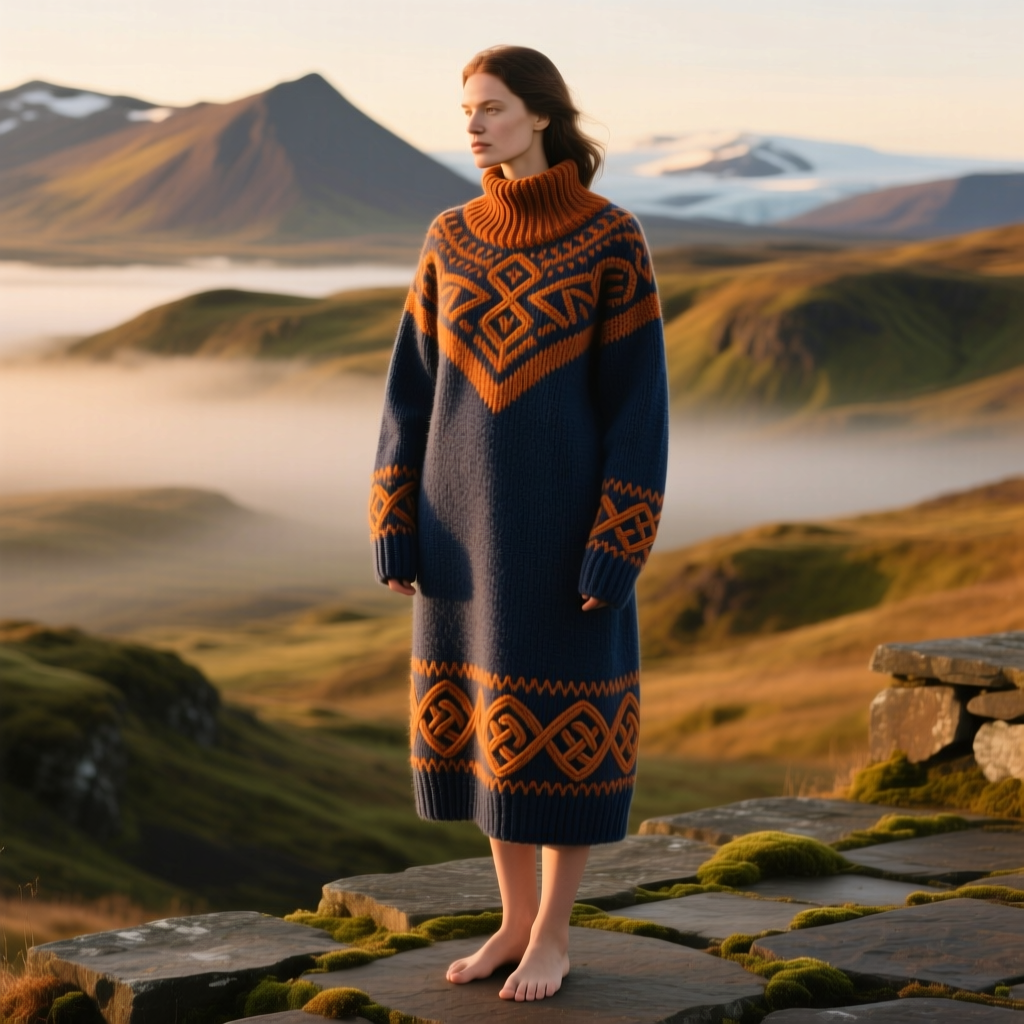
When the biting winds of the North Atlantic sweep across the volcanic landscapes of Iceland, the people do not merely endure the elements; they wear their resilience. At the heart of this sartorial armor is the Lopapeysa, the iconic Icelandic yoke sweater. Recognized instantly by its striking, circular colorwork yoke and thick, textured wool, the Lopapeysa is far more than a simple winter garment. It is a profound expression of cultural heritage, a testament to centuries of agricultural isolation, and a masterclass in functional textile design.
To understand the Lopapeysa is to understand the Icelandic relationship with nature, survival, and community. From the unique dual-coated fleece of the Icelandic sheep to the mathematical precision of the yoke’s decreases, every stitch tells a story of a people adapting to one of the most unforgiving climates on Earth. In this comprehensive guide, we explore the deep-rooted heritage, the meticulous craftsmanship, and the enduring cultural significance of the Icelandic Lopapeysa, cementing its place in the global pantheon of heritage garments.
The Origins and Evolution of Nordic Knitting
The story of the Lopapeysa begins long before the sweater itself was conceived, rooting itself in the arrival of the first Norse settlers who brought with them hardy, short-tailed sheep. Due to Iceland’s extreme geographic isolation, these animals were never crossbred with other varieties. Over centuries of harsh winters and volcanic summers, the Icelandic sheep developed a fleece unlike any other in the world—a dual-coated marvel of natural engineering that would eventually become the foundation of the nation's textile heritage.
For much of Iceland’s early history, wool was processed into vaðmál, a dense, woven cloth that served as currency, trade goods, and essential protection against the cold. Weaving was a labor-intensive process requiring large looms and significant indoor space. However, as the centuries progressed, the art of knitting was introduced to the island. Knitting quickly revolutionized domestic textile production. It was faster, required minimal equipment, and could be done in the dim light of the winter evenings, allowing entire families to contribute to the household’s wool output.
While knitting became a ubiquitous domestic chore, the specific design we now recognize as the Lopapeysa—the seamless sweater with a patterned circular yoke—is a relatively modern invention in the grand tapestry of history. Emerging in the mid-twentieth century, the yoke design was born from a desire to create a seamless, comfortable garment that eliminated the bulky seams of traditional drop-shoulder sweaters. By joining the body and sleeves on a single circular needle and working the intricate colorwork patterns upward toward the neck, Icelandic knitters created a garment that was both structurally superior and visually breathtaking. This innovation transformed a humble domestic necessity into a globally recognized symbol of Nordic design.
The Craftsmanship: Lopi Wool and the Art of the Yoke
The true magic of the Lopapeysa lies in its material. The sweater is knit using Lopi, a term that refers to the unspun roving of the Icelandic sheep’s fleece. To appreciate Lopi, one must understand the unique biology of the Icelandic sheep, which produces two distinct types of fiber:
- Tog: The outer coat, consisting of long, coarse, and highly water-resistant fibers. This layer acts as a natural shield against rain, snow, and biting winds.
- Thel: The inner coat, made of short, incredibly soft, and airy fibers that trap body heat, providing exceptional insulation.
When these two fibers are carded together and drawn out into a lightweight, unspun roving, the result is Lopi. Because it is largely unspun, Lopi retains a remarkable amount of air, making the resulting sweater incredibly warm yet surprisingly lightweight. For those interested in the broader science of natural fibers, our deep dive into wool types and their unique properties offers further insight into why animal fibers remain unmatched in extreme weather.
The construction of the Lopapeysa is a masterclass in seamless knitting. Traditionally worked from the bottom up, the knitter creates the body and the two sleeves as separate tubes. Once they reach the underarm, the stitches are joined onto a single long circular needle. From this point onward, the iconic yoke—known in Icelandic as the ysta—is born.
The yoke requires a deep understanding of knitting mathematics. As the knitter works upward toward the collar, they must decrease the stitch count at specific, evenly spaced intervals to create a smooth, contoured dome that perfectly cups the shoulders and neck. These decrease rounds are often cleverly hidden within the geometric colorwork patterns, ensuring the structural shaping does not disrupt the visual harmony of the design. The result is a garment with no shoulder seams, eliminating points of friction and weakness, and allowing for unrestricted movement—a crucial feature for a historically agrarian and maritime society.
Cultural Significance and Symbolism in the Patterns
The patterns adorning the yoke of a Lopapeysa are not merely decorative; they are a visual language that reflects the Icelandic landscape and the cultural psyche of its people. Unlike the highly codified, clan-specific tartans of Scotland or the regional ganseys of the British Isles, traditional Icelandic yoke patterns are largely inspired by the natural world and the interplay of light & shadow across the island's dramatic terrain.
Motifs frequently mimic the crystalline structure of snowflakes, the jagged edges of basalt lava columns, the rippling surface of glacial rivers, and the geometric stars visible in the clear, dark winter skies. The color palettes traditionally rely on the natural shades of the Icelandic sheep: stark white, deep charcoal, rich chocolate brown, and warm greys. While modern dyed yarns have introduced a spectrum of colors to the craft, the most authentic and revered garments often stick to these earthy, natural tones, grounding the wearer in the landscape.
Knitting in Iceland has always been a deeply communal and egalitarian practice. Historically, it was one of the few ways women could generate independent income, selling their knitted goods to merchants and trading posts. The rhythmic clicking of needles was the soundtrack of the Icelandic home, and patterns were passed down not through written charts, but through oral tradition and muscle memory. This shared craft fostered a sense of collective resilience. The Icelandic concept of þetta reddast—a cultural mantra translating roughly to "it will all work out"—is woven into the very fabric of the Lopapeysa. It represents a people who, faced with volcanic eruptions, freezing winters, and isolation, choose to create warmth and beauty with their own hands.
For a comparative look at how other Northern cultures utilized colorwork and pattern to signify identity and region, explore our heritage guide to Fair Isle knitting traditions, which shares a fascinating parallel history of island-based wool craftsmanship.
Regional Variations and Modern Preservation
While the fundamental architecture of the Lopapeysa remains consistent across Iceland, subtle regional variations and personal interpretations have always existed. In the remote Westfjords, where the weather is notoriously fierce, sweaters were often knit with a tighter gauge and thicker, more heavily felted Lopi to maximize wind resistance. In contrast, garments from the milder coastal regions might feature a looser drape and more intricate, delicate colorwork bands.
Another significant variation is the peysa versus the cardigan. While the pullover is the most globally recognized silhouette, the traditional Icelandic cardigan is equally important. Knit seamlessly in the round, the cardigan requires the knitter to employ a technique called steeking. This involves knitting a bridge of extra stitches up the center front and then bravely taking a pair of sharp scissors to cut the garment open. The unspun, slightly sticky nature of the Lopi wool causes the fibers to cling together, preventing the cut edges from unraveling. This technique allows for complex, continuous colorwork without the need to purl back across the wrong side of the fabric.
Today, the preservation of this heritage is fiercely guarded by institutions like the Handknitting Association of Iceland (Handprjónasamband Íslands). Founded to protect the livelihoods of rural knitters and ensure the quality of Icelandic wool products, the Association operates cooperatives where thousands of local artisans submit their hand-knit garments. When you purchase a sweater bearing their official label, you are guaranteed an authentic, hand-knit Lopapeysa made from 100% Icelandic wool, directly supporting the local economy and preserving the craft.
Unfortunately, the global popularity of the Lopapeysa has led to a flood of mass-produced, machine-knit imitations made from synthetic blends or non-Icelandic wool. These knock-offs lack the water-resistant properties of the tog, the insulating warmth of the thel, and the soul of the hand-knitter. True preservation requires consumer education and a commitment to valuing slow fashion and heritage craftsmanship over fast, disposable trends.
Styling and Caring for Your Heritage Garment
The beauty of the Lopapeysa lies in its rugged versatility. It is a garment designed to be lived in, whether you are chopping wood in a snowy forest, navigating a windy coastline, or simply enjoying a crisp autumn evening in the city. Because of its substantial texture and bold yoke, the sweater serves best as a statement outer layer or a heavy mid-layer. Pairing it with durable denim, waxed canvas, or heavy wool trousers creates a cohesive, heritage-inspired silhouette. For more inspiration on integrating heavy knits into your cold-weather wardrobe, read our comprehensive guide to winter layering essentials.
Caring for a Lopapeysa requires a gentle touch and an understanding of the unspun wool. Because Lopi is highly lanolin-rich and naturally antimicrobial, the sweater rarely needs to be washed. Frequent airing out in a damp, breezy environment (much like the Icelandic climate itself) is often enough to refresh the fibers and eliminate odors. When washing is absolutely necessary, it must be done by hand in cool water with a specialized wool wash, avoiding any agitation or sudden temperature changes that could cause the unspun fibers to felt and shrink. For a complete breakdown of maintaining your investment pieces, consult our detailed tutorial on knitwear care and maintenance.
Frequently Asked Questions
What makes Icelandic Lopi wool so unique?
Lopi is unique because it is largely unspun roving that combines the two distinct coats of the Icelandic sheep: the long, water-resistant outer hair (tog) and the short, insulating inner fleece (thel). This combination, along with the high lanolin content and the airy, unspun structure of the yarn, creates a sweater that is exceptionally warm, highly water-repellent, and surprisingly lightweight compared to densely spun wools.
How do you wash and maintain a Lopapeysa sweater?
Maintenance is minimal due to the natural antibacterial properties of wool. Air the sweater out regularly in a humid or breezy environment. When washing is required, soak it gently in cool water with a mild, lanolin-friendly wool detergent. Never wring, twist, or machine wash the garment, as the unspun fibers will felt and shrink rapidly under friction and heat. Roll the wet sweater in a towel to press out excess water and lay it flat to dry.
Are traditional Lopapeysa sweaters itchy to wear?
Authentic Lopi wool contains the coarse outer tog fibers, which can feel scratchy against highly sensitive skin, particularly around the neck. However, many wearers find that the sweater softens significantly with wear and the natural oils from the skin. For those with extreme sensitivity, wearing a lightweight cotton or linen base layer underneath is the traditional and most comfortable solution, preserving the sweater's outer-shell functionality.
What is the significance of the yoke pattern?
The yoke pattern, or ysta, is primarily inspired by the Icelandic natural environment. The geometric shapes, stars, and repeating motifs reflect snowflakes, glacial ice, volcanic rock formations, and the northern skies. Beyond aesthetics, the yoke serves a crucial structural purpose, utilizing strategic decrease rounds to shape the garment seamlessly over the shoulders without the need for bulky seams.
Can I knit my own Lopapeysa as a beginner?
While the Lopapeysa looks incredibly complex, the actual knitting techniques involved are quite accessible. The garment is typically knit entirely in the round using the simple stockinette stitch, with the yoke requiring only basic stranded colorwork and standard decreases. A beginner who has mastered knitting in the round, reading a basic chart, and managing two colors of yarn can absolutely tackle a Lopapeysa, making it a deeply rewarding milestone project in a knitter's journey.
How can I tell if a Lopapeysa is authentically hand-knit in Iceland?
Authenticity can be verified by looking for the official label of the Handknitting Association of Iceland. Additionally, genuine hand-knit Lopi sweaters will have slight, charming irregularities in the tension, a distinct smell of natural lanolin, and a lightweight, airy feel that machine-knit, tightly twisted commercial wools cannot replicate. Always check the fiber content to ensure it is 100% Icelandic wool.