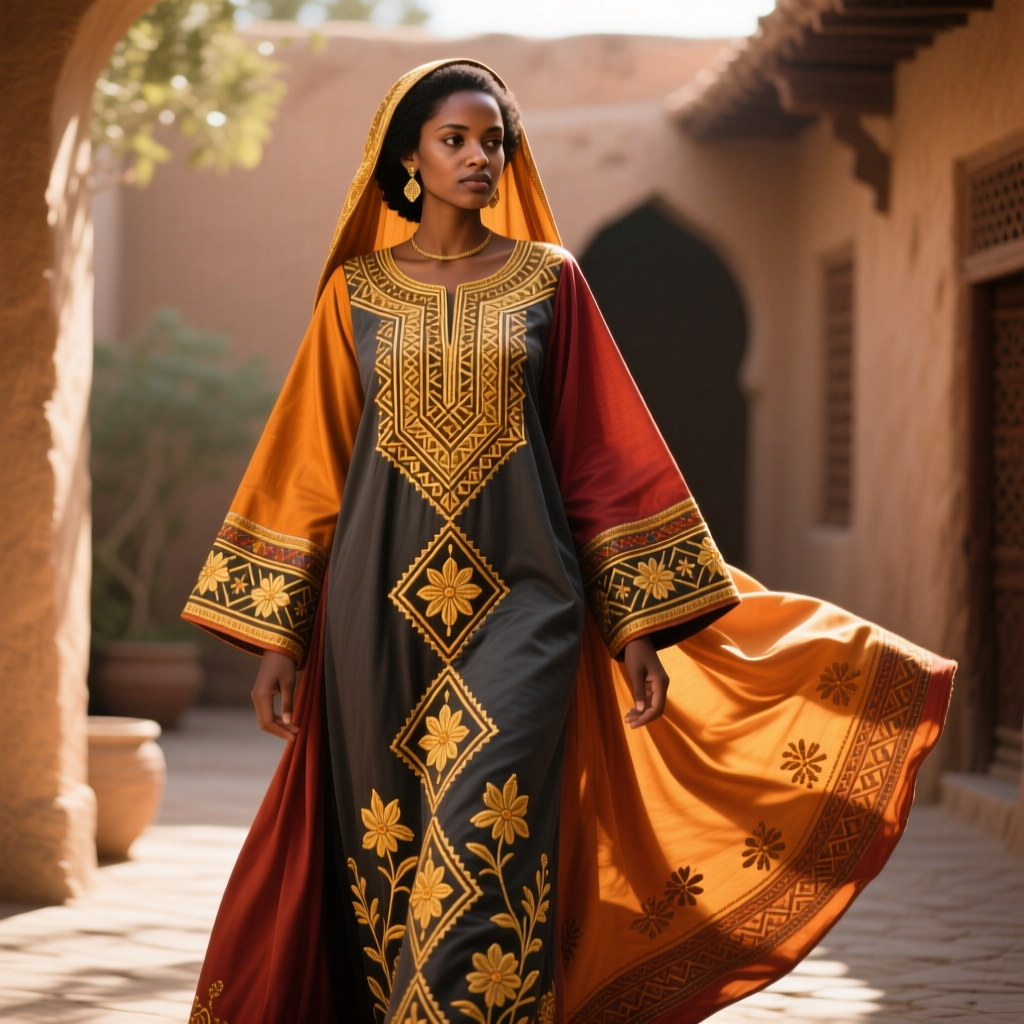
Bhutanese Kira and Gho: Woven Identity

In the mist-wrapped valleys of the Himalayas, where prayer flags flutter against snow-capped peaks and ancient dzongs guard mountain passes, the Kingdom of Bhutan preserves one of the world's most remarkable living textile traditions. The kira and gho—the national dress of Bhutanese women and men, respectively—are far more than garments. They are woven manuscripts of identity, carrying within their threads the stories of clans, regions, spiritual beliefs, and an unbroken cultural lineage that stretches back centuries. To understand the kira and gho is to understand Bhutan itself: a nation that has deliberately chosen to measure its progress not in GDP alone, but in the preservation of its cultural soul.
Unlike most nations, where traditional dress has been relegated to museums and ceremonial occasions, Bhutan maintains its national costume as everyday attire. Government officials don the gho for work. Women wear the kira to offices, markets, and schools. This is not a fossilized tradition preserved under glass—it is a living, breathing, evolving expression of Bhutanese identity, shaped by royal decree, sustained by master weavers, and cherished by a population that sees in its textiles the very fabric of nationhood.
At The Garment Atlas, we believe that every traditional garment tells a story of human ingenuity, cultural resilience, and artistic mastery. The kira and gho stand among the most extraordinary examples of textile heritage on Earth, and their story deserves to be told in full.
The Historical Tapestry: Origins and Evolution of Bhutanese National Dress
The origins of the kira and gho are deeply interwoven with Bhutan's emergence as a unified nation. While the peoples of the region had worn wrapped and draped garments for millennia, it was the arrival of Zhabdrung Ngawang Namgyel in the early 17th century that catalyzed the crystallization of a distinctly Bhutanese sartorial identity. The Zhabdrung, a Tibetan Buddhist lama who fled sectarian conflict to establish a theocratic state in Bhutan, understood that clothing could serve as a powerful marker of cultural distinction. Under his guidance, Bhutanese dress began to diverge consciously from Tibetan and Indian neighbors, establishing silhouettes and construction methods that would become unmistakably Bhutanese.
The gho (pronounced "go") for men evolved from the Tibetan chuba, a long robe worn across the Himalayan plateau. However, Bhutanese tailors transformed it into something unique: a knee-length garment, belted at the waist with a woven textile belt called a kera, creating a distinctive bloused effect above the belt that serves as an enormous pocket. This practical adaptation—where the voluminous pouch formed by the belted gho can carry everything from a ceremonial scarf to a modern smartphone—exemplifies the Bhutanese genius for merging form and function.
The kira for women represents an even more distinctive achievement. A rectangular piece of woven textile—typically measuring roughly two meters by one and a half meters—the kira is wrapped around the body, secured at the shoulders with elaborate silver clips called koma, and cinched at the waist with a belt. The result is an ankle-length dress of remarkable elegance, worn over a long-sleeved blouse called a wonju and often topped with a short open jacket known as a tego. The simplicity of its construction belies the extraordinary complexity of the textiles from which it is made.
The formalization of national dress accelerated dramatically in the late 20th century. In the 1960s and 1970s, as Bhutan began cautiously opening to the outside world, the royal government recognized that cultural erosion could accompany modernization. The policy of Driglam Namzha—the official code of etiquette and dress—was codified and reinforced, mandating the wearing of national dress in government offices, schools, and on formal occasions. This was not merely aesthetic conservatism; it was a deliberate strategy of cultural preservation in the face of globalizing forces that had already swept away traditional dress in much of Asia.
The late King Jigme Dorji Wangchuck and his successors understood something that many modern nations have forgotten: that clothing is among the most visible and visceral expressions of cultural identity. When a Bhutanese man knots his gho each morning, adjusting the white cuffs that peek from beneath the sleeves, he participates in a ritual that connects him to his ancestors. When a woman fastens her koma brooches at her shoulders, she carries forward the artistry of weavers whose techniques have been transmitted from mother to daughter across generations.
Cultural Significance: Threads That Bind a Nation
To appreciate the kira and gho fully, one must understand that in Bhutanese culture, textiles occupy a position of reverence that few other societies accord to cloth. In traditional Bhutanese belief, weaving is not merely a craft—it is a sacred act. The patterns woven into textiles are understood to carry protective powers, spiritual symbolism, and markers of social station that communicate volumes before a word is spoken.
The social hierarchy encoded in Bhutanese dress is both subtle and precise. The color and pattern of a gho, the quality of its weave, and—perhaps most importantly—the kabney (ceremonial scarf) worn with it immediately communicate the wearer's rank and role. A saffron kabney denotes the King and the Je Khenpo (Chief Abbot). Orange signifies government ministers and senior officials. Red is worn by district administrators and royal advisory council members. Blue indicates members of the National Assembly. White is the color for ordinary citizens. This chromatic language of authority, derived from ancient Buddhist court traditions, allows any Bhutanese person to read the social landscape of a gathering at a glance.
For women, the rachu—a narrow embroidered cloth draped over the left shoulder—serves a parallel function, with its colors and patterns indicating rank on formal occasions. The interplay between kira, rachu, and the accompanying jewelry creates a visual vocabulary that is both beautiful and deeply informative.
Spiritual dimensions permeate every aspect of these garments. Many traditional patterns incorporate Buddhist iconography: the endless knot symbolizing the interdependence of all phenomena, the dorje (thunderbolt) representing indestructible truth, lotus motifs evoking purity amid the mud of worldly existence. Weavers in eastern Bhutan, where the most intricate textile traditions are concentrated, often begin their work with prayers and observe specific rituals during the weaving process. Certain patterns are believed to protect the wearer from malevolent spirits, while others are reserved exclusively for religious ceremonies and should never be worn in secular contexts.
The lifecycle significance of textiles in Bhutanese culture cannot be overstated. A child's first kira or gho is a momentous occasion, often accompanied by blessings from a lama. Textiles form a central component of dowries, with families spending years accumulating finely woven pieces for a daughter's marriage. At death, special textiles are used to shroud the deceased, and the finest pieces from a person's collection may be offered to monasteries in their memory. From birth to death, the kira and gho accompany the Bhutanese individual through every significant passage of life.
Textiles also function as a form of economic and social currency. Historically, finely woven cloth served as a medium of exchange, a form of tax payment to the central government, and a means of accumulating and displaying wealth. Even today, a hand-woven kira of exceptional quality can command prices equivalent to several months' salary, and the gift of fine textiles remains among the most meaningful gestures of respect and affection in Bhutanese society.
The Art of Weaving: Master Craftsmanship and Techniques
The creation of a single hand-woven kira can take anywhere from several months to over a year, depending on the complexity of the pattern and the fineness of the yarn. This is textile production at its most demanding and most refined—a discipline that requires not only technical mastery but an almost meditative patience and an artistic sensibility honed over decades.
Bhutanese weaving is traditionally performed on a backstrap loom, known locally as the pangthap. This deceptively simple apparatus consists of a set of sticks and heddles attached to a strap that passes around the weaver's lower back, using the weaver's own body tension to maintain warp tension. Despite its apparent simplicity, the backstrap loom is capable of producing textiles of extraordinary complexity and refinement. The weaver's body becomes an integral part of the machine, leaning forward and backward to adjust tension, her fingers dancing across the warp threads with a speed and precision that defies belief.
The most complex and prestigious weaving technique in Bhutan is known as thrima, a supplementary weft patterning method in which additional colored threads are woven into the fabric to create elaborate geometric and figurative designs. Thrima weaving is so demanding that only the most skilled practitioners can execute the finest patterns, and a single error can require the unwinding of days or weeks of work. The technique produces a fabric in which the pattern appears to float on the surface of the cloth, with a richness and depth that machine printing can never replicate.
Another significant technique is sapma, in which continuous supplementary weft threads create patterns that run across the full width of the fabric. Sapma produces textiles with a more uniform, all-over pattern and is somewhat less time-consuming than thrima, though it still demands considerable skill. A third technique, adhang, involves the creation of horizontal stripes and bands, often combined with supplementary weft patterning to produce textiles of striking visual rhythm.
The materials used in traditional Bhutanese weaving have evolved over the centuries while maintaining a connection to natural sources. Historically, yarns were spun from nettle fiber, cotton, and the silk produced by indigenous eri silkworms (Samia cynthia ricini), which yield a textured, nubby silk with a distinctive warm glow. Wild silk, known as bura, was also harvested and prized for its irregular texture and natural golden coloration. The introduction of commercially spun silk, cotton, and synthetic yarns in the 20th century expanded the weaver's palette enormously, and contemporary weavers often blend traditional and imported materials to achieve specific effects.
Natural dyeing was once universal in Bhutanese textile production, with colors derived from an astonishing range of botanical and mineral sources. Indigo yielded deep blues; madder root produced rich reds; turmeric and pomegranate rind gave yellows; walnut hulls created warm browns. The knowledge of which plants to harvest, when to harvest them, and how to prepare and apply the dyes constituted a specialized body of knowledge passed down through generations. While synthetic dyes have largely replaced natural ones in everyday production, a revival of natural dyeing is underway among master weavers and cultural preservation organizations, who recognize that the subtle, living colors of natural dyes possess a quality that synthetic alternatives cannot match.
The patterns themselves—known collectively as yathra in central Bhutan and by various regional names elsewhere—constitute a vast visual vocabulary. Some patterns are ancient, their origins lost to time, while others were created by specific weavers and named after them. Common motifs include the thokmey (a geometric design resembling a stepped diamond), the phurja (a cross-like motif with tantric Buddhist associations), and various representations of flowers, animals, and auspicious symbols. The arrangement and combination of these motifs within a single textile can follow traditional prescriptions or reflect the creative vision of the individual weaver.
Regional Variations: A Geography of Pattern and Style
Bhutan may be a small country—roughly the size of Switzerland—but its textile traditions display a regional diversity that is nothing short of astonishing. Each valley, each district, and in some cases each village has developed its own distinctive weaving styles, preferred patterns, and characteristic color palettes. This diversity reflects not only the geographic isolation imposed by Bhutan's mountainous terrain but also the strong sense of local identity that persists within the broader framework of national culture.
Eastern Bhutan, particularly the districts of Trashigang, Mongar, Lhuentse, and Trashiyangtse, is widely regarded as the heartland of Bhutanese weaving. The women of this region are considered the most accomplished weavers in the country, and their textiles command the highest prices and greatest respect. The kushuthara—a supremely intricate kira fabric featuring dense, multicolored supplementary weft patterning on a silk ground—is perhaps the most prestigious textile produced in eastern Bhutan. A genuine hand-woven kushuthara from Lhuentse or Trashigang is a masterpiece of the weaver's art, requiring months of painstaking labor and representing the pinnacle of Bhutanese textile achievement. The weavers of Khoma, a village in Lhuentse district, are particularly celebrated for their kushuthara, and their work is sought after by collectors and connoisseurs throughout the country.
Central Bhutan, encompassing the districts of Bumthang and Trongsa, is famous for its yathra textiles—thick, warm fabrics woven from wool or a wool-cotton blend, characterized by bold geometric patterns in vivid colors. Yathra is traditionally used for jackets, blankets, and saddle covers, and its robust construction makes it ideally suited to the cold winters of the central highlands. The village of Zhemgang and the communities around Bumthang's four valleys each maintain their own yathra traditions, with subtle differences in pattern and color that allow knowledgeable observers to identify a textile's origin at a glance.
Western Bhutan, including the capital Thimphu and the Paro Valley, has historically been more influenced by external trade and administrative culture. While the weaving traditions of the west are generally considered less elaborate than those of the east, they possess their own distinctive character. The weavers of Ha and Gasa, in the far northwest, produce textiles with a restrained elegance that reflects the austere beauty of their high-altitude environment. In recent decades, Thimphu has also become a center for innovation, where weavers from different regions exchange techniques and where contemporary designers experiment with new applications for traditional textiles.
Southern Bhutan, bordering India, presents a different picture. The predominantly Lhotshampa (Nepali-origin) population of the south has its own sartorial traditions, and while the kira and gho are worn for official purposes, everyday dress often reflects South Asian influences. This regional variation is itself an important part of Bhutan's textile story, illustrating how national dress policies interact with local cultural realities in complex and sometimes contested ways.
The men's gho also displays regional variation, though it is generally less pronounced than in women's textiles. The weight and weave of the fabric, the style of the kera belt, and the choice of accompanying accessories all vary by region and occasion. In eastern Bhutan, men's gho fabrics often feature bold, colorful patterns woven with supplementary weft techniques similar to those used in women's kira. In the west, solid colors and more subdued patterns are common for everyday wear, with elaborate brocaded gho reserved for festivals and formal events. The zhing (a type of hand-woven textile used for men's gho) produced in the central valleys is particularly prized for its durability and refined patterning.
Modern Preservation: Sustaining Heritage in a Changing World
The tension between preservation and modernization is felt acutely in Bhutan's textile sector. As the country has opened to tourism, television, the internet, and global trade, the forces that have eroded traditional dress cultures elsewhere in the world have begun to exert pressure on Bhutan as well. Young Bhutanese, particularly in urban areas, increasingly encounter global fashion through social media and travel, and while national dress remains compulsory in many contexts, the voluntary, heartfelt embrace of the kira and gho cannot be taken for granted.
The Bhutanese government and civil society have responded with a multi-pronged preservation strategy. The Royal Textile Academy of Bhutan, established in Thimphu, serves as the nation's premier institution for the study, preservation, and promotion of textile arts. The Academy maintains a museum collection of historic textiles, conducts research on traditional techniques and materials, and offers training programs for aspiring weavers. Its exhibitions and publications have played a crucial role in documenting patterns and techniques that might otherwise have been lost.
The National Institute of Zorig Chusum (the School of Thirteen Traditional Arts) includes textile arts among its curricula, ensuring that young Bhutanese have the opportunity to learn weaving alongside painting, sculpture, woodwork, and other traditional disciplines. This institutionalization of textile education represents a significant shift from the historical model of mother-to-daughter transmission, broadening access to the craft while raising questions about whether institutional learning can fully replicate the intimate, embodied knowledge transfer of the family workshop.
Fashion innovation has emerged as an unexpected ally of preservation. A growing number of Bhutanese designers are finding ways to reinterpret traditional textiles for contemporary contexts, creating kira and gho that appeal to younger wearers while respecting the essential forms and techniques of the tradition. Some designers experiment with new color combinations and pattern arrangements; others incorporate traditional hand-woven panels into modern silhouettes for casual wear. The annual Bhutan Fashion Week and various design competitions have provided platforms for this creative dialogue between tradition and innovation, generating excitement among young Bhutanese and demonstrating that the kira and gho can evolve without losing their identity.
The economic dimension of preservation is equally critical. Weaving remains an important source of income for many rural women, and the market for hand-woven textiles—both domestic and international—provides a powerful incentive for the continuation of the craft. However, the economics are challenging: the months of labor required to produce a fine hand-woven kira mean that prices must be high, while cheaper machine-made imports from India and China threaten to undercut the market for everyday textiles. Organizations supporting fair trade practices, direct-to-consumer sales, and the certification of genuine hand-woven products are working to ensure that weavers receive fair compensation for their extraordinary labor.
UNESCO recognition and international attention have also bolstered preservation efforts. The inclusion of Bhutanese textile traditions in various international cultural heritage programs has raised the global profile of the kira and gho, attracting scholarly research, museum exhibitions, and collector interest that in turn reinforces the value placed on these traditions within Bhutan itself. When a Bhutanese textile is exhibited in a major international museum or featured in a global design publication, it sends a powerful message to young Bhutanese that their heritage is valued and admired by the wider world.
Perhaps the most important factor in the survival of the kira and gho, however, is the continued emotional attachment of the Bhutanese people to their national dress. Despite the pressures of modernization, surveys and observations consistently reveal that the majority of Bhutanese—particularly outside the capital—continue to wear the kira and gho with genuine pride and affection. For many, these garments are inseparable from their sense of self, their connection to family and community, and their identity as citizens of a small nation that has chosen, against considerable odds, to remain distinctively itself. As long as that emotional connection endures, the kira and gho will continue to grace the streets of Thimphu, the fields of Bumthang, and the festival grounds of Paro—not as costumes, but as living expressions of a culture that refuses to be erased.
Frequently Asked Questions
What is the difference between a kira and a gho?
The kira is the national dress of Bhutanese women: a rectangular woven cloth wrapped around the body, fastened at the shoulders with silver clips (koma), and belted at the waist, worn over a blouse (wonju) and often with a short jacket (tego). The gho is the national dress for men: a knee-length robe that is wrapped and folded around the body, secured with a woven belt (kera), and characterized by its distinctive bloused pouch above the belt. Both garments are constructed without cutting or tailoring in the Western sense, relying instead on wrapping, folding, and draping techniques that have been refined over centuries.
How long does it take to weave a traditional Bhutanese kira?
The time required varies enormously based on the complexity of the design and the fineness of the materials. A simple everyday kira with basic patterning might take a skilled weaver one to two months to complete. A medium-complexity kira with detailed supplementary weft patterns typically requires three to six months. The most elaborate kushuthara kira—featuring dense, multicolored patterning across the entire surface—can take a master weaver a year or more to finish. This extraordinary investment of time and skill is reflected in the price: a fine hand-woven kira can cost anywhere from several hundred to several thousand dollars, with the most exceptional examples commanding premium prices among collectors.
Are visitors to Bhutan expected to wear the kira or gho?
International visitors are not required to wear Bhutanese national dress for everyday activities. However, when visiting dzongs (fortress-monasteries), government offices, and certain religious sites, visitors are expected to dress formally and modestly. Some tour operators offer visitors the opportunity to try on a kira or gho, and many travelers choose to do so as a gesture of respect and cultural engagement. Wearing national dress at a festival (tshechu) is particularly appreciated by local communities. For more on how traditional garments are experienced across cultures, explore our heritage garment guides to learn about dress traditions from around the world.
What are the most prestigious patterns in Bhutanese weaving?
Among the most prestigious patterns is the kushuthara style, characterized by dense, intricate supplementary weft patterning in multiple colors on a silk ground. Specific prestigious motifs include the thokmey (stepped diamond), various lotus and dorje designs, and complex geometric compositions that require the highest level of technical skill. Certain patterns are associated with royalty or the monastic establishment and were historically restricted to specific social ranks. The aikapur pattern, a complex geometric design from eastern Bhutan, is considered among the most difficult to execute and is highly prized by textile connoisseurs.
How is Bhutanese national dress adapting to modern life?
The kira and gho are evolving to meet the demands of contemporary life while retaining their essential character. Innovations include lighter-weight fabrics for warmer seasons and office environments, pre-pleated and pre-stitched versions that are easier to put on, and modern interpretations that incorporate traditional textiles into jackets, bags, and accessories. Young Bhutanese designers are experimenting with new color palettes and pattern combinations that appeal to contemporary tastes. Meanwhile, the Driglam Namzha dress code continues to ensure that the fundamental forms of the kira and gho remain constant in formal and official contexts. This balance between continuity and adaptation is what keeps the tradition alive—not as a museum piece, but as a dynamic, evolving expression of Bhutanese identity. For more on how traditional garments navigate modernity, browse our style guides covering traditional dress worldwide.