A Comprehensive Guide to Traditional Mexican Clothing: History, Styles & Cultural Significance
A Comprehensive Guide to Traditional Mexican Clothing
When one envisions the cultural tapestry of Mexico, the mind is immediately flooded with a kaleidoscope of colors, intricate patterns, and masterful textile artistry. Traditional Mexican clothing is far more than a mere collection of garments; it is a living, breathing codex of history, identity, and cosmology. From the misty highlands of Chiapas to the sun-drenched plains of the Yucatán, the apparel worn by indigenous and mestizo communities tells the story of a nation forged through the complex blending of pre-Columbian civilizations and European influences. This comprehensive guide explores the origins, defining characteristics, regional variations, and enduring cultural significance of traditional Mexican clothing, offering a deep dive into the threads that weave this vibrant nation together.
The Origins and Evolution of Mexican Garments
Long before the arrival of European explorers, the indigenous peoples of Mesoamerica had developed highly sophisticated textile traditions. In the pre-Hispanic era, clothing was a primary indicator of social status, lineage, and community affiliation. Because the pre-Columbian world did not utilize the wheel for transport or possess large domesticated beasts of burden, the weaving of fibers was an intimately human endeavor. Artisans relied on native cotton, which was cultivated in the warm lowlands, and ixtle, a tough fiber extracted from the agave or maguey plant, which thrived in the arid highlands. These fibers were spun using a drop spindle and woven on the backstrap loom, an ingenious device that allowed the weaver to control the tension of the warp threads with her own body weight.
The Spanish conquest in the early sixteenth century introduced a profound shift in Mexican textile history. The colonizers brought new materials, including sheep’s wool, silk, and the pedal loom, which allowed for wider and longer bolts of fabric. Furthermore, the introduction of European flora and religious iconography merged with indigenous motifs, creating a unique mestizo aesthetic. While the Spanish attempted to impose European dress codes on the native population, the sheer vastness of the territory and the resilience of indigenous communities allowed traditional garment structures to survive. Over centuries, these two worlds intertwined, resulting in a sartorial landscape where ancient weaving techniques coexist with colonial-era embroidery styles, creating the traditional Mexican clothing we recognize today.
Defining Characteristics of Traditional Mexican Clothing
The hallmark of traditional Mexican apparel lies in its meticulous craftsmanship, vibrant color palettes, and profound symbolism. Unlike Western fashion, which is driven by seasonal trends and rapid turnover, traditional garments are designed for longevity, often taking months or even years to complete. The creation of a single piece is a communal and spiritual act, passed down through generations of predominantly female artisans.
Color symbolism plays a pivotal role in the visual language of these garments. In many indigenous communities, colors are not chosen merely for their aesthetic appeal but for their spiritual and natural associations. Red, historically derived from the labor-intensive cochineal insect, represents blood, life, and the sun. Yellow and orange evoke the sacred maize that sustains life, while deep blues and greens, originally sourced from the indigo plant, are tied to water, fertility, and the divine. Black and white often represent the duality of life and death, a central tenet of Mesoamerican philosophy.
The techniques used to decorate these garments are equally significant. While embroidery is widely recognized, many traditional pieces utilize brocade, a technique where decorative patterns are woven directly into the fabric on the loom, rather than stitched on afterward. This requires immense mathematical precision and foresight from the weaver. The motifs themselves serve as a protective and narrative language. Diamonds representing the four corners of the universe, stylized toads symbolizing rain and agricultural fertility, and double-headed eagles denoting power and vision are common motifs that transform a simple tunic into a sacred map of the cosmos. For a deeper dive into these techniques, explore our guide on traditional embroidery and weaving techniques.
Iconic Garments and Their Descriptions
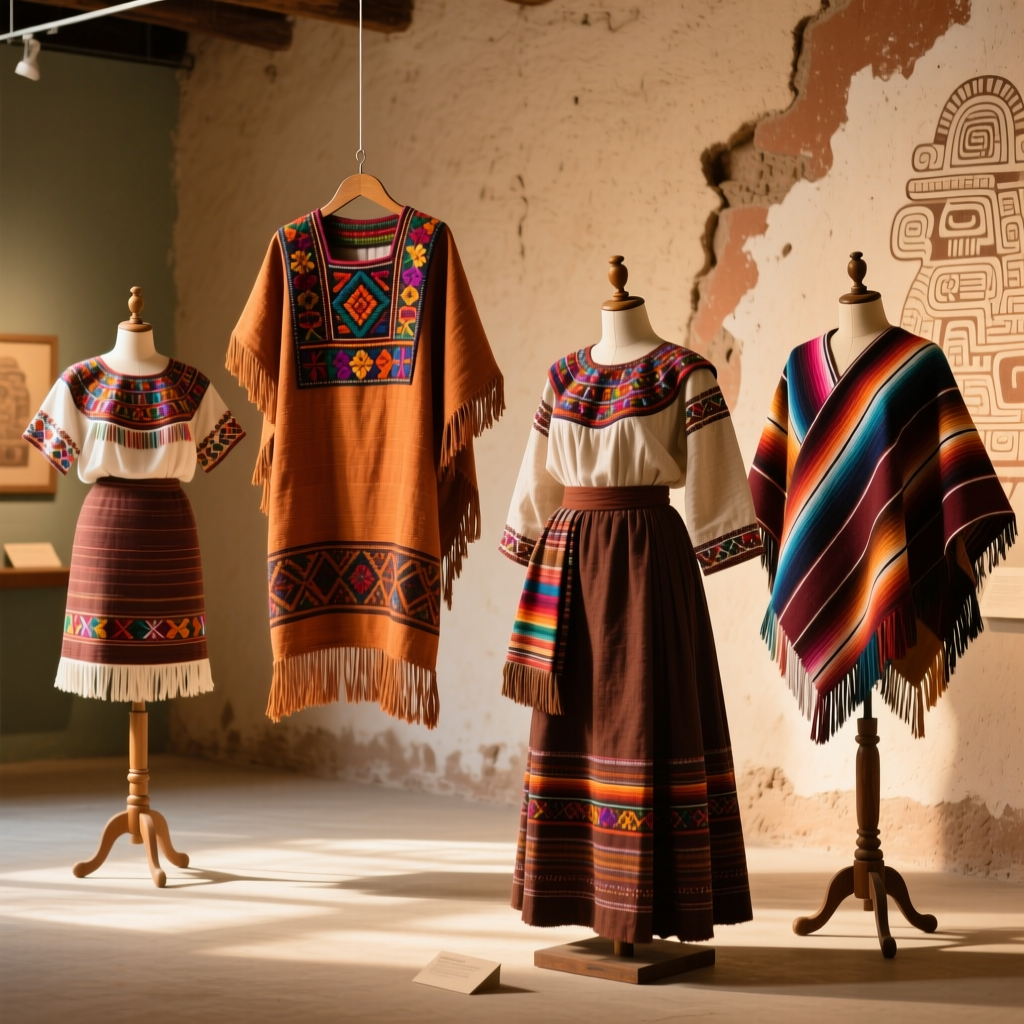
The traditional Mexican wardrobe is composed of several foundational garments, each with its own distinct history, structure, and regional variations. Understanding these core pieces is essential to appreciating the broader landscape of Mexican textile arts.
The Huipil
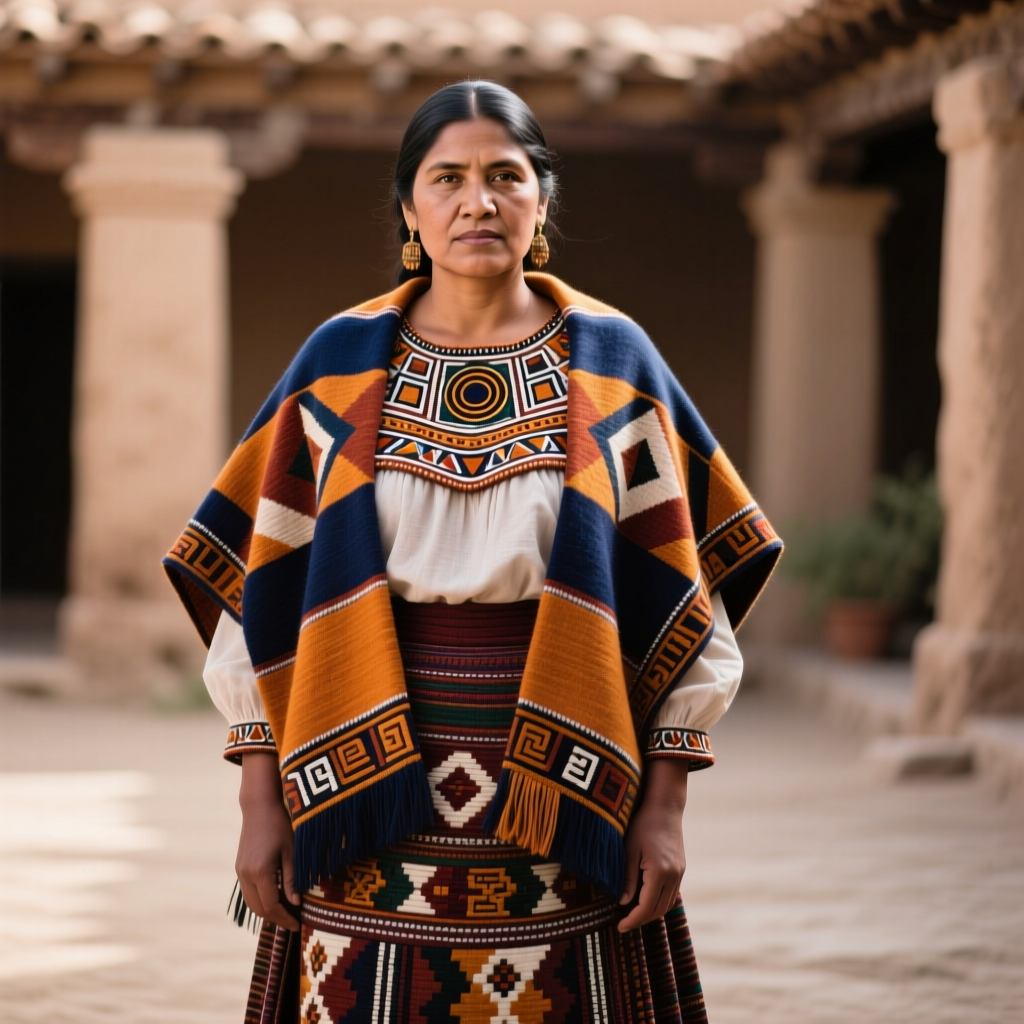
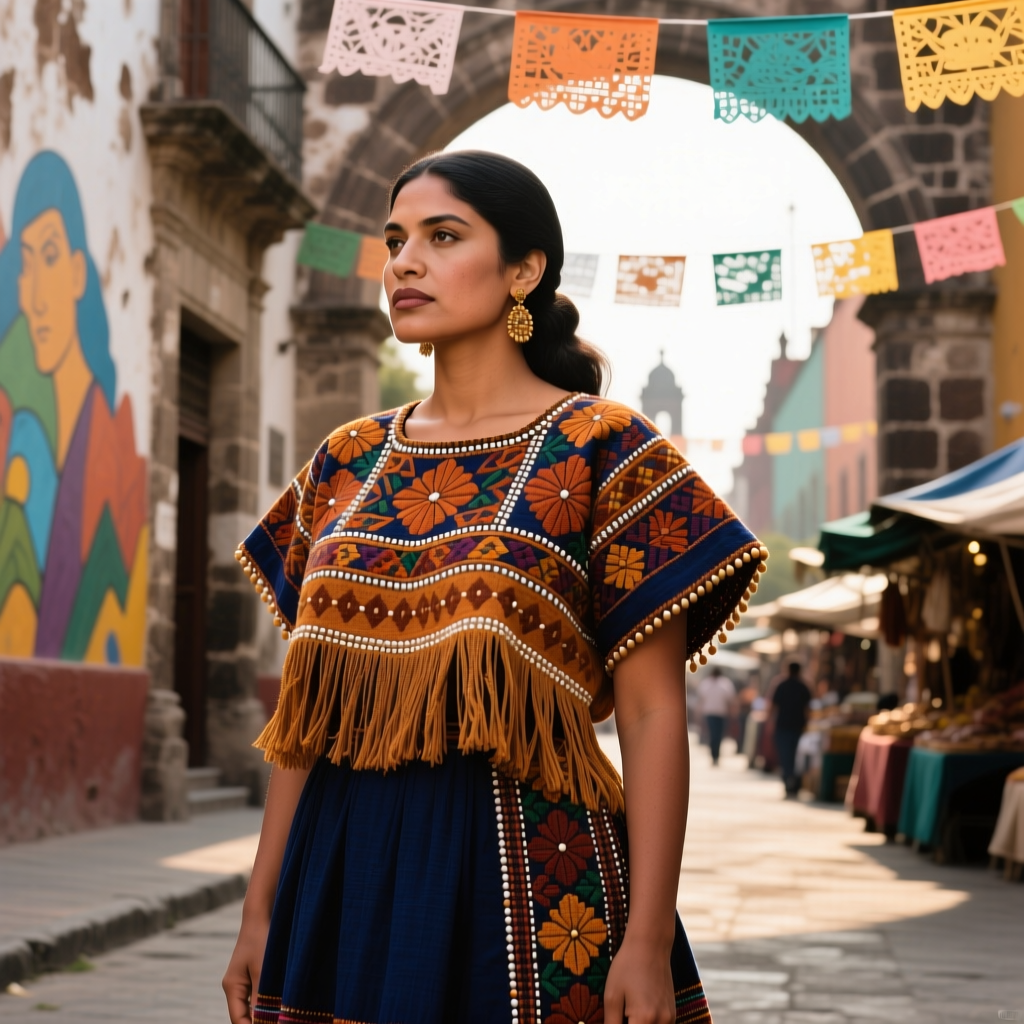
The huipil (pronounced wee-peel) is arguably the most iconic and widespread traditional garment in Mexico and Central America. At its most basic, a huipil is a loose-fitting tunic made from one, two, or three rectangular panels of hand-woven fabric joined together with intricate randa (seaming) stitches. The neckline is often formed by a simple slit or a gathered drawstring. However, the simplicity of its structure belies the complexity of its surface design. In communities across Oaxaca, Chiapas, and Guerrero, the huipil serves as a visual identifier; the specific patterns, colors, and weaving techniques can instantly communicate the wearer’s village, marital status, and social standing. To understand the profound depth of this garment, read our dedicated guide to the huipil.
The Rebozo
The rebozo is a versatile, long, flat shawl that has become a universal symbol of Mexican womanhood. Ranging from simple cotton wraps used for everyday labor to exquisite silk and metallic-thread masterpieces reserved for special occasions, the rebozo is a tool as much as it is a garment. Women use it to carry infants, bundle market goods, provide warmth in the chilly highland evenings, and even as a ceremonial head covering in church. The finest rebozos, particularly those from Santa María del Río in San Luis Potosí, are renowned for their rapacejo—the meticulously hand-knotted fringe that can take months to complete. Discover the rich history of this essential accessory in our article on the Mexican rebozo.
The Sarape and Jorongo
While the huipil and rebozo are predominantly female garments, the sarape is the quintessential male textile of Mexico. Originating in the colder, northern, and central regions, the sarape is a heavy, blanket-like shawl woven on the pedal loom, typically from wool. It is characterized by its bold, geometric patterns and vibrant, contrasting stripes, with the most famous iteration being the Saltillo sarape, which features a central diamond motif surrounded by intricate color gradations. When a sarape is tailored with a slit for the head, it becomes a jorongo or poncho. Learn more about the evolution of this striking outerwear in our history of the sarape.
The Quechquémitl
The quechquémitl is a pre-Hispanic, poncho-like garment worn primarily by women in the cooler, mountainous regions of central Mexico, such as the Sierra Norte of Puebla. It is constructed from two rectangular pieces of fabric woven on a backstrap loom, which are then joined in a way that creates a diamond or triangular shape when draped over the shoulders. Often heavily embroidered with floral and animal motifs, the quechquémitl is a masterpiece of structural engineering and ancient design.
The China Poblana Dress
Often cited as the national dress of Mexico, the China Poblana ensemble is a product of colonial syncretism. The outfit consists of a heavily sequined and beaded white blouse, a vibrant, tiered skirt adorned with the colors of the Mexican flag (green, white, and red), and a silk rebozo. The skirt frequently features the national coat of arms—the eagle perched on a cactus devouring a serpent. Rooted in the urban and mestizo culture of the colonial era, the China Poblana dress is today primarily worn by folkloric ballet dancers and during national celebrations. Explore the fascinating legend behind this dress in our China Poblana guide.
Regional Variations Across Mexico
Mexico is a vast country with diverse climates, topographies, and indigenous groups, resulting in an astonishing array of regional clothing variations. The environment dictates the materials used, while local cosmology dictates the designs.
Oaxaca and the Isthmus of Tehuantepec: Oaxaca is widely considered the textile capital of Mexico. In the Mixtec and Zapotec communities of the Mixteca Alta, huipils are often woven with intricate brocade featuring red birds, horses, and geometric diamonds. Conversely, in the tropical Isthmus of Tehuantepec, the traditional Tehuana dress is a striking departure from indigenous weaving. It consists of a velvet bodice and skirt, heavily embroidered with vibrant, oversized silk flowers and finished with a wide, elaborate lace headdress known as a resplandor. This matriarchal society’s dress became famous globally after being adopted by artist Frida Kahlo.
Chiapas and the Mayan Highlands: In the highlands of Chiapas, the cold climate necessitates heavier garments. In San Juan Chamula, the Tzotzil people wear thick, felted wool tunics that provide immense warmth and water resistance. Meanwhile, in Zinacantán, women wear stunning blouses and shawls embroidered with riotous, brightly colored floral patterns, predominantly in magenta, pink, and orange, reflecting the lush, blooming gardens of their beliefs.
The Yucatán Peninsula: The sweltering heat of the Yucatán requires lightweight, breathable fabrics. The traditional Mayan garment here is the hipil (the local pronunciation of huipil), which is often worn as a long, flowing dress. The most formal iteration is the terno, a three-piece ensemble consisting of a square yoke, a fitted bodice, and a long skirt. The pristine white cotton is adorned with punto de cruz (cross-stitch) embroidery in bright, contrasting colors, often depicting local flora and fauna.
Jalisco and Central Mexico: In the western state of Jalisco, the traditional folkloric dress for women features a wide, sweeping skirt adorned with thick, colorful ribbons, designed to create spectacular visual effects during the Jarabe Tapatío dance. For men, the region is famous for the Charro suit, an ornate, tailored ensemble featuring silver buttons, tight-fitting trousers, and a wide-brimmed sombrero, which evolved from the practical riding gear of Mexican horsemen. Read more about this iconic menswear in our guide to the Charro suit.
Occasions and Everyday Wear
In many rural and indigenous communities, traditional clothing is not relegated to museums or tourist performances; it is a vital part of daily life. Women continue to weave and wear huipils for daily chores, agricultural work, and market visits. However, there is a distinct separation between everyday wear and ceremonial garments. A daily huipil might be woven with simpler patterns and durable cotton, while a traje de fiesta (festival outfit) reserved for weddings, baptisms, and patron saint festivals will feature the finest silk threads, complex brocade, and months of meticulous labor.
Festivals such as Día de los Muertos (Day of the Dead), La Guelaguetza in Oaxaca, and local fiestas patronales are grand showcases of regional textiles. During these occasions, communities don their most sacred and elaborate garments, reinforcing their collective identity and honoring their ancestors. The clothing acts as a bridge between the physical and spiritual realms, with specific garments often required to properly participate in religious ceremonies and traditional dances.
The Cultural Significance and Preservation of Mexican Textiles
Beyond their aesthetic beauty, traditional Mexican garments serve as a visual language that preserves indigenous knowledge, history, and worldview. In communities where written languages were suppressed or lost during the colonial period, textiles became the archives of the people. Every knot, dye, and motif holds ancestral memory. Furthermore, the production of these garments is a cornerstone of the local economy and a primary source of financial independence for indigenous women. Weaving cooperatives allow artisans to bypass exploitative middlemen, ensuring fair compensation for their extraordinary skills and preserving their cultural autonomy.
However, the modern era presents significant challenges to these traditions. The influx of cheap, mass-produced synthetic garments threatens to undercut the market for hand-woven textiles, while the migration of younger generations to urban centers risks breaking the chain of intergenerational knowledge transfer. Additionally, the global fashion industry has frequently engaged in the cultural appropriation of Mexican designs, mass-producing indigenous patterns without credit, context, or compensation to the source communities. Protecting these intellectual and cultural properties is an ongoing battle. To learn more about the ethical consumption of artisan crafts and the fight against appropriation, visit our resource on protecting indigenous textiles.
Frequently Asked Questions
What is the most common traditional Mexican garment?
The most common and widely recognized traditional garment is the huipil. Worn by millions of indigenous women across Mexico and Central America, the huipil is a versatile tunic that serves as the foundation of the traditional wardrobe. Its design, length, and decoration vary wildly from region to region, making it a highly localized expression of identity despite its widespread use.
How are traditional Mexican textiles dyed?
Historically, traditional textiles were dyed using natural, organic sources. The most famous is cochineal, a small insect that lives on nopal cacti, which produces a brilliant, colorfast crimson red when crushed and mixed with an acidic mordant like lime juice. Indigo leaves were used for deep blues, while various barks, mosses, and flowers provided yellows, browns, and greens. Today, while many master weavers still use natural dyes for high-end, ceremonial pieces, the majority of everyday traditional garments utilize commercial synthetic dyes due to their lower cost, ease of use, and vast color availability.
What is the difference between a sarape and a poncho?
While often used interchangeably in casual conversation, there is a distinct structural difference between the two. A sarape is a large, rectangular, blanket-like shawl that is draped over the shoulders or wrapped around the body; it does not have a head opening. A poncho (or jorongo, in the Mexican context) is essentially a sarape that has been tailored with a slit or hole in the center to allow the wearer’s head to pass through, letting the garment hang freely over the torso.
Is it appropriate for non-Mexicans to wear traditional Mexican clothing?
This is a nuanced topic that centers on the difference between cultural appreciation and cultural appropriation. Wearing a garment purchased directly from an indigenous artisan or a verified cooperative is generally viewed as a form of appreciation and economic support. It honors the craft and provides vital income to the community. However, wearing mass-produced, counterfeit versions sold by fast-fashion brands, or wearing sacred, ceremonial garments as costumes or party wear, is highly disrespectful. The key is to understand the context, purchase ethically, and treat the garments with the dignity and respect they command.
Where can I buy authentic traditional Mexican clothing?
The most ethical and rewarding way to purchase authentic traditional Mexican clothing is to buy directly from the artisans or their cooperatives, either by visiting local markets in Mexico or through verified fair-trade online platforms. Organizations and NGOs that partner directly with weaving collectives in states like Oaxaca, Chiapas, and Michoacán ensure that the profits go straight to the creators. When shopping online, look for transparency regarding the artisan's name, their community, and the materials used. Avoid large commercial retailers that offer