Traditional Mexican Clothing for Boys: A Comprehensive Cultural Guide
Traditional Mexican Clothing for Boys: A Comprehensive Cultural Guide
Mexico's sartorial landscape is a vibrant, living tapestry woven from centuries of indigenous heritage, colonial influence, and regional innovation. When we examine traditional Mexican clothing for boys, we uncover far more than mere fabric and thread; we discover a profound narrative of cultural transmission, identity, and familial pride. Dressing young boys in traditional garments is a time-honored practice that connects the newest generation to the deep, ancestral roots of their communities. From the sun-drenched plazas of the Yucatán Peninsula to the rugged, mountainous terrains of Oaxaca, the clothing worn by children serves as a visual language that speaks to the history, climate, and social values of their respective regions.
In contemporary times, traditional attire for boys is most frequently seen during national holidays, religious ceremonies, and folkloric dance performances. However, the historical significance of these garments stretches back to the pre-Columbian era, evolving through the colonial period into the diverse array of styles recognized today. This comprehensive guide explores the origins, essential characteristics, regional variations, and enduring cultural significance of traditional Mexican clothing for boys, offering a deep dive into the garments that have shaped the visual identity of Mexican youth for generations.
The Historical Origins of Boys' Traditional Mexican Garments
To truly understand the traditional clothing worn by Mexican boys today, one must look back to the complex historical convergence of Mesoamerican civilizations and European colonizers. Prior to the Spanish arrival, indigenous children in empires such as the Aztec and Maya wore garments dictated by strict social hierarchies and the local climate. Young boys typically wore a 'maxtlatl' (a type of loincloth) and, in cooler regions or during ceremonies, a 'tilmatli' (a woven cloak tied at the shoulder). These garments were crafted from native cotton, agave fibers, and animal skins, utilizing backstrap loom weaving techniques that are still practiced by artisans today.
The Spanish colonization in the sixteenth century introduced European concepts of modesty, tailoring, and new materials. The colonizers brought wool, silk, and the pedal loom, alongside European silhouettes such as trousers, button-down shirts, and structured hats. The resulting syncretism gave birth to the 'mestizo' wardrobe. Indigenous populations were often forced to adopt European-style clothing, but they infused these new silhouettes with native symbolism, vibrant natural dyes, and intricate embroidery. Over the centuries, this blended wardrobe evolved into the regional folk costumes we recognize today. For young boys, this meant transitioning from simple indigenous loincloths to the 'calzones de manta' (white cotton trousers) and woven tunics that would become the foundational base of rural and traditional Mexican children's wear.
As Mexico moved through its independence and into the modern era, regional identities solidified. The clothing of young boys began to reflect the specific trades, climates, and cultural pride of their home states. The rural 'campesino' (peasant) attire became a symbol of national pride, while the elaborate equestrian suits of the hacienda owners were adapted into festive wear for children. This historical layering ensures that every time a boy dons a traditional outfit, he is wearing a garment that tells the story of Mexico's complex, resilient, and beautiful history.
Key Characteristics and Essential Garments
The traditional wardrobe for Mexican boys is characterized by its emphasis on breathability, durability, and intricate handcrafted details. While styles vary wildly from state to state, several foundational garments appear repeatedly across the country, adapted to suit local climates and customs.
Calzones de Manta and Camisa de Manta
The absolute bedrock of traditional Mexican boys' clothing is the 'calzones de manta'. These are loose-fitting, drawstring trousers made from unbleached, lightweight cotton. They are almost always paired with a matching 'camisa de manta' (a simple, collarless or band-collar cotton shirt). This ensemble is highly practical for warm climates and allows for the freedom of movement required for children playing or performing folkloric dances. The manta fabric is celebrated for its softness and ability to wick away moisture, making it an enduring staple in rural and traditional wardrobes.
The Guayabera
In tropical and coastal regions, the guayabera is the quintessential formal and semi-formal garment for boys. Characterized by its distinctive vertical pleats (known as 'alforzas'), embroidered panels, and two or four front patch pockets, the guayabera is a masterpiece of functional elegance. Typically worn untucked over trousers, it provides excellent ventilation while maintaining a polished appearance. For a deeper understanding of the construction and history of this iconic shirt, readers can explore our guayabera shirt guide, which details the evolution of this garment from rural workwear to high-society attire.
The Charro Suit
For formal celebrations, mariachi performances, and national holidays, the Charro suit is the most prestigious garment a Mexican boy can wear. Originating from the skilled horsemen of the Jalisco region, the Charro suit is heavily tailored, often featuring tight-fitting trousers adorned with silver buttons ('botonadura') running down the outer seams. The accompanying jacket is short-waisted and elaborately embroidered with floral or geometric patterns. Young boys wearing miniature Charro suits often complete the look with a wide-brimmed sombrero, a silk bow tie, and leather boots. The history of the Charro suit is a fascinating journey from rural equestrian necessity to a globally recognized symbol of Mexican pride.
Serapes, Ponchos, and Rebozos
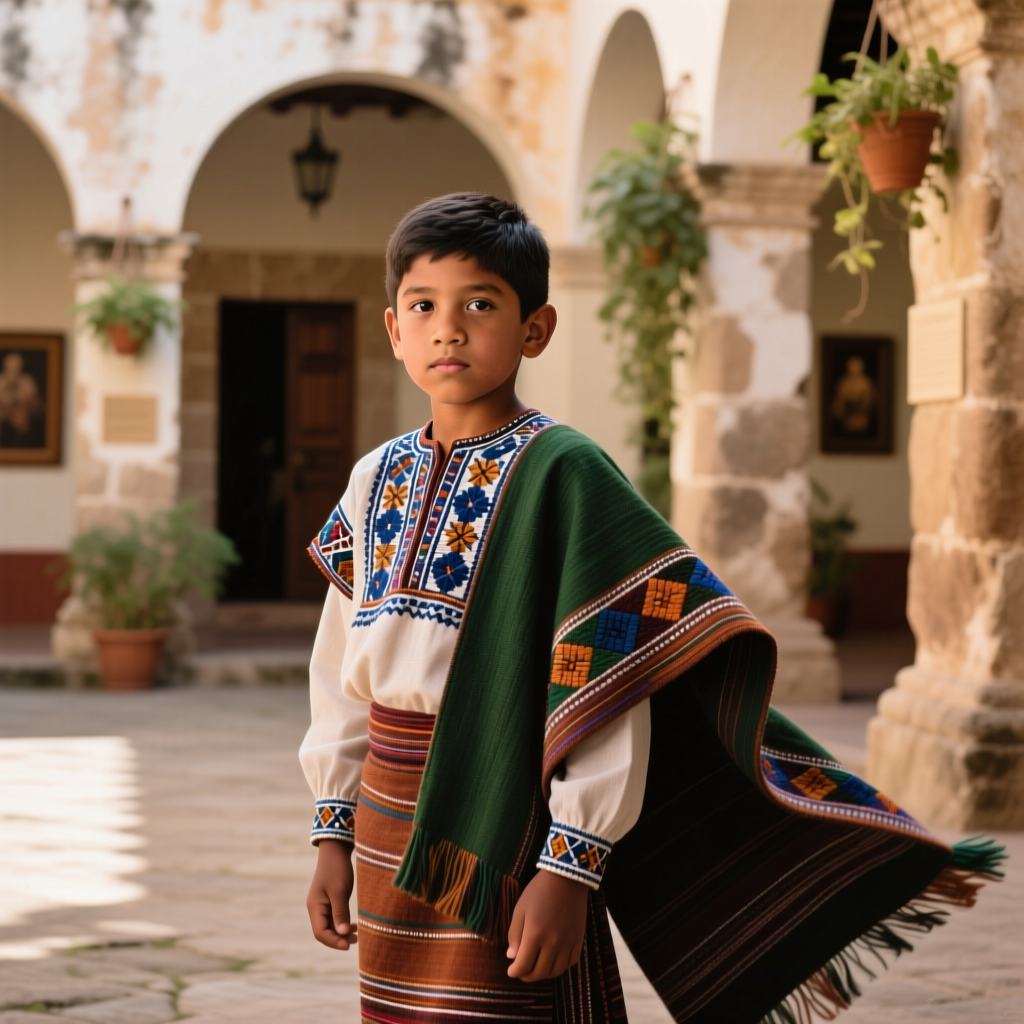
In the cooler, mountainous regions of central and northern Mexico, outerwear is essential. The serape (a long, blanket-like shawl worn over the shoulders) and the poncho are traditional garments that provide warmth and vibrant visual flair. Woven from wool and featuring striking geometric patterns or the famous Saltillo diamond motifs, these garments are often passed down through generations. While the rebozo is traditionally a women's garment, young children of all genders are sometimes wrapped in these intricately woven textiles during cold weather or religious ceremonies.
Huaraches and Footwear
Traditional footwear for boys centers around the huarache, a woven leather sandal that has been utilized since pre-Hispanic times. The interwoven leather straps provide support and breathability, making them ideal for warm weather. For more formal or equestrian-inspired outfits, boys will wear 'botines' (short leather boots) with a slight heel, designed originally for riding but now a staple of the festive Charro ensemble.
Regional Variations and Festive Occasions
Mexico is a vast country with diverse microclimates, indigenous populations, and colonial histories. Consequently, traditional boys' clothing is not a monolith; it is a collection of distinct regional styles, each worn with immense pride during specific festive occasions.
The Yucatán Peninsula
In the sweltering heat of the Yucatán, traditional clothing is designed to reflect the sun and maximize airflow. Boys typically wear pristine white cotton trousers and white guayaberas, often featuring delicate, cross-stitch embroidery ('punto de cruz') in vibrant colors that reflect the region's Maya heritage. The outfit is usually accessorized with a 'jipijapa' (a finely woven palm hat) and a red bandana tied around the neck or waist. This attire is prominently featured during the 'Vaquería' festivals and regional jarana dances, where boys participate in lively, rhythmic footwork.
Oaxaca and Chiapas
The southern states of Oaxaca and Chiapas are the heartland of Mexico's indigenous textile traditions. Here, boys' clothing often incorporates hand-woven wool tunics, heavily embroidered cotton shirts, and vibrant sashes. The embroidery is not merely decorative; it is a codified language of flora, fauna, and cosmological beliefs. To truly appreciate the complexity of these designs, one must study the Oaxacan textiles that have been perfected over centuries. During the Guelaguetza festival or local patron saint feast days, boys dress in the specific traditional attire of their village, serving as living representatives of their community's unique heritage.
Jalisco and the Bajío Region
In Jalisco, the birthplace of mariachi and tequila, the Charro influence dominates. For boys, festive occasions like the Fiestas de Octubre or local charreadas (rodeos) call for the elegant, silver-buttoned Charro suits mentioned previously. Alternatively, the 'Tapatío' folkloric costume for boys features a simpler, more rustic interpretation of the hacienda worker's attire, often including a plain white shirt, dark trousers, a red sash, and a wide-brimmed sombrero adorned with ribbons.
The Northern States
In the arid, rugged northern states like Chihuahua, Sonora, and Nuevo León, the traditional clothing for boys reflects the 'vaquero' (cowboy) culture. Denim or heavy cotton trousers, leather chaps, plaid or pearl-snap shirts, and northern-style hats (which feature wider brims and different crowns than the central Mexican sombrero) are standard. This attire is proudly worn during regional rodeos, polka dances, and local fiestas, celebrating the rugged, frontier spirit of the north.
Occasions for Traditional Wear
Traditional clothing for boys is most visible during major cultural and religious milestones. During Día de los Muertos (Day of the Dead), boys may dress as elegant 'catrines' in vintage-style suits or don traditional peasant wear while sporting intricate calavera (skull) face paint. During Fiestas Patrias in September, it is customary for children to attend school and community parades dressed in regional folk costumes, often incorporating the green, white, and red of the national flag. Furthermore, children participating in Ballet Folklórico troupes wear highly stylized, historically accurate versions of regional garments, learning the history of their country through the physical medium of dance and dress. For families looking to coordinate their children's heritage wear, our guide to traditional Mexican clothing for girls provides excellent complementary styling insights.
Cultural Significance and Artisanal Heritage
The decision to dress a boy in traditional Mexican clothing is an act of cultural preservation. In an era of rapid globalization and fast fashion, maintaining these sartorial traditions is a powerful statement of identity and resistance against cultural homogenization. When parents and grandparents purchase hand-embroidered shirts or hand-woven ponchos for their children, they are directly supporting local artisans, indigenous cooperatives, and rural economies. The creation of these garments often involves techniques that require months of labor, from harvesting and spinning native cotton to dyeing threads with cochineal insects and indigo, and finally weaving the fabric on a traditional loom.
For the child, wearing these garments fosters a deep, tactile connection to their ancestry. It instills a sense of pride and belonging, teaching them that their heritage is something to be celebrated visibly and joyfully. The garments themselves become heirlooms; a finely crafted Charro jacket or a meticulously embroidered guayabera is often passed down from older brothers to younger siblings, or from fathers to sons, carrying the memories of past celebrations, dances, and family gatherings.
Moreover, the preservation of these garments ensures that the indigenous embroidery techniques and weaving methods are not lost to time. By creating a sustained demand for authentic, high-quality traditional children's clothing, communities ensure that master weavers and embroiderers can pass their skills on to the next generation. The clothing of Mexican boys, therefore, is not just a reflection of the past; it is an active, vital investment in the cultural and economic future of Mexico's artisanal communities.
Frequently Asked Questions
What is the most common traditional outfit for Mexican boys?
The most ubiquitous and foundational traditional outfit for Mexican boys is the 'calzones de manta' paired with a matching cotton shirt. This simple, white, unbleached cotton ensemble is worn across various regions, particularly in rural areas and during folkloric dance performances. It is highly valued for its comfort, breathability, and historical authenticity, serving as a blank canvas that can be accessorized with regional sashes, hats, and ponchos depending on the specific state's traditions.
How do I choose the right traditional Mexican clothing for a child's celebration?
Choosing the right outfit depends heavily on the nature of the event and the regional heritage you wish to celebrate. For formal events like weddings, baptisms, or mariachi performances, a miniature Charro suit or a high-quality linen guayabera is highly appropriate. For school festivals, Fiestas Patrias, or folkloric dancing, a regional folk costume (such as the Jalisco Tapatío suit or a Yucatán white cotton set) is ideal. Always prioritize natural fabrics like cotton and wool to ensure the child remains comfortable, especially during outdoor events or active dancing.
Are traditional Charro suits for boys different from adult versions?
While they share the same fundamental design, Charro suits for boys are tailored specifically for a child's proportions and comfort. The heavy, restrictive wool fabrics used in adult winter Charro suits are often replaced with lighter cotton blends or softer wools for children. Additionally, the intricate silver 'botonadura' (buttons) and heavy embroidery might be simplified or made with lighter, child-safe materials to prevent the suit from being too heavy or cumbersome for a young boy to wear while playing or performing.
What fabrics are traditionally used in boys' Mexican garments?
Authentic traditional garments rely heavily on natural, locally sourced fibers. 'Manta' (unbleached cotton) is the most common fabric for everyday and dance wear due to its breathability. Linen and high-quality cotton blends are used for guayaberas in coastal regions. In the cooler, mountainous regions, virgin wool and sheep's wool are woven into serapes, ponchos, and heavier trousers. Silk is occasionally used for high-end Charro suits or ceremonial sashes, while agave fibers (like ixtle) were historically used for rougher workwear and accessories.
Where can I learn more about the indigenous textiles used in these garments?
The indigenous textiles of Mexico are a vast and complex subject, encompassing thousands of years of history and dozens of distinct ethnic groups. To explore the specific weaving techniques, natural dyeing processes, and symbolic meanings behind the embroidery found on traditional boys' tunics and shirts, we highly recommend visiting our comprehensive archive on indigenous embroidery techniques. This resource provides a deep dive into the artisanal cooperatives and historical contexts that keep these magnificent textile traditions alive today.