Traditional Indian Clothing for Women: A Comprehensive Cultural Guide
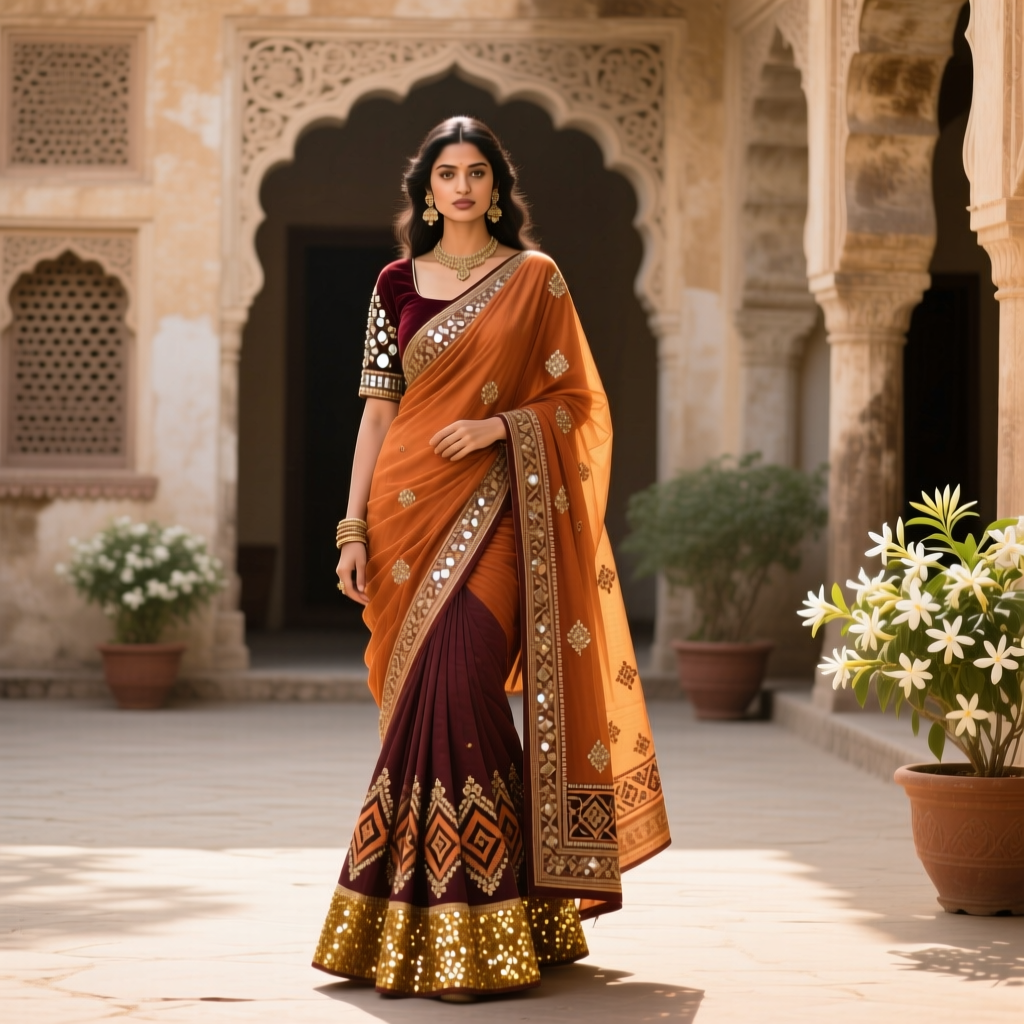
Traditional Indian Clothing for Women: A Comprehensive Cultural Guide
Few cultures in the world boast a textile heritage as vast, intricate, and enduring as India's. For thousands of years, the women of the Indian subcontinent have adorned themselves in garments that are far more than mere clothing—they are canvases of identity, markers of region and community, expressions of devotion, and masterworks of artisanship passed down through countless generations. From the flowing drape of a handwoven sari to the regal silhouette of an embroidered lehenga, traditional Indian clothing for women represents one of humanity's most diverse and symbolically rich sartorial traditions.
Unlike Western fashion, which tends to cycle rapidly through trends, Indian garments have maintained their essential forms for centuries while continuously evolving in textile technique, embellishment, and styling. A woman wearing a Kanjeevaram silk sari today participates in a tradition that stretches back to ancient temple weavers. A bride adorned in a red lehenga carries forward customs that predate recorded history. This guide explores the major categories of traditional Indian clothing for women—their origins, characteristics, regional variations, and the deep cultural significance woven into every thread.
Whether you are exploring your own heritage, preparing for a cultural celebration, or simply fascinated by global textile traditions, this comprehensive guide will illuminate the magnificent world of Indian women's attire. For more on specific garments and their histories, browse our complete collection of garment guides.
The Sari: India's Most Iconic Garment
No discussion of traditional Indian clothing for women can begin anywhere other than the sari (also spelled saree)—a garment so iconic that it has become synonymous with Indian culture itself. The sari is, in its most essential form, a single length of unstitched fabric, typically ranging from five to nine yards in length, draped around the body in a multitude of styles that vary dramatically by region, community, and occasion.
Origins and Historical Evolution
The sari's origins can be traced to the Indus Valley Civilization, where archaeological evidence suggests that women wore draped garments as early as 2800 BCE. The word "sari" itself derives from the Sanskrit word śāṭī, meaning a strip of cloth. Ancient texts, including the Vedas and the epic Mahabharata, contain numerous references to draped garments worn by women, confirming that this style of dress has been continuous for millennia.
What makes the sari remarkable from a design perspective is its reliance on a single piece of unstitched fabric. In ancient Indian tradition, unstitched cloth was considered pure and auspicious—a belief rooted in Hindu philosophy that associated the act of piercing fabric with a needle as a form of violence. The sari, therefore, was not merely practical but spiritually significant. Over centuries, the garment evolved alongside advances in weaving, dyeing, and embroidery, absorbing influences from Mughal courts, colonial encounters, and regional kingdoms while retaining its fundamental draped structure.
Construction and Draping Styles
A traditional sari ensemble consists of three elements: the sari itself, a fitted blouse known as a choli (or ravika), and a petticoat (ghagra or inskirt) that provides structure and support for the drape. The sari fabric is wrapped around the waist, pleated at the front, and then draped over the shoulder—this shoulder portion is called the pallu or anchal, and it is often the most elaborately decorated section of the garment.
However, this describes only the most common draping style, known as the Nivi style, which originated in Andhra Pradesh and became widespread during the colonial era. In truth, there are over one hundred documented draping styles across India, each tied to a specific region or community:
- Bengali Style (West Bengal): The sari is draped without pleats, with the pallu coming over the left shoulder and then brought back under the right arm. Keys were traditionally tied to the pallu's corner, symbolizing the woman's role as keeper of the household.
- Gujarati Style: The pallu is draped over the right shoulder instead of the left and is spread across the front of the body to display its design.
- Madisar Style (Tamil Nadu): Worn traditionally by Brahmin women, this style uses a nine-yard sari and involves draping the fabric between the legs to create a trouser-like effect, allowing for ease of movement during religious rituals.
- Kodagu Style (Karnataka): The pleats are placed at the back rather than the front, and the pallu is draped over the right shoulder.
- Mundum Neriyathum (Kerala): A two-piece garment consisting of a lower wrap (mundu) and an upper cloth (neriyathu), considered one of the oldest surviving forms of the sari.
Textile Varieties and Occasions
The sheer diversity of sari textiles is staggering. Each region of India has developed its own signature weaving traditions, resulting in saris that are identifiable by their fabric, pattern, color palette, and technique. Some of the most celebrated varieties include:
- Banarasi Silk (Uttar Pradesh): Woven in Varanasi, these saris feature opulent gold and silver zari work with intricate Mughal-inspired motifs such as floral patterns, jal (net) designs, and kalga (paisley) shapes. They are considered essential bridal wear in many North Indian communities.
- Kanjeevaram Silk (Tamil Nadu): Known for their heavy silk fabric, bold color contrasts, and temple-border designs, Kanjeevaram saris are woven with mulberry silk thread and real gold zari. The body and border are often woven separately and then interlocked together—a technique called korvai.
- Chanderi (Madhya Pradesh): These lightweight saris blend silk and cotton, featuring delicate motifs inspired by nature and geometry. They are prized for their sheer texture and subtle elegance.
- Patola (Gujarat): Created using the extraordinarily complex double ikat technique, where both warp and weft threads are tie-dyed before weaving, Patola saris can take months or even years to complete and are considered heirloom pieces.
- Baluchari (West Bengal): These silk saris feature narrative panels on the pallu depicting scenes from mythology, particularly the Mahabharata and Ramayana.
- Bandhani (Rajasthan & Gujarat): Created through a meticulous tie-and-dye process, Bandhani saris feature thousands of tiny dots forming elaborate patterns. They are especially popular for weddings and festivals.
- Tussar Silk (Jharkhand & Bihar): Woven from wild silk, these saris have a natural golden hue and a textured, organic quality that sets them apart from cultivated silk varieties.
Saris are worn across the full spectrum of occasions—from simple cotton saris for daily wear to heavily embroidered and embellished silk saris for weddings, religious ceremonies, and major festivals such as Diwali, Durga Puja, and Pongal. For a deeper exploration of draped garments across cultures, visit our guide to traditional draped garments.
The Salwar Kameez: Versatility and Grace
The salwar kameez (also spelled shalwar kameez) is the second most widely worn traditional garment among Indian women, particularly dominant in North India, Pakistan, and Bangladesh. It consists of three pieces: the kameez (a tunic or long top), the salwar (loose-fitting trousers that taper at the ankle), and the dupatta (a long scarf or shawl draped over the shoulders or head).
Origins and Historical Development
The salwar kameez traces its roots to the Central Asian and Persian garments introduced to the Indian subcontinent through successive waves of migration and conquest, particularly during the Mughal era. The Mughal courts, which ruled much of India from the early sixteenth to the mid-nineteenth century, were instrumental in establishing tailored clothing as a mark of refinement and status. While the sari represented the indigenous draped tradition, the salwar kameez represented the stitched tradition—two parallel streams of Indian sartorial culture that have coexisted and influenced each other for centuries.
Over time, the garment was thoroughly Indianized, absorbing local textile techniques, embroidery traditions, and aesthetic sensibilities. What began as court dress became everyday wear for millions of women, valued for its comfort, modesty, and adaptability to different climates and lifestyles.
Key Variations
The salwar kameez is remarkably versatile, and its basic three-piece structure has given rise to numerous regional and stylistic variations:
- Punjabi Suit: The classic version with a straight-cut kameez, a salwar that is wide at the top and narrow at the ankle, and a dupatta. This is perhaps the most universally recognized form.
- Patiala Suit: Originating from the royal courts of Patiala in Punjab, this style features extremely pleated and voluminous salwar trousers that require significantly more fabric, creating a distinctive gathered silhouette.
- Churidar: Instead of a loose salwar, the churidar features tightly fitted trousers that gather in folds around the ankles (the name means "bangle-like" because the folds resemble stacked bangles). It is often paired with a longer kameez or an anarkali (a frock-style top that flares from the waist).
- Anarkali Suit: Named after the legendary Mughal courtesan, this style features a long, flowing, frock-like kameez that is fitted at the bodice and flares dramatically from the empire waist. It is a popular choice for formal occasions and celebrations.
- Sharara and Gharara: These feature wide-legged, flared trousers that are either continuous (sharara) or fitted to the knee and then dramatically flared (gharara). They are heavily associated with Lucknowi and Hyderabadi Muslim wedding traditions.
- Palazzo Suit: A contemporary adaptation pairing the kameez with wide-legged palazzo trousers, offering a modern silhouette while maintaining traditional elements.
Fabrics, Embroidery, and Occasions
The salwar kameez is crafted in virtually every textile available in India, from everyday cotton and linen to luxurious silks, chiffons, georgettes, and velvets. The choice of fabric is closely tied to occasion and season: cotton suits for daily wear and summer, silk and brocade for festive occasions, and heavy velvet with zardozi embroidery for winter weddings.
Embroidery traditions associated with the salwar kameez are among India's most celebrated needlework arts:
- Phulkari (Punjab): Meaning "flower work," this embroidery style uses brightly colored silk threads on handspun cotton, creating vibrant geometric and floral patterns. A fully embroidered phulkari piece is called a bagh (garden).
- Chikankari (Lucknow): A delicate white-on-white embroidery tradition featuring intricate shadow-work, openwork, and surface stitching that creates an ethereal, lace-like effect on fine muslin or organza.
- Zardozi: A heavy metal embroidery using gold and silver threads, beads, sequins, and sometimes precious stones. Historically reserved for royalty, zardozi is now widely used on bridal and formal salwar suits.
- Kashidakari (Kashmir): Fine needlework inspired by the natural beauty of the Kashmir Valley, featuring motifs of chinar leaves, lotus blossoms, and paisleys.
The salwar kameez serves as appropriate attire for nearly every occasion in a woman's life—college, office, casual outings, religious visits, festivals, and weddings. Its adaptability is arguably unmatched by any other traditional garment in the world. Explore more about traditional embroidery techniques from around the globe in our dedicated guide.
The Lehenga Choli: Celebration and Ceremony
The lehenga choli (also known as ghagra choli or chaniya choli) is the quintessential celebratory garment of Indian women—a three-piece ensemble consisting of a long, flared skirt (lehenga or ghagra), a fitted blouse (choli), and a dupatta. If the sari embodies timeless grace and the salwar kameez represents everyday versatility, the lehenga choli is the embodiment of festivity, joy, and ceremonial splendor.
Origins and Cultural Roots
The lehenga choli has ancient origins in the Indian subcontinent. Sculptures and paintings from the Gupta period (approximately fourth to sixth centuries CE) depict women wearing skirt-and-blouse combinations that closely resemble the modern lehenga choli. The garment has particularly deep roots in Rajasthan, Gujarat, and the broader North Indian cultural sphere, where it has been the preferred attire for festivals, weddings, and folk performances for centuries.
In Rajasthan and Gujarat, the lehenga choli—known locally as chaniya choli—is inseparable from the folk traditions of these regions. The swirling, mirror-embroidered skirts of Rajasthani women performing the Ghoomar dance, or Gujarati women dancing the Garba during Navratri, are among the most recognizable images of Indian cultural expression.
Design Elements and Variations
The lehenga is characterized by its voluminous, flared silhouette, which is achieved through various cutting and construction techniques. The amount of fabric used—often measured in kalis (panels)—determines the fullness of the flare. Key design variations include:
- A-Line Lehenga: Fitted at the waist and gradually flaring to the hem, creating a silhouette resembling the letter A. This is a universally flattering and widely popular style.
- Circular Lehenga: Cut from a full circle or multiple circles of fabric, this style creates an extremely voluminous flare that is especially dramatic when twirling—making it the preferred choice for dance performances and wedding receptions.
- Mermaid/Fishtail Lehenga: Fitted through the hips and knees, then flaring dramatically at the calf or ankle, creating a silhouette that blends Western fashion influences with traditional Indian embellishment.
- Panel Lehenga: Constructed from multiple vertical panels (kalis), each of which can feature different embroidery, prints, or fabric, creating a richly layered visual effect.
- Sharara-Style Lehenga: A hybrid that appears to be a lehenga but is actually a pair of extremely wide-legged trousers, offering the visual drama of a flared skirt with the practical ease of pants.
The choli, or blouse, is equally important to the ensemble and ranges from modest, full-coverage designs to daring backless styles held together by strings (dori), depending on the occasion and regional norms. The dupatta completes the look and can be draped in numerous ways—over one shoulder, across both shoulders, over the head, or in the elaborate seedha pallu style where it is spread across the front of the body.
The Bridal Lehenga
Perhaps no garment in Indian culture carries more emotional and cultural weight than the bridal lehenga. In most North Indian Hindu and Sikh wedding traditions, the bride wears a heavily embroidered lehenga, traditionally in red—a color symbolizing fertility, prosperity, and marital bliss. The bridal lehenga is often the most expensive garment a woman will ever own, featuring months of hand embroidery, real gold or silver zari work, and embellishments including kundan, dabka, nakshi, sequins, beads, and sometimes semi-precious stones.
While red remains the most traditional bridal color, contemporary brides increasingly opt for shades of pink, maroon, coral, gold, and even pastels—reflecting both personal preference and evolving fashion sensibilities. The lehenga is typically passed down as an heirloom, with mothers gifting their wedding lehengas to daughters, creating a tangible thread connecting generations of women in a family.
For more on ceremonial and bridal garments from cultures around the world, see our guide to traditional wedding attire.
Regional Variations: A Subcontinent of Sartorial Diversity
India's vast geography, linguistic diversity, and complex history have produced an extraordinary range of regional clothing traditions that go well beyond the three major garment types discussed above. Every state, community, and sometimes even individual villages have distinctive textile and garment traditions that reflect local climate, available materials, religious practices, and aesthetic values.
South India
In South India—encompassing Tamil Nadu, Kerala, Karnataka, Andhra Pradesh, and Telangana—the sari dominates women's traditional attire, but in forms distinctly different from North Indian styles. The Kanjeevaram silk sari of Tamil Nadu, with its bold color blocking and temple motifs, is one of the most prestigious textiles in the country. In Kerala, the traditional mundum neriyathum—a two-piece cream-colored garment with a gold border (kasavu)—is the defining attire for women during the Onam festival and other auspicious occasions. Karnataka is home to the distinctive Ilkal and Molakalmuru silk saris, while Andhra Pradesh produces the exquisite Pochampally ikat and Venkatagiri cotton saris.
The half-sari (known as langa voni in Telugu, langa davani in Kannada, and pavadai davani in Tamil) is a traditional garment worn by young, unmarried women across South India. It consists of a skirt, a blouse, and a shorter length of fabric draped over the shoulder, serving as a coming-of-age garment that marks the transition from childhood to young womanhood.
East and Northeast India
In West Bengal and Odisha, the sari is draped in distinctive styles and is complemented by unique textile traditions. The Baluchari and Tant (handloom cotton) saris of Bengal, and the Sambalpuri ikat saris of Odisha, are celebrated for their artistry. Bengali women traditionally wear white saris with red borders (laal paar) during Durga Puja, creating a striking visual identity during one of India's grandest festivals.
The northeastern states—Assam, Manipur, Nagaland, Meghalaya, and others—have clothing traditions that are markedly different from the rest of India, reflecting their distinct ethnic identities and Southeast Asian cultural connections. In Assam, women wear the mekhela chador, a two-piece garment consisting of a cylindrical lower wrap (mekhela) and a drape (chador) worn over the upper body. It is woven from the lustrous muga silk (golden silk), eri silk (peace silk), or pat silk, all unique to the region. In Manipur, the phanek (a wrapped skirt) and innaphi (a translucent shawl) form the traditional women's attire.
West India
Rajasthan and Gujarat are treasure troves of textile heritage. Beyond the lehenga choli discussed earlier, Rajasthani women traditionally wear the poshak—a layered ensemble consisting of a kanchli (blouse), kurti (a loose top worn over the blouse), ghagra (skirt), and odhni (veil). The bandhani (tie-dye) and block printing traditions of these states produce some of India's most vibrant textiles, with communities such as the Khatri, Rabari, and Meghwal each maintaining distinctive embroidery and mirror-work styles.
In Maharashtra, women traditionally wear the nauvari (nine-yard) sari draped in the kachha style, where the fabric is passed between the legs and tucked at the back, creating a dhoti-like lower portion. This style was historically practical for the warrior women of the Maratha empire and remains the preferred drape for the Lavani dance form and Maharashtrian weddings.
Central and Tribal India
The tribal communities of Central India—including the Gond, Bhil, Santhal, and many other groups—maintain clothing traditions that are among the oldest on the subcontinent. Tribal women often wear saris draped without a blouse, wrapped tightly around the body and secured at the shoulder, accessorized with elaborate silver jewelry, beadwork, and tattoo art that serves as a form of bodily adornment complementing the garment. The Maheshwari and Chanderi weaving traditions of Madhya Pradesh produce saris of exceptional delicacy and refinement, representing a more urban textile tradition in the same geographic region.
To understand how these regional traditions connect to broader patterns of cultural dress, explore our cultural heritage textiles collection.
Cultural Significance and Symbolism
Traditional Indian clothing for women is deeply embedded with cultural, religious, and social meaning. Every element—from the choice of color and fabric to the draping style and accompanying jewelry—communicates information about the wearer's identity, status, community, marital state, and the occasion at hand.
Color Symbolism
Color in Indian clothing is never arbitrary. Red, the most auspicious color in Hindu tradition, symbolizes fertility, passion, and marital commitment—it is the quintessential bridal color and is worn during weddings, Karva Chauth, and other marriage-related rituals. Yellow represents knowledge, learning, and spring; it is worn during Basant Panchami and Haldi ceremonies. White, in many Hindu communities, is associated with mourning and is worn by widows, though in Kerala and among certain communities, white (often with gold borders) is the most auspicious color for festivals. Green symbolizes new beginnings and is favored during Mehendi ceremonies. Saffron represents sacrifice, purity, and spiritual renunciation.
Marital Status and Adornment
Traditional Indian clothing works in concert with jewelry and other adornments to signal marital status. In many communities, married women are expected to wear specific markers alongside their clothing: sindoor (vermilion powder in the hair parting), mangalsutra (a sacred necklace), glass bangles, and bichhiya (toe rings). The manner of draping a sari—particularly whether the pallu covers the head—can also indicate marital status and respect, especially in the presence of elders or in temple settings.
Religious and Ritual Significance
Clothing plays a central role in Indian religious practice. Silk garments, particularly handwoven saris, are considered pure and are preferred for temple visits and puja (worship). Specific deities are associated with specific colors and garments: Goddess Lakshmi is depicted in red and gold, Goddess Saraswati in white, and Goddess Durga in red. During festivals, the act of wearing new clothes—called vastra in Sanskrit—is itself a form of auspicious ritual, symbolizing renewal and prosperity.
The tradition of streedhan (a woman's personal wealth) often includes textiles and jewelry given to a bride by her family, making garments not just clothing but financial assets and emotional heirlooms. Many Indian families maintain collections of saris and lehengas that are several generations old, brought out for special occasions and treated with the reverence accorded to sacred objects.
Social Identity and Community
Traditional clothing serves as a powerful marker of community identity. The specific weave, pattern, and draping style of a sari can often identify a woman's region, caste, and even village of origin. The Parsi gara sari, the Kota doria of Rajasthan, the Muga mekhela chador of Assam—each of these garments carries within it the history, aesthetics, and values of the community that created it. In an era of globalization and fast fashion, the continued wearing of traditional garments represents a conscious act of cultural preservation and identity assertion.
The Indian government and numerous non-governmental organizations have recognized the importance of preserving these traditions through initiatives such as Geographical Indication (GI) tags, which legally protect the names and techniques of specific regional textiles—ensuring that a Kanjeevaram sari can only be called so if it is woven in the designated region using traditional methods. Handloom cooperatives and artisan collectives across the country work to sustain weaving and embroidery communities whose skills might otherwise be lost to industrialization.
For more on how traditional garments serve as cultural identity markers worldwide, visit our guide on clothing and cultural identity.
Frequently Asked Questions
What is the most common traditional outfit worn by Indian women?
The sari is the most widely recognized and commonly worn traditional garment among Indian women across all regions, age groups, and communities. However, the salwar kameez is equally prevalent as daily wear, particularly in North India, where its comfort and practicality make it the preferred choice for everyday activities, work, and casual occasions. The lehenga choli is generally reserved for festive occasions, weddings, and celebrations rather than daily wear. In practice, most Indian women maintain wardrobes that include all three garment types, selecting among them based on the occasion, season, and personal preference.
How many different ways can a sari be draped?
There are more than one hundred documented sari draping styles across India, though the exact number depends on how granularly one categorizes regional and community variations. The most widely worn style today is the Nivi drape from Andhra Pradesh, which features front pleats and a pallu over the left shoulder. Other major styles include the Bengali drape (without pleats), the Gujarati drape (pallu over the right shoulder), the Madisar drape (nine-yard trouser style from Tamil Nadu), the Kodagu drape (pleats at the back), and the Seedha Pallu style (pallu spread across the front). Each style requires different sari lengths and draping techniques, and many are still actively practiced within their communities of origin.
What fabrics are traditionally used in Indian women's clothing?
Indian traditional clothing utilizes an extraordinarily diverse range of fabrics, determined by regional availability, climate, occasion, and community tradition. The most important traditional fabrics include silk in its many varieties—mulberry silk (used in Kanjeevaram and Banarasi saris), wild tussar silk, eri (peace) silk, and muga (golden) silk from Assam. Cotton is the most common everyday fabric, with India having been one of the earliest civilizations to cultivate and weave cotton. Fine muslin (historically from Bengal), khadi (handspun and handwoven cotton championed by Mahatma Gandhi), and chanderi (a silk-cotton blend) are also significant. Wool is used in colder regions such as Kashmir and the Himalayan states, where pashmina and shahtoosh shawls are renowned worldwide. Synthetic fabrics such as georgette, chiffon, and polyester have become common in contemporary production, though traditionalists and textile conservationists continue to advocate for natural, handwoven fabrics.
What is the difference between a lehenga and a ghagra?
The terms "lehenga" and "ghagra" are often used interchangeably, and in many contexts, they refer to the same garment—a long, flared skirt worn with a choli and dupatta. However, subtle distinctions exist in regional usage. In Rajasthan and Gujarat, "ghagra" (or "ghaghra") is the more common term and often refers to the traditional, heavily gathered skirt made from cotton or silk with mirror work, bandhani, or block printing—associated with folk culture and rural life. "Lehenga" tends to be used more in urban and North Indian contexts and often refers to more structured, tailored skirts with contemporary silhouettes, such as A-line or mermaid cuts, made from luxury fabrics with elaborate embroidery. In practice, the distinction is fluid, and the terms are largely synonymous in modern usage.
How has traditional Indian clothing evolved in modern times?
Traditional Indian clothing has evolved significantly while retaining its core forms and cultural relevance. Key modern developments include the fusion of traditional garments with Western silhouettes—such as sari gowns, pre-stitched saris, lehenga-saris, and Indo-Western dresses that combine Indian embroidery and fabrics with contemporary cuts. The rise of Indian fashion designers on the global stage has brought international attention to traditional textile techniques, while also introducing innovations in construction, color palettes, and styling. Social media and e-commerce have made regional textiles accessible to a global audience, helping to sustain artisan communities. At the same time, there is a growing movement toward sustainable fashion that has renewed interest in handloom fabrics, natural dyes, and slow-fashion principles that are inherent to traditional Indian textile production. Despite these changes, the fundamental garments—the sari, the salwar kameez, and the lehenga choli—remain central to Indian women's wardrobes, proving that tradition and modernity are not opposites but partners in the ongoing story of Indian clothing.
Traditional Indian clothing for women is a living, breathing testament to one of the world's oldest and richest civilizations. Every sari drape, every embroidered motif, every handwoven thread carries within it the accumulated wisdom, artistry, and cultural memory of countless generations. Whether you are drawn to the sculptural elegance of a Banarasi silk sari, the festive exuberance of a mirror-work lehenga, or the understated sophistication of a chikankari salwar kameez, you are engaging with a tradition that has been refined over millennia and continues to evolve with grace and vitality. Explore more of our garment guides to discover the stories woven into clothing traditions from around the world.