The Art of Traditional Chinese Clothing Drawing: A Comprehensive Guide
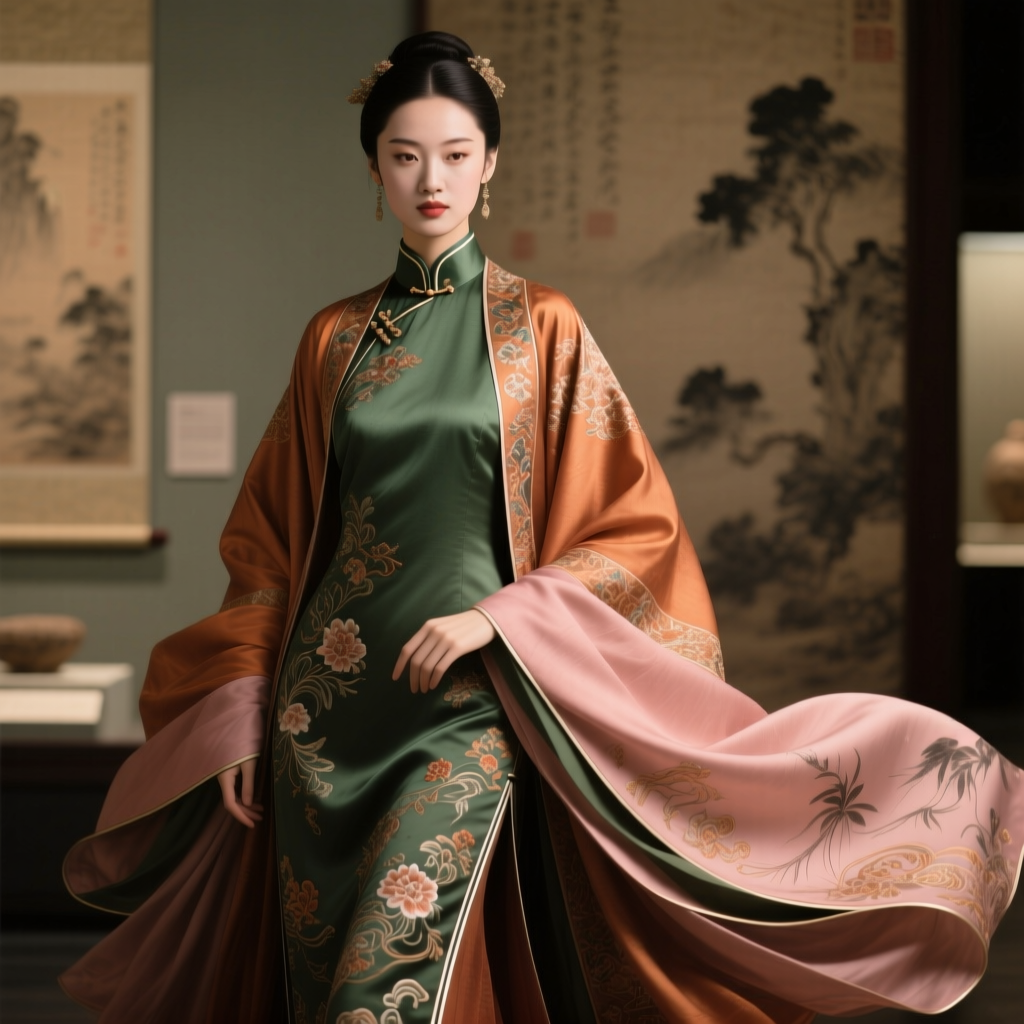
The intersection of fashion illustration and cultural heritage offers a profound canvas for artists, and few sartorial traditions are as visually captivating as those of China. Traditional Chinese clothing drawing is not merely an exercise in rendering fabric; it is a meticulous study of history, philosophy, and structural elegance. From the sweeping, ethereal sleeves of ancient Hanfu to the tailored, sophisticated silhouette of the Qipao, capturing these garments on paper requires an understanding of both anatomical proportion and cultural symbolism.
For illustrators, fashion designers, and cultural historians, mastering the art of traditional Chinese clothing drawing opens a gateway to visual storytelling that transcends borders. Whether you are sketching for a contemporary fashion collection, illustrating a historical graphic novel, or documenting intangible cultural heritage, understanding the drape, motif, and structural nuances of these garments is essential. In this comprehensive guide, we will explore the origins, defining characteristics, rendering techniques, and cultural depths required to bring traditional Chinese attire to life on the page.
The Origins & Evolution of Chinese Garment Illustration
To draw traditional Chinese clothing authentically, one must first understand how these garments have been depicted throughout history. Long before the advent of modern fashion sketching, Chinese garments were documented through masterful scroll paintings, woodblock prints, and court portraits. The ancient technique of Baimiao (line drawing) laid the foundational aesthetics for garment illustration. Using only ink and brush, ancient masters captured the fluid dynamics of silk without the need for heavy shading, relying entirely on line weight, rhythm, and the strategic placement of folds to convey volume and movement.
During the Tang era, court painters emphasized the opulence of the era, illustrating voluminous skirts, sheer shawls, and elaborate hair ornaments. The brushstrokes used to depict these garments were often described as 'flowing water and fluttering ribbons,' a philosophy that remains highly relevant for modern illustrators attempting to capture the weightlessness of Chinese silk. By the Ming period, illustrations became more structured, with woodblock prints detailing the precise tailoring, collar intersections, and layered robes of scholars and officials.
As global trade expanded and East met West, the evolution of Chinese fashion illustration began to incorporate Western perspective and anatomical proportions. The transition from documenting ceremonial status to illustrating personal style birthed a new era of fashion sketching. Today, artists blend the ancient fluidity of Baimiao line work with modern rendering techniques, creating illustrations that honor the historical roots of the garments while appealing to contemporary aesthetic sensibilities. For a deeper dive into the foundational garments that inspired these ancient artworks, explore our guide to Hanfu history and styles.
Defining Characteristics of Traditional Chinese Attire
Accurate illustration begins with structural comprehension. Traditional Chinese clothing is broadly categorized into several distinct silhouettes, each with unique geometric and structural rules that dictate how the fabric drapes over the human form.
The Hanfu: Flowing Lines & Layered Elegance
The Hanfu is characterized by its flowing, unstructured elegance. The most critical element to master when drawing Hanfu is the jiaoling youren (cross-collar, right lapel). The left side of the garment must always cross over the right, a rule deeply rooted in traditional philosophy. When sketching, the collar forms a distinct 'y' shape at the neckline, which must follow the natural curve of the clavicle and neck. The sleeves of a Hanfu are typically wide and can extend past the hands, requiring the artist to draw heavy, pooling folds at the wrist and elbow. The waist is secured with sashes rather than buttons, meaning the fabric gathers organically, creating soft, vertical cascading folds down the skirt or trousers.
The Qipao: Tailored Precision & Structural Curves
In stark contrast to the voluminous Hanfu, the Qipao (or Cheongsam) is a masterclass in tailored precision. Originating from Manchu robes and later modernized in cosmopolitan hubs, the Qipao hugs the body's natural curves. Drawing a Qipao requires a firm grasp of human anatomy, as the garment leaves little to the imagination regarding the torso and hips. Key illustrative elements include the stiff Mandarin collar, which frames the jawline, and the pankou (knotted frog buttons) that trace the diagonal opening of the bodice. The side slits of the Qipao are crucial for movement; when drawing a figure in motion, the illustrator must reveal the leg beneath while maintaining the taut, unyielding drape of the heavy silk or brocade fabric. Discover more about the tailoring nuances in our Qipao evolution guide.
The Ruqun: Proportions & High Waists
The Ruqun consists of a top garment (ru) and a wrap-around skirt (qun). Often, the skirt is tied high, sometimes above the bust or at the natural waist, creating an elongated lower-body proportion. When drawing the Ruqun, artists must emphasize the horizontal gathering of the skirt at the waistband and the long, sweeping vertical lines that elongate the figure. The interplay between the fitted top and the expansive, flowing skirt provides a dynamic contrast that is highly rewarding to illustrate.
Techniques for Drawing Silk, Embroidery & Draping
The soul of traditional Chinese clothing lies in its textiles. Rendering these fabrics accurately requires specific illustrative techniques that differentiate silk, brocade, ramie, and cotton.
Capturing the Essence of Silk & Satin
Silk is defined by its high contrast and luminous quality. When drawing silk, avoid flat, uniform shading. Instead, utilize sharp, bright highlights adjacent to deep, crisp shadows. The folds in silk are often sharp and tubular, resembling the petals of a lily. Use smooth gradients to capture the luster of satin, and ensure that the light source is clearly defined, as silk reflects its environment. A single, unbroken highlight line running down the crest of a fold can instantly communicate the slippery, luxurious texture of the fabric.
Rendering Heavy Brocade & Embroidery
Brocade and heavily embroidered garments behave differently than lightweight silk. They are stiff, structural, and hold their shape, resulting in wider, more angular folds. When illustrating intricate embroidery—such as dragons, phoenixes, or lotus motifs—the challenge is to make the design follow the topography of the body and the folds of the fabric. Use stippling or fine cross-hatching to suggest the raised texture of gold and silver thread. For artists interested in the creation of these textiles, our article on Chinese silk weaving provides invaluable reference material for pattern structures.
The Physics of Draping & Movement
Traditional Chinese garments are rarely static; they are designed to interact with the wind and the wearer's movements. Ribbons, shawls (pibo), and wide sleeves act as extensions of the body's kinetic energy. To draw these elements convincingly, study the physics of drag and tension. The point of tension (usually the shoulder or the hand holding a sash) will feature tight, radiating folds, while the trailing ends will exhibit sweeping, S-curve rhythms that suggest a gentle breeze.
Occasions & Ceremonial Garments in Illustration
The context of the garment dictates not only its design but also the posture and styling of the illustrated figure. Ceremonial attire requires a different illustrative approach than everyday wear.
Wedding Attire: Opulence & Symbolism
Traditional Chinese wedding garments, such as the Qungua or the Ming-style phoenix coronet and robes, are heavily layered and rich in symbolism. When drawing bridal attire, the focus should be on the sheer volume of the garments and the density of the motifs. The bride's posture is often depicted with a sense of grounded dignity. Illustrators must pay special attention to the headpieces, which feature intricate metalwork, dangling tassels, and jade ornaments. The tassels should be drawn with a sense of weight, hanging perfectly straight or swaying gently in unison.
Court & Official Dress: Rigidity & Authority
Court garments, characterized by the Mang (python) robes and rigid square collars, convey authority and hierarchy. These garments are heavily padded and lined, meaning they do not drape closely to the body. When sketching officials or emperors, use broad, imposing shoulder lines and geometric, boxy folds. The Buzi (rank badges) on the chest and back must be drawn with meticulous precision, as the specific birds or beasts depicted denote the exact rank of the wearer.
Scholarly & Everyday Wear: Fluidity & Modesty
In contrast, the everyday wear of scholars and commoners was designed for modesty, comfort, and intellectual pursuits. These garments were often made of cotton, linen, or ramie, which have a matte finish and softer, more crumpled fold structures. Illustrating a scholar in a bamboo grove allows the artist to draw looser, more relaxed postures, with the fabric pooling naturally on the ground or catching on the knees when seated.
Regional Variations & Ethnic Minority Dress
China's vast geography is home to a multitude of ethnic groups, each with distinct sartorial traditions that offer incredible diversity for fashion illustrators. Moving beyond Han-centric garments opens up a world of vibrant textiles, unique silhouettes, and extraordinary accessories.
The Miao & Dong: Silver & Pleats
The Miao and Dong peoples are renowned for their intricate pleated skirts and staggering silver jewelry. When drawing Miao attire, the illustrator must capture the accordion-like stiffness of the indigo-dyed pleated skirts. The true challenge, however, lies in rendering the heavy silver horn headdresses and chest plates. The contrast between the dark, matte indigo fabric and the highly reflective, ornate silver provides a striking visual dynamic that requires careful attention to metallic rendering techniques.
Tibetan & Mongolian: Layering & Asymmetry
High-altitude and steppe climates necessitate heavy layering and asymmetrical styling. Tibetan robes (chuba) are often worn with one sleeve slipped off the shoulder and tied at the waist, creating a striking, asymmetrical silhouette. Drawing these garments requires an understanding of thick, voluminous fabrics like sheepskin and heavy wool. The folds are deep and rounded, and the vibrant sashes tied at the waist create a focal point of color and tension. Mongolian deels feature wide, sweeping hems and heavy fur-lined collars that frame the face, demanding bold, confident line work to convey the weight of the winter garments.
Uyghur & Central Asian Influences
In the northwest, Uyghur traditional clothing showcases Central Asian influences, characterized by vibrant atlas silk (ikat) and embroidered doppa caps. The atlas silk features blurred, bleeding patterns that require a looser, more expressive rendering technique compared to the precise embroidery of eastern regions. Illustrators should focus on the vibrant color blocking and the flowing, multi-tiered skirts that flare out dynamically during traditional dances. For more on regional patterns, visit our archive on Asian textile motifs.
The Cultural Significance of Garment Illustration
Drawing traditional Chinese clothing is an act of cultural preservation. Every line, color, and motif carries centuries of philosophical weight. The ancient Chinese viewed the universe through the lens of Yin & Yang and the Five Elements, and this cosmology was woven directly into their textiles.
Color symbolism is paramount in illustration. Red is not merely a bright hue; it represents fire, joy, and vital life force, making it ubiquitous in wedding and festival illustrations. Yellow, historically reserved for the emperor, represents the earth and the center of the universe; drawing an imperial figure in bright yellow immediately communicates supreme authority. Black and white, representing water and metal respectively, are often used in scholarly or mourning attire, conveying solemnity and depth.
Furthermore, the motifs an artist chooses to include in their drawing are a language of their own. A peony signifies wealth and honor, a lotus represents purity rising from the mud, and a bat symbolizes good fortune. When an illustrator thoughtfully incorporates these motifs into the draping of a garment, they are not just drawing a dress; they are illustrating a blessing, a social status, and a worldview. By studying and sketching these garments, artists participate in the ongoing dialogue of cultural heritage, ensuring that the visual language of traditional Chinese attire continues to inspire and educate future generations. Those interested in comparative cultural illustration may also enjoy our guide on traditional Japanese kimono drawing.
Frequently Asked Questions
What are the essential tools for drawing traditional Chinese clothing?
While digital tools like Procreate and Photoshop are widely used, traditional mediums are exceptionally well-suited for this subject. Fine-liner pens, brush pens, and high-quality watercolors are ideal. A brush pen allows for the dynamic line weight variation necessary to mimic the ancient Baimiao style, where a single stroke can transition from a thick, heavy shadow to a gossamer-thin highlight. For watercolors, using wet-on-wet techniques helps achieve the soft, bleeding gradients characteristic of silk and ikat fabrics, while gouache is excellent for rendering opaque, metallic embroideries.
How do I accurately draw the cross-collar of a Hanfu?
The cross-collar (jiaoling youren) must always overlap with the left side over the right side from the perspective of the wearer. To draw this accurately, start by sketching the base of the neck and the clavicles. Draw the right collar line first, angling it down toward the left side of the wearer's ribcage. Then, draw the left collar line crossing over it, angling down toward the right ribcage. Ensure the intersection forms a clean, symmetrical 'y' shape. The collar should sit snugly against the back of the neck but relax slightly as it moves down the chest, following the natural curvature of the torso.
What is the difference between drawing a Hanfu and a Qipao?
The primary difference lies in the relationship between the garment and the body's anatomy. When drawing a Hanfu, the body acts as a hanger; the focus is on the negative space, the volume of the fabric, and the sweeping, rhythmic folds created by gravity and wide sleeves. The anatomy is largely obscured. Conversely, drawing a Qipao requires a precise understanding of the underlying anatomy, particularly the bust, waist, and hips. The Qipao is tailored and restrictive, meaning the folds are minimal, localized at tension points (like the hips or knees), and the silhouette is defined by the continuous, unbroken curve of the body beneath the fabric.
How can I incorporate traditional Chinese motifs into my fashion sketches?
To incorporate motifs authentically, you must treat them as three-dimensional elements that wrap around the form, rather than flat stickers applied to the surface. First, establish the major folds and drape lines of your garment. Then, map your motifs—such as dragons, clouds, or florals—along these topographical lines. If a fold creates a valley, the motif should compress or disappear into the shadow. If it wraps around a curve, like a sleeve or a hip, the motif must distort in perspective. Additionally, respect the historical placement of motifs; for example, rank badges belong squarely on the chest and back, while wave and mountain motifs (lishui) are traditionally placed at the hem of court robes.
Where can I find historical references for Chinese garment drawing?
Authentic references are crucial for avoiding anachronisms and structural errors. Excellent sources include digitized museum archives, such as the Metropolitan Museum of Art, the Palace Museum in Beijing, and the Victoria & Albert Museum, which offer high-resolution images of extant garments. Historical paintings, such as Tang dynasty court lady scrolls and Ming dynasty portrait scrolls, are invaluable for understanding how garments moved and draped in real life. Additionally, studying traditional Chinese opera costumes can provide insight into exaggerated silhouettes, vibrant color pairings, and the dramatic flow of sleeves and water sleeves (shuixiu).