Traditional African Clothing in Trinidad and Tobago: A Cultural Guide
The twin-island republic of Trinidad and Tobago is a vibrant mosaic of cultures, shaped by centuries of migration, colonization, and the indomitable spirit of its people. Among the most visually striking and culturally profound elements of this Caribbean nation is its traditional African clothing. Far from being a mere fashion statement, African attire in Trinidad and Tobago serves as a living tapestry of ancestral memory, spiritual devotion, and socio-political resistance. From the bustling streets of Port of Spain to the serene, rhythmic shores of Tobago, the garments worn by the Afro-Caribbean population tell a story of survival and reclamation.
When exploring the rich landscape of African diaspora fashion, Trinidad and Tobago stands out as a unique nexus where West African heritage meets Caribbean ingenuity. The adoption and adaptation of traditional African garments—ranging from the flowing boubou to the intricately wrapped gele—represent a conscious effort to decolonize identity and celebrate Pan-African solidarity. This comprehensive guide delves into the historical origins, defining characteristics, and profound cultural significance of traditional African clothing in Trinidad and Tobago, offering a deep dive into a sartorial tradition that continues to evolve while honoring its roots.
Historical Origins and the Journey Across the Atlantic
The story of African clothing in Trinidad and Tobago begins in the dark era of the Transatlantic Slave Trade. Enslaved Africans brought to the Caribbean were systematically stripped of their material culture, including their traditional garments, as a method of psychological subjugation and control. Forced to wear coarse, undyed fabrics or the discarded cast-offs of European planters, the enslaved population was denied the right to express their indigenous identities through dress. However, the human spirit is remarkably resilient, and the aesthetic sensibilities of West and Central Africa were covertly preserved and adapted.
During the post-emancipation era, freed Africans and their descendants began to reclaim their sartorial autonomy. While European Victorian fashions heavily influenced the "Sunday best" of the late 19th and early 20th centuries, the underlying African aesthetic persisted in the form of vibrant color pairings, intricate beadwork, and the enduring practice of headwrapping. The true renaissance of traditional African clothing in Trinidad and Tobago, however, was catalyzed by the Black Power Revolution of the 1970s. This socio-political movement sparked a profound cultural awakening, leading Afro-Trinidadians and Tobagonians to reject Eurocentric beauty standards and embrace their African heritage.
The dashiki became a powerful symbol of this era, worn by activists, artists, and everyday citizens as a badge of racial pride and Pan-African solidarity. As global trade routes opened and connections with the African continent strengthened, authentic West African textiles like Ankara, Kente, and Mudcloth became more accessible. Local tailors and designers began merging these traditional fabrics with Caribbean silhouettes, birthing a unique Afro-Caribbean sartorial identity that honored the past while navigating the modern world.
Defining Characteristics of Afro-Trinidadian and Tobagonian Garments
Traditional African clothing in Trinidad and Tobago is characterized by its bold use of color, expansive silhouettes, and deep symbolic meaning. The garments are designed not only for aesthetic appeal but also for comfort in the tropical climate and for accommodating the dynamic movements of Caribbean life, from street parades to spiritual dances.
The Dashiki and the Boubou
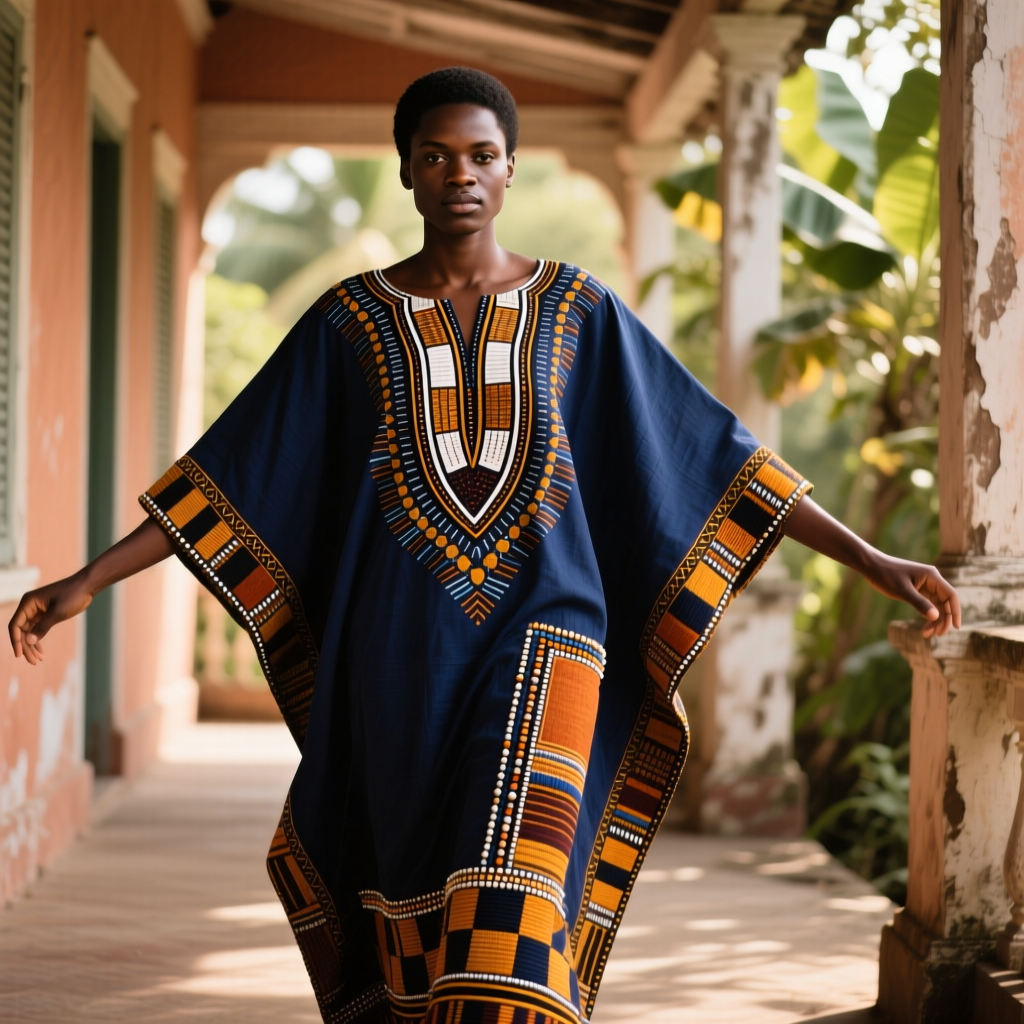
The dashiki is perhaps the most universally recognized piece of African wear in the islands. Originating from West Africa, this loose-fitting, V-neck pullover shirt is often adorned with intricate embroidery around the neckline and sleeves. In Trinidad and Tobago, the dashiki is worn by men and women alike, often paired with tailored trousers or skirts. For more formal or ceremonial occasions, the boubou (or grand boubou) takes precedence. This flowing, wide-sleeved robe exudes elegance and authority, often crafted from heavily embroidered cotton or luxurious brocade fabrics that catch the Caribbean sunlight.
Headwraps and the Art of the Gele
No discussion of African attire in the Caribbean is complete without acknowledging the headwrap. Known in various West African cultures as a gele, duku, or turban, the headwrap is a crown of cultural pride. The art of tying a headwrap is a generational skill passed down through families. In Trinidad and Tobago, headwraps are sculpted into magnificent, gravity-defying shapes that signify a woman's status, mood, or the specific nature of the event she is attending. To learn more about the intricate tying techniques and regional meanings, explore our guide to traditional headwraps.
Textiles, Patterns, and Accessories
The fabrics used in Trinidadian African wear are heavily reliant on imported African wax prints (Ankara), which feature vibrant, repeating motifs that often carry proverbial meanings. Kente cloth, with its striking geometric patterns and rich gold, green, and red threads, is reserved for high-status events like weddings and graduations. Accessories play a pivotal role in completing the ensemble. Cowrie shells, historically used as currency and symbols of fertility and wealth, are frequently sewn onto garments or fashioned into necklaces and waist beads. Copper and gold bangles, along with intricate beadwork, add a tactile and auditory element to the clothing, creating a subtle rhythm with the wearer's movements.
Occasions for Wearing Traditional African Attire
In Trinidad and Tobago, African clothing is not relegated to the margins of society; it is prominently displayed during the nation's most significant cultural, spiritual, and national events. The decision to wear "African wear" is often a deliberate act of cultural affirmation.
Emancipation Day Celebrations
Emancipation Day, observed on August 1st, is the pinnacle of African fashion in Trinidad and Tobago. As the first country in the world to establish a national holiday commemorating the abolition of slavery, the twin islands mark the occasion with profound reverence and spectacular visual displays. Streets across the nation, particularly in Port of Spain and Arima, transform into rivers of vibrant Ankara prints, towering headwraps, and flowing boubous. Families coordinate their outfits, and community groups organize parades accompanied by traditional African drumming, making Emancipation Day a powerful, living exhibition of ancestral pride.
Carnival and Traditional Mas
While Trinidad and Tobago Carnival is globally renowned for its feathered bikinis and wire-framed costumes, the festival's roots are deeply embedded in African resistance and masquerade. Within the realm of "Traditional Mas" (masquerade), African-inspired bands are a staple. Participants don garments made from burlap, mud cloth, and cowrie shells, paying homage to the enslaved Africans who created early Carnival costumes out of whatever meager materials they could find. Furthermore, the iconic Moko Jumbies (stilt walkers) often wear spectacular, flowing African prints that billow in the wind, a direct nod to West African stilt-walking traditions. For a deeper understanding of these festival garments, read our exploration of Carnival costume history.
Weddings and Rites of Passage
Many Afro-Trinidadian and Tobagonian couples are opting for traditional African wedding ceremonies, either in lieu of or alongside Western-style nuptials. These ceremonies are a feast for the eyes, with the bride and groom adorned in matching, custom-tailored boubous and headwraps made from premium Kente or lace. The bridal party and extended family often participate in the "Aso Ebi" tradition—a Yoruba practice where family members wear coordinated fabrics to signify unity and support. Similarly, naming ceremonies and coming-of-age rituals frequently feature traditional African garments to spiritually anchor the child to their heritage.
Regional and Spiritual Variations Across the Islands
While the overarching aesthetic of African clothing is consistent throughout the republic, subtle regional and spiritual variations exist between the island of Trinidad and the island of Tobago, as well as within specific religious communities.
Trinidad vs. Tobago: Urban Fusion and Folk Traditions
Trinidad, being the larger and more cosmopolitan island, serves as a hub for contemporary African fashion. Designers in Port of Spain frequently experiment with fusion wear, blending Ankara prints with Western corporate cuts, creating Afro-centric office wear and high-fashion evening gowns. Tobago, conversely, maintains a stronger connection to rural folk traditions. In Tobago, it is not uncommon to see the integration of Madras cloth—a vibrant, plaid cotton fabric with deep roots in Caribbean history—merged with African silhouettes. This unique blending of East Indian, European, and African Caribbean textiles reflects the complex, multi-layered history of the island's working class.
Spiritual Dress Codes: The Orisha and Ifa Traditions
One of the most profound preservers of traditional African clothing in Trinidad and Tobago is the Orisha (Shango) and Ifa spiritual communities. These Afro-Caribbean religions, which trace their lineage directly to the Yoruba people of modern-day Nigeria, utilize strict color-coded dress systems to honor specific deities (Orishas). During spiritual feasts and ceremonies, practitioners wear flowing, loose-fitting cotton garments that allow for uninhibited dance and spiritual possession.
- Shango: The deity of thunder and justice is honored with striking combinations of red and white.
- Ogun: The warrior and god of iron is represented by green and black.
- Yemaya (Yemoja): The mother of the ocean is revered in various shades of blue and white.
- Obatala: The father of creation and deity of peace is honored exclusively in pristine white.
- Oshun: The goddess of love, fertility, and fresh water is adorned in yellow and gold.
These spiritual garments are often accompanied by specific beadwork (elekes) and cowrie shell adornments, serving as a direct, unbroken sartorial link to pre-colonial West Africa.
The Cultural Significance and Modern Revival
The wearing of traditional African clothing in Trinidad and Tobago is an act of profound cultural significance. It is a visual rejection of the colonial narratives that once deemed African aesthetics as "uncivilized" or "backward." By embracing the boubou, the dashiki, and the gele, Trinidadians and Tobagonians are actively decolonizing their minds and bodies, asserting that their ancestral heritage is a source of beauty, dignity, and power.
Economically, the demand for African wear has fostered a thriving local industry. Markets in St. James and the Queen's Park Savannah are lined with vendors selling imported African fabrics, while local tailors and fashion houses have built lucrative businesses specializing in custom Afro-Caribbean designs. This economic ecosystem not only empowers local artisans but also fosters a sense of community self-reliance.
Furthermore, the modern revival of African clothing among the youth in Trinidad and Tobago is heavily influenced by global Pan-African movements and the digital age. Social media has allowed young Caribbean creatives to connect with fashion trends in Lagos, Accra, and Dakar, resulting in a new wave of streetwear that incorporates African prints into sneakers, bomber jackets, and bucket hats. This ensures that traditional African clothing remains a dynamic, evolving force in the Caribbean, rather than a static museum artifact.
Frequently Asked Questions
What is the most common African garment worn in Trinidad and Tobago?
The dashiki is arguably the most common and accessible piece of African clothing in Trinidad and Tobago. Its versatility allows it to be worn casually with jeans or dressed up with tailored trousers for formal events. For women, the two-piece skirt and top set made from vibrant Ankara wax print fabric is a staple of everyday African wear, offering both comfort in the tropical heat and a bold expression of cultural pride.
How does Carnival influence African fashion in the islands?
Carnival acts as a massive canvas for African artistic expression. While mainstream Carnival is dominated by beads and feathers, "Traditional Mas" and specific African-themed bands use the festival to showcase historical and spiritual African garments. Designers use the occasion to experiment with large-scale headpieces, raffia, mud cloth, and body painting, pushing the boundaries of how African aesthetics can be translated into performance art and street theater.
Are there specific colors associated with African spiritual wear in T&T?
Yes, color is deeply sacred in the Afro-Caribbean spiritual traditions of Trinidad and Tobago, particularly within the Orisha faith. Practitioners wear specific color combinations to align themselves with the energies of different deities. For example, red and white are worn for Shango, blue and white for Yemaya, and green and black for Ogun. Wearing the wrong colors to a specific spiritual feast is considered a breach of protocol and respect.
Where can visitors buy authentic African clothing in Trinidad?
Visitors looking to purchase authentic African fabrics and garments should explore the vibrant markets in Port of Spain. The St. James district is renowned for its concentration of African fabric shops, tailors, and boutiques. Additionally, the markets surrounding the Queen's Park Savannah, especially during the Emancipation Day season, offer a wide array of ready-to-wear dashikis, headwraps, and handmade cowrie shell jewelry crafted by local artisans.
What is the significance of the headwrap in Afro-Caribbean culture?
The headwrap, or gele, is a powerful symbol of Black womanhood, resilience, and cultural continuity. Historically, during slavery, headwraps were used to protect the hair from harsh labor conditions and to hide messages or small valuables. Today, in Trinidad and Tobago, the headwrap has been reclaimed as a crown of elegance and pride. The height, complexity, and fabric of the wrap often communicate the wearer's social standing, marital status, or simply her personal flair and artistic expression.