The Complete Guide to Zori, Geta, and Obi Accessories
The Foundation of Japanese Formalwear
When assembling a traditional Japanese kimono ensemble, the garment itself is only the beginning of the sartorial journey. The true marker of elegance, cultural literacy, and formal correctness lies in the meticulous selection of accessories. From the footwear that grounds the silhouette to the intricate cords and clasps that secure the obi, every element carries historical weight and strict rules of etiquette. According to the Victoria and Albert Museum's extensive research on Japanese dress, the coordination of these accessories is not merely decorative; it is a complex visual language that communicates the wearer's age, marital status, and the specific nature of the event they are attending.
This comprehensive guide will walk you through the essential components of kimono footwear and obi accessories, providing actionable advice on sizing, material selection, and formality matching to ensure your ensemble is both authentic and impeccably styled.
Footwear: Navigating Zori and Geta
Footwear in traditional Japanese dress is broadly categorized into two main types: zori and geta. Understanding the distinction between the two is critical, as wearing the wrong footwear can instantly downgrade the formality of your outfit or cause physical discomfort.
Zori: The Hallmark of Formality
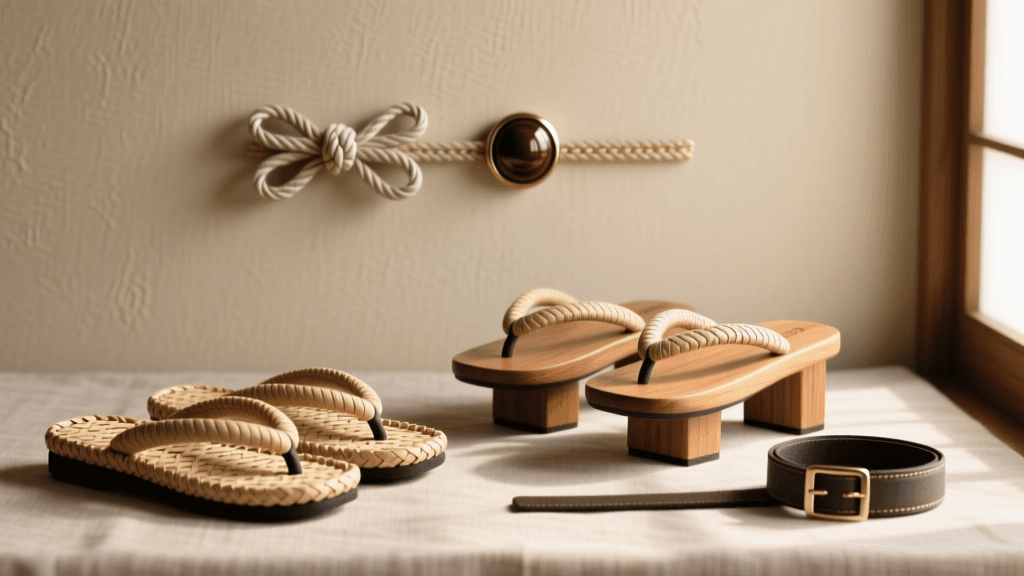
Zori are flat, sandal-like shoes that are the standard footwear for formal and semi-formal kimono. Unlike geta, zori do not have elevated wooden teeth. The base (sole) is traditionally covered in materials that denote formality:
- Tatami-omote (Woven Rush Grass): Used for men's formal wear and women's semi-formal or traditional tea ceremony attire.
- Brocade and Silk: Reserved for women's highly formal occasions, such as weddings or coming-of-age ceremonies, usually paired with furisode or tomesode kimono.
- Leather and Vinyl: Modern, practical options for everyday semi-formal wear (like komon or tsumugi), offering durability and water resistance.
Geta: Elevated and Informal
Geta are wooden clogs elevated by one or more 'teeth' on the underside. They are inherently informal and are typically worn with yukata (summer cotton kimono) or casual wool and tsumugi silk kimono. The sound of geta clicking against the pavement is a nostalgic hallmark of Japanese summer festivals. As noted by The Japan Times, while geta were once everyday footwear, they have now been relegated to leisure, festival, and casual summer wear.
The Hanao (Thongs): Color and Etiquette
The hanao is the Y-shaped thong that secures the foot to the shoe. Hanao are easily replaceable, allowing wearers to refresh old footwear or change colors to match a new kimono. The color rules are surprisingly strict:
- White Hanao: Strictly for formal women's zori (often made of silk or velvet).
- Black or Red Hanao: Used for informal zori and geta. Red is popular for casual outings, while black is versatile for everyday wear.
- Men's Hanao: Typically black, white, or navy, with white reserved for the most formal ceremonial occasions.
Obi Accessories: The Jewels of the Kimono
The obi (sash) is the centerpiece of the kimono, but it is the accessories used to tie and decorate it that provide the finishing touches. The two most important obi accessories are the obijime and the obidome.
Obijime: The Securing Cord
The obijime is a braided cord tied over the obi knot to secure it in place. Beyond its functional purpose, it acts as a vital color accent. Obijime are generally divided into two shapes:
- Marugumi (Round Cord): The most common and versatile type. Thicker round cords are used for formal wear, while thinner ones are for casual outfits.
- Hiragumi (Flat Cord): Often woven with intricate patterns or metallic threads, flat cords are typically reserved for formal or semi-formal occasions.
Seasonal motifs are also woven into the cord. For example, an obijime featuring a subtle snowflake pattern is perfect for winter, while one with cherry blossom accents is ideal for spring.
Obidome: The Decorative Clasp
The obidome is a small, decorative bead or clasp through which the obijime is threaded. It sits at the center front of the obi knot, acting like a brooch. Obidome are crafted from exquisite materials, including:
- Traditional Crafts: Satsuma ware (pottery), cloisonne enamel, carved lacquerware, and tortoiseshell.
- Gemstones and Glass: Jade, coral, agate, and intricate Venetian glass.
- Modern Materials: Acrylic, resin, and even 3D-printed plastics for playful, casual ensembles.
Experts at the Japan Experience cultural portal emphasize that the obidome should never overpower the kimono; rather, it should serve as a subtle, sophisticated focal point that complements the overall color palette.
Formality Matrix: Matching Accessories to Your Kimono
Coordinating your accessories with the correct level of formality is crucial. The table below serves as a quick-reference guide for matching your footwear and obi accessories to your kimono type.
| Kimono Type | Formality Level | Footwear | Hanao Color | Obijime & Obidome |
|---|---|---|---|---|
| Kurotomesode (Black formal) | Highest (Married women) | Brocade Zori | White | Gold/Silver metallic cord; Coral or Tortoiseshell clasp |
| Furisode (Long sleeve) | High (Unmarried women) | Brocade or Silk Zori | White or Red | Thick round cord with floral motifs; Glass or Enamel clasp |
| Houmongi (Visiting wear) | Semi-Formal | Leather or Silk Zori | White, Silver, or Pastel | Flat woven cord; Ceramic or Lacquer clasp |
| Komon (Everyday pattern) | Casual | Vinyl Zori or Geta | Red, Black, or Patterned | Thin cotton or silk cord; Playful or wooden clasp |
| Yukata (Summer cotton) | Informal / Festival | Barefoot in Geta | Red, Black, or Transparent | Usually omitted, or simple thin cotton cord |
Sizing, Fit, and Purchasing Advice
Unlike Western shoes, traditional Japanese footwear sizing and fit follow a unique philosophy that often confuses first-time buyers.
The Overhang Rule
In Western footwear, toes should never hang off the edge of the shoe. In traditional Japanese dress, the opposite is true. Your heel should slightly overhang the back of the zori or geta by about 1 to 2 centimeters. This overhang prevents the hem of your kimono from catching under your heel as you walk, which could cause tripping or soil the delicate fabric.
Measurements and Costs
Zori and geta are sized in centimeters. Women's sizes typically range from 22.0 cm to 25.5 cm. When purchasing, measure your foot from the tip of your longest toe to the back of your heel, and select a shoe size that is equal to or slightly smaller than your actual foot measurement.
- Vintage Zori: Expect to pay between $30 and $100. Vintage brocade zori are beautiful but check the condition of the sole and the hanao, as old silk can fray.
- New Vinyl/Leather Zori: Range from $80 to $150. These are highly recommended for beginners due to their weather resistance and ease of cleaning.
- New Formal Brocade Zori: Can cost anywhere from $150 to over $400, depending on the quality of the weave and the craftsmanship of the hanao.
Caring for Your Kimono Accessories
Proper maintenance ensures your accessories last for generations. Zori and geta should be stored in a cool, dry place away from direct sunlight, which can yellow vinyl and fade silk brocade. If your hanao become stretched or soiled, they can be easily replaced. Many specialized kimono shops and online retailers sell replacement hanao kits, which include the thong and the metal or plastic plugs used to secure them to the sole. Learning to replace a hanao yourself is a valuable skill for any kimono enthusiast, allowing you to customize your footwear to match new additions to your kimono wardrobe.
For obijime and obidome, store them in small, breathable fabric pouches to prevent the metallic threads from tarnishing and to protect delicate ceramic or glass obidome from chipping. Never store obijime tightly knotted; always untie them and loosely coil them to maintain their structural integrity and braided shape.
Conclusion
Mastering the art of zori, geta, and obi accessories transforms the act of wearing a kimono from simply putting on clothes to participating in a living cultural tradition. By respecting the rules of formality, understanding the nuances of materials, and ensuring a proper fit, you honor the artisans who craft these beautiful items and the centuries of history they represent. Whether you are attending a formal tea ceremony or enjoying a casual summer festival, the right accessories will ensure you step out in perfect harmony with Japanese tradition.