Zori and Geta: The Complete Japanese Footwear Guide
Introduction to Japanese Traditional Footwear
When assembling a traditional Japanese kimono ensemble, the garments themselves—such as the kimono, the obi sash, and the obijime cord—often receive the most attention. However, as noted by the Encyclopædia Britannica, the kimono silhouette is never truly complete without its specialized footwear. Zori and geta are not merely functional items designed to protect the feet; they are deeply embedded in the cultural, seasonal, and aesthetic rules of Japanese dress. Understanding the nuances of these sandals, from heel height to strap materials, is essential for anyone looking to master the art of kimono styling.
For kimono enthusiasts, collectors, and those attending traditional events, selecting the correct footwear can elevate an outfit from disjointed to impeccably authentic. This comprehensive guide explores the anatomy, styling rules, and practical considerations for wearing zori and geta, ensuring your ensemble is grounded in both tradition and elegance.
Zori vs. Geta: Understanding the Core Differences
While both zori and geta are slip-on sandals secured by a thong (hanao) between the first and second toes, their construction, materials, and appropriate use cases differ significantly. The Victoria and Albert Museum highlights how accessories like zori and obi reflect the wearer's social status, the formality of the event, and even the season. Below is a structured comparison to help you distinguish between the two.
| Feature | Zori | Geta |
|---|---|---|
| Sole Material | Vinyl, leather, brocade, tatami, or cork | Solid wood (paulownia, cedar, or hinoki) |
| Heel Type | Flat or wedged heel, no teeth | Elevated on wooden 'teeth' (ha) or flat |
| Formality Level | Ranges from casual to highly formal (bridal) | Strictly casual, festival, or yukata wear |
| Acoustic Profile | Quiet, soft footfalls | Distinctive clacking sound (karankoron) |
| Best Season | Year-round, depending on material | Summer, festivals, and rainy seasons |
The Hanao: Thongs, Straps, and Obi Coordination
The hanao is the Y-shaped strap that secures the foot to the sole. Far from being an afterthought, the hanao is a critical component of kimono color theory and coordination. In modern kimono styling, the hanao should rarely match the primary color of the kimono itself. Instead, it should coordinate with the accessories.
Pro-Tips for Hanao and Obi Coordination
- Match the Obiage: The most sophisticated method is to match the hanao color to the obiage (the silk scarf peeking out above the obi) or the obijime (the decorative cord). This creates a cohesive, layered look without being overly matchy-matchy.
- Texture Matters: For formal winter events, choose hanao made of biroudo (cotton velvet) or silk brocade. For summer or rainy weather, opt for vinyl, leather, or synthetic materials that resist moisture and staining.
- Left and Right Symmetry: Unlike Western shoes, traditional hanao are completely symmetrical. There is no left or right foot, which distributes wear evenly and extends the life of the strap.
Sizing and the 'Hang-Off' Rule
One of the most common mistakes Westerners make when wearing traditional Japanese footwear is buying a size too large. Japanese shoe sizes are measured in exact centimeters (typically ranging from 22.0 cm to 25.0 cm for women). However, traditional footwear is worn differently than Western shoes.
The Kakato o Dasu (Heel Overhang) Rule: When wearing zori or geta, your heel should actually hang off the back edge of the sandal by approximately 1 to 2 centimeters. This intentional overhang serves a vital functional purpose: it prevents the back of your heel from catching and dragging the delicate silk hem of the kimono (the suso) while walking. If your heel sits flush or overhangs the front, you risk stepping on your own garment and damaging the fabric.
Formality Levels, Measurements, and Costs
Just as the type of kimono dictates the formality of the obi, the formality of the kimono dictates the footwear. Here is a practical breakdown of what to wear, including expected measurements and market costs for authentic pieces.
1. Casual and Yukata Wear
- Footwear: Wooden geta or tatami-faced zori.
- Heel Height: Low (2 to 4 cm).
- Hanao: Simple cotton or synthetic woven straps, often featuring playful patterns.
- Estimated Cost: $25 to $60 USD for new; $10 to $20 USD for vintage.
2. Semi-Formal (Komon, Tsumugi, and Edo Komon)
- Footwear: Leather, cork, or high-quality vinyl zori.
- Heel Height: Medium (4.5 to 5.5 cm).
- Hanao: Solid colors matching the obijime, typically in subdued tones like navy, plum, or sage.
- Estimated Cost: $70 to $150 USD.
3. Formal (Furisode, Houmongi, and Tomesode)
- Footwear: Brocade (nishiki) or silk-wrapped zori.
- Heel Height: High (6 to 8 cm). The elevated heel forces a smaller, more elegant stride, which naturally improves posture and prevents the kimono hem from dragging.
- Hanao: Thick, padded velvet or silk brocade, often in gold, silver, or stark white.
- Estimated Cost: $150 to $400+ USD for authentic, hand-woven brocade.
Seasonal Variations: Rain and Snow
Traditional silk kimono are notoriously vulnerable to water damage. If you are attending an event during the rainy season (tsuyu) or winter, specialized footwear is required.
Shigure Geta (Rain Geta): These are wooden geta treated with lacquer and fitted with removable, waterproof vinyl covers (shigure kaba) that enclose the entire foot and hanao. They are typically worn with a matching vinyl raincoat (michi-yuki).
Fur-Tsuki Zori (Winter Zori): For cold weather, the hanao is covered in plush fur (historically rabbit or fox, now predominantly high-quality synthetic or shearling). This not only provides warmth but also signals the winter season aesthetically, much like swapping a silk obi for a wool one.
Mastering the Suriashi (Sliding Walk)
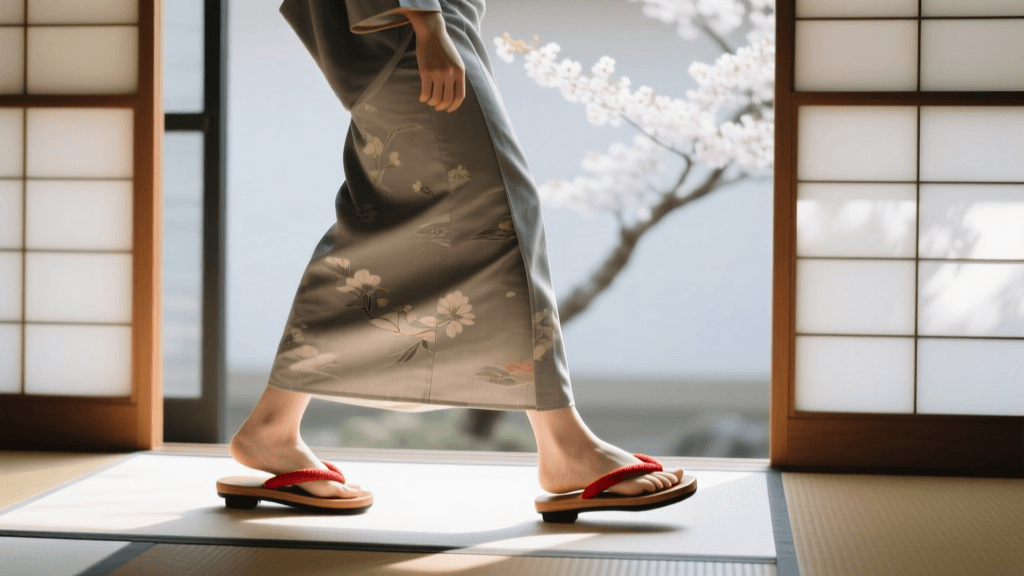
Walking in zori and geta requires a specific technique known as suriashi. Because the sandals are not strapped to the heel, lifting your foot too high will cause the shoe to fly off. Furthermore, a high-stepping walk will cause the kimono hem to flap open, breaking the elegant, cylindrical silhouette (tsutsu-gata) of the garment.
How to walk correctly: Keep your knees close together and glide your feet forward, barely lifting the toes off the ground. Step first with the heel, then roll to the toe. This sliding motion ensures the sandals stay securely on your feet while keeping the kimono hem perfectly still and draped.
Care, Maintenance, and Storage
To ensure your footwear lasts for decades, proper maintenance is crucial. After each wear, wipe the soles of zori with a slightly damp cloth to remove street dust and dirt, which can transfer to your indoor tatami mats. For wooden geta, use a dry brush to clear debris from the teeth (ha).
Store your zori and geta in a cool, dry place away from direct sunlight. UV exposure will quickly yellow vinyl soles and fade delicate silk brocade. If the hanao becomes frayed or loses its tension, it can be replaced by a professional kimono tailor or a specialized cobbler, allowing you to keep a beloved pair of soles for a lifetime. By respecting the craftsmanship and rules of zori and geta, you honor the rich heritage of Japanese textile arts from the ground up.