The Everyday Haori: Styling Japanese Jackets for Modern Wear
The Haori: From Edo-Era Outerwear to Modern Street Style
The haori is a traditional Japanese hip- or thigh-length jacket worn over a kimono. Historically, it was designed to provide warmth and protect the underlying garments from dust and rain. During the Edo period (1603–1867), the haori became heavily regulated by sumptuary laws, leading to a fascinating cultural workaround: while the exterior of the haori was often required to be plain, dark, and subdued, the interior lining (known as the hakkake) became a canvas for breathtaking, hidden artwork and vibrant silk patterns. As noted by the Victoria and Albert Museum, this duality of modest exteriors and extravagant interiors reflects the complex social dynamics and aesthetic sensibilities of Edo-period Japan.
Originally worn by men and later adopted by geisha in the 19th century as a symbol of sophistication, the haori eventually became a staple for women and men across all social classes. According to The Metropolitan Museum of Art, the evolution of Japanese outerwear demonstrates a remarkable continuity, where historical garments are continuously adapted to fit the practical needs of contemporary life. Today, the haori has transcended its historical roots to become one of the most versatile pieces of everyday casual traditional wear, beloved by fashion enthusiasts globally for its elegant drape and rich textile heritage.
Why the Haori is the Ultimate Casual Traditional Garment
When integrating traditional Asian garments into a modern, everyday wardrobe, the primary hurdle is often the complexity of dressing. Kimono and yukata require precise wrapping, specialized undergarments (juban), and the intricate, time-consuming tying of an obi sash. The haori, however, bypasses these barriers entirely. Designed with an open front, it is traditionally secured with a simple braided cord called a haori himo.
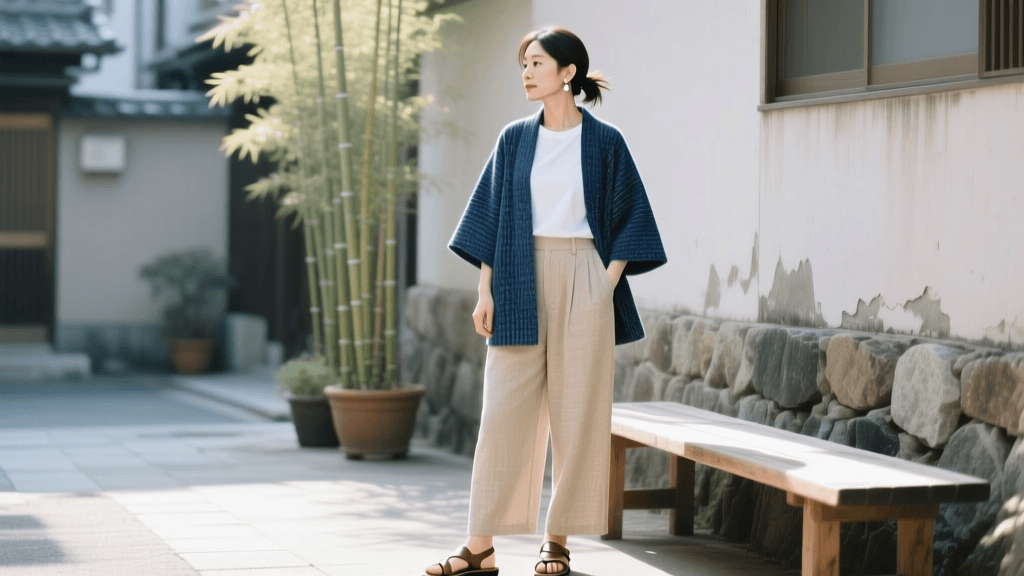
In modern casual styling, the haori himo is frequently removed, allowing the jacket to be left open to drape elegantly like a western cardigan, duster, or unstructured blazer. The sleeves feature a distinctive opening at the back (the furi), which allows for ease of movement and creates a beautiful, flowing silhouette when walking. This structural simplicity, combined with the fact that it requires no specialized undergarments, makes the haori the perfect bridge between historical Japanese craftsmanship and contemporary global streetwear.
Fabric Choices for Everyday Wardrobes
Choosing the right fabric is crucial for adapting the haori to daily life. Different materials offer varying levels of durability, care requirements, and seasonal appropriateness.
- Vintage Silk: The most common and historically significant material. Vintage silk haori feature incredible woven patterns, shibori (tie-dye), and hand-painted yuzen designs. While visually stunning, silk requires careful maintenance and is best suited for dry, mild weather or indoor evening wear.
- Cotton and Linen: Modern haori are frequently crafted from cotton or linen blends, specifically designed for casual, everyday use. These fabrics are breathable, washable, and offer a more relaxed, matte texture that pairs effortlessly with denim and casual cotton trousers. Linen haori are particularly popular as summer resort wear.
- Polyester and Synthetic Blends: For budget-conscious buyers or those seeking low-maintenance travel garments, modern synthetic haori are widely available. They resist wrinkling, can be machine-washed, and often replicate the look of silk brocade at a fraction of the cost, though they lack the breathability of natural fibers.
- Wool and Kasuri: For autumn and winter, wool-blend haori or those made from kasuri (a traditional Japanese ikat-woven cotton) provide excellent insulation and a rustic, artisanal texture that elevates cold-weather layering.
Sizing and Measurements: Getting the Right Fit
Unlike Western jackets that are sized by chest and shoulder width, traditional haori are sized primarily by Yuki (the measurement from the center back of the neck, across the shoulder, and down to the wrist) and back length. Because the haori is meant to hang loosely from the shoulders, the fit is inherently forgiving, but getting the proportions right is essential for a polished look.
| Haori Size Category | Back Length (cm) | Yuki (Shoulder to Sleeve, cm) | Best For (Height) |
|---|---|---|---|
| Short (Petite) | 75 - 80 | 60 - 64 | Under 155 cm |
| Standard | 80 - 88 | 64 - 68 | 155 - 165 cm |
| Long (Tall) | 88 - 95 | 68 - 72 | 165 - 175 cm |
| Oversized/Modern | 95 - 105+ | 72 - 78 | 175+ cm / Streetwear |
Pro Tip: For a modern, casual aesthetic, many wearers intentionally size up. An oversized haori with a longer back length (90+ cm) creates a dramatic, duster-like silhouette that looks exceptionally stylish when layered over minimalist, form-fitting base layers.
3 Actionable Ways to Style a Haori Today
Integrating a haori into your daily rotation requires balancing its traditional volume with modern, structured pieces. Here are three actionable styling formulas:
- The Urban Casual (Weekend Errands & Cafes): Pair a mid-length, geometric-patterned cotton haori with a crisp white crewneck t-shirt, slim-fit raw denim jeans, and clean white leather sneakers. The contrast between the flowing, traditional sleeves and the structured denim grounds the outfit, making it approachable and effortlessly cool. Leave the haori completely open to showcase the t-shirt and create vertical lines that elongate the torso.
- The Smart-Casual Office (Creative Workspaces): Swap your standard wool blazer for a solid-colored, dark silk or wool-blend haori. Wear it over a fine-gauge black turtleneck, tailored charcoal trousers, and Chelsea boots. The high neck of the turtleneck mirrors the high collar of a traditional kimono, providing a respectful nod to the garment's origins while maintaining a sleek, professional silhouette suitable for creative industries.
- The Summer Resort (Beach & Travel): Utilize a lightweight, unlined linen haori as a luxurious cover-up or sun shield. Drape it over a linen button-down shirt and tailored shorts, or wear it directly over swimwear when transitioning from the beach to a seaside restaurant. The wide sleeves provide excellent airflow, while the natural linen texture complements the relaxed resort environment.
Buying Guide: Costs, Timing, and Where to Shop
The market for haori ranges from inexpensive vintage finds to high-end contemporary artisan pieces. According to the Japan National Tourism Organization, supporting traditional crafts is a vital part of experiencing Japanese culture, and purchasing a haori is an excellent way to participate.
- Vintage Silk ($30 - $80 USD): The best value for money. Tokyo neighborhoods like Shimokitazawa and Koenji are famous for thrift stores (such as the Chicago chain) where you can find pristine, second-hand silk haori for under $50. Online platforms like Etsy and specialized kimono resale sites also offer vast inventories. The best time to buy vintage is during the seasonal wardrobe changeovers in Japan (May and October).
- Modern Cotton/Linen ($80 - $180 USD): Brands specializing in modern wafuku (Japanese clothing) produce washable, everyday haori. These are ideal for those who want traditional aesthetics without the anxiety of damaging fragile vintage silk.
- Artisan & Designer ($250 - $600+ USD): For those seeking new, hand-dyed, or hand-woven pieces directly from Kyoto or Kanazawa artisans. These are investment pieces that support the continuation of endangered textile techniques like yuzen dyeing and nishijin weaving.
Care and Maintenance for Longevity
Proper care ensures your haori remains a staple in your wardrobe for decades. Always check the fabric composition before cleaning. Vintage silk should ideally be dry-cleaned or, if you are experienced, hand-washed in cold water using a pH-neutral detergent like Eucalan. Never wring silk; instead, roll it in a clean towel to absorb excess moisture and lay it flat to dry away from direct sunlight, which can fade the delicate dyes.
Cotton, linen, and polyester haori can generally be machine-washed on a delicate, cold-water cycle. Always place the garment inside a mesh laundry bag to protect the wide sleeves from snagging or stretching. When storing your haori for the off-season, avoid wire hangers, which can distort the shoulder seams. Instead, use padded hangers or fold the garment along its natural seams and store it in a breathable cotton garment bag with a natural cedar block to deter moths and absorb humidity.