Drafting Zero-Waste Balkan Folk Shirts: 2026 Sewing Guide
The Intersection of Heritage and 2026 Sustainable Fashion
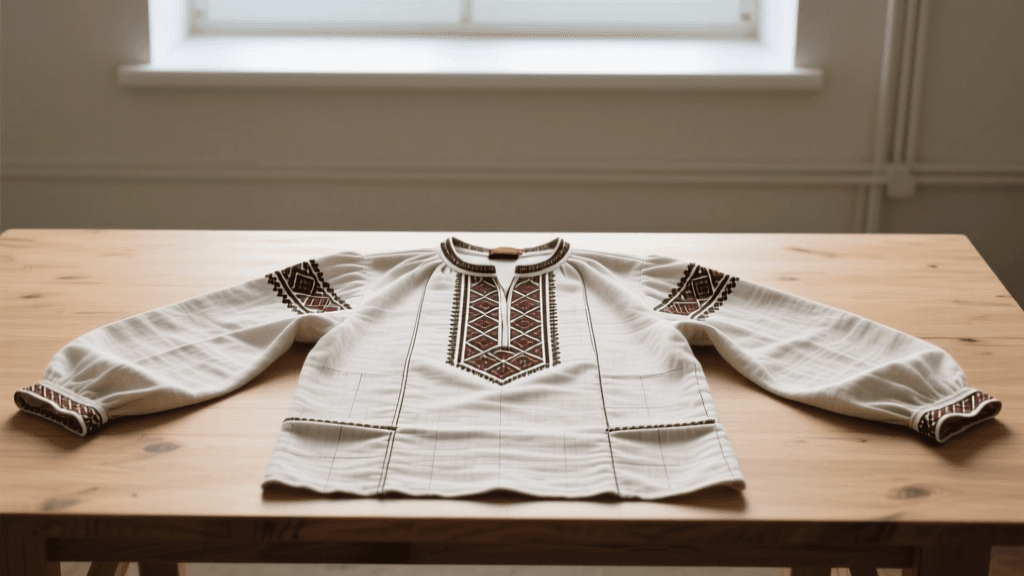
As the global textile industry faces mounting pressure to eliminate waste, modern sewists and designers in 2026 are increasingly looking to the past for solutions. Traditional European folk dress, particularly the Balkan and Eastern European folk shirt—known regionally as the ie, rubakha, or vyshyvanka—represents a masterclass in zero-waste pattern drafting. Born from the strict limitations of historical narrow-loom weaving, these garments utilize every single inch of fabric without relying on curved armholes or tapered side seams.
According to recent data highlighted by the Ellen MacArthur Foundation, the transition toward circular textile systems is a primary focus for 2026 fashion initiatives. By adopting the geometric, rectangular construction methods of Balkan folk shirts, contemporary makers can achieve a 100% fabric utilization rate, completely eliminating the offcuts that plague modern commercial pattern cutting.
The Geometry of the Traditional Loom
To understand the construction of a traditional Balkan shirt, one must understand the tool that dictated its shape: the narrow shaft loom. Historically, linen and hemp fabrics were woven in widths ranging from 40 cm to 60 cm (roughly 16 to 24 inches). Because cutting into the cloth was considered wasteful and weakened the structural integrity of the handwoven textile, garments were engineered entirely from rectangles, squares, and straight lines.
The cultural significance of these garments is profound. The traditional shoulder-embroidered shirt of Romania and Moldova, for instance, has been recognized on the UNESCO Representative List of the Intangible Cultural Heritage of Humanity. This recognition underscores not just the aesthetic beauty of the embroidery, but the deep, ancestral knowledge embedded in the garment's zero-waste architecture.
Anatomy of the Zero-Waste Folk Shirt
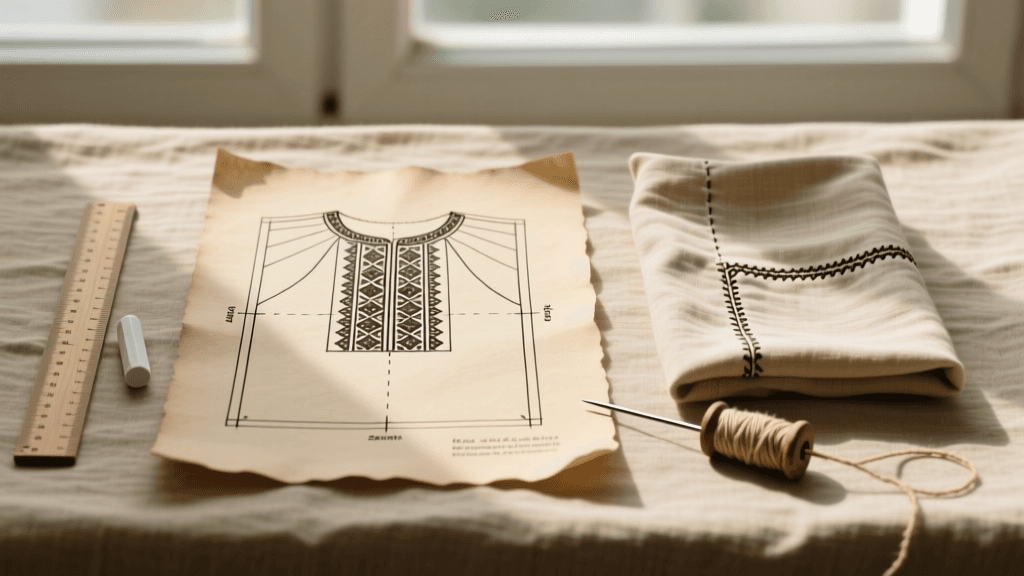
A classic Balkan or Slavic folk shirt consists of a few fundamental geometric components. When drafting your pattern in 2026, you will abandon standard commercial slopers and instead rely on direct body measurements mapped to rectangular panels.
- The Body Panel: A single, continuous rectangle that folds over the shoulder, forming both the front and back of the shirt. No shoulder seams are required.
- The Sleeves: Two long rectangles attached directly to the top edge of the body panel, creating a dropped shoulder and a wide, T-shaped silhouette.
- The Gusset (Lastovitsa or Pavolok): A small square of fabric inserted at the underarm intersection. This is the engineering marvel of the garment; it provides the necessary three-dimensional mobility for the arms without requiring curved armhole scythes.
- The Neckline: Rather than a shaped collar, the neck is created via a straight slit or a gathered drawstring casing, often finished with a narrow stand collar or simple binding.
Step-by-Step Pattern Drafting Guide
Drafting this garment requires only a measuring tape, a ruler, and fabric chalk. Below is the standard formula for a medium-sized adult shirt using modern 140 cm (55-inch) wide linen, adapted for zero-waste layout.
1. Calculating the Body Panel
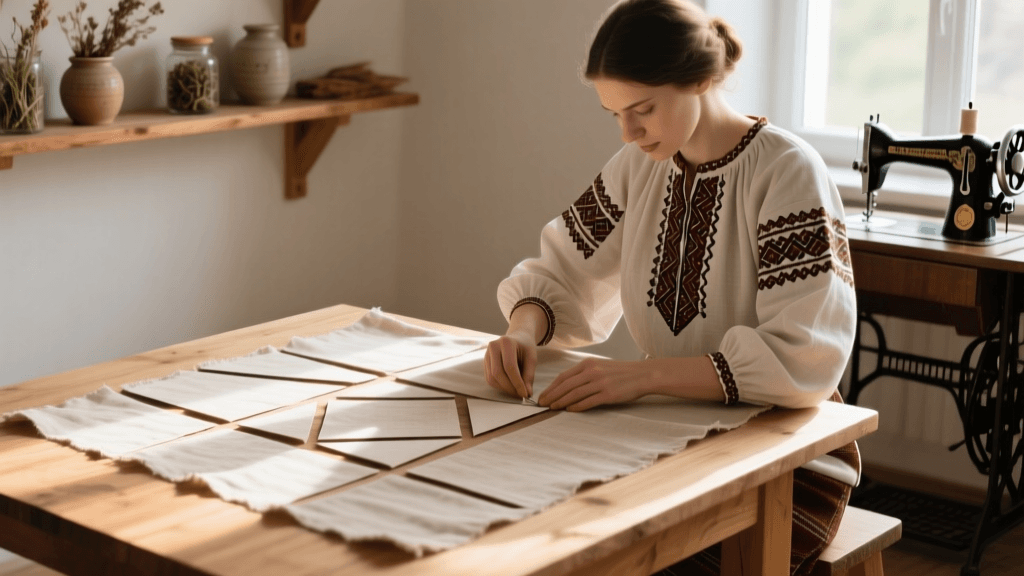
Measure the wearer's full bust or chest circumference. Add 10 to 15 cm for ease. If your fabric is 140 cm wide, you can fold the fabric in half selvedge-to-selvedge. The width of the folded fabric (70 cm) will serve as the front/back width for a standard fit. The length of the body panel is measured from the highest point of the shoulder down to the desired hemline, multiplied by two (since the front and back are one continuous piece).
2. Drafting the Sleeves
Sleeve width is determined by the bicep measurement plus generous ease (typically 40-50 cm total circumference). The length is measured from the shoulder drop to the wrist. Because you are using 140 cm wide fabric, you can cut two sleeve rectangles side-by-side from the remaining fabric width after the body panel is removed.
3. The Crucial Underarm Gusset
The gusset is typically a 12 cm x 12 cm to 15 cm x 15 cm square. When assembling the shirt, the body panel is folded at the shoulder. The sleeve is sewn to the top edge. The side seam of the body and the underarm seam of the sleeve are left open for the final 15 cm. The square gusset is then pivoted and sewn into this diamond-shaped opening, transforming the flat cross into a wearable, three-dimensional tunic.
Historical Loom Constraints vs. 2026 Fabric Adaptations
While historical weavers were constrained by 50 cm loom widths, modern sewists in 2026 typically purchase fabric in 140 cm or 150 cm bolts. To maintain the zero-waste philosophy, we must adapt the layout.
| Feature | Historical Narrow Loom (Pre-1900) | Modern 2026 Zero-Waste Layout |
|---|---|---|
| Fabric Width | 40 cm - 60 cm | 140 cm - 150 cm |
| Body Construction | Multiple panels sewn side-by-side | Single wide panel, folded at shoulder |
| Sleeve Attachment | Sewn to narrow body edge | Sewn across wide upper back/chest |
| Waste Management | Offcuts used for gussets/collars | Mathematical nesting to yield 0% waste |
| Hem Finishing | Woven selvedges left raw | Deep rolled hems or drawn-thread work |
2026 Fabric Sourcing: The Renaissance of European Flax
The authenticity of a Balkan folk shirt relies heavily on the textile. In 2026, the gold standard for sustainable, historically accurate shirting is certified European Flax linen. When sourcing your fabric, look for the Masters of Linen certification, which guarantees that the flax was grown, spun, and woven entirely within Western Europe, adhering to strict 2026 environmental and zero-pesticide guidelines.
For a traditional summer ie, opt for a medium-weight linen (150-190 gsm). Before cutting, you must pre-wash and dry the linen on high heat to force maximum shrinkage. Historical garments were washed in rivers and beaten; modern pre-shrinking ensures your zero-waste calculations remain accurate after the garment's first laundering.
Seam Finishes and Embroidery Placement
Because the garment is constructed from straight lines, the seams are long and continuous, making them perfect candidates for traditional flat-felled seams. A flat-felled seam encloses all raw edges, providing immense durability and a clean finish on both the inside and outside of the shirt. For 2026 sewing setups, using a specialized felling foot on a modern machine (such as the Bernina 790 Pro) allows for rapid, uniform seam finishing on heavy linen.
The Logic of Protective Embroidery
In Balkan and Slavic traditions, embroidery was not merely decorative; it was apotropaic, designed to ward off evil spirits. According to archives documented by institutions like the Victoria and Albert Museum, traditional dress utilized heavy stitch work at the 'vulnerable' openings of the garment: the neckline, the cuffs, and the hem. When planning your own embroidery, concentrate your cross-stitch or drawn-thread work along these structural seams. This not only honors the historical aesthetic but also reinforces the high-stress areas of the zero-waste garment.
Conclusion: Sewing the Future Through the Past
Drafting a zero-waste Balkan folk shirt is a deeply rewarding exercise in geometric problem-solving and historical appreciation. By utilizing rectangular panels, strategic gussets, and 100% of your linen yardage, you are participating in a lineage of sustainable craftsmanship that spans centuries. As we navigate the ecological demands of 2026, the ancestral wisdom of the European narrow loom offers a flawless blueprint for the future of ethical garment construction.