Master Slavic Rubakha Patterns 2026: Zero-Waste Gusset Techniques
Introduction to the Slavic Rubakha and Zero-Waste Heritage
The traditional Slavic rubakha (also known regionally as the sorochka or koshulya) is a masterclass in geometric efficiency and textile conservation. For centuries, peasants and artisans across Eastern Europe crafted these foundational garments without wasting a single thread of precious hand-woven linen. Today, as the global fashion industry in 2026 grapples with the environmental crisis of textile waste, historical European folk dress construction offers brilliant, time-tested solutions. The zero-waste patterning techniques inherent in the rubakha are experiencing a massive revival among contemporary historical costumers, sustainable fashion designers, and heritage crafters.
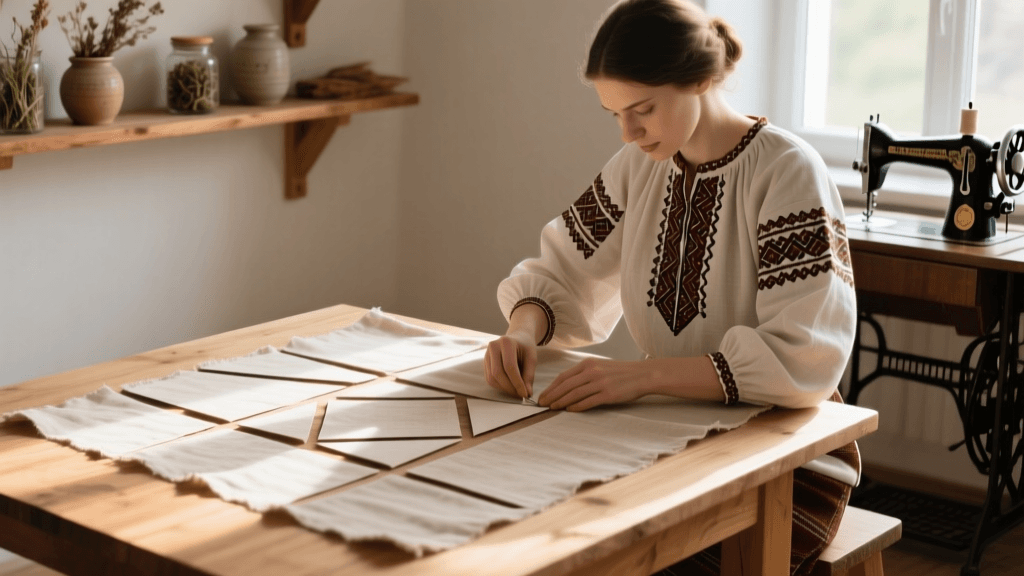
Unlike modern commercial patterns that rely on curved armholes, princess seams, and complex darts—which inevitably leave behind 15% to 20% of fabric waste on the cutting room floor—the traditional rubakha is constructed entirely from rectangles, squares, and straight-grain triangles. This article explores the precise construction patterns, mathematical drafting techniques, and structural engineering of the traditional Slavic shirt, providing a comprehensive guide for the 2026 modern maker.
The Geometry of Folk Dress: Rectangular Patterning Explained
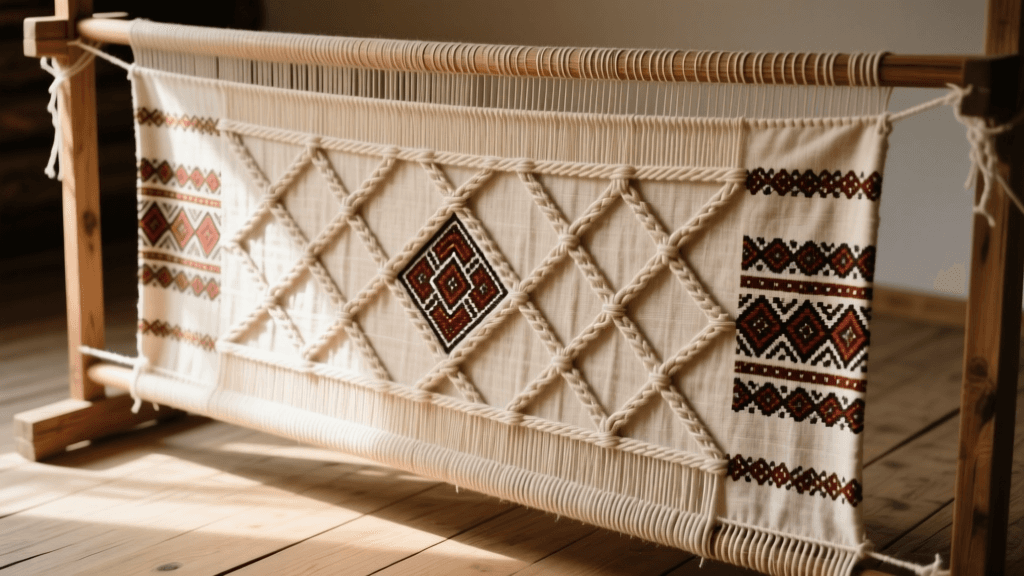
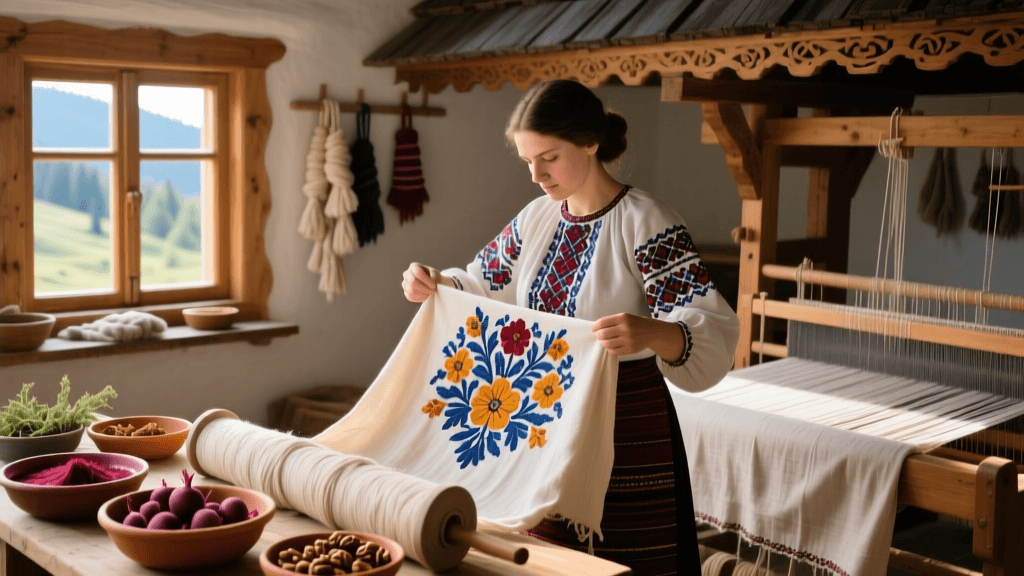
To understand the construction of the rubakha, one must understand the technology of the historical loom. Traditional warp-weighted and horizontal floor looms produced narrow strips of fabric, typically ranging from 36 to 60 centimeters (14 to 24 inches) in width. Because spinning and weaving flax into linen was an incredibly labor-intensive process that took hundreds of hours per garment, cutting curves into the fabric was considered not just wasteful, but economically ruinous.
As documented in the Europeana digital heritage archives, historical garments from the Carpathian and Dnieper regions consistently demonstrate a strict adherence to the loom's natural geometry. The pattern pieces were simply the fabric itself, folded, gathered, or joined. The body of the shirt was often a single long rectangle folded over the shoulders, or two wide rectangles joined at the shoulders. The sleeves were straight tubes. This resulted in a garment with a dropped shoulder line and a boxy, voluminous silhouette that allowed for layering and unrestricted movement during agricultural labor.
Drafting the 2026 Modern Rubakha: Step-by-Step
While modern linen is frequently woven on industrial looms to widths of 140cm or 150cm, the authentic zero-waste methodology remains the same. By adapting the historical math to modern body measurements, you can draft a custom rubakha that honors traditional construction while fitting the contemporary wearer.
Calculating the Body Panels and Sleeves
The foundation of the shirt relies on four primary measurement sets: chest circumference, desired shirt length, arm length (from the base of the neck to the wrist), and bicep circumference. Because the garment is unshaped by darts, ease is built into the width of the rectangles to allow for breathing and movement.
- Body Panels: Calculate the width by taking the wearer's full chest circumference, dividing by two, and adding a minimum of 10cm (4 inches) of ease per panel. If using traditional narrow-loom logic, the front and back panels are identical rectangles.
- Sleeves: The sleeve is a simple rectangle. The width is determined by the bicep circumference plus 8cm of ease. The length is measured from the shoulder drop (where the body panel ends) to the wrist, plus 5cm for a traditional gathered cuff.
- Neline and Cuffs: The neckline is a simple slit or keyhole cut into the center of the front body panel, finished with a narrow straight-grain binding. Cuffs are gathered using a drawstring or a tightly embroidered band.
The Crucial Role of the Gusset (Lastovitsa)
The most critical engineering marvel of the traditional Slavic shirt is the underarm gusset, known in Russian as the lastovitsa and in Ukrainian as the lastka. When a straight, rectangular sleeve is sewn directly to a straight, rectangular body panel, the resulting T-shaped seam creates immense tension at the underarm pivot point. Raising the arms would pull the entire side seam upward, restricting movement and eventually tearing the linen.
The gusset solves this problem brilliantly. By inserting a square or diamond-shaped piece of fabric (typically ranging from 10cm to 15cm across) at the intersection of the side seam and the sleeve seam, the garment gains a three-dimensional pivot point. The gusset acts as a hinge, allowing the arm to lift freely without distorting the main body of the shirt. Construction analyses from the Victoria and Albert Museum's fashion resources frequently highlight the gusset as a defining feature of pre-industrial European tailoring, separating true historical reproductions from modern costume approximations.
2026 Standard Gusset Sizing Chart
Selecting the correct gusset size is vital for mobility. A gusset that is too small will still restrict movement, while one that is too large will create bulky, uncomfortable folds under the arm. Below is the standard sizing chart utilized by heritage tailors in 2026 for drafting rectangular shirts.
| Wearer's Chest Circumference | Recommended Gusset Width (Point-to-Point) | Recommended Gusset Length (Side-to-Side) | Mobility Rating & Use Case |
|---|---|---|---|
| 76 - 86 cm (30 - 34 in) | 10 cm (4 in) | 12 cm (4.75 in) | Standard / Daily Wear |
| 87 - 96 cm (35 - 38 in) | 12 cm (4.75 in) | 14 cm (5.5 in) | Active / Agricultural Labor |
| 97 - 106 cm (39 - 42 in) | 14 cm (5.5 in) | 16 cm (6.25 in) | Heavy Layering / Winter Wear |
| 107 - 116 cm (43 - 46 in) | 15 cm (6 in) | 18 cm (7 in) | Maximum Ease / Outer Garment |
Note: Gussets are traditionally cut on the bias (diagonal to the grainline) to provide natural stretch, or on the straight grain if the fabric is heavily fulled or softened through washing.
Authentic Seam Finishes and Structural Embroidery
Because linen frays easily and the rubakha was subjected to rigorous physical labor and frequent, harsh laundering, all internal seams were historically finished using the flat-felled technique (often called a run-and-fell seam). In this method, the fabric edges are enclosed within the seam itself, creating a flat, incredibly durable join that lies smoothly against the skin. In 2026, modern makers often use a sewing machine for the initial straight stitch, but finishing the fell by hand with a slip stitch remains the gold standard for historical accuracy.
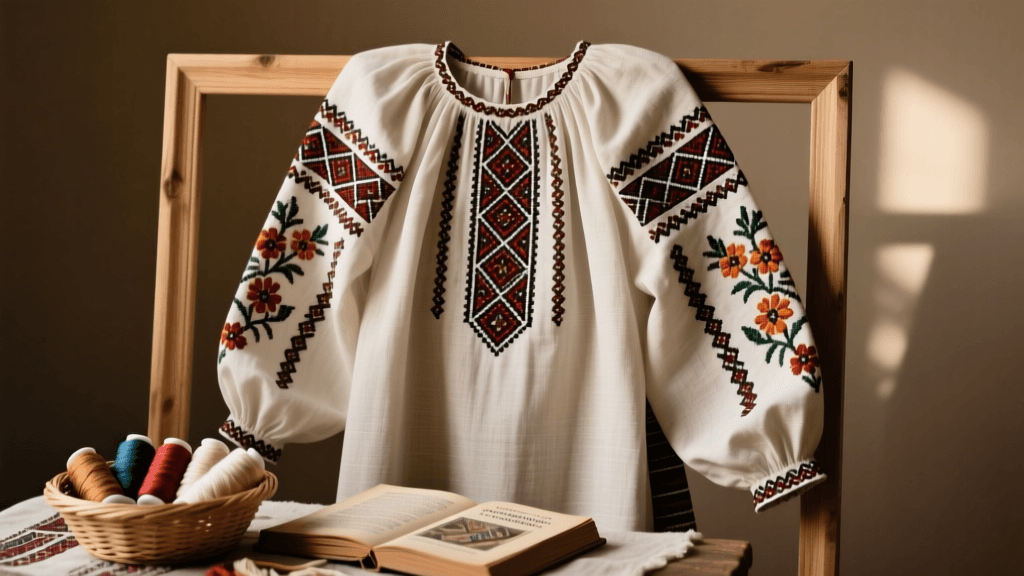
Embroidery on the rubakha was never purely decorative; it was deeply structural and apotropaic (designed to ward off evil). The seams where the gusset met the sleeve and body panels were considered vulnerable entry points for malevolent spirits. Consequently, these specific structural intersections were heavily reinforced with cross-stitch or drawn-thread work using red linen thread. Red was believed to possess protective life-force properties. When drafting your pattern, ensure you allocate an additional 1cm of seam allowance at the gusset intersections if you plan to heavily embroider the seams, as dense stitching can slightly shrink the fabric.
Sourcing Materials in 2026
The success of a traditional rubakha relies entirely on the quality of the textile. Modern cotton blends or lightweight, flimsy linens will not hold the architectural structure of the rectangular gathers. For an authentic 2026 reproduction, makers should source 100% European Flax certified linen.
- Undergarment / Summer Rubakha: Look for a medium-weight linen between 150 and 180 GSM (grams per square meter). It should be bleached or naturally ecru, and pre-washed at a high temperature to soften the fibers and complete any shrinkage before cutting.
- Outer / Winter Rubakha: Opt for a heavy-weight linen ranging from 220 to 280 GSM. These fabrics mimic the dense, slightly slubby texture of hand-woven historical textiles and drape beautifully when gathered at the cuffs and neckline.
- Thread: Avoid modern polyester threads, which are stronger than the linen itself and will cut through the historical fabric over time. Use 100% long-staple linen thread (such as 50/2 or 35/2 weight) for construction, and heavily waxed linen thread for flat-felling the seams.
Conclusion
The Slavic rubakha is far more than a simple peasant shirt; it is a triumph of geometric problem-solving and sustainable design. By mastering the art of rectangular patterning and understanding the vital structural purpose of the underarm gusset, modern sewists can create garments that are historically accurate, incredibly comfortable, and entirely zero-waste. As we move further into 2026, looking back to the resourcefulness of our ancestors provides a clear, elegant path forward for the future of garment construction. Whether you are building a piece for a folk festival, a historical reenactment, or simply a sustainable addition to your daily wardrobe, the mathematics of the rubakha will never fail you.