Loom-Width Slavic Rubakha and Romanian Ie Patterns 2026
The Enduring Legacy of Loom-Width Construction
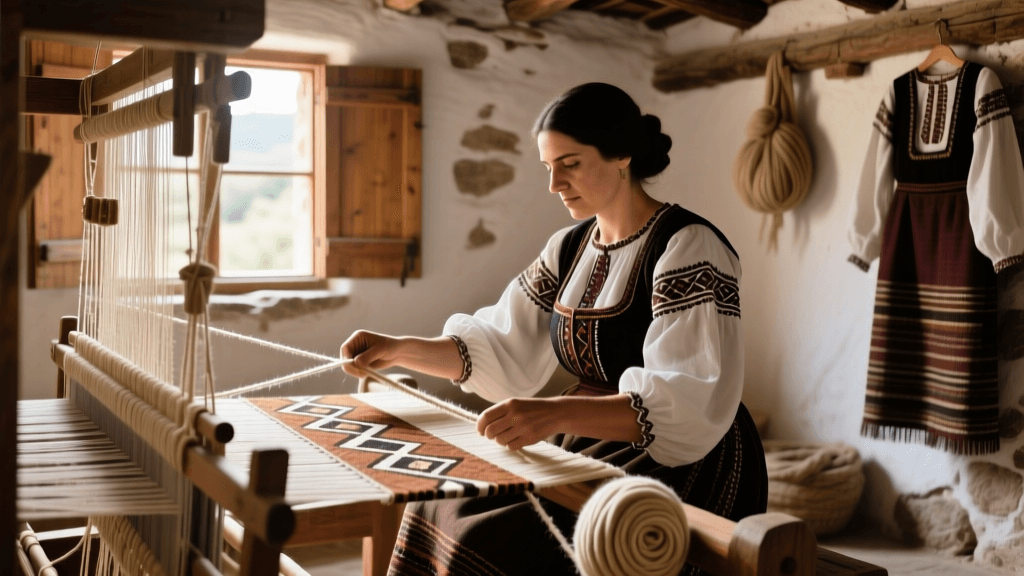
In the landscape of 2026 sustainable fashion, the zero-waste movement has brought renewed attention to historical garment construction. Long before modern pattern grading and curved armholes, Eastern European artisans crafted masterpieces using strictly rectangular, loom-width geometry. The traditional Slavic rubakha (shirt) and the iconic Romanian ie (blouse) are prime examples of this brilliant, waste-free engineering. By utilizing the exact width of the handwoven linen as it came off the loom, makers created garments that were durable, modular, and entirely devoid of fabric scraps.
As we navigate the textile landscape of 2026, modern sewists and historical costumers are reviving these techniques not just for their historical accuracy, but for their ecological benefits. According to recent data from the Ellen MacArthur Foundation, the fashion industry is aggressively pivoting toward circular design models, making the study of zero-waste folk patterns more relevant than ever. This guide explores the geometric drafting, specific construction techniques, and modern fabric adaptations required to recreate these Eastern European masterpieces today.
The Geometry of the Slavic Rubakha
The traditional Slavic rubakha is fundamentally a tunic constructed from straight rectangles. Historical handlooms typically produced linen that was 36 to 40 centimeters (14 to 16 inches) wide. Because the fabric was so narrow, a single garment required multiple rectangular panels sewn together. The genius of the rubakha lies in its use of gussets and gores to transform flat rectangles into a three-dimensional, mobile garment.
The body of the shirt is made from two long rectangles (front and back) folded over the shoulder, eliminating the need for a shoulder seam. To allow for arm movement, a square or diamond-shaped gusset, known as a lastovitsa, is inserted into the underarm intersection. Below the waist, triangular gores (klins) are inserted into the side seams to provide flare and ease of walking. In 2026, makers using modern 60-inch (150 cm) wide fabrics must intentionally cut their linen into 16-inch strips and sew them back together to replicate the historical drape and seam placements, or use parametric CAD software to digitally simulate the narrow-loom drape before cutting.
The Romanian Ie: Altita, Incret, and Fodor
Moving southward into the Carpathian regions, the Romanian ie showcases a different approach to loom-width construction, heavily dictated by its elaborate embroidery. The ie is constructed from rectangular panels gathered at the neckline and cuffs, but its defining feature is the sleeve construction, which is divided into three distinct zones: the altita, the incret, and the fodor.
The altita is a rectangular, heavily embroidered shoulder piece that acts as a structural cap. Below it, the incret is a narrow, gathered band that transitions the shoulder into the sleeve. Finally, the fodor is the long, rectangular lower sleeve that cascades down the arm, often ending in a ruffle. The placement of these seams is not arbitrary; it is strictly governed by the geometry of the embroidery. As documented in the extensive digital archives of Europeana, the structural seams of the ie are always hidden beneath or aligned perfectly with the geometric bands of traditional cross-stitch and chain-stitch motifs. When drafting an ie in 2026, the maker must first map out the embroidery grid, as the loom-width panels must be cut to accommodate the exact repeat of the chosen thread-count pattern.
2026 Zero-Waste Adaptations and Fabric Innovations
Sourcing authentic handwoven, narrow-loom linen can be prohibitively expensive and difficult. However, the 2026 market has seen a surge in sustainable, union-woven fabrics that mimic the drape and texture of historical textiles. Modern hemp-linen blends offer the crispness required for the structured gathers of the ie and the durability needed for the felled seams of the rubakha.
Furthermore, contemporary makers are utilizing 2026's advanced zero-waste CAD modules. These tools allow designers to input the exact width of their chosen fabric and automatically nest rectangular pattern pieces, ensuring that every millimeter of the textile is utilized. Any remaining narrow strips are traditionally repurposed into branie (woven belts) or used as structural ties, maintaining a true zero-waste workflow.
Comparative Fabric Analysis for 2026
Choosing the right textile is critical for loom-width garments, as the fabric must hold sharp, angular folds while remaining comfortable against the skin. Below is a comparison of historical textiles versus the most popular sustainable alternatives available to makers in 2026.
| Fabric Type | Composition | Typical Width | Drape & Structure | 2026 Avg. Cost (per yard) |
|---|---|---|---|---|
| Historical Handwoven Linen | 100% Flax | 14" - 16" | Stiff, highly structured, softens with wear | $65 - $90 (Specialty) |
| Modern Organic Hemp-Linen | 55% Hemp / 45% Linen | 58" - 60" | Crisp, excellent for gathers, durable | $28 - $35 |
| Rami-Linen Blend | 60% Rami / 40% Linen | 54" | Slight sheen, softer drape, breathable | $22 - $30 |
| Cotton Batiste (Modern Alt.) | 100% Organic Cotton | 44" - 60" | Lightweight, fluid, less structural memory | $15 - $20 |
Step-by-Step Loom-Width Drafting Guide
To construct a traditional loom-width shirt using modern fabrics, follow these precise drafting and construction steps. This method assumes a standard 60-inch wide hemp-linen blend, which you will conceptually divide into 15-inch 'loom-width' strips.
- Step 1: Calculate Panel Widths. Measure the wearer's bust and divide by four. Add 2 inches for ease and 1 inch for seam allowances. This is your target panel width. If it is close to 15 inches, use 15-inch strips to mimic historical loom widths.
- Step 2: Cut the Body Rectangles. Cut two long rectangles for the front and back. The length should be from the base of the neck to the desired hemline, plus 2 inches for the hem.
- Step 3: Draft the Sleeves and Gussets. Cut two rectangular sleeves. The width should match your body panel width (or slightly narrower for the ie). Cut two 6x6 inch square gussets (lastovitsa) for the underarms.
- Step 4: Sew the Structural Seams. Use a run-and-fell seam technique. Sew the body panels together at the sides, leaving a 6-inch slit at the top for the gusset. Insert the gusset into the armhole intersection, sewing it to both the body and the sleeve.
- Step 5: Execute the Draw-Thread Gathers. For the Romanian ie or a gathered-neck rubakha, do not cut curved necklines. Instead, run two parallel rows of strong, waxed linen thread along the top edge of the front, back, and sleeve panels. Pull the threads to gather the fabric to the wearer's exact neck circumference.
- Step 6: Attach the Neckband and Cuffs. Bind the gathered edges with straight-grain linen tape. This secures the gathers and provides a clean, zero-waste finish without requiring any curved facings or bias tape.
The Role of Embroidery in Structural Integrity
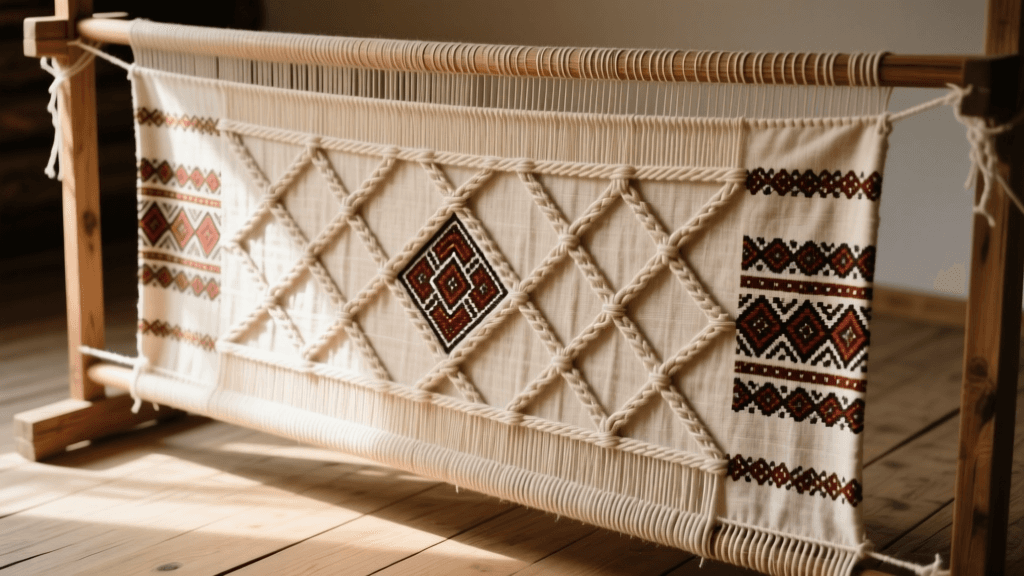
It is vital to understand that in Eastern European folk dress, embroidery is rarely just decorative; it is deeply structural and symbolic. The dense cross-stitch patterns found on the collars, cuffs, and hemlines of the rubakha serve to reinforce the edges of the linen, preventing fraying in an era before sergers and overlock machines. For the Romanian ie, the altita shoulder pad is heavily embroidered to protect the garment from the wear and tear of carrying baskets or yokes.
When planning your 2026 reproduction, map your embroidery before you sew. The dense stitching will stiffen the fabric, altering how the rectangular panels drape. The Victoria and Albert Museum's textile archives frequently highlight how the weight of metallic threads and dense wool yarns in historical pieces actively shaped the silhouette of the garment, pulling the lightweight linen into distinct, sculptural folds.
Conclusion: Preserving Geometry for the Future
The construction patterns of the Slavic rubakha and the Romanian ie represent a masterclass in geometric efficiency and sustainable design. By embracing loom-width drafting, modern makers can drastically reduce textile waste while connecting with centuries of Eastern European heritage. As the fashion industry continues to seek circular solutions in 2026, the ancestral wisdom of the zero-waste rectangle offers a profound, elegant path forward. Whether you are drafting by hand or utilizing modern parametric software, respecting the straight grain and the loom's edge ensures that these beautiful, functional garments will endure for generations to come.