Baltic Amber & Silver Filigree Folk Jewelry: 2026 Guide
The 2026 Renaissance of Baltic Folk Accessories
European folk dress is an intricate tapestry of textiles, but it is the accessories—specifically the jewelry and headwear adornments—that truly signify regional identity, marital status, and social standing. In 2026, the revival of Polish and Lithuanian traditional garments has sparked a massive demand for authentic Baltic amber and silver filigree jewelry. Collectors, cultural preservationists, and modern fashion enthusiasts are increasingly seeking out museum-quality replicas and ethically sourced antique pieces to complete their traditional ensembles. The intersection of historical accuracy and modern ethical sourcing has defined the 2026 market for these exquisite accessories, making it a pivotal year for both artisans and buyers in the European folk dress community.
Authenticating Baltic Amber: 2026 Standards and Techniques
Baltic amber, scientifically known as succinite, is the fossilized resin of ancient coniferous forests that blanketed the region over 40 million years ago. It is the cornerstone of Polish and Lithuanian folk jewelry, often featured in heavy, multi-strand necklaces, bodice clasps, and rosaries. However, the market is frequently saturated with copal (immature resin) and synthetic polymers. According to the Gemological Institute of America (GIA), genuine Baltic amber possesses unique inclusions and specific gravity characteristics that distinguish it from imitations. Furthermore, Encyclopædia Britannica notes that true succinite contains succinic acid, a chemical marker absent in most other global amber varieties.
In 2026, authentication has moved beyond the traditional "saltwater float test" and "hot needle test," which can damage historical pieces. Modern buyers and artisan guilds now rely on portable Fourier-transform infrared (FTIR) spectroscopy to verify the succinic signature without compromising the integrity of antique folk jewelry. When sourcing amber for traditional costumes, buyers must look for the International Amber Association's certification, which in 2026 strictly categorizes amber into natural, modified, reconstructed, and bonded grades.
2026 Baltic Amber Grading and Market Pricing
The value of Baltic amber in folk jewelry is determined by its color, clarity, and the presence of prehistoric inclusions. Below is the current 2026 market pricing for artisan-grade amber used in traditional jewelry making.
| Amber Grade / Color | Description & Folk Application | 2026 Price per Gram (EUR) |
|---|---|---|
| Butterscotch (Opaque) | Highly prized, milky yellow. Used in premium Lithuanian bridal necklaces and high-status bodice clasps. | €12.00 - €18.00 |
| Cognac (Transparent) | Classic deep golden-brown. The standard for everyday regional folk beads and rosaries. | €4.50 - €8.00 |
| Cherry / Red | Rare, often heat-treated historically. Featured in festive Kraków region accessories. | €15.00 - €25.00 |
| Insect Inclusion | Contains prehistoric flora/fauna. Reserved for central amulets or master-crafted silver pendants. | €30.00 - €100.00+ |
| Reconstructed (Pressed) | Fused amber dust. Used in budget-friendly tourist replicas; avoided by serious folk dress purists. | €0.80 - €1.50 |
Silver Filigree: Headdress Pins and Bodice Clasps
While amber provides the vibrant color of Baltic folk dress, silver filigree provides the structural elegance. In traditional Polish and Lithuanian costumes, silver is heavily utilized in headwear and bodice fastenings. The czepce (married women's caps) were historically secured and decorated with ornate silver pins featuring intricate wire-weave and granulation techniques. In 2026, master silversmiths in Vilnius and Kraków are utilizing 3D scanning to map surviving 18th-century museum pieces, allowing them to cast exact base models before applying the painstaking hand-woven filigree wirework that defines authentic folk accessories.
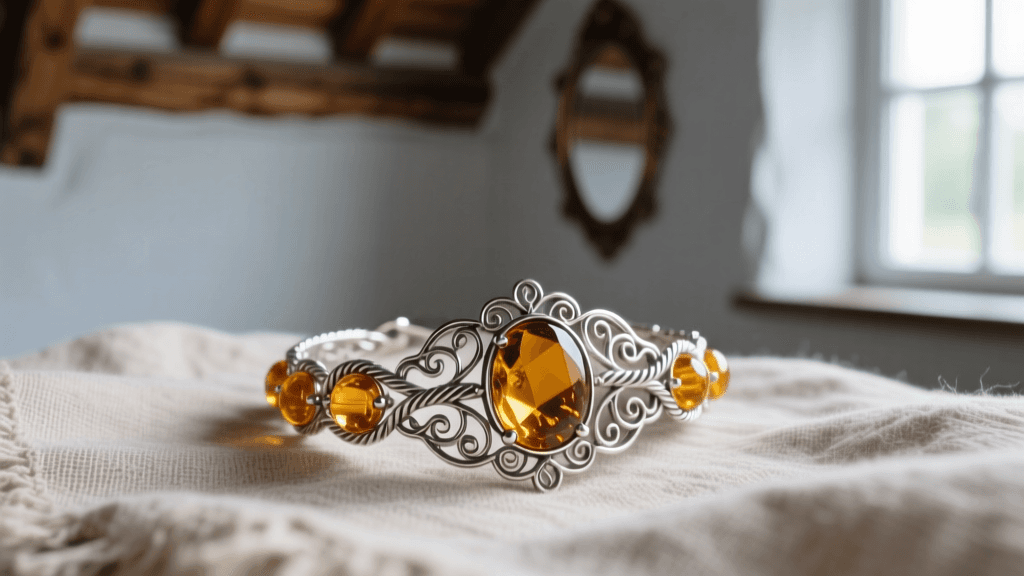
Another vital accessory is the spinka or kontusz clasp. Originally used to secure the heavy, sash-like belts of the nobility, these clasps trickled down into regional folk variations, often featuring a central amber cabochon surrounded by silver rosettes. The 2026 trend in artisan silverwork favors the "oxidized" finish, which mimics the natural tarnish and wear of centuries-old village pieces, providing a more historically accurate aesthetic than highly polished modern silver.
Headwear Adornments: From Wianki to Kokoshniks
Headwear in Eastern European and Baltic folk dress is heavily codified, signaling everything from a woman's village of origin to her marital status. Unmarried women traditionally wore the wianok (wreath), which, while primarily floral, was often reinforced with silver wire and studded with small amber beads for festive occasions. In 2026, cultural revival groups are moving away from synthetic flowers and plastic beads, opting instead for preserved botanicals, brass wire, and genuine Baltic amber chips to recreate these wreaths with historical fidelity.
Further east, the influence of the rigid kokoshnik intersects with Baltic traditions in the borderland regions. These elaborate, halo-like headdresses were heavily encrusted with river pearls, amber, and silver thread. Modern reproductions of these heavy headpieces require specialized structural engineering; contemporary artisans use lightweight, breathable buckram bases covered in silk velvet, adorned with ethically sourced amber and silver bullion embroidery, ensuring the headwear is comfortable enough for modern folk festivals and extended wear.
Ethical Sourcing and the 2026 Supply Chain
A major shift in the 2026 European folk dress market is the emphasis on ethical sourcing. Historically, the majority of Baltic amber was mined in the Kaliningrad region. However, due to ongoing geopolitical shifts and supply chain disruptions, Polish and Lithuanian artisans have heavily pivoted toward sustainable coastal foraging and localized, small-scale extraction. Lithuanian coastal amber, gathered after severe Baltic storms, is highly prized in 2026 for its "wild" aesthetic and guaranteed ethical provenance. When purchasing folk jewelry, buyers are encouraged to request certificates of origin that verify the amber was sourced from independent Baltic coastal cooperatives rather than large-scale industrial mines.
Caring for Antique and Artisan Amber in 2026
Amber is remarkably soft (2 to 2.5 on the Mohs scale) and highly susceptible to environmental degradation. To preserve historical folk jewelry and modern artisan replicas, proper conservation is essential. In 2026, museum conservators recommend avoiding all commercial jewelry dips and ultrasonic cleaners, which can cause micro-fracturing in ancient resin. Instead, collectors should use a soft, untreated microfiber cloth and, once a year, apply a micro-crystalline conservation wax (such as Renaissance Wax) to the silver filigree components to prevent aggressive tarnishing, while keeping the amber itself lightly polished with a dry, soft cloth. Storing these pieces in UV-blocking, acid-free archival boxes is critical, as prolonged exposure to modern LED lighting and sunlight can cause butterscotch amber to oxidize and darken into a deep, opaque brown, altering its historical appearance.
Styling Traditional Pieces for Contemporary Wardrobes
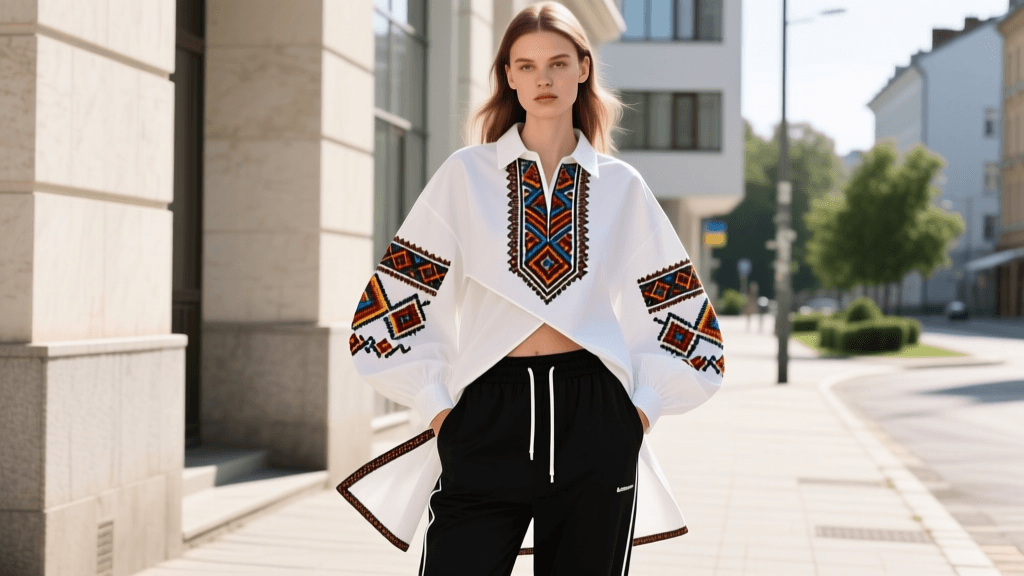
While these accessories are rooted in historical folk dress, the 2026 fashion landscape embraces heritage pieces in everyday wear. A multi-strand cognac amber necklace can be layered over a modern linen blouse, echoing the rustic elegance of a Lithuanian folk shirt without looking like a costume. Similarly, a single, ornate silver filigree clasp can be repurposed as a striking lapel pin on a tailored wool blazer. By understanding the history, craftsmanship, and proper care of Baltic amber and silver filigree, enthusiasts can seamlessly integrate the rich legacy of European folk dress into their modern lives, ensuring these ancient traditions continue to thrive.