Viking Smokkr Guide 2026: Heritage Wool & Tablet Weaving
The Evolution of the Smokkr in Modern Historical Reconstruction
As we navigate the historical textile revival of 2026, the Viking smokkr—commonly referred to as the apron dress or hängerock—remains the undisputed centerpiece of female Norse garb. Over the past decade, the historical reenactment community has transitioned away from generalized "costuming" toward rigorous, evidence-based archaeological reconstruction. Today, crafting a smokkr is not merely about sewing a garment; it is an exercise in experimental archaeology, requiring a deep understanding of historical agriculture, fiber preparation, and ancient weaving technologies.
In 2026, the standard for authenticity demands that we look beyond commercial, heavily processed yarns. Modern reenactors and traditional garment enthusiasts are returning to the roots of Norse textile production, prioritizing heritage sheep breeds, natural dyeing processes, and period-accurate structural techniques. This comprehensive guide will walk you through the exact methodologies, material sourcing, and construction techniques required to build a museum-quality Viking smokkr this year.
Sourcing Authentic Heritage Wool for 2026 Projects
The foundation of any authentic Viking garment is the fiber. The Vikings did not use modern, ultra-fine merino wool; they relied on hardy, double-coated sheep breeds that produced both a soft inner undercoat (thel) and a long, coarse, water-resistant outercoat (tog). In 2026, sourcing raw or minimally processed fleece from these heritage breeds is more accessible than ever, thanks to a global resurgence in traditional shepherding.
Spælsau vs. Gotland: A Fiber Comparison
Choosing the right wool dictates the drape, durability, and weather resistance of your smokkr. Below is a comparison of the most historically appropriate heritage breeds utilized by master weavers in 2026.
| Breed | Fleece Type | Staple Length | Best Use in Smokkr | 2026 Avg. Raw Fleece Cost |
|---|---|---|---|---|
| Norwegian Spælsau | Double-coated | 15-20 cm (outer) | Outer tunic, durable apron dress, cloaks | $18 - $25 / kg |
| Swedish Gotland | Long, curly, single | 10-15 cm | Luxurious outer layers, high-status trims | $30 - $45 / kg |
| Icelandic Sheep | Double-coated | Variable | Underdress (thel), lightweight apron dress | $20 - $30 / kg |
For the primary fabric of the smokkr, Norwegian Spælsau is the gold standard in 2026. The long outer hairs can be combed and spun worsted to create a strong, slightly glossy yarn that weaves into a dense, wind-resistant tabby or twill fabric. The softer undercoat is best reserved for the serk (underdress) or for creating the weft of your woven trim.
Pattern Cutting: The Wrap vs. Tube Debate
For years, the exact construction of the smokkr was a subject of fierce debate. Early interpretations favored a simple "tube" dress gathered by brooches. However, recent archaeological consensus, heavily informed by textile fragment analysis from the Hedeby and Køge finds, points toward a more complex, multi-panel wrap or fitted construction designed to minimize fabric waste.
According to the National Museum of Denmark, the preservation of textiles in Viking Age graves reveals a sophisticated understanding of geometry and tailoring. Norse weavers worked on warp-weighted looms, producing fabric in specific, narrow widths. Rather than cutting into the cloth and wasting precious material, Viking tailors utilized rectangular panels and triangular gores to shape the garment.
Drafting the 2026 Pattern
To construct an accurate smokkr today, begin with four main rectangular panels (front, back, and two sides) extending from the armpit to the mid-calf. To allow for movement and a flattering drape, insert triangular gores into the side seams starting at the waist. The top edge of the front and back panels should be folded down and stitched to create a sturdy casing or loop structure for the shoulder straps. The shoulder straps themselves should be woven or braided, not merely cut from the same cloth, as this prevents stretching and tearing under the weight of the bronze brooches.
Natural Dyeing: Achieving Historical Color Fastness
A common misconception is that Viking clothing was exclusively drab, undyed brown or grey. While the lower classes may have worn natural fleece colors, high-status garments were vibrantly dyed. In 2026, botanical dyeing has seen a massive revival, with historically accurate mordants and dyestuffs readily available from specialized heritage suppliers.
- Madder Root (Rubia tinctorum): Produces rich, colorfast reds and deep oranges. Requires an alum mordant and a carefully controlled temperature (around 60°C) to prevent the dye from turning muddy brown.
- Woad (Isatis tinctoria): The primary source of blue in the Viking Age. Woad requires a complex, oxygen-deprived fermentation vat, a skill that many modern dyers have mastered through dedicated historical workshops.
- Weld (Reseda luteola) and Tansy: Used for vibrant, sun-resistant yellows and greens (when over-dyed with woad).
When dyeing your Spælsau yarn, ensure you scour the wool thoroughly using a mild, pH-neutral soap. Modern commercial detergents often contain optical brighteners and enzymes that will strip natural dyes or react poorly with alum mordants.
Mastering Tablet Weaving for Apron Dress Trims
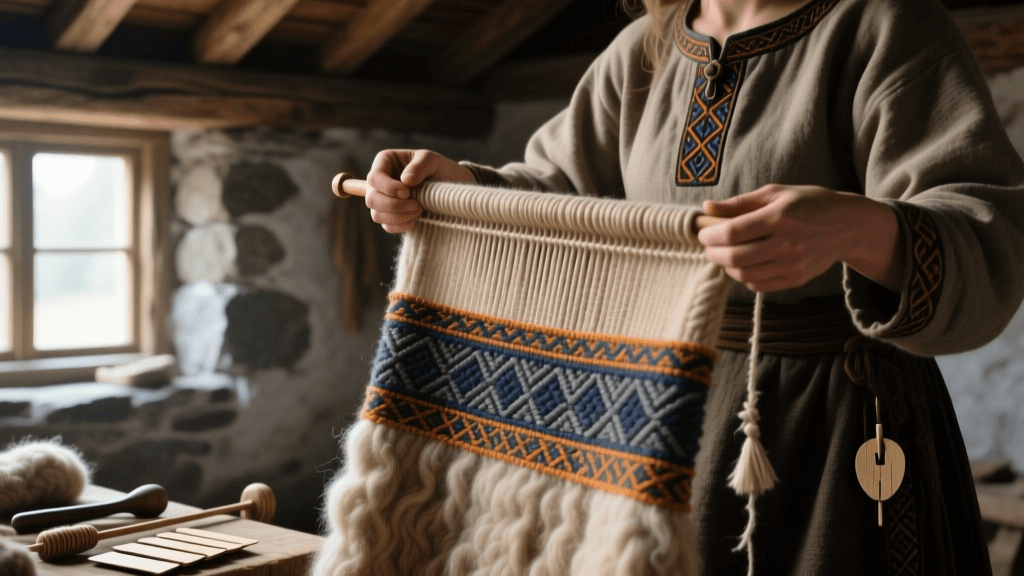
No Viking smokkr is complete without intricately woven trim. Tablet weaving (or card weaving) was the primary method for producing strong, decorative bands used to edge necklines, armholes, and the bottom hems of the apron dress. The Textile Research Centre emphasizes the importance of thread count and weave structure in historical textiles, noting that the tightness of the warp and the tension of the weft are what give tablet-woven bands their incredible structural integrity.
Setting Up Your Loom and Choosing Yarns
For a traditional smokkr trim, you will need a set of 20 to 40 square cardboard or wooden tablets. In 2026, laser-cut wooden tablets with smooth, beveled edges are the preferred tool, as they prevent the wool warp from fraying during the turning process.
- Warp Selection: Use a tightly spun, worsted wool yarn for the warp. It must withstand high tension and the friction of the tablets rotating. A 2-ply Spælsau or Gotland yarn is ideal.
- Weft Selection: The weft can be a slightly softer, single-ply yarn, which will pack down tightly and remain hidden within the structure of the band.
- Threading: Thread the tablets either all in the same direction (for a simple, sturdy twill) or in alternating S and Z directions (to create balanced, chevron, or diamond patterns).
- Tensioning: Secure the warp to a rigid inkle loom or use traditional backstrap tensioning. The tension must be exceptionally high; if the warp is loose, the resulting band will be spongy and historically inaccurate.
As you turn the tablets forward, pass the weft thread through the shed and beat it firmly into place with a wooden shuttle or bone beater. The resulting band should be stiff, dense, and capable of protecting the edges of your wool smokkr from wear and tear.
The Serk and Accessories: Completing the Silhouette
The smokkr is an outer garment, worn over a linen underdress known as a serk. For 2026 reconstructions, unbleached or naturally sun-bleached linen is the most accurate choice. The serk should feature a keyhole neckline and long, slightly tapered sleeves. Avoid modern cotton entirely; cotton was not available in Norse territories during this period and lacks the correct drape and moisture-wicking properties of historical flax linen.
To suspend the smokkr, you will need a pair of cast bronze "tortoise" or oval brooches. The 2026 market for historical jewelry has improved drastically, with several foundries offering museum-grade replicas based directly on 10th-century Birka and Gotland casts. Ensure the brooches feature the correct dual-loop pin mechanism on the reverse to securely hold the thick wool straps and linen serk without tearing the fabric.
2026 Sourcing and Cost Breakdown
Building an authentic garment is an investment in time and heritage materials. Below is the estimated cost breakdown for sourcing and creating a complete, high-status Viking smokkr ensemble in 2026, assuming you are spinning and weaving the primary fabric yourself.
- Raw Spælsau Fleece (3 kg for dress and straps): $65.00
- Raw Flax/Linen Yarn (for Serk): $45.00
- Madder & Woad Dye Extracts + Alum Mordant: $55.00
- Wooden Tablet Weaving Cards & Bone Beater: $30.00
- Cast Bronze Oval Brooches (Pair, Museum Replica): $95.00
- Soapstone Spindle Whorl (for drop spinning): $25.00
- Total Estimated Material Cost: $315.00
Note: This breakdown does not include the hundreds of hours of labor required for hand-spinning, natural dyeing, and weaving. If purchasing pre-woven heritage wool fabric from specialized European mills, expect to pay between $80 and $120 per meter in 2026.
Conclusion
Crafting a Viking smokkr in 2026 is a profound way to connect with the ingenuity and artistry of Norse women. By rejecting modern shortcuts in favor of heritage Spælsau wool, botanical dyes, and meticulous tablet weaving, you are not just making a piece of clothing; you are keeping an ancient, living tradition alive. Whether you are preparing for a historical immersion event or simply wish to wear a masterpiece of traditional European folk dress, the dedication to authentic methods will yield a garment that is as beautiful as it is historically resonant.