Authentic Slavic Kokoshnik Headdresses & Pearlwork 2026 Guide
The Resurgence of the Kokoshnik in 2026
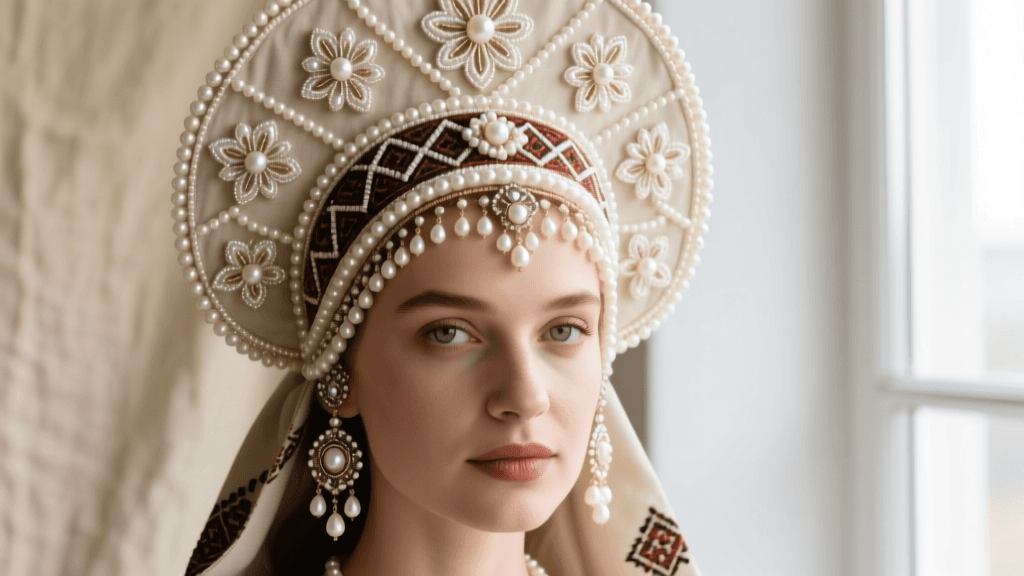
The kokoshnik remains one of the most visually striking and culturally significant elements of Eastern European folk dress. Originating in the northern and central regions of Russia between the 16th and 19th centuries, this elaborate headdress has transcended its historical roots to become a centerpiece of the 2026 European folk dress revival. Today, the kokoshnik is no longer confined to museum archives or theatrical performances; it is actively worn at international Slavic heritage festivals, high-fashion cultural galas, and traditional Maslenitsa celebrations across Europe and North America. As contemporary artisans blend historical accuracy with modern ergonomic adjustments, understanding the anatomy, jewelry pairings, and regional variations of the kokoshnik is essential for any serious collector or folk dress enthusiast in 2026.
Anatomy of the Traditional Kokoshnik and Pearlwork
To appreciate the craftsmanship of a genuine kokoshnik, one must understand its complex structural anatomy. The headdress is not merely a piece of fabric but a rigid, engineered crown designed to frame the face and signify the wearer's marital and social status. According to historical textile analyses documented by Britannica, the kokoshnik was strictly reserved for married women, serving as a vital cultural marker that completely concealed the hair, which was considered taboo to show in public after marriage.
The Foundation (Osnova) and Forehead Band (Ochelye)
The base of the kokoshnik, known as the osnova, is traditionally constructed from layered birch bark, heavy canvas, or quilted cotton buckram. This rigid foundation ensures the headdress maintains its distinctive silhouette—whether a soaring crescent, a horned peak, or a cylindrical halo. The front edge, or ochelye, is the most heavily decorated section, resting just above the eyebrows. In 2026, master artisans often reinforce these historical materials with lightweight, breathable modern buckrams to reduce the overall weight of the headdress during long festival days, without compromising the historical silhouette.
The Podniz: Intricate Pearl Netting
Draping elegantly from the ochelye over the wearer's forehead is the podniz, a delicate netting woven entirely from seed pearls. Historically, these were harvested from freshwater river mussels in the northern waterways of Europe. Because authentic wild river pearls are exceedingly rare and heavily protected in 2026, contemporary master jewelers and textile artists now source premium, sustainably farmed freshwater seed pearls from specialized 2026 aquaculture cooperatives. These modern cultured pearls offer the exact same irregular, organic luster as historical river pearls, ensuring the podniz catches the light with a soft, ethereal glow that mass-produced glass beads simply cannot replicate.
Goldwork Embroidery: The Couching Technique
Beyond pearls, the surface of the kokoshnik is typically covered in lavish goldwork embroidery. The primary technique used is couching, where thick metallic threads (historically spun gold or silver, now often high-quality gilt copper or synthetic metallic yarns for durability) are laid on the surface of the velvet or brocade and stitched down with tiny, nearly invisible silk threads. Artisans in 2026 frequently employ the litsey (face) stitching method, where the metallic threads are arranged in directional patterns to create a shimmering, three-dimensional effect that mimics the scales of a fish or the feathers of a firebird. The Russian Ethnographic Museum highlights that the density and quality of this goldwork were direct indicators of a family's wealth, a tradition that modern bespoke ateliers honor by offering tiered pricing based on the density of the metallic thread coverage.
Accompanying Jewelry: Kolts, Ryasny, and Gaitans
A kokoshnik is rarely worn in isolation; it is the anchor for a complex ecosystem of traditional Slavic jewelry. In 2026, the revival of these accompanying pieces has been driven by advancements in 3D scanning and lost-wax casting, allowing metalsmiths to recreate museum-grade artifacts with stunning fidelity.
- Kolts (Temple Pendants): These are large, ornate medallions that hang at the temples, often attached directly to the lower edges of the kokoshnik or suspended from the headdress via chains. They frequently feature cloisonné enamel, granulation, or intricate filigree depicting mythical birds like the Sirin or Alkonost.
- Ryasny (Chains): Hanging from the kolts or the sides of the headdress, ryasny are long, multi-stranded chains that frame the face and rest on the shoulders. They create a rhythmic, chiming sound when the wearer moves, which was historically believed to ward off evil spirits.
- Gaitans (Cords and Lanyards): Worn around the neck or woven into the hair at the nape, gaitans are braided silk or metallic cords that hold heavy pectoral crosses or amber medallions, connecting the headdress visually to the upper garments like the sarafan.
Regional Variations: A 2026 Buyer’s Comparison
The silhouette and decoration of the kokoshnik vary dramatically by region. The Metropolitan Museum of Art costume archives highlight how local materials and sumptuary laws shaped these distinct styles. Below is a comparison of the primary regional types and their 2026 bespoke commission costs.
| Region | Silhouette / Shape | Key Materials & Decoration | 2026 Avg Commission Cost (USD) |
|---|---|---|---|
| Vologda / North | Crested / Crescent | Heavy river-style pearls, dense goldwork, dark velvet | $1,800 - $3,500 |
| Kostroma | Triangular / Horned | Foil inserts, colored glass, silk ribbons, modest pearls | $900 - $1,600 |
| Pskov | Kika (Horned / Saddle) | Rich crimson velvet, heavy pearl podniz, silver galloons | $2,200 - $4,000 |
| Moscow / Central | Halo / Cylindrical | Gold brocade, moderate pearlwork, floral embroidery | $1,200 - $2,500 |
Sourcing Authentic Pieces and Modern Artisans in 2026
If you are looking to acquire an authentic kokoshnik in 2026, it is crucial to avoid mass-produced theatrical costumes and seek out specialized historical tailors and jewelers. The market has shifted heavily toward bespoke commissions. Artisans based in Eastern Europe, as well as specialized diaspora crafters in North America, typically require a lead time of 4 to 8 months to construct a fully embroidered and pearl-netted headdress.
When commissioning a piece, always request a breakdown of materials. Ensure the podniz uses genuine freshwater pearls rather than plastic or glass imitations, and verify that the goldwork utilizes tarnish-resistant metallic threads. For accompanying jewelry like kolts, seek metalsmiths who work in sterling silver or brass with traditional hot enamel (cloisonné) rather than cheap cold-epoxy resins. Expect to invest between $2,500 and $5,000 for a complete, museum-quality ensemble including the headdress, temple rings, and chains.
Care and Preservation of Antique and Bespoke Pearlwork
Proper preservation is vital, especially given the organic nature of the materials used. Pearls are highly susceptible to dehydration and acidic environments. In 2026, conservation experts recommend storing kokoshniks in climate-controlled environments with a relative humidity of around 45-55%. Never store the headdress in plastic bags, as this traps moisture and promotes mold on the velvet and canvas base. Instead, wrap the piece in unbuffered, acid-free archival tissue paper and place it in a custom-fitted archival box. Keep the headdress away from direct UV light, which will rapidly fade the silk embroidery threads and degrade the metallic couching yarns.
Styling the Kokoshnik for Contemporary Folk Dress
Wearing a kokoshnik in 2026 requires a thoughtful approach to styling to honor its cultural weight. For traditional folk festivals, pair a northern crescent kokoshnik with a rich, embroidered linen rubakha (shift) and a heavy wool or silk ponyova (wrap skirt). The jewelry should be balanced; if the podniz is heavily pearled, opt for simpler bronze or silver kolts to avoid visual clutter. For modern cultural galas or high-fashion interpretations, a sleek, cylindrical Moscow-style kokoshnik in gold brocade can be paired with a minimalist, high-collared velvet gown, allowing the intricate goldwork and pearl netting to serve as the undisputed focal point of the ensemble. By respecting the historical construction and pairing it with authentic regional jewelry, the kokoshnik remains a breathtaking testament to the enduring legacy of European folk dress.