Romanian Altita Blouse Smocking & Pattern Guide 2026
The Resurgence of Heritage Construction in 2026
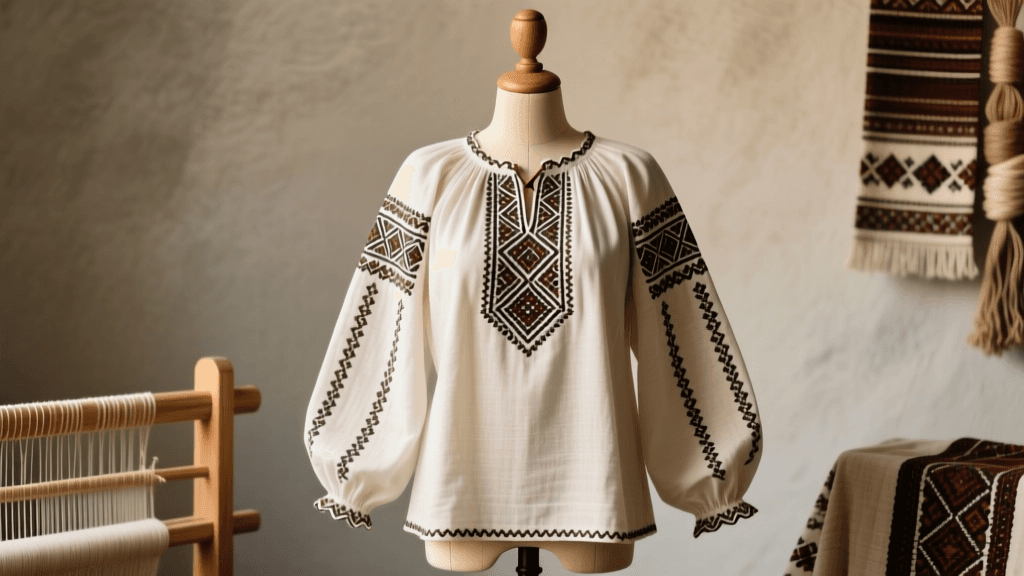
In 2026, the global slow-fashion movement has placed unprecedented value on zero-waste pattern drafting and ancestral textile techniques. Among the most intricate and highly sought-after garments in the European folk dress revival is the traditional Romanian Ie (peasant blouse), specifically the variations featuring the altiță—a heavily smocked and embroidered shoulder panel. As contemporary makers and heritage artisans seek to move away from mass-produced fast fashion, mastering the geometric smocking and structural drafting of the Romanian blouse has become a pinnacle of textile craftsmanship. This comprehensive guide explores the precise construction patterns, material sourcing, and smocking techniques required to build an authentic Ie cu altiță in 2026.
The Zero-Waste Philosophy of Eastern European Folk Dress
Unlike modern commercial pattern drafting, which often results in significant fabric waste through curved armholes and shaped side seams, the traditional Romanian blouse is a masterclass in zero-waste geometric construction. The garment is entirely composed of rectangles and squares. This approach not only honors the historical necessity of preserving every inch of hand-loomed linen but also creates a distinctive, voluminous silhouette that drapes beautifully across the body. According to the extensive archives at the Romanian Peasant Museum, this rectangular cutting method was designed to maximize the width of traditional narrow-loom fabrics, which typically measured between 40 and 60 centimeters in width.
Anatomy of the 'Ie cu Altiță'
To draft the pattern accurately, one must understand the distinct anatomical components of the blouse. The standard construction consists of the following elements:
- Front and Back Panels: Two identical rectangles that form the bodice, gathered at the neckline.
- Sleeves: Wide rectangular panels that extend from the neckline to the wrist or elbow, featuring the altiță at the shoulder.
- The Altiță: A rectangular shoulder board, usually 12 to 15 centimeters wide, heavily embroidered with geometric motifs. It acts as the structural anchor for the sleeve.
- The Încreț: The smocked gathering located directly beneath the altiță, which transitions the wide shoulder panel into the voluminous lower sleeve.
- The Pavă (Gussets): Small square or diamond-shaped fabric inserts placed under the arm to provide mobility and ease.
- The Cheiță: Decorative faggoting seams used to join the rectangular panels together, replacing standard closed seams.
2026 Material Sourcing and Cost Analysis
Sourcing authentic materials is critical for achieving the correct drape and structural integrity. In 2026, the market for heritage textiles has expanded, with several cooperatives in Maramureș and Bucovina supplying hand-loomed linen and hemp blends globally. When constructing the altiță, the fabric must have a clear, countable warp and weft grid, as the smocking and embroidery rely entirely on counting threads rather than tracing printed patterns.
| Material Component | 2026 Recommended Specification | Average 2026 Cost (EUR) |
|---|---|---|
| Main Fabric | 100% Hand-loomed Linen (28-32 count) | €35 - €55 per meter |
| Embroidery Thread | Mercerized Cotton or Natural Silk (DMC/Anchor) | €2.50 - €4.00 per skein |
| Smocking Thread | Heavy-duty Linen or Cotton Basting Thread | €8.00 per 500m spool |
| Cheita (Faggoting) Yarn | Hand-spun Wool or Thick Cotton | €12.00 per 100g hank |
Historical garments preserved in The Metropolitan Museum of Art's European textile collection demonstrate that early 20th-century blouses frequently utilized a mix of hemp for durability and linen for sheen. Today, modern makers often opt for a 70/30 linen-cotton blend for the sleeve panels to withstand the intense tension of the încreț smocking without warping.
Drafting the Pattern: Measurements and Proportions
Drafting the Ie requires abandoning standard sizing charts in favor of proportional geometry. The width of the front and back panels is determined by the wearer's bust measurement plus a minimum of 15 centimeters of ease for gathering. For a standard European size Medium (92 cm bust), the front and back panels are each cut to 60 cm wide by 70 cm long. The sleeves are cut to match the width of the fabric loom, typically 50 cm wide, and extend to the desired length (usually 65 cm from the base of the neck). The altiță is cut as a separate horizontal rectangle, 15 cm wide and matching the 50 cm width of the sleeve. This separate piece is essential because the intense density of the shoulder embroidery would cause a continuous sleeve panel to pucker and distort.
Constructing the Altiță and Încreț Smocking
The încreț is the structural smocking that gathers the wide sleeve into the narrower altiță. This is not merely decorative; it is an engineering feat that distributes the volume of the sleeve evenly. In 2026, artisans utilize a precise grid-marking technique before stitching. Using a water-soluble fabric pen or traditional tailor's chalk, a grid of 1 cm squares is marked on the wrong side of the fabric, directly below the altiță seam line.
Step-by-Step Smocking Process
- Warp and Weft Counting: Identify the exact thread count of your linen. A standard 28-count linen means you will pick up 4 threads for every stitch to maintain a uniform 5mm grid.
- The Running Stitch Grid: Using a strong, contrasting basting thread, sew horizontal running stitches across the marked grid, leaving long tails at the ends.
- Pulling the Gathers: Gently pull the basting threads to compress the fabric. The cultural significance of this garment was globally recognized when UNESCO added the traditional blouse with shoulder embroidery to its Intangible Cultural Heritage list, noting that the gathering must be compressed to exactly one-third of the original sleeve width.
- Locking the Smocking: Once the desired width is achieved, use a stem stitch or honeycomb smocking stitch with matching embroidery thread to lock the gathers in place permanently. The basting threads are then carefully removed.
Geometric Motifs and Symbolic Embroidery
The altiță is traditionally divided into three distinct horizontal bands, each serving a specific symbolic and visual purpose. The top band, known as the cerul (the sky), features celestial motifs such as sun wheels, stars, and continuous meanders. The middle band contains agricultural and terrestrial symbols, most notably the rhombus (representing sown fields and fertility) and the zig-zag line (representing water or the river of life). The bottom band transitions into the încreț and often features smaller, repeating geometric seeds or 'wolf's teeth' borders. In 2026, contemporary makers are utilizing digital graphing software to map out these traditional cross-stitch and satin-stitch patterns before transferring them to the physical linen grid, ensuring perfect symmetry across both shoulders.
Assembly and the Cheiță Faggoting Technique
Once the embroidery and smocking are complete, the panels are assembled. Rather than sewing the panels face-to-face with a standard seam, the Romanian Ie utilizes cheiță (faggoting). This involves placing the finished edges of two rectangles parallel to each other, leaving a 1 cm gap, and bridging the gap with decorative needle lace. The most common cheiță stitch is the figure-eight or buttonhole stitch, worked over a temporary paper backing. This technique not only adds a delicate, lace-like aesthetic to the garment but also provides structural flexibility, allowing the rigid hand-loomed linen to move fluidly with the body. The neckline, or ciupag, is finished with a narrow, tightly smocked collar band, utilizing the same thread-counting gathering technique as the sleeve încreț, but on a much finer, denser scale.
Conclusion: Preserving Anstral Techniques
Constructing a traditional Romanian Ie cu altiță in 2026 is an exercise in patience, precision, and deep respect for ancestral engineering. By adhering to zero-waste rectangular drafting, mastering the mathematical tension of the încreț smocking, and honoring the symbolic geometry of the altiță, modern makers do more than recreate a historical costume. They actively participate in the living continuation of European folk dress, proving that the most sustainable and beautifully constructed garments are those rooted in centuries of perfected technique.