Bavarian vs Black Forest Tracht: Regional Folk Dress Guide 2026
Introduction to Southern German Tracht in 2026
When exploring the rich tapestry of European folk dress, few regions command as much global recognition and deep-rooted cultural pride as Southern Germany. However, the term Tracht (traditional folk costume) is not a monolith. As we navigate the 2026 festival season and the ongoing revival of heritage textiles, it is crucial to distinguish between the globally recognized Bavarian Tracht and the deeply localized, visually striking costumes of the Black Forest (Schwarzwald). While both share a broader Alpine and Southern German heritage, their construction, silhouettes, and cultural signifiers are distinctly different. For collectors, cultural historians, and enthusiasts of traditional European garments, understanding these regional nuances is essential for authentic appreciation and proper sourcing.
The Bavarian Tracht: Dirndl and Lederhosen
Bavarian Tracht is arguably the most exported image of German folk dress, heavily influenced by the Alpine regions of Upper Bavaria (Oberbayern). In 2026, the Bavarian Tracht continues to evolve, balancing strict historical preservation with contemporary sustainable fashion movements. The Bavarian Tracht Association actively monitors and promotes the authentic production of these garments, ensuring that modern interpretations do not dilute centuries-old tailoring techniques.
The Anatomy of the Authentic Dirndl
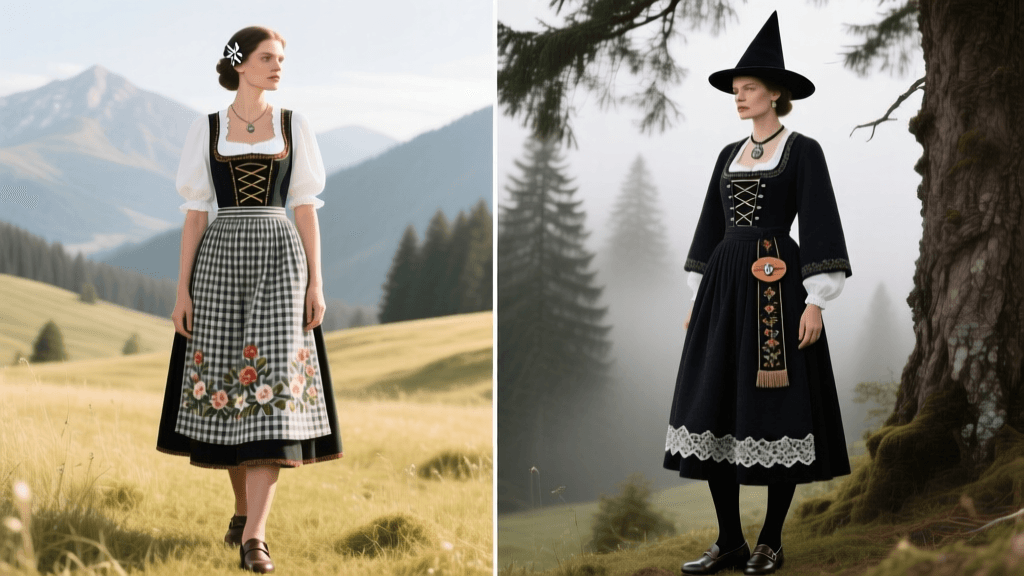
The Bavarian Dirndl is a four-part ensemble consisting of a bodice (Mieder), a blouse (Bluse), a full skirt (Rock), and an apron (Schürze). In 2026, the hallmark of a high-quality Dirndl is the use of natural fibers. Mass-produced polyester blends are increasingly rejected by discerning buyers in favor of 100% Austrian linen, raw silk, and lightweight merino wool. The bodice is heavily structured, often featuring hidden hook-and-eye closures or intricate lacing that provides a tailored, corseted silhouette. The apron, tied at the front, serves as a traditional marital status indicator: a bow on the left signifies the wearer is single, on the right means married or engaged, in the center indicates virginity (traditionally), and at the back signifies widowhood or that the wearer is a working server.
Lederhosen: Beyond the Stereotype
Authentic Bavarian Lederhosen are far removed from the cheap costume shop replicas seen at international beer festivals. True to their name, they are crafted from Hirschleder (deer leather) or Gamsleder (chamois leather), which is tanned using traditional brain-tanning or vegetable-tanning methods to achieve a soft, suede-like finish. In 2026, a master-crafted pair of Bundlederhosen (knee-breeches) features intricate, region-specific floral embroidery (Stickerei) done entirely by hand. The suspenders (Hosenträger) are heavily decorated and often feature a cross-piece (Steg) that displays the wearer's regional crest or family initials.
The Black Forest: Bollenhut and Schäppelkrone
Traveling west from the Bavarian Alps into the dense, rolling hills of the Black Forest, the folk dress shifts dramatically. The Black Forest Tracht is highly localized, with the most famous variations originating from just three villages: Gutach, Kirnbach, and Horn-Reichenbach. According to cultural guides from Schwarzwald Tourismus, these garments are less about Alpine practicality and more about displaying regional wealth, marital status, and religious affiliation through striking headwear and darker color palettes.
The Iconic Bollenhut
The Bollenhut is the undisputed symbol of the Black Forest, recognized globally for its bold, oversized wool pompoms (Bollen) mounted on a whitewashed straw base. The color of the pompoms strictly dictates the wearer's status: vibrant red pompoms are reserved exclusively for young, unmarried women, while black pompoms are worn by married women. The rest of the Gutach Tracht features a black bodice, a white puffed blouse, and a long, heavy skirt that falls to the mid-calf, often layered with a green or red silk apron depending on the specific church holiday or festival day.
The Schäppelkrone Bridal Crown
Perhaps the most breathtaking piece of European folk headwear is the Schäppelkrone, the traditional bridal crown of the Black Forest. Weighing up to several kilos, this elaborate headdress is constructed from a wireframe covered in silver foil, mirrored glass, ribbons, and artificial flowers. In 2026, the creation of a Schäppelkrone remains a highly specialized craft, with only a handful of master artisans in the Kinzig valley capable of restoring or building new crowns for local brides. It is worn only once in a woman's life, on her wedding day, and is considered a masterpiece of regional folk art.
Comparative Analysis: Bavarian vs. Black Forest Garments
To truly understand the divergence in Southern German folk dress, we must look at the structural and material differences side-by-side. The following table outlines the primary distinctions between the two regional styles as they are worn and preserved in 2026.
| Feature | Bavarian Tracht (Oberbayern) | Black Forest Tracht (Gutach/Kirnbach) |
|---|---|---|
| Primary Silhouette | Fitted bodice, flared midi-skirt, structured apron. | Longer, heavier skirts, wide puffed sleeves, distinct corset-like waist. |
| Headwear (Women) | Minimalist; small felt hats, floral wreaths, or bare-headed with braided hair. | Highly elaborate; Bollenhut (pompom hat), Schäppelkrone (bridal crown), or Gollerhüte. |
| Headwear (Men) | Tirolerhut (felt hat with eagle feather or Gamsbart tuft). | Schäppelhut (wide-brimmed black hat) or velvet caps. |
| Primary Materials | Deer leather, alpine linen, loden wool, silk. | Heavy wool, velvet, straw, broadcloth, silver wire. |
| Color Palette | Earth tones, alpine greens, deep blues, soft pastels for blouses. | High contrast: stark black, bright red, crisp white, and vibrant green. |
Sourcing Authentic Tracht in 2026: A Buyer’s Guide
For those looking to invest in authentic European folk dress, the 2026 market offers both incredible artisanal quality and a minefield of mass-produced imitations. Whether you are sourcing for a museum collection, a cultural performance, or personal heritage wear, understanding current pricing and material standards is vital.
Cost and Investment Guide
- Authentic Bavarian Dirndl: A high-quality, made-to-measure Dirndl from a reputable Munich or Salzburg atelier currently ranges from €600 to €1,500. This price reflects the cost of premium Austrian linen and hand-stitched bodice detailing.
- Handcrafted Lederhosen: Expect to pay between €900 and €2,500 for genuine Hirschleder breeches with hand-embroidered suspenders. The tanning process alone takes months, and the embroidery can require over 40 hours of skilled labor.
- Black Forest Bollenhut: Authentic, artisan-made Bollenhüte are rare and typically cost between €400 and €800. They are often custom-fitted to the wearer's head circumference to ensure the heavy wool pompoms sit correctly without causing strain.
- Vintage and Antique Pieces: The secondary market for early 20th-century Tracht is thriving in 2026. However, buyers must be wary of moth damage in heavy wool skirts and dry-rot in vintage leather. Always request detailed macro-photography of the seams and leather grain before purchasing antique pieces online.
Material Verification
When shopping, always check the inner lining and seam allowances. Authentic garments will feature generous seam allowances to allow for future alterations, a hallmark of traditional tailoring meant to last generations. Furthermore, genuine loden wool will have a distinct, slightly lanolin scent and a dense, water-resistant weave that synthetic blends simply cannot replicate. The Goethe-Institut frequently highlights cultural preservation initiatives that support these traditional weavers and tanners, making it easier for buyers to identify certified heritage producers.
Care and Maintenance of Heritage Textiles
Preserving these garments requires specific care routines that differ vastly from modern clothing. Lederhosen should never be dry-cleaned; the chemicals strip the natural oils from the deer leather, causing it to crack. Instead, they should be brushed with a specialized suede brush and aired out in a humid environment to naturally release odors and light stains. Dirndl blouses, often made of delicate cotton batiste or silk, require hand-washing in lukewarm water with a pH-neutral detergent. The heavy wool skirts of the Black Forest Tracht must be stored flat or on wide, padded hangers to prevent the warp and weft of the fabric from distorting under the garment's own weight.
Cultural Festivals and Contemporary Revival
The true home of the Tracht is not in a museum archive, but in the vibrant festival culture of Southern Germany. While Munich's Oktoberfest remains the most famous showcase for Bavarian Tracht, purists often point to smaller, localized events for a more authentic experience. The Gutacher Trachtenfest in the Black Forest and the Gauefest in Upper Bavaria are premier 2026 events where regional Tracht associations gather to parade in historically accurate, meticulously maintained garments. These festivals are not mere performances; they are living expressions of regional identity, where the cut of a bodice or the color of a pompom still speaks volumes about a wearer's hometown, heritage, and community standing. By understanding and respecting these regional distinctions, we ensure that the profound legacy of European folk dress continues to thrive in the modern era.