Romanian Ia Blouse Construction: Pattern Drafting & Sewing 2026
The Resurgence of the Romanian Ia in 2026
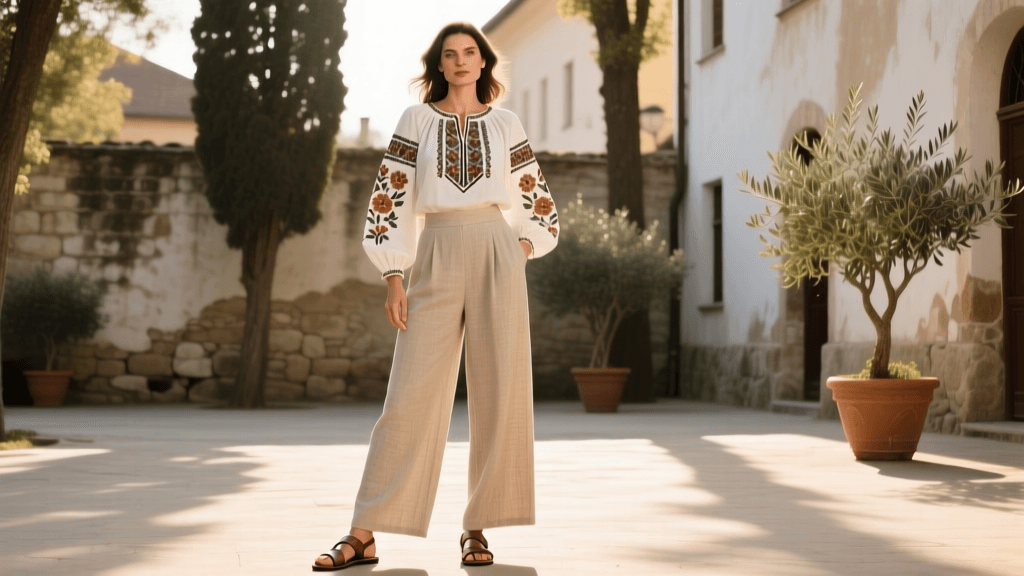
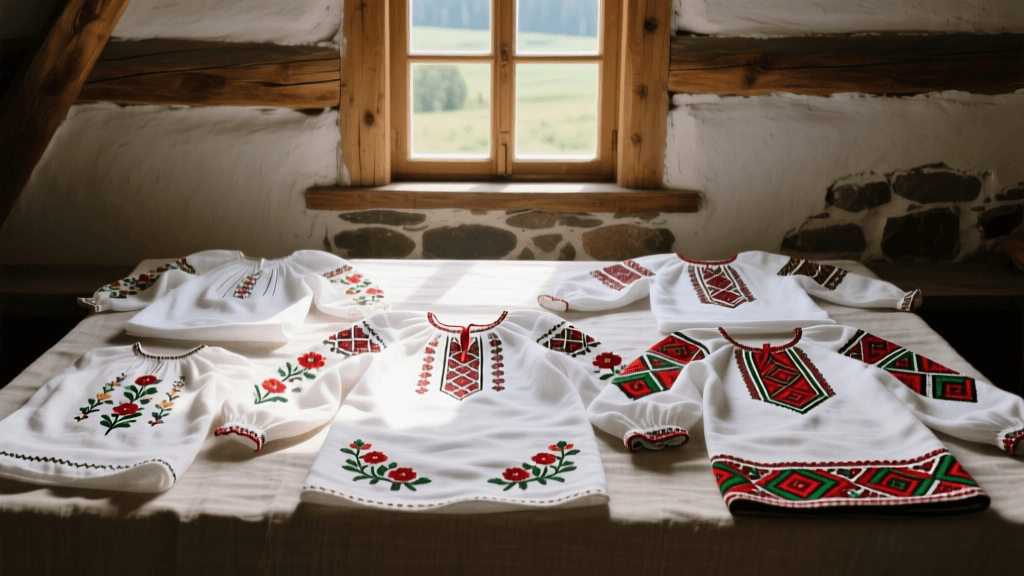
As we navigate the slow fashion and heritage revival landscape of 2026, the traditional Romanian Ia (embroidered blouse) has experienced a monumental resurgence. Moving beyond mere aesthetic appreciation, contemporary artisans and historical costumers are deeply focused on the authentic construction patterns and zero-waste techniques that define this iconic piece of European folk dress. Unlike modern Western pattern drafting, which relies on curved armholes and shaped side seams, the Ia is rooted in strict geometric construction. Every piece of the garment is cut from rectangles, squares, and triangles, ensuring that absolutely no fabric is wasted—a necessity born from the historical value of hand-woven textiles. According to the UNESCO Intangible Cultural Heritage registry, the traditional art of the blouse with shoulder embroidery (altiță) is a vital element of cultural identity, and preserving its structural integrity is just as important as preserving its visual motifs.
The Geometry of the Sorochka: Rectangular Pattern Drafting
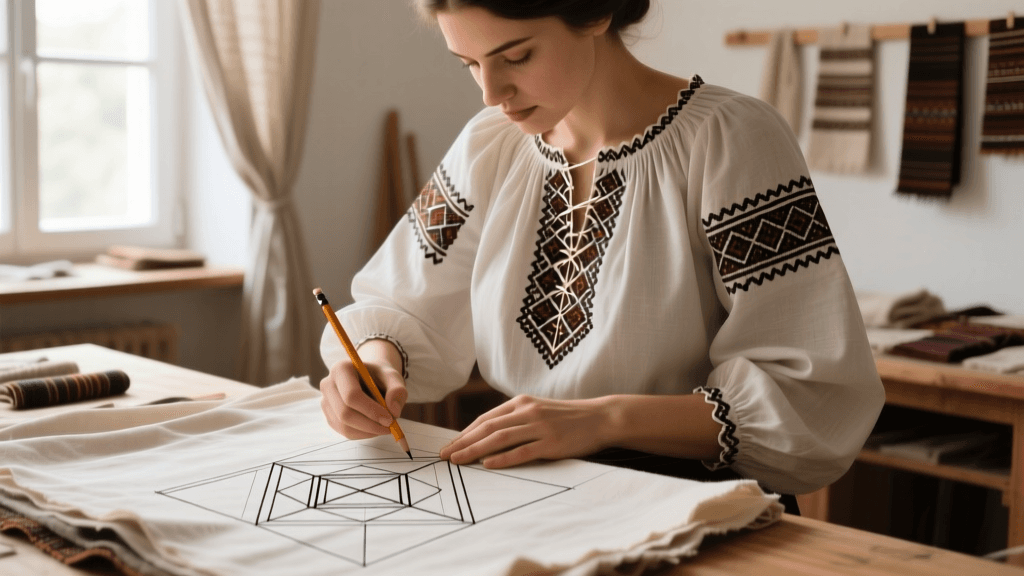
The foundation of the Ia is the 'straight-line' cutting method. To draft the pattern for a standard 2026 reproduction, you must abandon curved rulers and rely entirely on mathematical proportions based on the wearer's measurements. The main body consists of a front and back panel, both cut as identical rectangles. To calculate the width of these panels, take the full bust measurement, add 12 to 15 centimeters for traditional ease, and divide by two. For example, for a 96 cm bust, the front and back panels will each be cut to exactly 55.5 cm wide. The length is measured from the base of the neck to the desired hip placement, typically adding 4 cm for a rolled hem.
The sleeves are also simple rectangles. The width is determined by the bicep circumference plus 10 cm of ease, while the length runs from the acromion bone (the shoulder tip) to the wrist, plus 5 cm to accommodate the gathered cuff. Because there is no curved armscye (armhole), the sleeve is attached directly to the straight top edge of the body panels, creating a dropped shoulder line that is characteristic of Balkan and Slavic folk dress. This geometric approach not only honors historical accuracy but also aligns perfectly with modern 2026 zero-waste sustainability standards, a fact frequently highlighted by textile conservationists at institutions like the Victoria and Albert Museum Textiles Collection.
Calculating the Gusset (Pava) and Godets (Clini)
The most critical structural element in the Ia is the underarm gusset, known locally as the 'pava'. Because the sleeve and body meet at a harsh 90-degree angle, a gusset is required to provide mobility and prevent the seam from tearing under tension. The pava is cut as a perfect square, typically measuring 12 cm by 12 cm for a modern size medium. It is inserted into a slit cut into the underarm seam, effectively turning the restrictive 90-degree corner into a flexible, multi-directional pivot point. Additionally, side godets ('clini') are often inserted from the hem up to the waist or hip to provide flare and walking ease without adding bulk to the waistline. These are cut as right-angled triangles, with the hypotenuse forming the side seam and the straight grain running down the center of the triangle to ensure the fabric drapes correctly.
Fabric Selection and Preparation for 2026
Selecting the correct textile is paramount for authentic drape and embroidery execution. In 2026, the market for heritage textiles has expanded, but prices for authentic, shuttle-loom woven fabrics have risen due to increased global demand for slow fashion. The fabric must be an evenweave material to allow for counted-thread embroidery, which is the primary technique used for the Ia's geometric motifs. Below is a comparative guide to sourcing materials in the current market.
| Material | Weight (gsm) | 2026 Avg. Cost (EUR/m) | Construction Use |
|---|---|---|---|
| Hand-woven Hemp | 180-220 | 45 - 60 | Winter Ia, heavy structural smocking |
| Heritage Flax Linen | 120-150 | 28 - 35 | Standard Ia body, altiță canvas |
| Batiste Cotton-Linen | 80-100 | 18 - 24 | Summer blouses, delicate insets |
Before cutting, all natural fibers must be pre-washed in warm water and pressed to account for shrinkage, which can range from 8% to 12% in untreated heritage linens. In 2026, many artisans use digital fabric simulators to test the drape of these specific GSM weights before committing to expensive hand-woven yardage.
Constructing the Altiță and Increț (Smocking)
The visual hallmark of the Romanian Ia is the 'altiță'—the dense, horizontal band of embroidery located on the upper shoulder of the sleeve. Historically, this was worked directly onto the garment fabric. However, for structural stability, especially when using lighter batiste linens, modern constructors often embroider the altiță on a separate piece of heavier 25-count evenweave linen and insert it as a rectangular panel between the main sleeve body and the sleeve cuff. The geometric patterns (often featuring crosses, rhombuses, and stylized vegetal motifs) are strictly counted, requiring the warp and weft threads of the fabric to be perfectly aligned.
Below the altiță lies the 'râuri' (the vertical rivers of embroidery flowing down the sleeve), and at the neckline, we find the 'increț' (smocking). The increț is not merely decorative; it is a highly functional structural technique used to gather the wide, straight-cut neckline of the geometric pattern into a comfortable fit around the wearer's neck. Using a strong, waxed linen thread, artisans create a grid of running stitches across the top 5 cm of the front, back, and sleeve panels. Once pulled tight, this creates a dense, honeycomb-like smocking that absorbs the excess fabric without the need for curved darts or elastic, a technique that remains a masterclass in functional folk engineering.
Assembly Sequence and Seam Finishes
The order of assembly for the Ia differs significantly from modern garment construction. Because the embroidery must align perfectly across the seams, the decorative stitching is often completed before the garment is assembled. The recommended 2026 assembly sequence is as follows:
- Complete the altiță and râuri embroidery on the flat sleeve rectangles.
- Join the sleeve panels to the front and back body panels using flat-felled seams, ensuring the embroidery motifs match perfectly at the shoulder line.
- Insert the square pava (gusset) into the underarm junction, pivoting carefully at the inner corners to prevent fraying.
- Sew the side seams and the under-sleeve seams in one continuous line, incorporating the side godets at the hem.
- Execute the increț (smocking) at the neckline and bind the raw edge with a narrow, bias-cut linen strip.
All internal seams are traditionally finished using flat-felled seams or whip-stitched overcast edges to prevent fraying and ensure the garment can be worn comfortably without an underlayer. In 2026, while some artisans use modern sergers for hidden internal seams to save time, purists and competition-level folk dressmakers continue to advocate for hand-felled seams, which allow the linen to breathe and drape more naturally.
Essential Tools for the Modern Heritage Seamstress
To achieve historical accuracy while utilizing modern precision, the following tools are highly recommended for drafting and constructing the Ia in 2026:
- Digital Thread Counters: To verify the exact warp/weft ratio of vintage or newly woven heritage linens before beginning counted-thread embroidery.
- Long-arm Quilting Rulers: Essential for drafting the large, perfectly straight rectangular panels and ensuring 90-degree corners on the pava gussets.
- Waxed Linen Cord (0.8mm): Specifically required for the structural increț smocking at the neckline, as standard cotton thread will snap under the tension of the heavy gathers.
- Micro-Serrated Shears: To cleanly cut slippery, high-thread-count batiste linens without fraying the edges before hemming.
By mastering these geometric drafting techniques and respecting the zero-waste philosophy of Eastern European folk dress, contemporary makers can create garments that are not only historically profound but also structurally superior to much of today's mass-produced apparel. The Romanian Ia stands as a testament to the ingenuity of traditional pattern cutting, proving that complex, beautiful, and highly functional garments can be born entirely from straight lines and right angles.