Ultimate Bavarian Schuhplattler Dance Costumes: 2026 Guide
Introduction to the Schuhplattler and Festival Tracht
The Schuhplattler is arguably the most recognizable and physically demanding folk dance in the Alpine regions of Europe. Originating from the rural courtship rituals of Bavaria, Tyrol, and Salzburg, this traditional slap dance requires performers to rhythmically strike their thighs, knees, and footwear with precise, percussive force. As we enter the 2026 European folk festival season, the demand for authentic, performance-grade Tracht (traditional folk dress) has surged among both heritage preservation societies and competitive dance troupes.
For the uninitiated, the global commercialization of Oktoberfest has blurred the lines between mass-produced tourist costumes and genuine folk dance garments. However, within the strict guidelines of the Bayerischer Trachtenverband (Bavarian Folk Costume Association), the distinction is absolute. A true Schuhplattler costume is an engineered garment, designed to withstand high-impact choreography, facilitate rapid spinning, and project acoustic resonance. This comprehensive guide details the exact specifications, materials, and 2026 sourcing metrics required to assemble an authentic Bavarian dance costume.
The Anatomy of Authentic Dance Lederhosen
Standard fashion shorts or suede trousers will disintegrate under the friction and impact of the Schuhplattler. Authentic dance Lederhosen are constructed from Hirschleder (deer leather), specifically processed using a traditional method known as Sämischgerbung (oil or brain tanning). This labor-intensive tanning process uses cod oil or natural fats, resulting in a leather that is exceptionally soft, breathable, and capable of being washed with water and soap without losing its suppleness.
Cut and Proportions for the Plattler
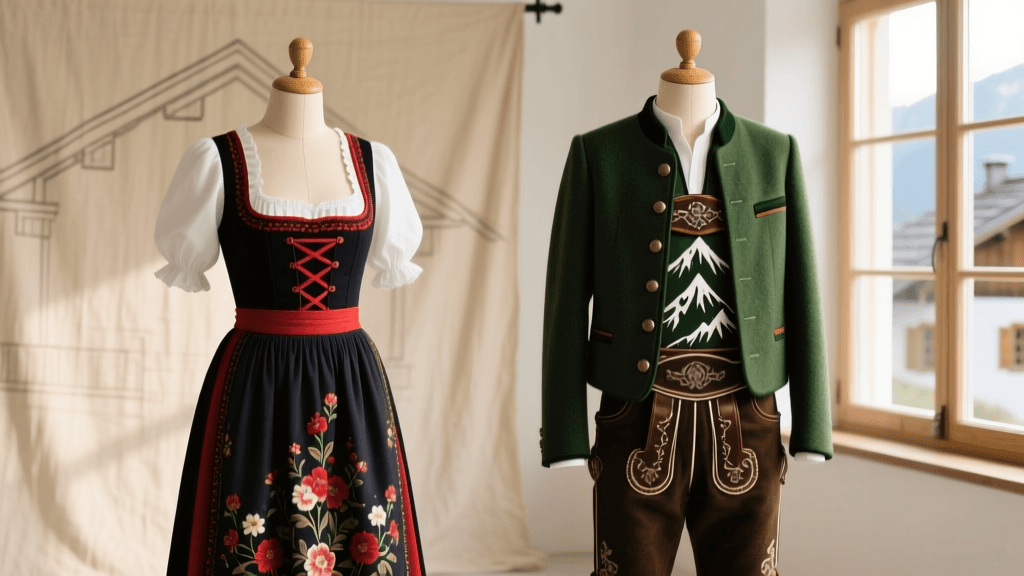
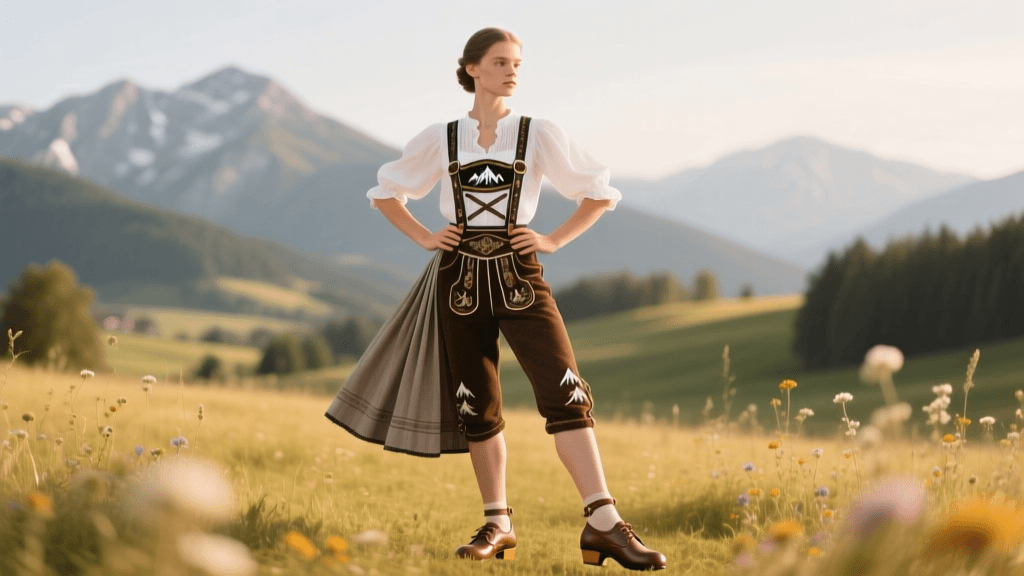
For male dancers, the Kniebundlederhosen (knee-breeches) are the standard. In 2026, master tailors emphasize a precise anatomical cut: the waistband (Bund) must sit high, just below the navel, to allow for deep knee bends and high leg kicks without the garment shifting. The legs must be tailored to end exactly at the patella, secured by a tight leather cuff and a decorative knot. If the breeches extend below the knee, they will interfere with the dancer's traditional woolen stockings (Loferl or Wadenwärmer) and restrict the calf muscles during jumps.
The Latz and Hosenträger
The iconic drop-front flap, or Latz, is not merely decorative; it provides a reinforced layer of leather over the lower abdomen, protecting the dancer during aggressive thigh-slapping sequences. The Latz must be secured tightly with horn or bone buttons to prevent flapping during the Watschntanz (the comedic, duck-waddling variation of the dance). Suspenders (Hosenträger) are heavily embroidered with regional motifs (such as edelweiss or oak leaves) and feature a cross-brace at the back to distribute the weight of the heavy leather evenly across the shoulders, preventing waist fatigue during multi-hour festival performances.
Footwear: The Critical Role of Haferl Shoes
The most vital component of the male Schuhplattler costume is the footwear. The percussive stomping requires a shoe with a thick, rigid sole and robust ankle support. The traditional choice is the Haferlschuh (literally 'little barley shoe'), named for its side-lacing mechanism which resembles the shape of a barleycorn, or the heavier Goiserer shoe originating from Bad Goisern in Austria.
According to heritage shoemakers like Meindl, a proper dance Haferl must feature a double-stitched, Goodyear-welted sole. In 2026, many competitive troupes opt for soles embedded with concealed hobnails or a specialized hardened rubber compound that amplifies the acoustic 'crack' when striking the wooden stages of Alpine festival tents. The side-lacing design is crucial: it ensures that no laces sit on top of the foot, which would be painfully struck during the rapid knee-slapping sequences.
Dirndl Construction for Folk Dance Troupes
While the male dancers perform the percussive Plattler, the female dancers execute the Dreher—a series of rapid, continuous waltz spins that require the Dirndl skirt to flare out into a perfect, horizontal bell shape. Achieving this physics-defying silhouette requires meticulous garment engineering that mass-market Dirndls completely fail to replicate.
The Rock (Skirt) and Hem Weighting
An authentic dance Dirndl skirt must have a minimum circumference of 3.5 to 5 meters. This vast amount of fabric is heavily pleated and attached to a structured waistband. To ensure the skirt flares properly during the Dreher and drops instantly when the dancer stops, the hem is weighted with a Bleiband (lead or heavy cotton tape), typically weighing between 40 to 60 grams per meter. The length of the skirt is strictly regulated by regional Tracht guidelines, generally falling to mid-calf (approximately 72 to 78 cm from the waist) to prevent tripping during complex footwork while maintaining modesty during high spins.
The Mieder (Bodice)
The bodice of a dance Dirndl is constructed more like a corset than a standard blouse. It is heavily reinforced with steel or thick synthetic boning to provide rigid torso support, preventing the garment from buckling or shifting during vigorous movement. The front is laced tightly with silk or linen cords, often through silver or horn hooks. Beneath the bodice, dancers wear a crisp white Dirndlbluse with short puff sleeves, allowing complete freedom of movement for the arms during partner turns.
2026 Festival Sourcing and Pricing Metrics
Acquiring authentic, performance-ready Tracht is an investment in cultural heritage and artisanal craftsmanship. As of 2026, inflation and the scarcity of ethically sourced, traditionally tanned deer leather have driven up the cost of bespoke garments. Heritage houses such as Lodenfrey continue to emphasize that true Tracht is made-to-measure, requiring multiple fittings over several months.
| Garment Feature | Tourist / Fashion Tracht | Authentic Dance Tracht (2026 Standard) |
|---|---|---|
| Lederhosen Material | Split cowhide / Suede | Sämisch gegerbtes Hirschleder (Deer) |
| Skirt Circumference | 1.5 - 2 meters | 3.5 - 5 meters (weighted hem) |
| Footwear | Standard loafers / Sneakers | Goiserer or Haferl with reinforced soles |
| Bodice Structure | Lightweight darts / No boning | Steel-boned, corseted Mieder |
| Estimated Price (Full Set) | €100 - €250 | €1,400 - €2,800+ |
For dance troupes preparing for the 2026 Gaufest (the annual competitive gathering of Bavarian folk costume clubs), it is highly recommended to commission garments at least six months in advance. Custom shoemakers currently have waitlists extending up to four months due to the specialized labor required to hand-welt the heavy leather soles.
Caring for Your Dance Tracht
Maintaining performance Tracht requires specific care routines. Sämisch tanned Lederhosen are unique in that they can be gently hand-washed using a mild, pH-neutral leather soap and lukewarm water. After washing, the leather must be worn while slightly damp to mold perfectly back to the dancer's body as it dries. The characteristic dark patina of well-worn dance Lederhosen is considered a badge of honor, and excessive brushing or chemical cleaning is strictly avoided. Haferl shoes must be regularly treated with natural beeswax or pine tar to maintain water resistance during outdoor summer festivals, and the hobnails or sole plates should be inspected by a cobbler before every major competition season to ensure safety and acoustic consistency.