Regional Alpine Folk Dress: Bavaria vs Tyrol 2026 Guide
The Resurgence of Alpine Tracht in 2026
Alpine folk dress, universally known as Tracht, represents one of the most vibrant and strictly codified textile traditions in Europe. As we navigate the 2026 festival season, the revival of traditional European folk costumes has decisively shifted away from the mass-produced, synthetic fast-fashion trends of the previous decade. Today, discerning collectors, cultural preservationists, and festival-goers are prioritizing heritage craftsmanship, regional accuracy, and sustainable textiles. Whether you are preparing for the 2026 Almabtrieb (alpine pasture descent) or seeking a historically accurate garment for a cultural exhibition, understanding the nuanced differences between neighboring regions is essential.
According to the Bayerischer Trachtenverband, the demand for bespoke, regionally accurate garments has surged by over 22% since 2024, driven by a younger generation's desire to reconnect with sustainable, slow-fashion heritage. This guide breaks down the sartorial distinctions between the Bavarian and Tyrolean traditions, offering actionable advice on sourcing, commissioning, and maintaining these masterpieces of European folk dress.
Bavarian Tracht (Germany): The Dirndl and Lederhosen
Bavaria is perhaps the most globally recognized region for Alpine folk dress, largely due to the international footprint of Munich's Oktoberfest. However, authentic Bavarian Tracht is deeply regional, varying significantly from the alpine south to the Franconian north.
The Miesbacher and Werdenfelser Styles
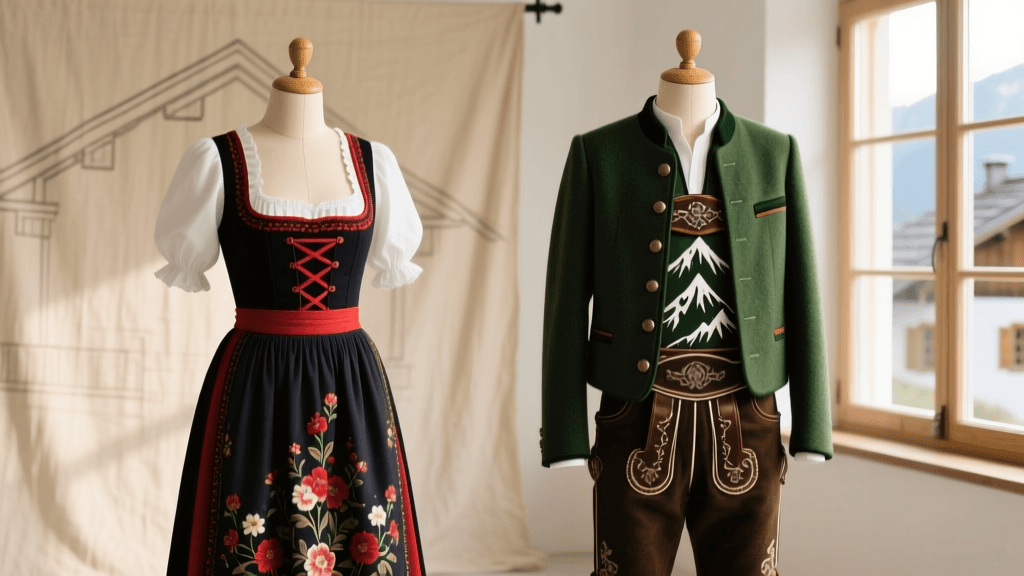
The Miesbacher Tracht is considered the gold standard for formal Bavarian folk dress. For women, the Miesbacher Dirndl is characterized by a dark, rich color palette—often deep forest greens, navy blues, or burgundies—paired with intricate silk embroidery and a heavy, pleated wool skirt. The bodice (Mieder) is heavily structured, often featuring silver hooks and a laced front. For men, the Miesbacher Lederhosen are traditionally crafted from Hirschleder (deer leather), featuring the iconic Hosentürl (front flap) and elaborate floral embroidery known as Laubstickerei.
Conversely, the Werdenfelser Tracht, originating from the Garmisch-Partenkirchen region, favors lighter materials. Summer Dirndls in this region frequently utilize high-quality linen and feature delicate, hand-printed floral motifs. The aesthetic is slightly more pastoral and relaxed, reflecting the agricultural history of the Werdenfels Valley.
Tyrolean Tracht (Austria): Beyond the Stereotypes
Crossing the border into Austria, the Tyrolean Tracht reveals a different sartorial language, heavily influenced by the rugged, high-altitude environment of the Alps. The Tiroler Volkskundemuseum highlights that Tyrolean dress places a paramount emphasis on heavy, weather-resistant outerwear and distinct regional headwear.
The Zillertal and Brixental Variations
The Zillertaler Tracht is famous for its vibrant, heavily pleated skirts and contrasting silk aprons. A defining feature of the Zillertal women's dress is the Schnürhut, a wide-brimmed hat adorned with a thick cord and a tuft of chamois hair. The men's attire heavily features the Lodenjanker, a thick, boiled wool jacket that provides essential insulation against alpine winds.
In the Brixental region, the garments are notably more conservative and ornate. Formal church attire often includes the Goldhaube (gold bonnet), an exquisite piece of headwear crafted from gold thread and silk brocade, requiring hundreds of hours of specialized embroidery. The men's Lederhosen in Tyrol are frequently made from Gamsleder (chamois leather), which is darker, thicker, and more durable than the deer leather preferred in Bavaria.
Comparative Data: Bavarian vs. Tyrolean Garments
To help you identify and source the correct regional garments, refer to the comparative table below detailing the core elements of these two distinct traditions.
| Garment Element | Bavarian (Miesbacher) | Tyrolean (Zillertaler) |
|---|---|---|
| Primary Leather | Hirschleder (Deer) - Soft, light tan | Gamsleder (Chamois) - Thick, dark brown |
| Women's Bodice | Structured, silver hooks, laced front | Softer tailoring, often hidden hook-and-eye |
| Skirt Material | Heavy pleated wool or silk-wool blend | Vibrant pleated cotton or lightweight wool |
| Men's Jacket | Short Janker with horn buttons | Long, heavy Lodenjanker with lapels |
| Signature Headwear | Trachtenhut with Gamsbart (chamois beard) | Schnürhut (wide-brimmed with cord) |
2026 Sourcing and Pricing Guide
Acquiring authentic Tracht in 2026 requires patience and a willingness to invest in artisanal craftsmanship. The era of purchasing genuine, master-crafted Alpine wear off the rack is largely over; most premium garments are now made-to-measure.
- Authentic Dirndl (Bespoke): Expect to pay between €1,200 and €3,500 in 2026. This includes the hand-pleated skirt, the structured bodice, a silk apron, and a custom linen blouse. Lead times from master tailors in Munich or Salzburg currently average 6 to 9 months.
- Authentic Lederhosen (Bespoke): Hand-embroidered deer or chamois Lederhosen range from €1,500 to €4,000. The embroidery alone can take a master artisan over 40 hours to complete.
- Vintage and Antique Markets: For those on a stricter budget, the 2026 vintage market is thriving. Authentic, mid-century Dirndls can be found for €150 to €400 at specialized textile fairs in Innsbruck and Miesbach, though they will likely require professional tailoring adjustments.
The Apron Bow Code: A Practical Guide
One of the most vital pieces of actionable advice for anyone wearing a Dirndl to a festival or cultural event is understanding the apron bow (Schürzenschleife) code. Tying the bow incorrectly can send unintended social signals. As of 2026, this tradition is still widely observed and respected at major events.
- Bow on the Left: The wearer is single and open to being approached.
- Bow on the Right: The wearer is married, engaged, or in a committed relationship.
- Bow in the Center: Traditionally indicates virginity. While less strictly policed by the younger generation today, it remains a recognized historical signal.
- Bow at the Back: The wearer is widowed, or they are working as staff/waitress at the venue.
Commissioning a Bespoke Bodice: Measurement Guide
The Mieder (bodice) is the structural heart of the Dirndl. Unlike modern dresses, a traditional bodice must fit with the precision of a corset to provide the correct silhouette and support. If you are commissioning a piece remotely in 2026, provide your tailor with these exact measurements:
- Underbust: Measure snugly directly beneath the bust line, keeping the tape measure parallel to the floor.
- Bust: Measure across the fullest part of the bust, ensuring the tape is not pulled too tight.
- Natural Waist: Measure at the narrowest part of your torso, typically just above the navel and below the ribcage.
- Torso Length: Measure from the prominent bone at the base of your neck (C7 vertebra) down to your natural waistline.
- Front Drop: Measure from the hollow of your collarbone down to your natural waistline.
"A true Trachten bodice should feel like a firm, reassuring embrace. It must restrict slouching while allowing full breath and movement for dancing." — Master Tailor Heinrich V., Miesbach, 2026.
Caring for Heritage Textiles in 2026
Modern dry cleaning chemicals can destroy the natural oils in traditional alpine textiles. To preserve your garments for future generations, adhere to these strict maintenance protocols:
Loden and Boiled Wool
Never wash Loden wool in water. The natural lanolin in the wool repels dirt and moisture. To clean it, use a natural bristle garment brush to sweep away surface dust. To remove wrinkles, hang the garment in a steamy bathroom for 30 minutes; the humidity will naturally relax the wool fibers without the need for a hot iron, which can scorch the material.
Hirschleder and Gamsleder (Leather)
Authentic alpine leather is tanned using natural fats and oils. Never expose it to direct heat or artificial drying. If the leather becomes stiff after being caught in the rain, massage it gently with your hands once it is dry to restore the fibers. Treat the leather annually with a specialized Hirschfett (deer fat) conditioner to maintain its supple texture and water resistance.
Silk Aprons and Embroidery
Silk aprons should be stored flat or rolled around acid-free tissue paper to prevent permanent creasing. Never hang a silk apron on a wire hanger. For silver or gold metallic embroidery (Goldstickerei), use a soft, dry microfiber cloth to gently polish the threads; avoid liquid silver cleaners, which will strip the metallic coating from the silk core.
Conclusion
The landscape of European folk dress in 2026 is a testament to the enduring power of regional identity. Whether you are drawn to the structured elegance of the Bavarian Miesbacher Dirndl or the rugged, vibrant charm of the Tyrolean Zillertaler Tracht, investing in authentic, regionally accurate garments ensures you are participating in a living, breathing textile tradition. By understanding the historical context, adhering to proper measurement protocols, and practicing meticulous textile care, you honor the artisans who keep these alpine heritage crafts alive today.