Norwegian Bunad Guide 2026: Regional Folk Costumes & Silver
The Living Heritage of the Norwegian Bunad in 2026
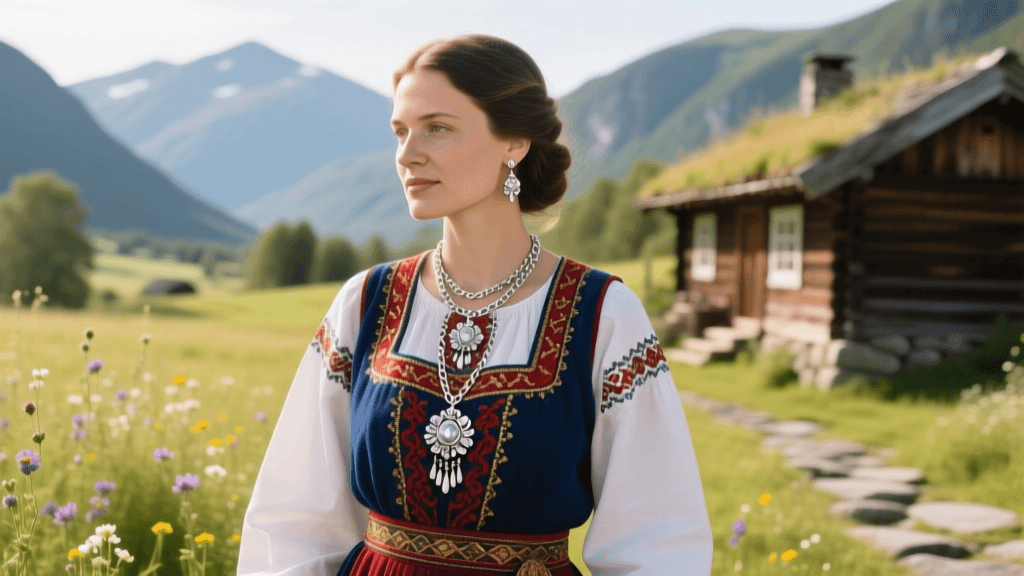
When discussing European folk dress, few traditions command as much reverence, continuity, and everyday formal usage as the Norwegian bunad. Unlike many regional costumes across Europe that were relegated to museum displays or tourist performances following the Industrial Revolution, Norway’s traditional garments evolved into a living, breathing wardrobe. In 2026, the bunad remains the ultimate formal wear in Norway, proudly worn at weddings, royal audiences, confirmations, and, most notably, Constitution Day (Syttende Mai). It is not considered a "costume" in the theatrical sense, but rather a deeply personal expression of regional identity, family heritage, and master-level craftsmanship.
To truly understand this tradition, one must distinguish between a bunad and a folkedrakt. According to the Norsk institutt for bunad og folkedrakt (The Norwegian Institute for Bunad and Folk Dress), a folkedrakt refers to the original, unbroken local peasant clothing tradition that evolved organically over centuries. A bunad, conversely, is a 20th-century reconstruction or adaptation based on those historical garments, standardized during the National Romantic period. Today, the Bunad and Folk Dress Council strictly regulates the patterns, materials, and construction methods of over 400 distinct regional variations, ensuring that the garments produced in 2026 maintain uncompromising historical accuracy.
Decoding Regional Variations: A Journey Through Norway
Norway’s dramatic topography—characterized by deep fjords, isolated valleys, and sprawling mountain plateaus—historically limited cross-regional interaction. This geographical isolation allowed highly distinct textile traditions to flourish. Below, we explore three of the most iconic and historically significant regional bunads.
The Hardangerbunad: The Mother of All Bunads
Originating from the Hardanger fjord region in Vestland county, the Hardangerbunad is widely considered the first true "bunad," gaining national prominence when Princess Maud of Wales (later Queen Maud of Norway) was photographed wearing a version of it in the early 1900s. The women’s garment is instantly recognizable by its deep black wool skirt and bodice, contrasted by a striking white linen apron featuring hardangersaum (intricate whitework embroidery with drawn-thread techniques). The bodice is heavily embellished with cross-stitch in vibrant red, green, and yellow silk threads, while the linen under-shirt (skjorte) features delicate white-on-white embroidery at the collar and cuffs. For men, the Hardangerbunad features a richly embroidered velvet vest over a crisp linen shirt, paired with black wool breeches and white knitted stockings.
The Setesdalsbunad: Valley of Dark Wool and Heavy Silver
Deep in the southern interior lies the Setesdal valley, home to one of the most rugged and visually striking folk dress traditions in Europe. The Setesdalsbunad is characterized by its heavy, dark blue or black vadmel (a traditional homespun, fulled wool). The women’s dress features a high, embroidered bodice and a distinctive bib-like front piece. However, it is the men’s Setesdalsbunad that draws the most fascination from textile historians. It features unique drop-front trousers with a buttoned flap (klaff), heavily embroidered suspenders, and a short, dark wool jacket. The Setesdal tradition is also famous for its heavy, darkened oxidized silver, which stands in stark contrast to the dark wool, reflecting the valley's historical wealth derived from silver mining and timber.
The Telemarksbunad: Rosemaling in Thread
Telemark, a region renowned for its sweeping landscapes and rich artistic heritage, produces a bunad that mirrors the famous rosemaling (traditional Norwegian rose painting) found on local wooden stave churches and furniture. The Telemarksbunad is a riot of color compared to its western counterparts. The embroidery features lush, asymmetrical floral motifs in vibrant reds, blues, yellows, and greens, stitched directly onto the black wool bodice and skirt hem. There are distinct variations within the region, such as the East Telemark and West Telemark bunads, which differ in the cut of the bodice, the style of the silk apron, and the specific arrangement of the floral threadwork. In 2026, master embroiderers in Telemark continue to use traditional silk threads that catch the light, giving the garments a vibrant, almost three-dimensional texture.
The Anatomy of Authenticity: Fabrics, Stitching, and Silver
Authenticity is the cornerstone of the bunad tradition. You cannot simply mix and match elements from different regions; doing so will quickly draw the ire of the so-called "Bunad Police"—a cultural phenomenon where knowledgeable locals will politely (or sometimes bluntly) correct incorrect styling. Every element, from the weave of the wool to the casting of the silver, must align with the specific regional blueprint.
Sølv (Silver Jewelry): The Crown of the Bunad
No bunad is complete without its accompanying silver (sølv). Historically, silver was a display of a family’s wealth and a form of portable banking that could be melted down in times of hardship. It was also believed to possess protective qualities, warding off evil spirits and the mythical huldra of the forests. A complete set of silver for a woman’s bunad can weigh over a kilogram and includes:
- Sølje: The large, intricate neck brooch, often featuring dangling spoons or discs that catch the light and make a gentle chiming sound.
- Beltestøler: Ornate silver buckles and clasps used to secure the woven wool or leather belt.
- Maljeringer: Decorative silver eyelets laced with silk ribbon, used to close the bodice.
- Brystknapper: Elaborate breast buttons, often featuring filigree work and inset semi-precious stones or glass.
In 2026, there is a massive resurgence in demand for hand-forged, locally cast silver over mass-produced imports. Artisans in regions like Setesdal and Telemark are experiencing multi-year waitlists for bespoke, historically accurate silver sets.
2026 Regional Bunad Comparison Chart
When investing in a bunad, understanding the regional differences in materials, construction, and cost is vital. Below is a comparison of three major regional styles based on 2026 market data from authorized dealers.
| Region | Primary Material | Signature Embroidery / Motif | Silver Style | 2026 Est. Starting Price (NOK) |
|---|---|---|---|---|
| Hardanger | Black Wool & White Linen | Cross-stitch & Whitework (Hardangersaum) | Polished & Oxidized Mix | 38,000 - 45,000 |
| Setesdal | Dark Blue/Black Vadmel | Wool thread geometric & floral motifs | Heavy, Dark Oxidized | 42,000 - 55,000 |
| Telemark (West) | Black Wool & Silk | Asymmetrical Rosemaling (floral) | Polished with Filigree | 40,000 - 50,000 |
Note: Prices reflect the base garment. Hand-embroidered custom pieces and full silver sets can easily double the total investment.
Sourcing Your Bunad: Where to Buy in 2026
If you are looking to commission or purchase an authentic bunad, the gold standard is Norges Husflidslag (The Norwegian Crafts Association), commonly known as Husfliden. With local shops scattered across the country, Husfliden employs certified bunad consultants who guide you through the process. In 2026, the standard practice involves a rigorous measuring session, as bunads are tailored to fit perfectly and are designed to be altered over a lifetime to accommodate weight fluctuations.
Because the embroidery is largely done by hand—either by the shop's master artisans or by the wearer themselves in guided courses—the lead time for a new, fully assembled bunad is typically between 8 to 14 months. It is highly recommended to begin the ordering process at least a year and a half before a major life event like a wedding or a milestone confirmation.
"A bunad is not merely a garment you wear; it is a textile archive of your ancestors. When you pin the sølje to your linen shirt, you are fastening yourself to a lineage of weavers, silversmiths, and farmers who survived the harsh Nordic winters through sheer resilience and beauty." — Textile Conservator, Norsk Folkemuseum.
Caring for Your Heirloom Garment
A properly maintained bunad is an heirloom meant to be passed down through multiple generations. The Norsk Folkemuseum (Norwegian Museum of Cultural History) outlines strict conservation guidelines for traditional wool and linen garments. First and foremost, never dry-clean a bunad unless explicitly instructed by a specialist; the harsh chemicals can strip the natural lanolin from the vadmel wool and cause the silk embroidery threads to bleed or become brittle.
Instead, rely on the natural self-cleaning properties of high-quality wool. After wearing the garment, air it out outdoors in a shaded, breezy area for 24 hours. For localized stains, gentle spot-cleaning with cold water and a specialized wool detergent is preferred. Store the bunad in a breathable cotton garment bag or a traditional cedar-lined chest to protect it from moths and light damage. The silver should be removed before storage and kept in anti-tarnish cloth rolls, polished only with a soft, untreated cloth to preserve the intentional oxidation in the crevices of the filigree work.
Conclusion
The Norwegian bunad stands as a testament to the enduring power of regional identity in a rapidly globalizing world. As we move through 2026, the dedication to preserving these ancient weaving, embroidery, and silversmithing techniques is stronger than ever. Whether you are tracing your own Scandinavian genealogy or simply studying the pinnacle of European folk dress, the bunad offers a profound, tactile connection to the history, artistry, and soul of Norway.