15th-Century Burgundian Houppelande Construction Guide 2026
Introduction to the Burgundian Houppelande
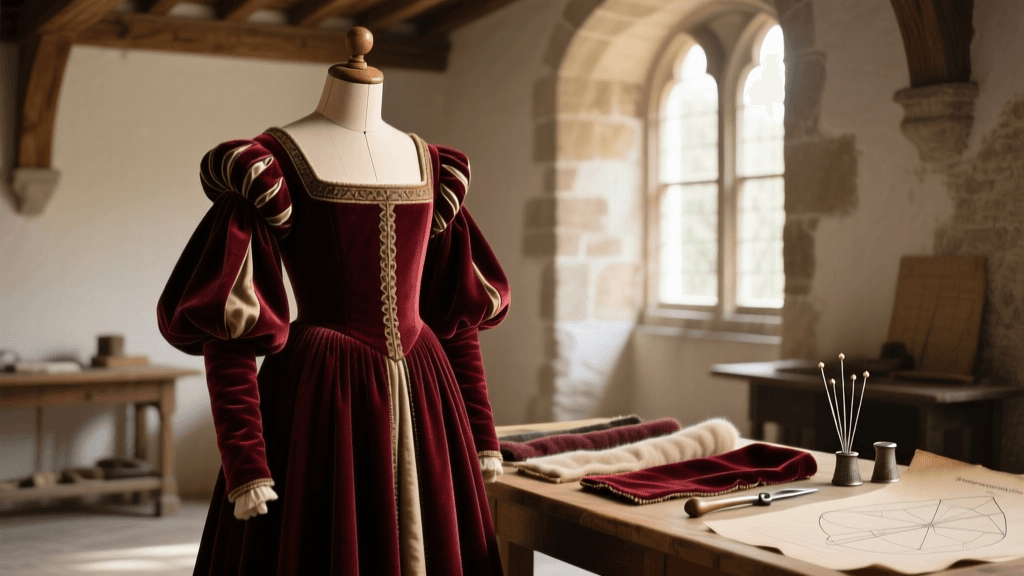
The Burgundian houppelande stands as one of the most magnificent and recognizable garments of the late medieval period. Emerging in the late 14th century and reaching its zenith in the 15th century, this sweeping, floor-length outer garment was characterized by its towering high collar, massive bombard sleeves, and voluminous skirt. As we navigate the 2026 historical reenactment and European folk dress festival season, major heritage guilds have implemented strict authenticity mandates, moving entirely away from the synthetic blends and modern tailoring shortcuts of the past. Today’s dedicated artisans and costumers demand rigorous historical accuracy, from the weave of the textile to the specific hand-stitching techniques used in the garment's assembly.
According to the Metropolitan Museum of Art's Heilbrunn Timeline of Art History, the transition from the tightly fitted, buttoned cotehardies of the 14th century to the expansive, flowing houppelande represented a profound shift in European tailoring. This shift emphasized wealth not through skin-tight silhouettes, but through the sheer, extravagant volume of imported textiles and the dramatic drape of the fabric. Constructing a houppelande in 2026 requires a deep understanding of historical geometry, natural fiber behavior, and traditional hand-sewing methods.
Sourcing Authentic Materials in 2026
The foundation of any accurate medieval garment is the textile. In 2026, the global supply chain for historically accurate, naturally dyed wool has stabilized, allowing reenactors to source premium broadcloth and fulled wool directly from heritage mills in Yorkshire, England, and Biella, Italy. When constructing a houppelande, the drape of the fabric is paramount. You require a textile with a heavy, fluid drape that pools elegantly on the floor while possessing enough structural integrity to support the stiff, gravity-defying architecture of the bombard sleeves and the high collar.
Below is a comprehensive breakdown of the most historically appropriate fabrics for a 15th-century houppelande, including current 2026 market pricing for heritage-grade materials.
| Fabric Type | Weight (oz/yd) | 2026 Avg. Cost (per yard) | Best Use in Houppelande |
|---|---|---|---|
| Wool Broadcloth | 14-16 oz | $45.00 - $60.00 | Main body, heavy drape, winter festivals |
| Fulled Wool Flannel | 10-12 oz | $38.00 - $50.00 | Lighter summer events, daywear |
| Silk Taffeta | 4-6 oz | $65.00 - $90.00 | Contrasting linings, sleeve interiors |
| Medium-weight Linen | 5-7 oz | $22.00 - $30.00 | Base interlining, collar support, undergarments |
When purchasing your primary wool, always request a 'burn test' sample if the vendor does not provide a certified fiber analysis. Authenticity in 2026 means 100% natural animal or plant fibers; even a 5% synthetic blend will melt rather than turn to ash, immediately disqualifying the garment from strict-accuracy heritage events.
Drafting the Pattern and Measurements
Modern garment construction relies heavily on curved armholes, princess seams, and complex darts to shape fabric to the human body. The 15th-century houppelande, however, relies on pure geometric shapes—primarily circles and rectangles. The body of the garment is traditionally constructed from four quarter-circle panels. When sewn together, these panels form a massive full circle, with a hole cut in the center for the head and a slit running down the front for ease of movement.
To draft your pattern, you will need the following critical measurements:
- Shoulder to Floor: Measure from the base of the neck, over the shoulder, down to the floor. Add 4 inches to allow for the fabric to pool slightly over the footwear, a hallmark of aristocratic 15th-century dress.
- Neck Circumference: Measure snugly around the base of the neck, then add 2 inches for the high collar's base circumference.
- Sleeve Length: Unlike modern sleeves measured from the shoulder seam, houppelande sleeves are often measured from the base of the neck down to the knuckles. The sleeve head is pleated into a simple straight armhole slit, allowing the massive bell of the sleeve to drape dramatically past the hands.
The High Collar Architecture
The collar is arguably the most defining and challenging feature of the Burgundian houppelande. It must stand up rigidly against the neck, framing the face and reaching up to the jawline or even the ears. To achieve this in 2026 without resorting to modern synthetic buckram or plastic boning, historical tailors use a technique called pad-stitching. By taking multiple layers of heavily starched, medium-weight linen and stitching them together with a dense, diagonal running stitch using thick wool or linen yarn, you create a flexible yet remarkably stiff structural foundation that molds to the wearer's neck over time.
Step-by-Step Construction Techniques
Seaming and Felling
Because the houppelande utilizes massive amounts of heavy wool, the seams must be incredibly robust. The primary seam used in the 15th century was the running stitch, worked with heavily waxed linen thread. For the long, sweeping vertical seams of the skirt, a flat-felled seam is highly recommended. This involves sewing the panels together, trimming one seam allowance, folding the wider allowance over the trimmed edge, and whipping it flat to the fabric. This not only prevents the wool from fraying but also adds a beautiful, structured ribbing to the interior of the garment.
Constructing the Bombard Sleeves
The bombard sleeves are essentially massive rectangles or slightly tapered tubes that are heavily pleated or gathered into the straight armhole slit of the body. The defining 'bombard' shape features an enormous bell at the wrist that can drag on the ground. To prevent the hem from fraying and to add a luxurious weight that enhances the drape, the bottom twelve inches of the sleeve are faced with a contrasting silk taffeta or, for the highest nobility, faux or ethically sourced vintage fur. As documented by the Victoria and Albert Museum's medieval and Renaissance collections, the display of contrasting, expensive linings in slashed or bell sleeves was a primary method for the European nobility to visually broadcast their wealth and navigate the complex sumptuary laws of the era.
Accessorizing the Ensemble: The Hennin and Belt
A houppelande is visually incomplete without its accompanying accessories. For women, the towering steeple hennin is the quintessential headwear of the Burgundian court. Constructing a hennin in 2026 involves creating a conical base from heavyweight, glue-stiffened linen or historical buckram, covering it in silk, and attaching a sheer silk organza veil that cascades down the back. A thin wire or 'billet' is often pinned across the forehead to secure the heavy cone and keep the veil from blowing in the wind during outdoor festivals.
For both men and women, a wide, embellished leather belt is essential. Unlike modern belts worn at the hips, the houppelande belt is worn high, either just under the bust for women or at the natural waist for men, to gather the massive volume of the skirt and create the elegant, high-waisted silhouette characteristic of 15th-century portraiture. Look for belts featuring cast brass or pewter buckles and chapes, avoiding any shiny, modern nickel-plated hardware.
Maintenance and Storage for the Modern Reenactor
Caring for a garment that utilizes up to 15 yards of heavy, naturally dyed wool requires dedication. After a long weekend at a heritage festival, never dry-clean your houppelande using modern chemical solvents, as this will strip the wool of its natural lanolin and ruin the historical drape. Instead, air the garment out on a wide, padded hanger in a shaded, well-ventilated area. Spot clean any mud or stains using a lanolin-safe wool wash and cold water. When storing the garment for the off-season, use a breathable cotton garment bag and include cedar blocks to deter moths, ensuring your investment remains pristine for the 2027 season and beyond.
Conclusion
Constructing a 15th-century Burgundian houppelande is a labor of love that bridges the gap between modern craftsmanship and medieval artistry. By sourcing authentic natural fibers, adhering to geometric pattern drafting, and utilizing historical hand-stitching techniques, you create more than just a costume; you resurrect a tangible piece of European cultural heritage. As the standards for historical accuracy continue to elevate in 2026, mastering the houppelande ensures you will be impeccably dressed for any royal court, guild gathering, or Renaissance festival across the globe.