Sardinian Folk Dress 2026: Pibiones Weaves & Bottones
Introduction to Sardinian Sartorial Heritage
Sardinia, Italy’s rugged and storied island, is home to some of the most intricate and well-preserved folk dress traditions in Europe. Isolated by the Mediterranean Sea for centuries, the island’s villages developed highly distinct sartorial dialects, where every stitch, weave, and silver embellishment communicated the wearer’s marital status, social standing, and village of origin. In 2026, Sardinian traditional garments are experiencing a profound renaissance. Driven by a global appetite for slow fashion and artisanal authenticity, contemporary heritage brands and master artisans are reviving ancient techniques like Pibiones weaving and Bottones filigree, adapting them for modern wardrobes while fiercely protecting their historical integrity.
According to the Italian Ministry of Culture, regional initiatives launched this year have heavily subsidized apprenticeships in traditional Sardinian textile and silversmithing arts, ensuring these labor-intensive crafts survive into the next generation. For collectors, cultural historians, and fashion enthusiasts, understanding the anatomy of Sardinian folk dress in 2026 requires a deep dive into its two most iconic elements: the raised-grain Pibiones weaves and the granular silver Bottones.
The Anatomy of Traditional Sardinian Dress
The traditional Sardinian female ensemble is a masterclass in layering and structural tailoring. While the male costume (abitu) features distinct elements like the berritta (a long, tubular black cap) and the ragas (a pleated linen kilt), it is the women’s ceremonial dress that showcases the island's most breathtaking textile and metallurgical achievements.
The Gonnella and Carpanedda
The foundation of the women's costume is the gonnella (or carpanedda), a heavily pleated skirt made from hand-woven wool or orbace (a coarse, water-resistant Sardinian cloth). In 2026, authentic hand-pleated gonnellas are treated with natural mordants and pressed using traditional wooden blocks to ensure the pleats hold their shape for decades. Over the skirt, women wear a meticulously embroidered apron, often bordered with metallic threads or silk ribbons, which serves as a canvas for regional motifs like the pomegranate (symbolizing fertility) and the peacock (symbolizing immortality).
Regional Variations: Desulo vs. Samugheo
Sardinian dress is hyper-local. The costumes of Desulo, located in the mountainous Barbagia region, are characterized by vibrant reds and deep blacks, featuring heavy woolen bodices (corpetto) adorned with intricate gold and silver chains. Conversely, the village of Samugheo is globally renowned for its lighter, intricately textured white and cream garments, defined by the world-famous Pibiones weaving technique. The Sardinia Tourism Board currently highlights both villages on its 2026 cultural heritage routes, allowing visitors to observe master weavers and silversmiths in their historic workshops.
Pibiones: The Soul of Sardinian Weaving
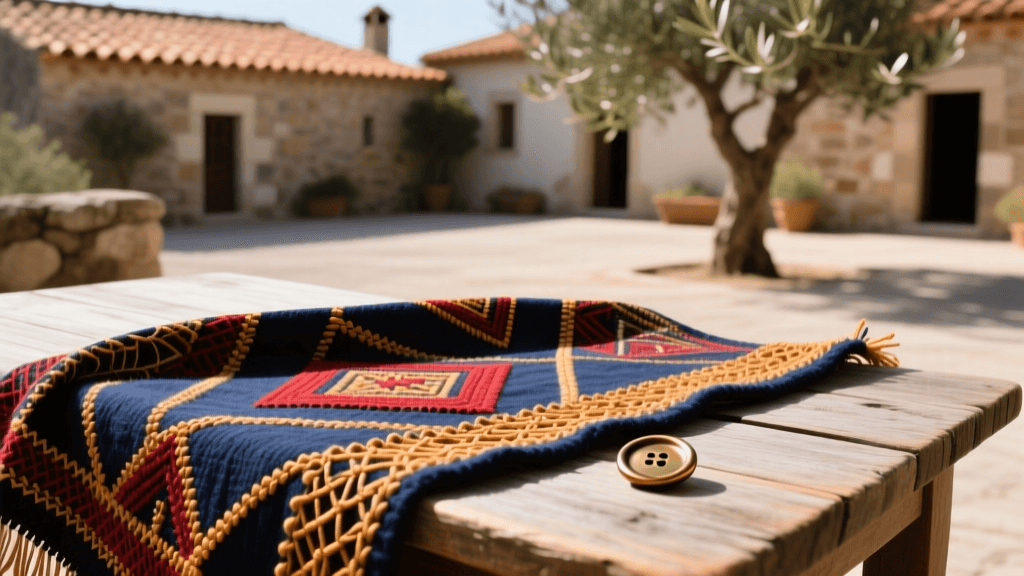
Pibiones (meaning 'grapes' or 'grains' in the Sardinian dialect) is a raised-loop weaving technique native to Samugheo. It creates a three-dimensional, textured surface on the fabric, historically used for bedspreads, shawls, and ceremonial aprons.
The Technique Behind the Grain
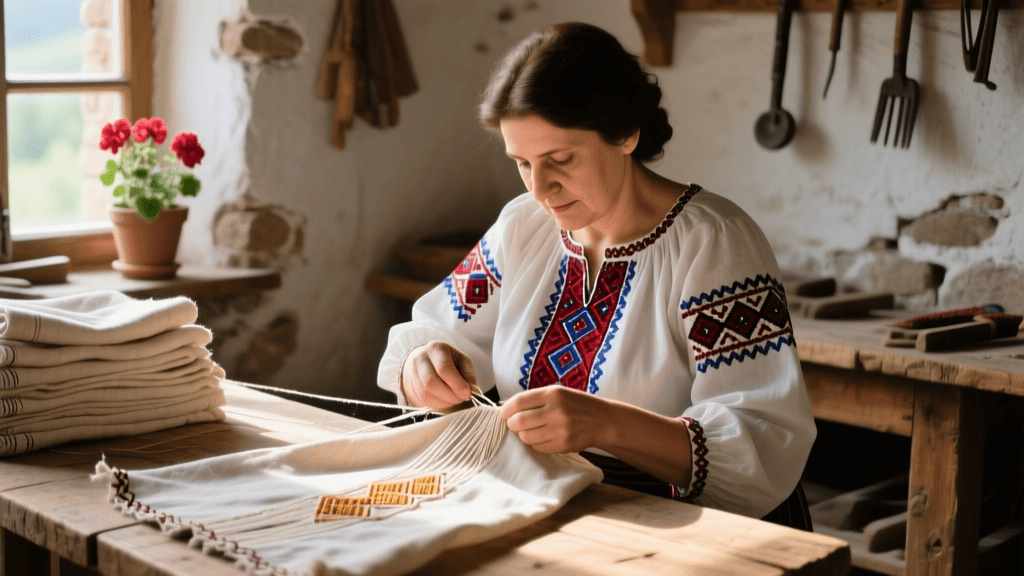
Creating genuine Pibiones is an exercise in extreme patience. The weaver sets up the tramu (warp) on a traditional wooden loom. As the stamu (weft) is passed through, the artisan places a smooth wooden or metal rod across the width of the loom. The weft thread is looped over this rod, creating a raised 'grain' or loop. Once the row is beaten down tightly, the rod is removed, leaving a permanent, raised three-dimensional dot on the surface of the textile.
A single, high-quality Pibiones shawl requires the weaver to lift and loop the thread tens of thousands of times. In 2026, master weavers are increasingly utilizing ethically sourced, organic Sardinian sheep wool and naturally dyed cotton threads, responding to modern demands for sustainable luxury. The geometric patterns—often featuring diamonds, birds, and stylized flora—are counted entirely from memory or passed-down graph charts, with no electronic jacquard looms permitted in authentic artisanal production.
2026 Innovations in Traditional Looms
While the core technique remains unchanged, 2026 has seen the introduction of ergonomic modifications to traditional wooden looms. Heritage cooperatives have collaborated with local engineers to design adjustable tension beams that reduce the physical strain on the weaver’s shoulders and wrists, allowing older master artisans to continue their craft comfortably while training younger apprentices.
Bottones: Masterpieces of Filigree
If Pibiones represents the soul of Sardinian textiles, Bottones (traditional filigree buttons) represent its heartbeat. These are not mere fasteners; they are heavy, intricately crafted pieces of jewelry that secure the bodice, cuffs, and headpieces of the traditional costume.
Symbolism and Construction
Sardinian Bottones are crafted using the ancient techniques of filigree and granulation. Silversmiths twist fine threads of sterling silver (or, for the wealthiest historical commissions, gold) into delicate lace-like patterns, which are then soldered onto a domed base. Tiny silver spheres (granules) are fused to the surface to create raised, tactile motifs.
The most iconic design is the bottonu a ganciu (hook button), which consists of two hemispheres connected by a chain or a rigid bridge. A set of 12 to 24 buttons can adorn a single ceremonial bodice. In 2026, contemporary Sardinian jewelers are reviving the use of 'coin silver'—melting down vintage European silver coins to achieve a specific alloy density that mimics the historical pieces found in 19th-century museum archives, a practice highlighted by European textile experts at the Victoria and Albert Museum.
2026 Heritage Brands and Artisans
Sourcing authentic Sardinian garments requires navigating a market saturated with mass-produced imitations. True heritage brands operate as small cooperatives or family-run laboratories. Below is a comparison of leading artisanal sources operating in 2026.
| Artisan / Brand | Specialty | 2026 Price Range (EUR) | Custom Lead Time |
|---|---|---|---|
| Tessitura Artigiana Samugheo | Authentic Pibiones Shawls & Runners | €650 - €1,400 | 8 - 12 Weeks |
| Filigree Sarda (Casteddu) | Sterling Silver Bottones & Gancini | €350 - €900 (per set) | 4 - 6 Weeks |
| Laboratorio Orbace | Traditional Wool Gonnellas & Capes | €800 - €2,200 | 3 - 5 Months |
| Moda e Tradizione Barbagia | Embroidered Aprons & Bodices | €450 - €1,100 | 6 - 10 Weeks |
Sourcing and Commissioning Authentic Pieces
For those looking to acquire genuine Sardinian folk dress elements in 2026, commissioning directly from the artisan is the most reliable method. When ordering a gonnella or a tailored corpetto, precise measurements are vital. Artisans will typically require your bust, waist, hip, and shoulder-to-waist measurements, alongside your preferred sleeve length for the underlying linen blouse (camisa).
Pricing and Lead Times in 2026
Due to the global surge in demand for heritage craftsmanship and the rising cost of raw, untreated Sardinian wool, prices for authentic pieces have adjusted in 2026. A hand-woven Pibiones shawl, requiring up to 60 hours of continuous loom work, now averages €950. Silver Bottones are priced by weight and complexity; a standard set of 12 filigree buttons currently costs around €500. Always expect a lead time of at least two months, as true artisans do not hold large inventories of bespoke, hand-loomed textiles.
Verifying Authenticity
When purchasing, look for the regional artisanal certification tags. In 2026, the Sardinian Chamber of Commerce issues digital NFC tags alongside traditional paper certificates for verified handmade textiles and jewelry. Scanning the tag with a smartphone will reveal the artisan’s name, the village of origin, and the exact hours spent on the piece. Avoid vendors offering 'Pibiones-style' machine-woven textiles at a fraction of the cost; these lack the structural integrity and cultural lineage of the genuine article.
Caring for Your Sardinian Garments
Preserving these garments requires specialized care. Pibiones textiles should never be machine washed. The raised loops can easily snag, and the natural wool can felt if exposed to heat and agitation. In 2026, conservationists recommend spot-cleaning with a pH-neutral wool detergent and cold water, followed by flat drying away from direct sunlight. For deep cleaning, seek out a dry cleaner who specializes in heritage textiles and understands the tension requirements of hand-loomed fabrics.
Silver Bottones require regular maintenance to prevent tarnishing, especially if worn against the skin or stored in humid environments. Avoid harsh chemical dips, which can strip the oxidation from the intricate filigree crevices, ruining the three-dimensional contrast. Instead, use a soft, untreated microfiber cloth and a specialized, non-abrasive silver polishing foam designed for antique jewelry. Store the buttons in anti-tarnish flannel pouches, separated from the heavy wool garments to prevent the sulfur in the wool from accelerating the tarnishing process.
Conclusion
Sardinian folk dress is far more than a historical costume; it is a living, breathing testament to the island’s resilience, artistry, and deep connection to the natural world. The Pibiones weaves of Samugheo and the silver Bottones of the Barbagia region represent the pinnacle of European textile and metallurgical heritage. By supporting the master artisans and heritage brands keeping these traditions alive in 2026, collectors and fashion enthusiasts do more than acquire a beautiful garment—they become active stewards of a profound cultural legacy. Whether you are commissioning a bespoke shawl or investing in a set of handcrafted filigree buttons, you are wearing a piece of Mediterranean history, meticulously crafted for the modern era.