Ancient Greek Chiton & Roman Toga Reconstruction Guide 2026
The Resurgence of Classical Antiquity Fashion in 2026
As we navigate the 2026 historical reenactment and Hellenic heritage festival season, the demand for historically accurate ancient Mediterranean garments has reached an all-time high. Modern textile enthusiasts, theater costumers, and cultural revivalists are moving away from cheap, mass-produced polyester costumes and embracing the intricate, mathematical beauty of classical drapery. Reconstructing the ancient Greek chiton and the Roman toga requires more than just wrapping a bedsheet; it demands an understanding of historical geometry, period-accurate textile weights, and traditional draping mechanics. This comprehensive guide provides actionable advice, precise measurements, and 2026 fabric sourcing strategies to help you build an authentic classical wardrobe.
The Anatomy of the Classical Chiton
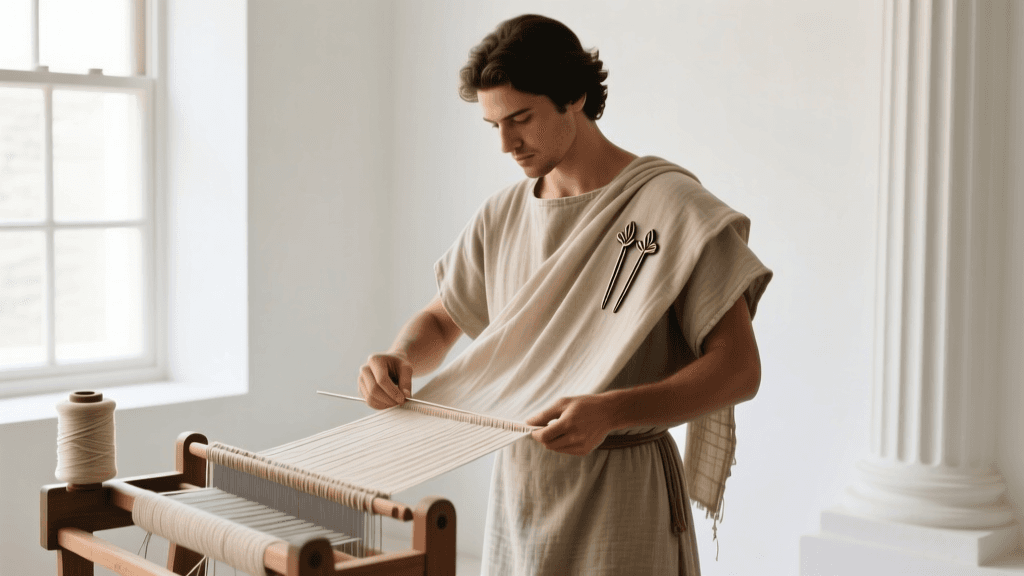
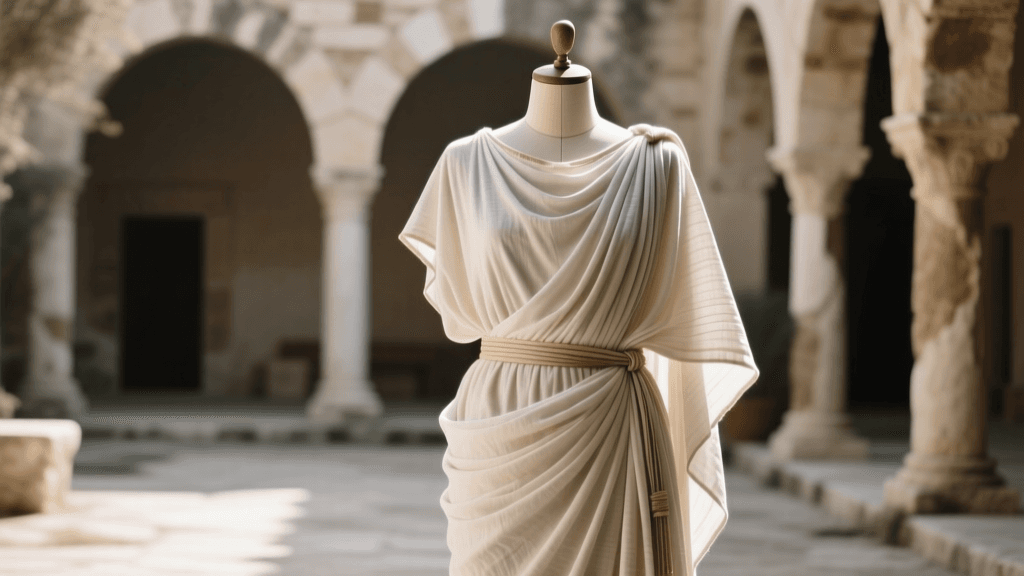
The chiton was the foundational garment of ancient Greece, worn by both men and women. Unlike modern tailored clothing, the chiton was constructed from a single, large rectangular piece of fabric that was folded, pinned, and belted directly onto the body. According to the World History Encyclopedia's overview of Greek Dress, the beauty of the garment relied entirely on the drape of the textile and the proportion of the folds.
The Doric Chiton (Peplos)
The Doric chiton, often referred to as a peplos when worn by women, was typically made from heavier woolen fabrics. It featured a distinctive overfold (apoptygma) at the top edge. To construct a Doric chiton for a modern wearer, you will need a rectangular piece of fabric measuring approximately 1.5 times the wearer's shoulder width, and a length equal to the wearer's height plus 18 inches to allow for the overfold and the blousing (kolpos) over the belt. The garment is pinned at the shoulders using fibulae, leaving the sides open or stitched depending on the specific regional variation.
The Ionic Chiton
In contrast, the Ionic chiton was crafted from much lighter, wider fabrics, primarily linen. It was characterized by its voluminous sleeves, created by pinning the fabric at multiple intervals along the arms rather than just at the shoulders. For a 2026 reconstruction, lightweight European flax linen is the ideal choice. The fabric width should be at least twice the wearer's wingspan to ensure the signature cascading sleeve folds. Because linen frays easily, modern reenactors often use a narrow rolled hem or a period-accurate tablet-woven border (clavus) to finish the raw edges.
Roman Garments: Toga and Stola Construction
While the Greeks favored rectangular drapery, the Romans introduced complex curved geometry into their national dress. The Roman toga was a symbol of citizenship and masculine civic duty, while the stola served as the traditional, modest garment for Roman matrons.
The Semicircular Toga
A common misconception in amateur theater is that the toga was a simple half-circle. As detailed in the World History Encyclopedia's definitive guide to the Toga, the Imperial Roman toga of the 1st and 2nd centuries CE was a massive, complex shape that combined a semicircle with additional curved extensions to create the sinus (the deep chest pocket) and the umbo (the decorative knot). To draft a basic Republican-era toga for modern use, cut a semicircle of heavyweight wool suiting with a radius of roughly 2.5 to 3 meters. Draping the toga requires a specific sequence of throwing the fabric over the left shoulder, wrapping it across the back, passing it under the right arm, and throwing the remaining bulk back over the left shoulder. In 2026, costumers often use hidden linen twill tape stitched to the interior folds to help the heavy wool maintain its shape during long festival days.
The Stola and Palla
Roman women did not wear the toga; instead, they wore the stola over a base tunic (tunica interior). The stola was a sleeveless, voluminous garment suspended from the shoulders by narrow straps (institae) and belted high under the bust. Over the stola, women draped the palla, a large rectangular shawl that could be pulled over the head for modesty or religious ceremonies. When sourcing fabric for a stola in 2026, look for mid-weight linen or fine worsted wool in rich, natural dye colors like madder red or weld yellow.
2026 Fabric Sourcing & Material Guide
Selecting the correct textile is the most critical step in classical reconstruction. The drape, weight, and opacity of the fabric will dictate how the garment behaves in motion. Below is a comparison chart of the best textiles available on the 2026 market for ancient Mediterranean garments.
| Fabric Type | Weight (GSM) | Drape Quality | Best Historical Use Case |
|---|---|---|---|
| Medium-Weight Linen | 180 - 220 GSM | Crisp, structured | Ionic Chiton, Stola, Palla |
| Lightweight Linen Voile | 90 - 120 GSM | Fluid, sheer | Layered Chitons, Summer Tunics |
| Worsted Wool Suiting | 250 - 300 GSM | Heavy, sculptural | Republican Toga, Winter Peplos |
| Merino Wool Flannel | 200 - 240 GSM | Soft, clinging | Doric Chiton, Base Tunics |
When purchasing textiles in 2026, prioritize sustainability and historical accuracy by seeking out Masters of Linen certified European flax. For wool, undyed heritage breeds like Shetland or Gotland provide the most historically accurate texture and natural lanolin water-resistance for outdoor reenactments.
Mathematical Draping & Measurements
To achieve a flawless classical silhouette, you must calculate your fabric dimensions based on the wearer's specific proportions. Follow this step-by-step measurement guide:
- Chiton Width: Measure the wearer's shoulder width. Multiply by 1.5 for a standard Doric drape, or by 2.0 for a voluminous Ionic drape.
- Chiton Length: Measure from the top of the shoulder to the ankle bone. Add 12 inches for the apoptygma (overfold) and an additional 6 inches to allow for the kolpos (the bloused fabric pulled up over the belt to adjust the hemline).
- Toga Radius: Measure the wearer's height. The radius of the toga's semicircle should be at least 1.2 times the wearer's height to ensure it reaches the calves after the complex wrapping process.
- Belt Placement: The Greeks belted the chiton just under the bust (for women) or at the natural waist (for men). The Romans often wore a secondary, hidden belt to secure the tunic tightly to the body before draping the outer layers.
Fasteners, Dyeing, and Accessories
The ancient Mediterranean wardrobe was held together by tension, gravity, and metal fasteners. The fibula (an ancient brooch resembling a safety pin) was essential for securing the chiton at the shoulders. In 2026, high-quality bronze and brass cast fibulae are readily available from specialized historical jewelers. Avoid modern safety pins, as they lack the structural integrity to hold heavy wool and will ruin the drape of fine linen.
Color was a massive status symbol in antiquity. While the lower classes wore undyed, naturally colored wools and linens (ranging from cream to dark brown), the elite utilized expensive natural dyes. For modern reenactors looking to dye their own fabrics, achieving the famous Tyrian purple is cost-prohibitive, but you can closely mimic Roman and Greek color palettes using modern botanical dyes. Madder root yields brilliant reds and terracottas, weld and dyer's broom produce vibrant yellows, and woad or Japanese indigo provides the blues worn by the working classes and infantry.
Finally, no classical garment is complete without appropriate footwear. The Greek krepis (a leather sandal with a woven thong and thick sole) and the Roman calceus (a fully enclosed leather shoe for citizens) are essential for grounding the outfit. Modern leatherworkers specializing in historical footwear now offer 3D-scanned custom lasts, ensuring that your period-accurate sandals provide the arch support needed for navigating modern cobblestones and festival grounds. By combining rigorous historical research with 2026 textile technology, you can create ancient garments that are not only visually stunning but deeply respectful of the classical world's sartorial legacy.