2026 Guide to European Folk Costumes: Bunad, Tracht & Krakowski
Introduction to Regional European Folk Dress in 2026
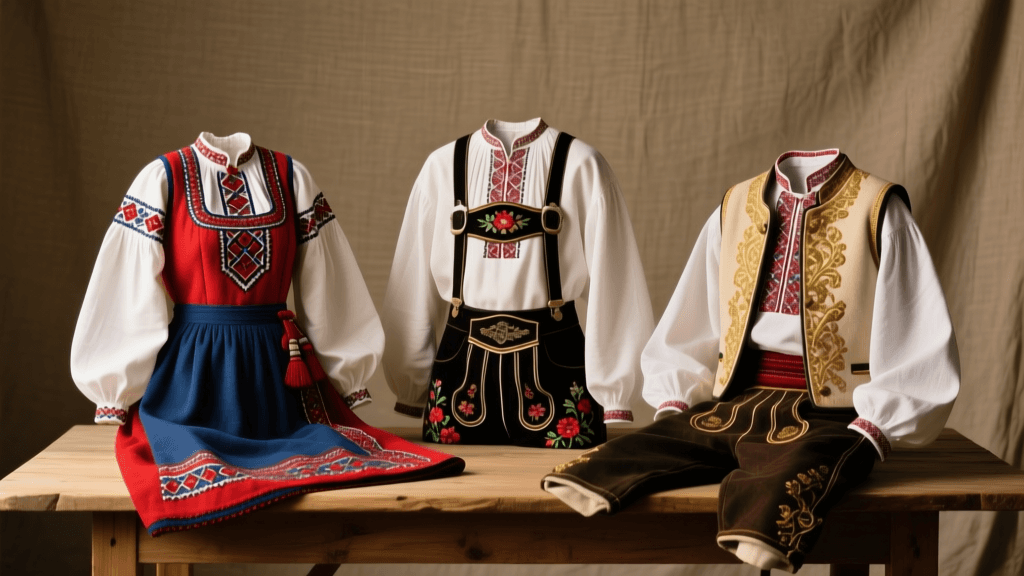
As we navigate the cultural festival season of 2026, the appreciation for authentic European folk dress has evolved from mere costume play to a profound respect for regional heritage, artisanal craftsmanship, and sustainable textile traditions. Across the continent, traditional garments are experiencing a massive revival, driven by a younger generation seeking tangible connections to their ancestry. However, navigating the acquisition, tailoring, and etiquette of these garments requires precise knowledge. This comprehensive guide explores three of Europe's most iconic and strictly regulated regional folk costumes: the Norwegian Bunad, the Bavarian Tracht, and the Polish Strój Krakowski. Whether you are attending a midsummer celebration in Scandinavia, a cultural parade in Munich, or a heritage festival in Lesser Poland, understanding the nuances of these garments is essential for respectful and authentic participation.
The Norwegian Bunad: Heritage, Embroidery, and Silver
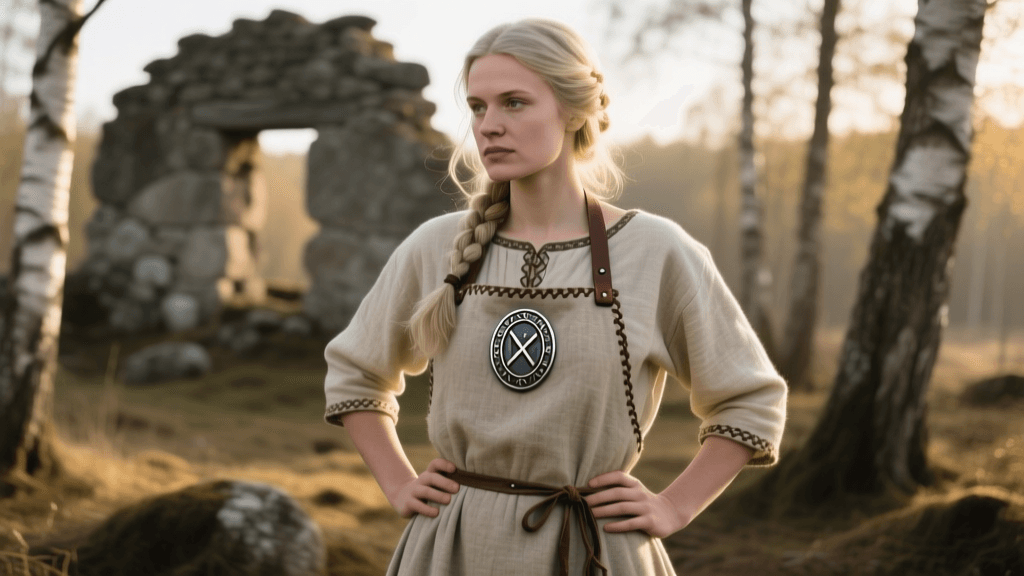
The Norwegian Bunad is arguably the most meticulously regulated folk costume in Europe. Unlike generic national costumes, a Bunad is strictly tied to a specific geographical region, and wearing one requires a documented connection to that area through birth, marriage, or ancestry. According to the Norsk institutt for bunad og folkedrakt, there are over 450 distinct Bunad variations in Norway today, each with specific requirements for fabric, embroidery patterns, and silver jewelry.
Focus on the Hardanger and Telemark Bunads
The Hardanger Bunad, often considered the 'first' Bunad, is famous for its intricate cross-stitch (kross-saum) and white linen aprons with drawn-thread work (hardangersøm). In 2026, the market for authentic, hand-embroidered Hardanger Bunads remains highly exclusive. The Telemark Bunad, characterized by its dramatic, dark wool fabrics and vibrant, rose-inspired embroidery (rosemaling motifs), is equally prestigious. Both require heavy, hand-woven wool and custom tailoring that accommodates the wearer's exact measurements, allowing for future alterations as the body changes over a lifetime.
The Silver (Sølv) Requirement
No Bunad is complete without its specific regional silver. A full set of Telemark silver can weigh several kilograms and includes a large breastplate (brystknapp), neck rings, cufflinks, and intricate shoe buckles. In 2026, a complete, hand-forged silver set from a certified Norwegian silversmith typically costs between 25,000 and 45,000 NOK (approximately $2,300 to $4,100 USD). It is crucial to avoid mass-produced, imported imitations; authentic Bunad silver must bear the maker's mark and the silver control stamp.
The Bavarian Tracht: Dirndl and Lederhosen Beyond Oktoberfest
While the world often associates Bavarian Tracht with the commercialized beer tents of Oktoberfest, true Tracht is a living, breathing tradition governed by regional Trachtenvereine (costume associations). The Haus der Bayerischen Geschichte emphasizes that authentic Tracht is not a static uniform but a regional identifier that reflects the wearer's hometown, marital status, and social standing.
Miesbach and Werdenfels Styles
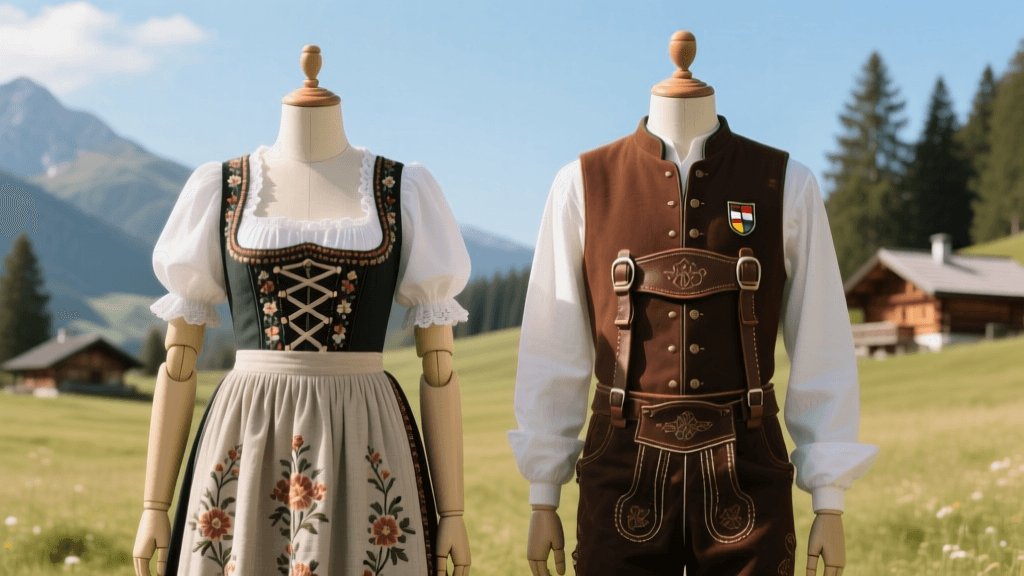
For men, the Miesbach Lederhosen is the gold standard. Authentic 2026 specifications demand Hirschleder (deer leather) that is brain-tanned and smoked, giving it a distinctive, earthy scent and a soft, durable texture. The leather should be approximately 1.0 to 1.2 millimeters thick, featuring hand-stitched white or green Säckler seams and horn buttons. The iconic suspenders (Hosenträger) must feature the 'Hosenträgersteg' (crosspiece) with regional embroidery, often depicting edelweiss or oak leaves.
For women, the Dirndl consists of a bodice (Mieder), blouse (Dirndlbluse), full skirt, and apron (Schürze). A high-quality, bespoke Dirndl in 2026 costs between 800 and 1,500 EUR. The bodice must be structured with internal boning and fastened with a silver hook-and-eye chain or silk ribbons. The fabric should be natural fibers—linen, cotton, or raw silk—avoiding the synthetic blends found in tourist shops.
The Apron Bow Etiquette
The placement of the Dirndl apron bow is a strict communicative code that remains highly relevant in 2026:
- Tied on the Left: The wearer is single and potentially looking for a partner.
- Tied on the Right: The wearer is married, engaged, or in a committed relationship.
- Tied in the Center: Traditionally indicates virginity, though today it is often used by young girls or those who simply prefer the aesthetic.
- Tied at the Back: The wearer is widowed, or, in the context of hospitality, working as a server or staff member.
The Polish Strój Krakowski: Vibrant Textiles and Embroidery
The Strój Krakowski (Kraków costume) is the most recognizable of all Polish regional folk dresses, largely because it was adopted in the 19th century as a symbol of national identity during periods of partition. The Ethnographic Museum in Krakow houses extensive archives detailing the evolution of this garment from everyday peasant wear to a celebrated ceremonial dress.
The Sukmana and Gorset
For men, the defining piece is the Sukmana, a long, flared woolen coat, typically in white, brown, or dark blue, heavily embroidered with red and black geometric and floral motifs at the collar and cuffs. It is worn over a white linen shirt, a leather belt with brass studs, and high leather boots.
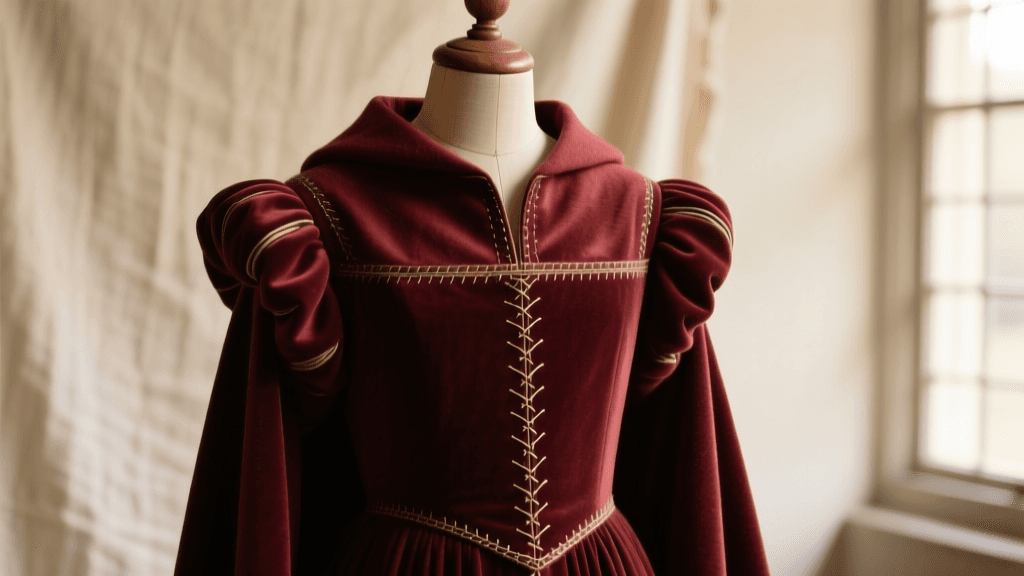
For women, the focal point is the Gorset (corset), made of velvet or brocade, adorned with intricate beadwork, sequins, and metallic thread embroidery featuring peacock feathers and floral wreaths. In 2026, artisanal beadwork on a bespoke Gorset takes upwards of 120 hours to complete by master embroiderers in the Lesser Poland region. The skirt is typically a heavy, floral-printed cotton or wool, worn over multiple starched petticoats to achieve the traditional bell shape.
2026 Comparative Sourcing and Cost Table
| Costume Type | Primary Region | Estimated 2026 Cost (Bespoke) | Lead Time | Key Materials |
|---|---|---|---|---|
| Norwegian Bunad (Telemark) | Telemark, Norway | 45,000 - 65,000 NOK ($4,100 - $6,000) | 12 - 18 Months | Hand-woven wool, linen, sterling silver |
| Bavarian Tracht (Miesbach) | Upper Bavaria, Germany | 1,500 - 2,500 EUR ($1,600 - $2,700) | 3 - 6 Months | Brain-tanned deer leather, linen, horn |
| Polish Strój Krakowski (Women) | Kraków, Poland | 4,500 - 7,000 PLN ($1,100 - $1,700) | 4 - 8 Months | Velvet, glass beads, floral wool/cotton |
Sustainability and Textile Sourcing in 2026
A major trend in 2026 is the push for sustainable and ethically sourced materials in traditional garment making. Artisans are increasingly returning to heritage farming practices. For instance, the wool used in high-end Bunads is now frequently sourced from specific heritage breeds of Norwegian sheep, such as the Spælsau, whose dual-coated fleece provides both the soft underwool for weaving and the long, water-resistant guard hairs. Similarly, Bavarian tanneries are facing stricter environmental regulations, leading to a renaissance in traditional, chemical-free brain-tanning and oak-bark tanning methods that produce biodegradable, incredibly durable leathers.
Care, Maintenance, and Storage
Investing in authentic European folk dress requires a commitment to proper maintenance. These garments are designed to be heirlooms, passed down through generations, but only if cared for correctly.
- Wool and Embroidery: Never dry-clean a Bunad or a heavily embroidered Krakowski corset unless the cleaner specializes in historical textiles. The harsh chemicals can dissolve the metallic threads and degrade the natural wool oils. Instead, air the garments outside on a humid, overcast day to naturally release odors and wrinkles.
- Leather Care: Hirschleder (deer leather) used in Tracht should never be treated with modern synthetic shoe polishes or waterproofing sprays, which will clog the pores and ruin the suede-like finish. Use a specialized leather milk or simply brush it gently with a soft bristle brush after wearing.
- Silver Polishing: Bunad silver often features intentional oxidation (darkening) in the crevices to highlight the intricate patterns. Do not use aggressive chemical silver dips, as they will strip this patina. Use a mild paste of precipitated chalk and distilled water, applied with a soft cotton swab, and buff gently with a microfiber cloth.
'A true folk costume is not a disguise you put on for a festival; it is a second skin that connects you to the soil, the history, and the people of your region.' — Traditional Textile Preservation Society, 2026 Symposium.
Conclusion
Acquiring and wearing a Norwegian Bunad, Bavarian Tracht, or Polish Strój Krakowski in 2026 is a significant financial and cultural investment. By prioritizing authentic materials, respecting regional etiquette, and supporting master artisans, you help ensure that these magnificent European textile traditions continue to thrive for generations to come. Whether you are fastening the heavy silver clasps of a Telemark Bunad or tying the silk ribbons of a Miesbach Dirndl, you are participating in a living history that transcends mere fashion.