Alpine Tracht Guide 2026: Regional Dirndl and Lederhosen Variations
The Resurgence of Hyper-Local Alpine Tracht in 2026
As we navigate the cultural and sartorial landscape of 2026, the world of European folk dress has witnessed a profound shift. The era of mass-produced, synthetic 'Oktoberfest costumes' is rapidly declining, replaced by a fierce resurgence of hyper-local, historically accurate Alpine Tracht. Enthusiasts, cultural historians, and modern consumers alike are returning to the roots of Bavarian and Austrian regional dress, seeking garments that reflect genuine heritage, artisanal craftsmanship, and sustainable material sourcing. According to cultural heritage archives maintained by the Bavarian National Museum, the preservation of regional Tracht is not merely about clothing; it is a living, breathing archive of Central European history, climate adaptation, and social identity.
Understanding the nuanced differences between regional folk costumes requires a deep dive into the specific valleys, towns, and alpine passes that birthed them. From the heavy, dark wools of Upper Bavaria to the lighter, brightly accented garments of the Austrian Tyrol, every stitch tells a story. This comprehensive 2026 guide explores the anatomy, regional variations, and modern sourcing of authentic Alpine Dirndl and Lederhosen.
Deconstructing the Anatomy of Alpine Folk Dress
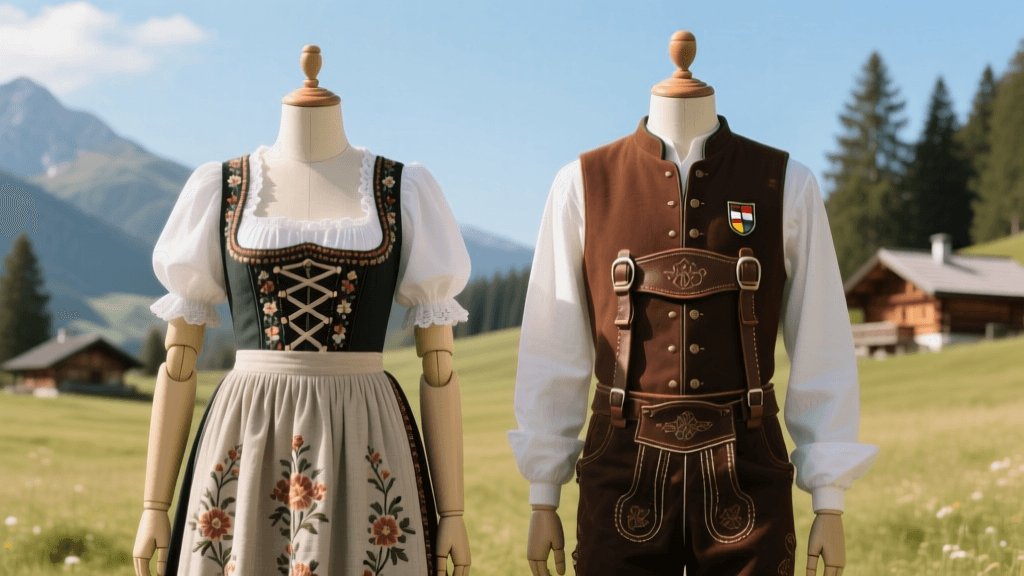
Before examining regional disparities, one must understand the foundational components of the garments. The Dirndl and Lederhosen are not monolithic designs; they are complex ensembles composed of highly specific, interchangeable elements.
The Dirndl Ensemble
- Mieder (Bodice): The structured, often heavily boned or padded upper garment that provides the Dirndl's iconic silhouette. In 2026, authentic makers are returning to natural fibers like hemp-canvas for internal structuring rather than synthetic plastics.
- Rock (Skirt): Traditionally made of wool, linen, or cotton, the skirt is heavily pleated and attached to the bodice. The length is strictly regulated by traditionalist clubs, typically falling just below the knee.
- Schürze (Apron): The most expressive element of the Dirndl. Worn over the skirt, the apron's fabric, pattern, and the placement of its tied bow communicate the wearer's marital status and regional origin.
- Bluse (Blouse): Worn beneath the Mieder, typically crafted from fine white cotton, linen, or silk, featuring varying necklines from modest high collars to delicate lace trims.
The Lederhosen Ensemble
- Leder (Leather): Authentic Lederhosen are crafted from Hirschleder (deer leather) or Gamsleder (chamois leather). The leather must be brain-tanned or vegetable-tanned to achieve the soft, suede-like finish that molds to the wearer's body over time.
- Latz (Drop Front): The iconic buttoned front flap, originally designed for ease of movement and warmth in harsh alpine winds.
- Hosenträger (Suspenders): Often heavily embroidered with regional motifs, crossing at the back or featuring a horizontal chest strap (the Steg).
- Hirschhorn Buttons: Genuine stag horn buttons are a hallmark of quality, replacing the plastic or metal substitutes found in tourist-grade garments.
Regional Variations: Bavaria vs. Austria
The most critical mistake modern buyers make is assuming all Alpine dress is identical. In reality, crossing a mountain pass can result in a complete shift in color palette, fabric weight, and embroidery motifs. The Austrian cultural archives highlight how micro-climates and historical trade routes dictated the evolution of these regional styles.
Upper Bavaria: The Miesbacher and Werdenfelser Tracht
The Miesbacher Tracht is widely considered the gold standard of Bavarian folk dress. Characterized by its somber, elegant color palette, the Miesbacher Dirndl features a dark, heavy wool skirt (often black or deep navy) paired with a silk or brocade Mieder in muted tones like forest green, plum, or charcoal. The apron is typically a solid, contrasting silk. For men, the Miesbacher Lederhosen are relatively short, ending well above the knee, and feature intricate, tonal embroidery utilizing the Sprengtechnik (a raised, three-dimensional embroidery stitch) depicting alpine flora like the gentian flower or oak leaves.
The Austrian Tyrol: Practicality Meets Alpine Flair
Tyrolean Tracht is inherently shaped by the rugged, high-altitude farming lifestyle of the region. The fabrics are generally lighter and more breathable to accommodate the physical labor of alpine pastures. Dirndls in the Tyrol often feature lighter cottons and linens in the summer months, with vibrant, contrasting aprons in checks or floral prints. The most distinguishing accessory is the Tirolerhut (Tyrolean hat), a felt hat adorned with a Gamsbart (a tuft of chamois hair) and a braided cord. Tyrolean Lederhosen often feature longer cuts (Kniebundhosen) to protect the legs from brush and cold, with embroidery that heavily favors the Edelweiss and alpine rose motifs.
Styria and the Salzkammergut: The Ausseer Dirndl
One of the most visually striking regional variations is the Ausseer Dirndl, native to the Styrian Salzkammergut lake region. Unlike the tightly boned bodices of Bavaria, the Ausseer Dirndl features a softer, unboned bodice and is famous for its strict color-blocking tradition. The classic Ausseer ensemble consists of a pink skirt, a green bodice, and a black apron. It is worn without a traditional blouse, instead featuring a high-necked, printed silk scarf tucked into the bodice. This style has seen a massive revival in 2026, championed by contemporary Austrian designers who appreciate its graphic, modernist aesthetic.
2026 Textile Trends: Sustainability and Ethical Sourcing
The year 2026 has brought stringent sustainability standards to the world of traditional European folk dress. Conscious consumers and heritage guilds are demanding full transparency in the supply chain. Chrome-tanned leathers, which are harmful to the environment and degrade poorly, have been almost entirely phased out by premium Tracht makers in favor of traditional brain-tanning and eco-friendly vegetable tanning methods.
Furthermore, the use of organic, regionally grown hemp and flax for blouses and linings has become the industry standard for high-end garments. Natural dyes derived from walnut shells, madder root, and indigo are replacing synthetic chemical dyes, resulting in richer, more historically accurate colors that age beautifully. Consequently, the investment required for authentic Tracht has risen. In 2026, a genuine, hand-embroidered Miesbacher Dirndl ranges from €900 to €1,800, while bespoke, artisan-crafted Lederhosen command prices between €1,200 and €2,500, reflecting the scarcity of master leatherworkers and embroiderers.
Comparison Chart: Regional Tracht Characteristics
| Region | Primary Dirndl Fabric | Lederhosen Style & Leather | Signature Accessory | Avg. 2026 Cost (EUR) |
|---|---|---|---|---|
| Miesbach (Bavaria) | Heavy Wool & Silk Brocade | Short, Hirschleder (Deer) | Silk Schürze, Charivari (Silver chain) | €1,200 - €1,800 |
| Tyrol (Austria) | Linen & Light Cotton | Knee-length, Gamsleder (Chamois) | Tirolerhut with Gamsbart | €800 - €1,400 |
| Ausseerland (Styria) | Color-blocked Cotton/Silk | N/A (Focus is primarily Dirndl) | Printed Silk Neck Scarf | €900 - €1,500 |
| Black Forest (Germany) | Black Wool & Velvet | Short, Calfskin | Bollenhut (Pom-pom hat) | €1,500 - €2,200 |
Sourcing and Caring for Authentic Garments
Acquiring authentic regional Tracht in 2026 requires looking beyond mainstream festival vendors. The most reliable sources are local Trachtenvereine (traditional costume clubs) and specialized, multi-generational tailors known as Trachtenschneidereien. When purchasing, always inspect the interior seams; authentic garments feature generous seam allowances to allow for alterations over a lifetime, a stark contrast to the serged, tight seams of fast-fashion alternatives.
Proper care is essential for preserving these investment pieces. Lederhosen should never be washed with water or soap, as this strips the natural oils from the leather. Instead, they should be brushed with a specialized suede brush and aired out in a humid environment (such as a bathroom during a hot shower) to naturally release odors and relax the fibers. Dirndl skirts and aprons should be dry-cleaned or hand-washed using pH-neutral, eco-friendly detergents, and always stored flat or rolled to prevent permanent creasing in the pleats.
Conclusion: Wearing History in the Modern Era
The European folk dress of the Alpine regions is far more than a festive uniform; it is a meticulously coded language of geography, social standing, and environmental adaptation. As the 2026 cultural revival continues to prioritize authenticity and sustainability over mass production, understanding these regional nuances allows wearers to participate in a living tradition with respect and accuracy. Whether donning the dark, elegant wools of Miesbach or the vibrant, graphic lines of the Ausseerland, wearing authentic Tracht is a profound connection to the enduring heritage of the Alps.