Romanian Ia Blouse Revival 2026: Modern Styling Guide
The Renaissance of the Romanian Ia in 2026
The landscape of European folk dress has experienced a profound transformation over the last few years, shifting from museum archives to the forefront of sustainable, contemporary fashion. At the center of this movement in 2026 is the Romanian Ie (pronounced 'ee-eh'), a traditional blouse that has captivated global designers, slow-fashion advocates, and heritage enthusiasts alike. Far from being a static historical artifact, the Ie has been reclaimed by a new generation of artisans and stylists who view it as the ultimate expression of eco-conscious luxury and cultural pride.
Following its celebrated inscription on the UNESCO Intangible Cultural Heritage list, the blouse has seen a massive surge in authentic revivalism. In 2026, the focus is no longer on mass-produced, fast-fashion approximations that plagued the market in the previous decade. Today’s consumers demand authenticity, tracing the lineage of their garments back to specific villages, artisan cooperatives, and heritage looms. The modern revival is characterized by a deep respect for the garment's original architecture while adapting its styling to fit the fluid, dynamic wardrobes of the contemporary era.
Decoding the Altiță: Anatomy of the Authentic Blouse
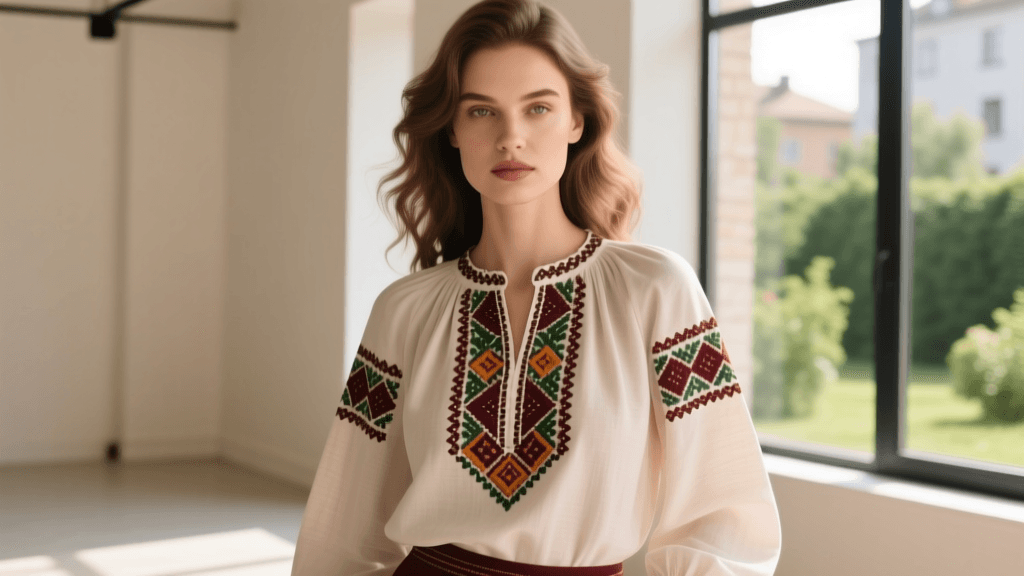
To style the Ie correctly, one must first understand its anatomy. The most defining feature of the authentic Romanian blouse is the altiță—the wide, intricately embroidered band that sits horizontally across the shoulder. This is not merely decorative; historically, the altiță served as a protective talisman, guarding the wearer's shoulders from negative energy. Below the altiță lies the încreț (a smaller, often geometric gather), which then flows into the râuri (rivers), the vertical or diagonal stripes of embroidery that cascade down the sleeves.
In 2026, contemporary designers are experimenting with these structural elements, offering new silhouettes while maintaining the sacred geometry of the embroidery. Below is a comparison of traditional heritage specifications versus the contemporary revival models available this year.
| Feature | Traditional Heritage (Pre-1950s) | 2026 Contemporary Revival |
|---|---|---|
| Fabric Base | Hand-woven hemp, flax, or raw linen | GOTS-certified organic linen, bamboo-linen blends, and recycled cotton |
| Dyes | Natural botanicals (madder root, walnut husk, indigo) | Eco-friendly botanical dyes, low-impact synthetic alternatives for colorfastness |
| Silhouette | Loose, heavily gathered at the neck and cuffs | Tailored options, wrap-ties, relaxed oversized fits, and modular sleeves |
| Embroidery Thread | Hand-spun silk, wool, or cotton thread | Recycled silk, metallic accents, and high-twist organic cotton |
| Motifs | Strict regional geometry, solar symbols, flora | Minimalist interpretations, abstracted regional motifs, negative space |
Regional Variations and Modern Interpretations
Romania’s diverse topography has birthed distinct regional styles of the Ie, each offering a unique aesthetic that translates differently into modern styling. Exploring these regional archives via platforms like the Europeana Fashion Collection provides endless inspiration for contemporary outfit building.
The Argeș and Olt Regions
Blouses from Argeș and Olt are renowned for their striking use of black and deep red embroidery on white linen, often featuring intricate, dense geometric patterns. In 2026, the Argeș Ie has become a staple in the "quiet luxury" capsule wardrobe. The high-contrast embroidery pairs beautifully with monochromatic tailoring, making it a favorite for high-end editorial shoots and sophisticated urban styling.
The Suceava and Bukovina Regions
Further north, the blouses of Suceava are characterized by their vibrant, polychromatic embroidery, often incorporating metallic threads and beadwork. The motifs are heavily inspired by the natural world, featuring stylized leaves, ferns, and floral bursts. Contemporary stylists often use the Suceava blouse as a statement piece, allowing the vibrant colors to dictate the palette of the rest of the outfit.
The Gorj and Oltenia Regions
The Oltenian Ie is famous for its râuri (rivers) that run vertically down the sleeve, often ending in a dramatic, flared cuff. The embroidery is typically more spaced out, utilizing negative space to create a lighter, more ethereal look. This regional style has been heavily adapted by modern indie brands into breezy, oversized summer tunics that bridge the gap between beachwear and resort eveningwear.
Contemporary Styling: How to Wear the Ia Today
The key to styling the Ie in 2026 is juxtaposition. Because the blouse is inherently romantic, voluminous, and rich in texture, it requires grounding elements to prevent it from looking like a theatrical costume. Here is how to integrate this heritage piece into your modern rotation.
1. The Modern Office and Smart Casual
To wear the Ie in a professional or smart-casual setting, focus on structure and tailoring. Choose a blouse with a more subdued color palette, such as white-on-white embroidery or navy thread on ivory linen. Tuck the blouse into high-waisted, wide-leg wool trousers in charcoal or camel. Add a structured leather belt to define the waist and manage the volume of the linen. Finish the look with pointed-toe leather ankle boots and minimalist gold hoop earrings. The contrast between the fluid, embroidered linen and the sharp, architectural tailoring of the trousers creates a powerful, sophisticated silhouette.
2. Festival and Evening Elegance
For evening events or summer festivals, lean into the romantic volume of the garment. A Suceava-style blouse with metallic thread embroidery looks stunning when paired with a bias-cut silk slip skirt in a complementary jewel tone. Allow the blouse to blouse softly over the waistband of the skirt. Layer with delicate, layered gold necklaces that sit just above the încreț gather. For footwear, opt for strappy leather sandals or minimalist velvet mules. This styling approach highlights the artisanal beadwork and embroidery while maintaining a sleek, modern red-carpet sensibility.
3. Weekend Heritage and Streetwear
The Ie has also found a home in elevated streetwear. For a weekend look, pair an oversized, raw-linen Gorj blouse with vintage, straight-leg denim and a cropped, distressed leather moto jacket. The toughness of the leather and the casual nature of the denim perfectly offset the delicate, time-intensive embroidery of the blouse. Add chunky leather loafers or retro sneakers, and a woven leather shoulder bag. This look embodies the 2026 ethos of "heritage utility," where historical garments are worn lived-in, loved, and integrated into daily life.
The Ethics of Revival: Sourcing Authentic Garments
As the popularity of the Ie has grown, so has the importance of ethical sourcing. The line between cultural appreciation and cultural appropriation is defined by where your money goes and who made your garment. In the past, major fashion houses faced severe backlash for copying traditional Romanian motifs without credit or compensation to the source communities.
In 2026, conscious consumers prioritize purchasing directly from Romanian artisan cooperatives, verified slow-fashion platforms, or designers who explicitly collaborate with and compensate local villages. When shopping, look for transparency regarding the artisan's name, the village of origin, and the hours spent on the embroidery. Many authentic 2026 cooperatives now utilize digital passports and blockchain tags sewn into the garment's side seam, allowing you to scan and view the exact artisan who spent up to 80 hours hand-stitching your altiță. Avoid mass-market retailers offering "peasant blouse" knockoffs, as these not only exploit cultural heritage but also rely on synthetic fabrics and exploitative labor practices.
Care and Maintenance for Hand-Embroidered Linen
An authentic Ie is an investment piece meant to be passed down through generations. Proper care is essential to preserve both the hand-woven linen base and the delicate embroidery threads.
- Washing: Never machine wash an authentic, hand-embroidered Ie. Hand wash in cool water (maximum 30°C) using a pH-neutral, eco-friendly detergent specifically formulated for delicate natural fibers.
- Drying: Do not wring or twist the fabric, as this can distort the altiță embroidery. Gently press out excess water and lay the garment flat on a clean, dry towel to air dry away from direct sunlight, which can fade natural botanical dyes.
- Ironing: Iron the blouse while it is still slightly damp. Always iron on the reverse side using a medium-hot setting with steam. Place a clean cotton pressing cloth between the iron and the embroidery to prevent crushing the three-dimensional texture of the silk or cotton threads.
- Storage: Store your Ie folded in a breathable cotton garment bag. Avoid wire hangers, which can stretch the delicate shoulder seams and distort the structural integrity of the altiță band over time.
By understanding the profound history, structural anatomy, and ethical considerations of the Romanian Ie, you can seamlessly integrate this masterpiece of European folk dress into your 2026 wardrobe, honoring the artisans of the past while dressing thoughtfully for the future.