Norwegian Bunad Silver & Bridal Crowns: 2026 Guide
The Soul of the Bunad: Understanding Norwegian Folk Accessories
When discussing European folk dress, few traditions command as much reverence, meticulous craftsmanship, and enduring popularity as the Norwegian bunad. However, the intricate wool embroidery and tailored silhouettes of these regional garments are only half the story. The true heartbeat of the bunad lies in its accompanying metalwork and headwear—collectively known as bunadsølv (bunad silver) and the spectacular brudekrone (bridal crown). As we navigate the heritage fashion landscape in 2026, the demand for authentic, hand-forged Scandinavian folk jewelry has reached unprecedented heights, driven by a global pivot toward slow fashion, sustainable heirlooms, and deep cultural reconnection.
For centuries, silver jewelry in Norway was not merely decorative; it was a vital economic asset, a talisman against malevolent spirits, and a visual ledger of a family’s wealth and social standing. Today, mastering the art of bunad accessorizing requires an understanding of historical context, regional strictness, and the modern 2026 marketplace. Whether you are preparing for a traditional Norwegian wedding, attending a midsummer festival, or integrating heritage pieces into contemporary formalwear, this comprehensive guide will illuminate the intricate world of Norwegian folk accessories.
Historical Symbolism and the Power of Silver
In traditional Scandinavian folklore, silver possessed potent apotropaic qualities. It was widely believed that the gleaming metal could repel trolls, huldrefolk (hidden forest spirits), and the evil eye. This is why bunad silver is characterized by its highly reflective, polished surfaces and the inclusion of dangling, moving elements that catch the light and create sound. According to the archives at the Norwegian Museum of Cultural History (Norsk Folkemuseum), the auditory component of folk jewelry was just as crucial as its visual impact; the chiming of silver was thought to confuse and ward off dark entities lurking in the valleys.
Furthermore, silver served as a portable bank account for rural farming families. In times of famine or economic hardship, silver buttons, belt clasps, and brooches could be melted down or sold to ensure survival. Consequently, the weight and purity of the silver were paramount. Today, authentic bunad silver is still crafted in 925 sterling silver, with many master artisans in 2026 increasingly sourcing recycled precious metals to align with modern environmental standards without compromising historical integrity.
Anatomy of a Traditional Norwegian Silver Set
A complete women’s bunad silver set is a marvel of functional art, comprising several distinct pieces that must harmonize with the specific regional garment. Mixing silver styles from different regions is considered a major faux pas in traditional Norwegian dressing.
The Sølje (Brooch)
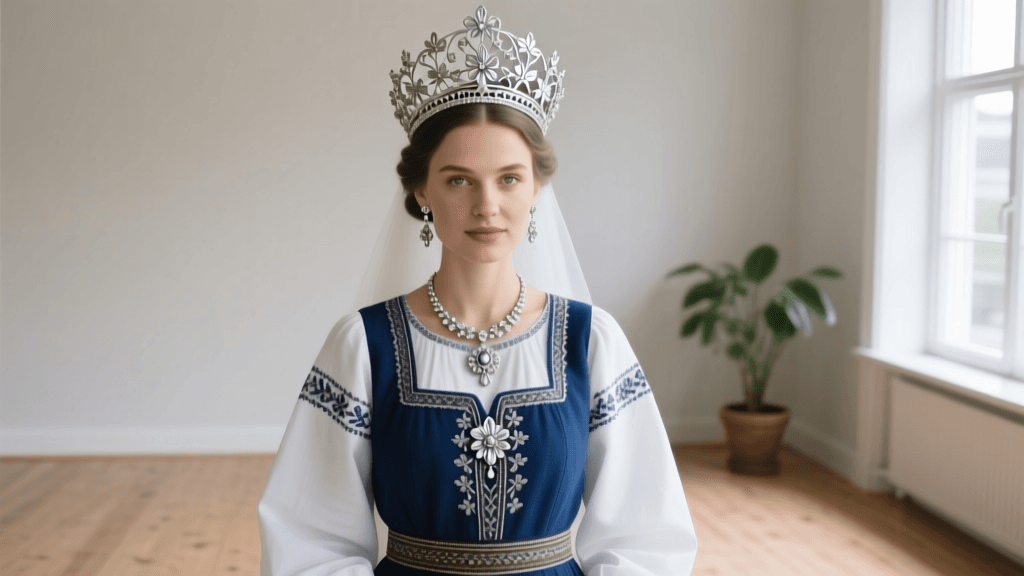
The sølje is the centerpiece of the bunad, worn at the collar of the linen shirt. It typically features a central dome or rosette surrounded by radiating filigree petals and dangling spoon-shaped or tear-shaped pendants known as koner. The number of koner often held symbolic meaning, sometimes representing the wearer's children or the family's livestock. In 2026, hand-forged sølje brooches remain the most sought-after items, with master silversmiths utilizing traditional repoussé and filigree techniques that require dozens of hours of bench time per piece.
Beltestølv and Veskelås (Belt and Purse)
The belt is secured with an ornate silver buckle or a series of linked silver plates (beltestølv). Accompanying this is the veskelås, the decorative silver clasp that adorns the front of the traditional leather or fabric purse. These pieces often feature engraved floral motifs, such as the acanthus leaf or the wild rose, which are deeply tied to Norwegian woodcarving and rosemaling traditions.
Erme knapper and Mansjetter (Cuff and Sleeve Buttons)
Depending on the region, the shirt cuffs and the front panel of the bunad vest may be fastened with intricate silver buttons. Some regions, like Hardanger, utilize simple, domed silver buttons, while others, like Telemark, prefer elaborate filigree spheres.
Men’s Bunad Silver: A Study in Understated Elegance
While women’s bunad silver is characterized by its expansive, shimmering presence, men’s bunad silver is decidedly more understated, focusing on utility and rugged refinement. A traditional men's set includes the halssølje (a smaller, flatter neck brooch worn at the shirt collar), heavily engraved silver buttons for the vest and knee-breeches, and a spectacular silver-mounted knife (kniv). The knife, worn in a tooled leather sheath at the hip, is a quintessential element of Norwegian rural masculinity. Additionally, men often wear a urkjede (pocket watch chain) draped across the vest, featuring silver fobs and seals that historically denoted the wearer's trade or family crest.
The Brudekrone: Norway’s Traditional Bridal Crown
No discussion of European folk headwear is complete without the Norwegian brudekrone. Historically, a bride’s hair was left uncovered and flowing to symbolize her purity, but during the wedding ceremony, she was crowned with a spectacular, towering headdress. The brudekrone is a masterpiece of silversmithing, often featuring a halo of filigree leaves, glass stones, pearls, and intricate wirework. Many crowns also feature suspended elements that chime softly as the bride walks down the aisle, echoing the ancient protective function of folk jewelry.
In 2026, the brudekrone has experienced a massive revival among modern Norwegian brides. While some families pass down heirloom crowns that have been worn for over a century, many brides opt to rent these magnificent pieces from local bunad shops or specialized heritage jewelers. The cost of commissioning a bespoke, handcrafted brudekrone from a master silversmith in 2026 can easily exceed 80,000 NOK (approximately $7,500 USD), making the rental market a thriving and practical sector of the folk dress industry.
Regional Variations: Hardanger vs. Telemark
To wear bunad silver correctly, one must respect the strict regional boundaries that define Norwegian folk dress. The silver must perfectly match the geographical origin of the bunad.
- Hardangerbunad Silver: Known for its striking contrast, Hardanger silver often incorporates black oxidized silver or dark enamel accents to complement the garment's bold black wool and vibrant cross-stitch embroidery. The sølje is typically flatter and more geometric.
- Telemark Bunad Silver: Telemark is the undisputed heartland of Norwegian silversmithing. The silver here is heavily three-dimensional, featuring deep repoussé work, abundant filigree, and highly polished, rounded koner that catch the light brilliantly. It is designed to complement the rich, dark fabrics and elaborate floral embroidery of the Telemark garments.
- Gudbrandsdalsbunad Silver: This region favors elegant, nature-inspired engravings, often featuring intricate acanthus leaf motifs that mirror the famous woodcarvings of the Gudbrandsdalen valley.
2026 Market Guide: Pricing and Sourcing Authentic Silver
The market for authentic bunad silver in 2026 is robust but constrained by the limited number of master artisans capable of executing traditional hand-forged filigree. Due to a resurgence in national pride and a global appreciation for heritage crafts, waitlists for bespoke pieces from renowned workshops can stretch from six to nine months. When sourcing authentic pieces, buyers are strongly encouraged to purchase from certified heritage retailers such as Norsk Flid Husfliden, the national organization dedicated to preserving Norwegian folk art, or directly from historic workshops like Sylvsmidja in Voss, which has been crafting traditional silver since 1899.
Below is a comparative overview of average 2026 retail pricing for authentic, hand-crafted bunad silver components in Norway:
| Accessory Type | Average 2026 Price (NOK) | Average 2026 Price (USD) | Artisan Lead Time |
|---|---|---|---|
| Sølje (Collar Brooch) | 4,500 - 12,000 | $420 - $1,120 | 2 - 4 Months |
| Beltestølv (Belt Plates) | 8,000 - 18,000 | $750 - $1,680 | 3 - 5 Months |
| Veskelås (Purse Clasp) | 3,000 - 7,500 | $280 - $700 | 1 - 3 Months |
| Brudekrone (Bridal Crown) | 45,000 - 95,000+ | $4,200 - $8,900+ | 8 - 12 Months |
| Men's Knife & Sheath | 6,000 - 14,000 | $560 - $1,300 | 2 - 4 Months |
Note: Prices fluctuate based on the global spot price of silver, which has seen steady upward momentum in 2026, and the specific complexity of the regional pattern.
Care, Maintenance, and Modern Styling
Proper care of bunad silver is essential to preserve its heirloom status. The golden rule of heritage silver care is to avoid harsh, modern chemical dips that strip away the metal's natural patina and can damage delicate solder joints. Instead, 2026 conservation best practices recommend using mild, non-abrasive silver polishing cloths and specialized, eco-friendly silver foams. For pieces with deep oxidized detailing (where the darkened silver is meant to provide contrast to the raised polished elements), aggressive polishing must be strictly avoided, as it will erase the intentional antiquing.
When storing bunad silver, each piece should be wrapped in acid-free tissue paper or untreated flannel to prevent sulfur in the air from accelerating tarnish. Plastic bags should never be used, as they can trap moisture and emit gases that cause rapid, uneven tarnishing.
Conclusion: Wearing History in the Modern Era
European folk dress accessories are far more than mere embellishments; they are wearable archives of history, mythology, and regional identity. The Norwegian bunad silver and brudekrone represent a living tradition, where the techniques of the 18th and 19th centuries are actively practiced and revered in 2026. Whether you are investing in a hand-forged sølje brooch to mark a milestone, or renting a towering brudekrone for your wedding day, engaging with these accessories is a profound way to honor the artisans of the past while carrying their legacy into the future. By prioritizing authentic craftsmanship, respecting regional rules, and practicing mindful maintenance, you ensure that these spectacular pieces of metalwork will continue to chime and shine for generations to come.