Romanian Ie Blouse Styling 2026: Modern Altiță Streetwear
The Renaissance of the Romanian Ie in 2026 Streetwear
As we navigate the sustainable fashion landscape of 2026, the integration of traditional European folk dress into contemporary wardrobes has moved far beyond mere festival costuming. Today, the modern styling of heritage garments is an exercise in cultural preservation, textile appreciation, and avant-garde streetwear. At the forefront of this movement is the Romanian Ie (pronounced 'ee-eh'), the traditional peasant blouse that has captivated designers and stylists worldwide. Following its widespread global recognition and protection on the UNESCO Intangible Cultural Heritage Lists, the 2026 market has seen a massive surge in demand for authentic, hand-loomed pieces. However, the true challenge for the contemporary fashion enthusiast is not just acquiring an authentic Ie, but styling it in a way that feels urgent, modern, and entirely divorced from theatrical folklore.
The Anatomy of the Altiță: Beyond the Folklore
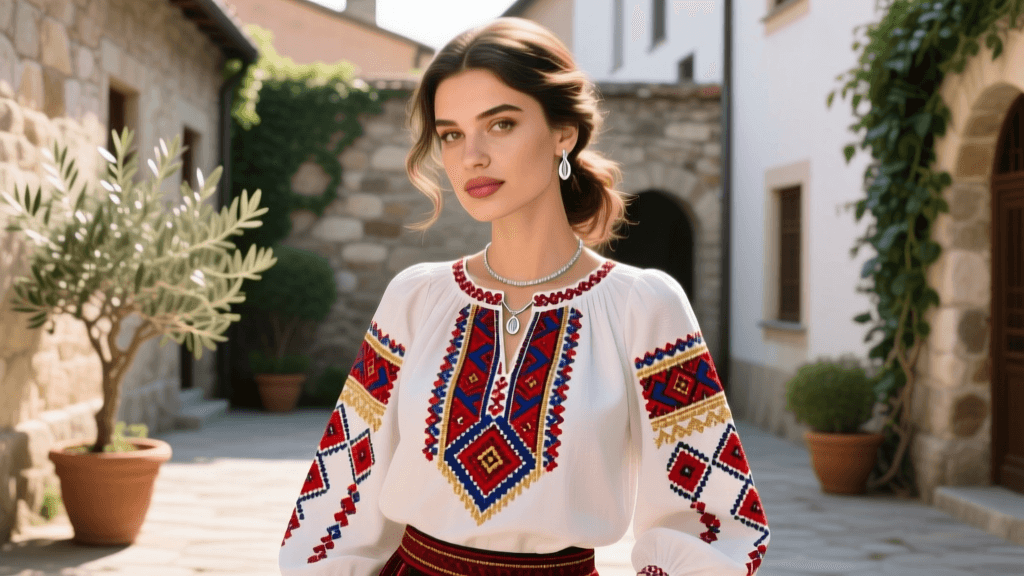
To style the Ie effectively in 2026, one must first understand its structural and artistic anatomy. The most defining feature of the blouse is the altiță—the dense, intricately embroidered band that wraps around the upper sleeve and shoulder. Historically, this band served as a protective talisman and a marker of regional identity, utilizing complex geometric and floral motifs stitched with hand-spun wool or silk thread.
Beneath the altiță lies the încreț, a subtle gathering of fabric that provides the blouse with its signature voluminous, architectural silhouette. Flowing downward from this gathering are the râuri (rivers), which are vertical bands of embroidery that guide the eye down the arm and torso. According to historical garment construction archives preserved in The Metropolitan Museum of Art Collection, the spatial distribution of these embroidered 'rivers' was strictly dictated by the loom width and the social status of the wearer. In 2026, contemporary stylists leverage this natural volume to create striking silhouettes that contrast sharply with modern, tailored minimalism.
Sourcing Authentic Garments in the 2026 Market
The 2026 textile market is heavily saturated with fast-fashion approximations of the Ie, often featuring machine-printed patterns on synthetic poly-blends. True revivalists and sustainable fashion advocates actively reject these in favor of authentic, artisan-crafted, or carefully sourced vintage hemp and linen blouses. When sourcing an authentic piece this year, look for the irregular slubs of hand-spun hemp, the slight asymmetry of hand-stitched cross-stitches (punctul în cruciuliță), and the use of natural, botanical dyes such as madder root (terracotta), woad (indigo), and weld (yellow).
Authentic vintage blouses from the mid-20th century, sourced through verified Eastern European textile cooperatives and specialized antique dealers, currently range from $180 to $450 in 2026, depending on the density of the altiță and the condition of the hemp. Newly commissioned pieces from rural artisan guilds in regions like Muscel or Olt can command upwards of $600, reflecting the dozens of hours required for hand-embroidery. As highlighted by the Victoria and Albert Museum Textiles Collection, the structural integrity and longevity of hand-loomed hemp make these garments not just fashion statements, but wearable, multi-generational archives.
Three Contemporary Styling Formulas for 2026
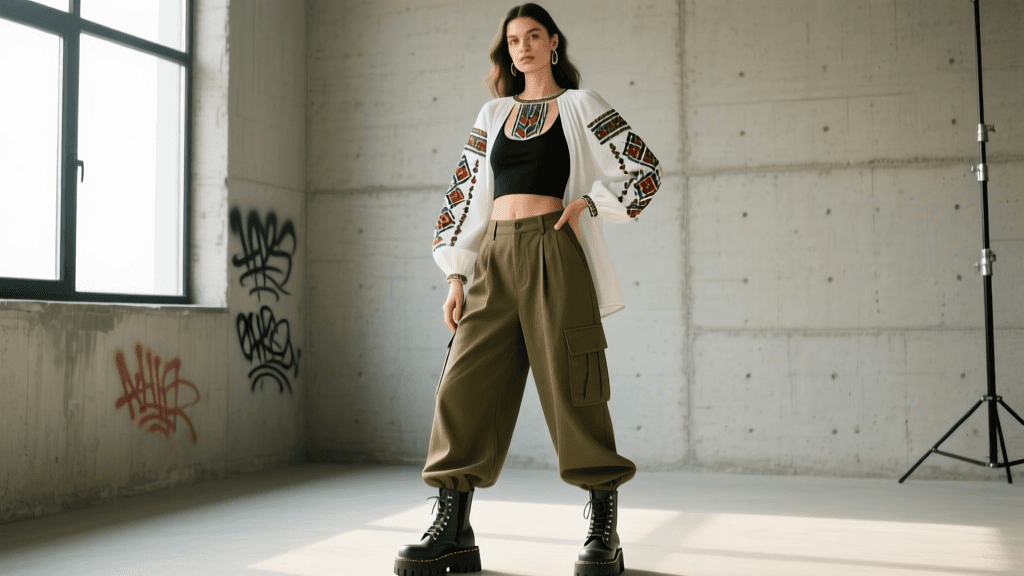
Styling the Ie for modern streetwear requires a mastery of contrast. The blouse is inherently romantic, voluminous, and delicate; therefore, the accompanying garments must provide grounding, structure, and a touch of urban edge. Below are three actionable styling formulas dominating the 2026 European streetwear scene.
Formula 1: The Architectural Minimalist
This look relies on the tension between the billowing sleeves of the Ie and the severe, structured lines of modern tailoring. Begin with a white or ecru hemp Ie featuring a monochromatic black or deep indigo altiță. Tuck the blouse into a pair of high-waisted, wide-leg wool trousers in charcoal or midnight blue. The trousers should feature a sharp, pressed front crease and pool slightly over a pair of square-toed leather Chelsea boots. By tucking the blouse, you highlight the râuri on the torso while allowing the încreț to create a dramatic, sculptural volume at the shoulders. Finish with a thick, sculptural leather belt and minimalist silver hardware to anchor the historical garment in a distinctly 2026 urban context.
Formula 2: The Textural Grunge Contrast
For a look that embraces the raw, tactile nature of heritage textiles, pair the delicate hand-loomed linen of the Ie with heavy, distressed materials. Wear a slightly oversized, vintage Ie unbuttoned at the neckline over a sheer, ribbed merino wool turtleneck in a muted olive or rust tone. Layer this over a heavy, raw-hem black leather midi skirt or distressed selvedge denim. The juxtaposition of the delicate floral embroidery against the aggressive, heavy-grain leather creates a neo-grunge aesthetic that feels entirely modern. Accessorize with chunky, lug-sole combat boots and a slouchy, unstructured hobo bag crafted from upcycled leather.
Formula 3: Elevated Summer Eclectic
During the warmer months, the Ie serves as the ultimate breathable luxury garment. Select a lightweight, finely woven linen blouse with vibrant, multi-colored altiță embroidery. Pair it with tailored, knee-length Bermuda shorts in a heavy cotton twill or a crisp, pleated linen wrap skirt. The key to elevating this look for 2026 is in the accessories: weave a silk scarf through the belt loops, add a pair of woven leather artisanal sandals, and layer multiple, mismatched gold chain necklaces over the Ie's open neckline. This approach treats the folk garment as a high-end resort wear staple, seamlessly blending village heritage with coastal luxury.
2026 Sourcing and Styling Matrix
To help you navigate the current market and plan your wardrobe, consult the matrix below detailing the primary types of Ie blouses available in 2026, their approximate market values, and their optimal styling applications.
| Garment Type | Material & Era | 2026 Price Range (USD) | Optimal Styling Pairing | Care Protocol |
|---|---|---|---|---|
| Vintage Muscel Ie | Hand-spun hemp, wool thread (1940s-1970s) | $250 - $450 | Architectural Minimalist (Wool trousers, structured boots) | Professional textile conservation wash only |
| Contemporary Artisan Ie | Hand-loomed linen, silk thread (2020s) | $400 - $750 | Elevated Summer Eclectic (Linen skirts, gold jewelry) | Hand wash cold, eco-friendly detergent, flat dry |
| Raw Hemp Workwear Ie | Unbleached hemp, cotton thread (Mid-century) | $120 - $200 | Textural Grunge (Leather skirts, heavy denim, lug boots) | Machine wash cold on delicate, no spin, iron damp |
Modern Care Protocols for Hand-Loomed Hemp and Linen
The revival of European folk dress is inherently tied to the slow fashion movement, which demands rigorous, sustainable garment care. The hand-loomed hemp and linen used in authentic Ie blouses are incredibly durable but require specific handling to preserve the integrity of the natural dyes and the tension of the embroidery. In 2026, the standard of care involves avoiding harsh alkaline detergents and high-heat agitation.
For routine maintenance, submerge the blouse in cold water (below 20°C) using a pH-neutral, plant-based textile wash. Never wring or twist the fabric, as this can distort the încreț gathering and snap the vintage embroidery threads. Instead, gently press the water out and roll the garment in a clean, dry cotton towel to absorb excess moisture. Always dry the Ie flat, away from direct sunlight, which can rapidly fade botanical dyes like weld and madder. If ironing is necessary to restore the crispness of the linen, use a low-heat steam setting and iron the garment inside out, placing a protective cotton cloth over the embroidered altiță to prevent the stitches from being crushed.
Conclusion: Wearing History in the Modern Era
The styling of the Romanian Ie in 2026 is a testament to the enduring power of regional craftsmanship in a globalized world. By understanding the profound cultural weight of the altiță, sourcing ethically, and applying contemporary styling formulas that rely on contrast and structure, modern dressers can honor European folk traditions without relegating them to the past. Whether paired with sharp tailoring or heavy grunge leather, the Ie remains a masterclass in textile artistry, proving that true heritage is not static—it is a living, breathing component of the modern wardrobe.