Burgundian Houppelande Guide 2026: Authentic Fabrics & Patterns
The Resurgence of 15th-Century Silhouettes in 2026
The transition from the structured, fitted garments of the 14th century to the voluminous, flowing silhouettes of the 15th century represents one of the most fascinating shifts in European sartorial history. As we navigate the 2026 historical reenactment and Renaissance festival season, the demand for meticulously accurate medieval clothing has reached an all-time high. Modern costuming enthusiasts and historical tailors are moving away from the synthetic blends and machine-serged seams that dominated the festival circuits of previous decades, favoring instead the rich, heavy wools and complex drapery of the Burgundian court. At the center of this sartorial revival is the houppelande, an iconic outer garment that defined the fashion of the European elite from the late 1300s through the mid-15th century.
Whether you are preparing for an upcoming Society for Creative Anachronism (SCA) event, a high-end historical film production, or simply expanding your personal collection of medieval folk dress, constructing an authentic houppelande requires a deep understanding of historical textiles, geometric pattern drafting, and specialized hand-sewing techniques. This comprehensive 2026 guide will walk you through every step of bringing this magnificent garment to life.
The Anatomy of the Burgundian Houppelande
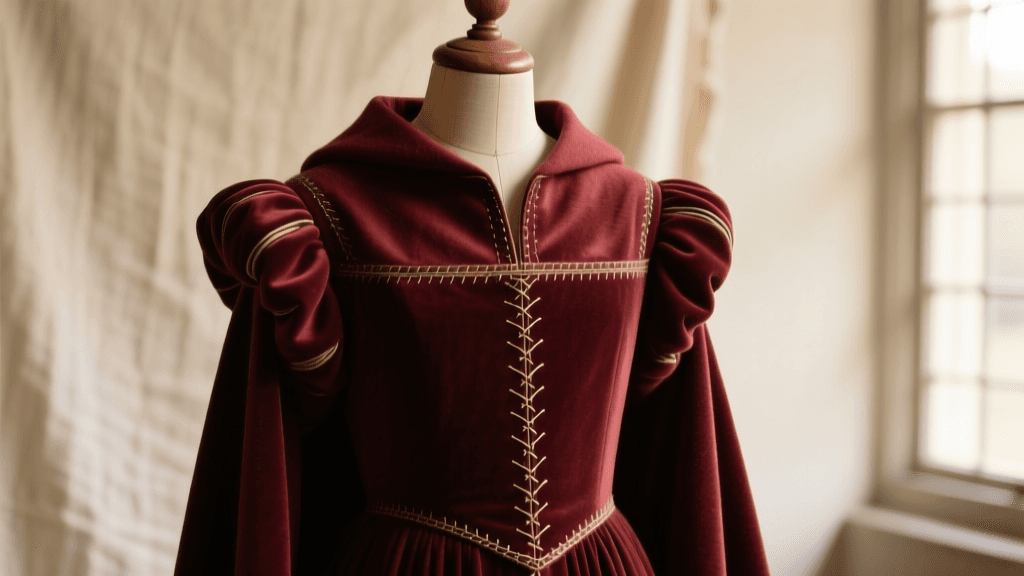
Before sourcing materials, it is essential to understand the structural elements that differentiate a true Burgundian houppelande from generic medieval robes. According to the Victoria and Albert Museum's comprehensive guide to Renaissance fashion, the garment was characterized by its immense volume, which served as a highly visible indicator of wealth and social status. The more fabric one consumed, the richer they were perceived to be.
- The High Collar: Often stiffened with buckram or heavy interfacing, the collar stands tall against the neck and is frequently adorned with dagged edges or lined with contrasting fur.
- The Bombard Sleeves: These are the most recognizable feature of the garment. Cut in a massive bell or trumpet shape, the sleeves often sweep the ground and are heavily lined to maintain their dramatic drape.
- The Belted Waist: Despite the enormous volume of the skirt, the houppelande is gathered tightly at the high waist (just below the bust for women, at the natural waist for men) using a wide, ornate leather or woven belt.
- The Trailing Hem: For the nobility, the hem was intentionally cut to pool on the floor, requiring the wearer to lift the heavy skirts when walking.
Sourcing Heritage Textiles in the Modern Market
The success of your houppelande relies entirely on the weight, drape, and fiber content of your chosen fabrics. In 2026, the global supply chain for heritage textiles has stabilized, allowing tailors to access high-quality, historically accurate materials without the exorbitant backorder times seen in previous years. You must avoid modern worsted wools, which are too tightly woven and lack the necessary fulled texture. Instead, seek out woolen-spun fabrics, melton wool, and heavy wool flannel.
For linings, historical accuracy dictates the use of linen for the body and fur (or high-quality modern ethical faux fur) for the sleeves and collar. Silk taffeta and silk damask were also used by the highest nobility for both outer shells and linings, though they require careful handling to prevent fraying.
2026 Material Comparison and Sourcing Table
| Material Type | Historical Equivalent | 2026 Est. Cost (per yard) | Best Application |
|---|---|---|---|
| Heavy Melton Wool (16-20oz) | Fulled Broadcloth | $45 - $65 | Outer shell, main body, and sleeves |
| Woolen-Spun Flannel | Medieval Woolen | $35 - $50 | Lighter outer shell, summer-weight garments |
| Heavyweight Linen (8-10oz) | Bleached/Unbleached Linen | $25 - $40 | Inner lining, structural interlining |
| Silk Taffeta | 15th-Century Silk | $60 - $90 | Noble linings, sleeve accents, trim |
| Ethical Faux Fur (Long Pile) | Marten, Fox, or Ermine | $50 - $80 | Collar lining, cuff trim, hem facing |
The Art of Natural Dyes and Color Symbolism
Color in the 15th century was heavily regulated by sumptuary laws and dictated by the immense cost of natural dyes. When selecting your fabric colors for a 2026 project, consider the historical context of the dyes used during the Burgundian era. Deep, saturated colors were the exclusive domain of the wealthy.
The most prized colors were derived from madder root (producing rich reds and deep burgundies), woad and indigo (for deep blues), and weld or saffron (for vibrant yellows). The famous National Gallery's analysis of Jan van Eyck's Arnolfini Portrait perfectly illustrates the staggering wealth conveyed by a vividly dyed green wool gown, achieved by overdyeing woad blue with weld yellow—a highly expensive and complex process in the 1430s. For a historically accurate bourgeois or lower-noble houppelande, opt for earthy tones: russet, madder brown, mustard yellow, or undyed sheep's grey.
Pattern Drafting: Geometric Construction
Modern tailors are accustomed to complex, multi-piece patterns with curved armscyes and princess seams. 15th-century tailors, however, relied on geometric construction to minimize fabric waste while maximizing volume. The houppelande is essentially constructed from rectangles and circles.
Drafting the Body
The main body of the garment is drafted using a modified rectangle. Measure from the base of your neck to the floor, adding an extra 4 to 6 inches for the trailing hem and the blousing effect that occurs when the garment is belted. The width of the body panels should be at least 60 inches per panel to ensure the deep, tubular folds characteristic of the style. Insert triangular gores at the side seams starting from the waist down to the hem to add the necessary sweep to the skirt.
Drafting the Bombard Sleeve
The bombard sleeve is cut as a massive, elongated triangle or half-circle. The top edge (the sleeve head) is gathered or pleated to fit into a relatively standard, slightly dropped armscye. The bottom edge forms the wide bell opening. To draft this, measure from your shoulder point down to your knuckles, then add 18 to 24 inches for the dramatic floor-sweeping extension. The width of the sleeve opening at the hem should be no less than 40 inches to achieve the correct historical proportions.
Advanced Tailoring: Cartridge Pleating and Linings
The secret to the houppelande's distinctive silhouette lies in how the massive amounts of fabric are managed at the waist and collar. This is achieved through cartridge pleating (also known as gauging).
Cartridge pleating involves running multiple parallel rows of heavy gathering stitches along the top edge of the fabric and pulling them tight to create dense, rounded, tube-like pleats that stand out perpendicular to the waistband or collar band. This technique allows you to compress up to 10 inches of heavy wool into a single inch of waistband without adding excessive bulk. Use a heavy-duty upholstery thread or waxed linen thread for these stitches, as standard sewing thread will snap under the tension and weight of the wool.
When lining the garment, the outer shell and the lining should be constructed separately and then slip-stitched together at the edges. This allows the heavy wool and the linen or silk lining to move independently, preventing the garment from pulling and distorting when worn. For the collar, sandwich a layer of heavy linen canvas or modern buckram between the outer wool and the lining to provide the stiff, upright structure required to frame the face.
Essential Accessories: The Hennin and Chaperon
A houppelande is never worn in isolation; it requires the correct headwear and accessories to complete the 15th-century illusion. For women, the steeple hennin or the heart-shaped bourrelet are the most iconic choices. In 2026, milliners specializing in historical headwear offer lightweight, structured wire-and-buckram bases that are far more comfortable for all-day festival wear than the heavy, solid-felt versions of the past. Ensure your veil is made of fine, semi-sheer silk organza or lightweight linen, pinned securely to the base.
For men, the chaperon is the mandatory headwear. Originally a practical hood, by the 15th century, it had evolved into a complex, sculptural turban-like hat made from draped wool. Learning to tie a traditional chaperon from a single long piece of dagged wool is a rite of passage for medieval reenactors. Additionally, a wide leather belt with a decorative pewter or brass buckle is essential for cinching the waist and holding the heavy skirts in place.
Maintenance and Storage of Heavy Wool Garments
Investing the time and money into a hand-finished Burgundian houppelande requires proper maintenance. Heavy wool garments should never be machine washed or dry-cleaned with harsh modern chemicals, which can strip the natural lanolin and cause the fulled texture to degrade. Instead, spot clean with a damp cloth and a mild, pH-neutral wool wash. After wearing, air the garment outside in the shade to release odors and moisture. Store the houppelande flat or folded over a wide, padded hanger in a breathable cotton garment bag to protect it from moths and dust, ensuring your masterpiece remains pristine for the 2027 reenactment season and beyond.