Latvian Silver Sakta Brooches & Vainags Headwear: 2026 Guide
The Renaissance of Latvian Tautastērps Accessories in 2026
The traditional Latvian folk dress, known as the tautastērps, is far more than a historical costume; it is a living, breathing testament to Baltic heritage. As we move through 2026, the revival of traditional European folk dress has reached unprecedented levels, particularly in the Baltic states. Driven by a renewed cultural pride and the massive logistical preparations for regional dance festivals and the globally recognized Latvian Song and Dance Festival, the demand for authentic accessories has skyrocketed. For enthusiasts, collectors, and cultural practitioners, understanding the nuances of Latvian jewelry and headwear is essential. The two most iconic elements of this sartorial tradition are the sakta (the traditional silver brooch) and the vainags (the ornate maiden's crown). This comprehensive 2026 guide explores the anatomy, regional variations, market pricing, and proper care of these extraordinary artifacts of European folk dress.
Decoding the Sakta: More Than Just a Fastener
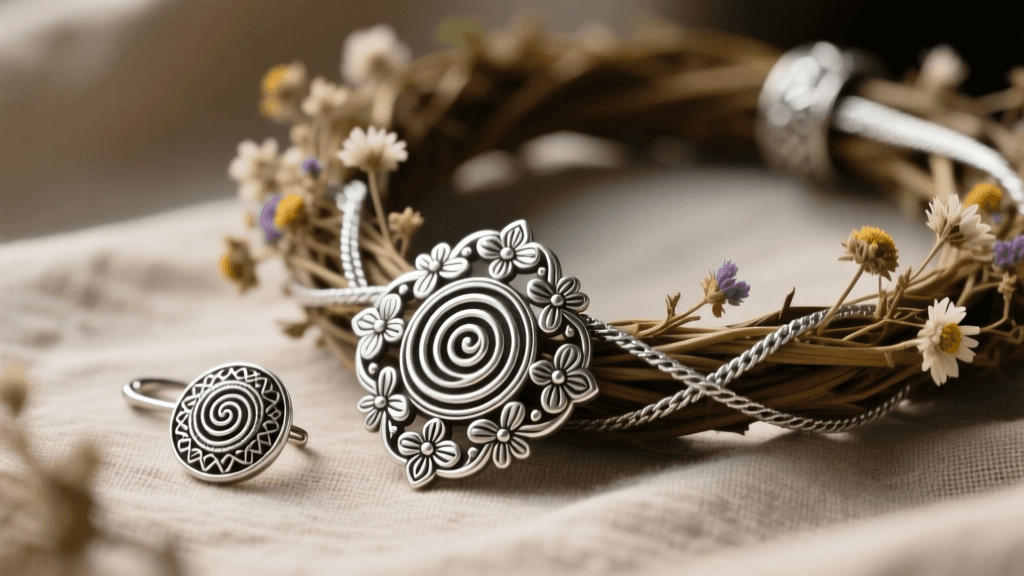
In the lexicon of Baltic folk dress, the sakta is a paramount accessory. While modern fashion relies on buttons and zippers, the historical Latvian wardrobe depended entirely on these masterfully crafted brooches to secure garments. The primary function of the sakta was to fasten the heavy, intricately woven woolen shawls (villaines) at the shoulder or to clasp the linen shirts (krekls) at the neck. However, by the 18th and 19th centuries, the sakta had evolved from a purely utilitarian object into a profound symbol of wealth, regional identity, and social status.
The Burbuļsakta and Metallurgical Mastery
The most recognizable of all Latvian brooches is the burbuļsakta, or 'bubble brooch.' Characterized by its concentric rings of hollow silver spheres, this piece is a marvel of pre-industrial metallurgy. Artisans in 2026 still utilize traditional techniques to create these pieces, involving the meticulous soldering of dozens of individual silver granules and hemispheres onto a base plate. The creation of a single, high-quality burbuļsakta with a diameter of 10 centimeters can take a master jeweler over forty hours of bench work. The bubbles are often interspersed with red coral cabochons, polished amber, or vibrant glass paste stones, creating a striking contrast against the oxidized or polished sterling silver.
Vainags and Aube: The Language of Headwear
In traditional Latvian society, a woman's headwear immediately communicated her marital status, age, and regional origins. The rules governing headwear were strictly observed, and the craftsmanship involved in creating these pieces was staggering.
The Vainags: A Maiden's Crown
The vainags is a tall, rigid, and heavily ornamented crown worn exclusively by unmarried women. Constructed on a base of stiffened linen, cardboard, or birch bark, the exterior is lavishly covered with metallic threads, brass or silver sequins, glass stones, and elaborate ribbon work. In regions like Kurzeme, the vainags can reach impressive heights, featuring dangling metallic leaves and sun motifs that catch the light during traditional circle dances. In 2026, acquiring a custom-made, historically accurate vainags requires commissioning specialized textile artisans, as the intricate beadwork and metallic embroidery cannot be replicated by machines.
The Aube: Elegance for Married Women
Upon marriage, a woman transitioned from the vainags to the aube, a white linen cap. While seemingly simpler than the maiden's crown, the aube is a masterpiece of textile art. The cap is heavily embroidered with white-on-white stitching, featuring complex geometric and botanical motifs. The edges are often finished with delicate, hand-tatted lace. The aube is typically secured with a woven sash or a smaller, simpler brooch, reflecting the transition to a more grounded, domestic social role.
2026 Market Guide: Pricing and Sourcing Authentic Pieces
The market for authentic Baltic folk accessories in 2026 is robust but heavily stratified. Due to the soaring cost of precious metals and the dwindling number of master artisans capable of traditional granulation and filigree work, prices for genuine pieces have risen significantly. According to curators at the Latvian National Museum of History, the preservation of these techniques is a national priority, which has led to state-sponsored apprenticeships that are slowly bringing new jewelers into the market.
When sourcing a sakta or a vainags in 2026, buyers must navigate between mass-produced tourist souvenirs and museum-quality ethnographic replicas. A genuine, hand-forged 925 sterling silver burbuļsakta (8-10 cm) crafted by a certified Latvian artisan currently ranges from €280 to €550. Antique pieces from the late 19th century, verified by auction houses, can easily command prices between €1,200 and €3,500, depending on provenance and the presence of original red coral inlays. For headwear, a fully beaded and historically accurate Kurzeme vainags requires a bespoke commission, with prices starting at €600 and reaching upwards of €1,500 for festival-grade pieces featuring genuine silver thread.
Regional Accessory Comparison Chart
To properly assemble a tautastērps, one must ensure that the jewelry and headwear match the specific ethnographic region. Mixing a Latgale brooch with a Kurzeme crown is considered a major faux pas in the folk dress community.
| Region | Primary Sakta Type | Typical Materials | Headwear Style (Maiden) | Distinctive Features |
|---|---|---|---|---|
| Kurzeme | Large Burbuļsakta | Silver, Red Coral, Amber | Tall, ornate Vainags | Dangling metallic leaves, heavy silver weight |
| Vidzeme | Flat Ring Sakta | Silver, Glass Paste | Moderate Vainags with ribbons | Wide floral motifs, colorful woven sashes |
| Latgale | Cross-shaped / Ring | Bronze, Silver, Beads | Woven Headbands / Beaded | Intricate white linen embroidery, bronze accents |
| Zemgale | Horseshoe / Bubble | Silver, Enamel | Low-profile Vainags | Geometric patterns, dark wool contrasts |
Preservation and Care for Antique and Modern Replicas
Whether you have invested in a modern 2026 commission or inherited an antique heirloom, proper care is vital. Silver sakta brooches should never be cleaned with harsh chemical dips, as these will strip the intentional oxidation that provides depth to the granulation and bubble work. Instead, use a soft, untreated jeweler's cloth to gently buff the raised surfaces. If your sakta features red coral or porous Baltic amber, avoid all liquid cleaners and ultrasonic baths, which can fracture the stones or strip their natural oils.
For the vainags, storage is the primary concern. The rigid base of the crown can easily crack if crushed, and the metallic threads are prone to tarnishing if exposed to high humidity. In 2026, conservationists recommend storing headwear in acid-free archival boxes with silica gel desiccant packets, wrapped loosely in unbleached cotton muslin. Never hang a vainags by its ribbons, as the weight of the beadwork will eventually warp the foundational structure.
Conclusion
The accessories of the Latvian folk dress are not mere decorations; they are wearable archives of Baltic history, metallurgy, and social structure. As the European folk dress revival continues to flourish in 2026, the sakta and the vainags stand as powerful symbols of cultural endurance. Whether you are a dancer preparing for the midsummer Jāņi celebrations or a textile collector preserving European heritage, investing in authentic, meticulously crafted accessories ensures that these ancient traditions continue to shine for generations to come.