Schuhplattler Dance Tracht: Tailoring Bavarian Costumes 2026
The Revival of Authentic Tracht in 2026
As the 2026 European folk festival season approaches, a profound shift is occurring within the world of traditional Alpine attire. The Bayerischer Trachtenverband (Bavarian Tracht Association) has noted a massive resurgence in authentic, historically accurate folk dress, particularly among competitive Schuhplattler dance troupes. Gone are the days when mass-produced, synthetic festival wear dominated the grounds of regional Gaufeste and major harvest festivals. Today, dancers and cultural preservationists demand garments that not only honor centuries-old textile traditions but also withstand the rigorous physical demands of traditional folk dance.
The Schuhplattler is a highly athletic Alpine dance characterized by rhythmic thigh-slapping (Watschler), intricate footwork, and dynamic partner lifts (Fensterl). For a costume to perform adequately during these movements, it must be engineered with specific tailoring techniques that prioritize mobility, durability, and aerodynamic swing. Whether you are a dancer preparing for the 2026 competition circuit or a tailor looking to expand your traditional European folk dress repertoire, understanding the precise construction of dance-ready Tracht is essential.
The Anatomy of a Dance-Ready Dirndl
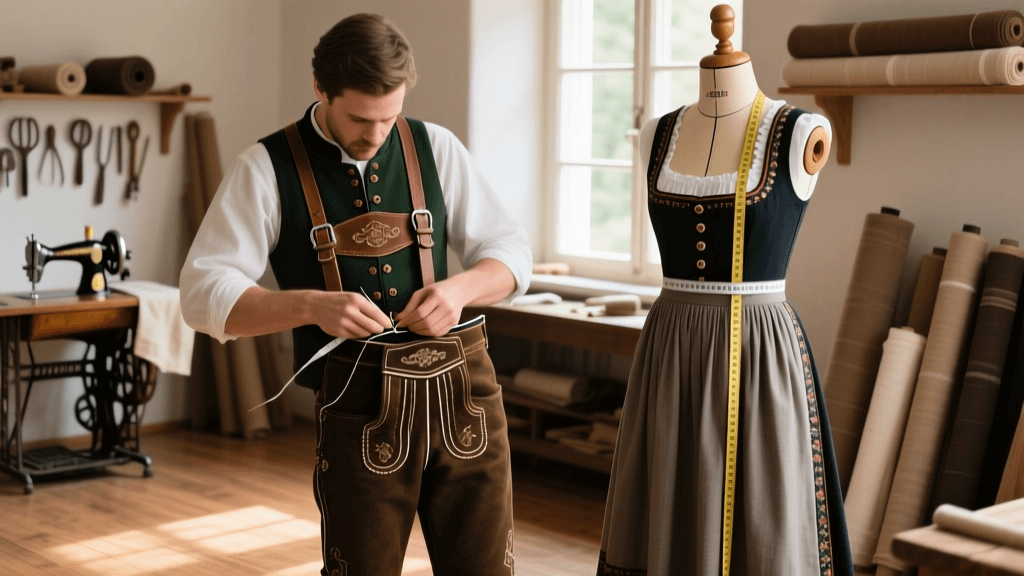
While the modern fashion dirndl is often restrictive and purely decorative, a traditional dancer’s dirndl (Tanzdirndl) is a marvel of functional tailoring. The garment must allow for deep squats, rapid spins, and overhead arm movements without compromising its structural integrity or historical silhouette.
Skirt Circumference and the Art of Faltenlegen
The most critical component of a dancer's dirndl is the skirt (Kittel). To achieve the iconic, gravity-defying flare during the rapid spins of the Drahrer (the male dancer spinning the female partner), the skirt must be cut as a full circle or heavily gathered. For the 2026 festival standards, competitive dancers require a hem circumference of no less than 3.5 to 4 meters. This is achieved through a meticulous pleating technique known as Faltenlegen. Tailors use a specialized pleating board to press hundreds of micro-pleats into medium-weight cotton or linen blends. The waistband must be reinforced with grosgrain ribbon to distribute the heavy weight of the fabric evenly across the dancer's hips, preventing the skirt from slipping during vigorous movement.
Bodice Construction and Arm Mobility
The bodice (Mieder) of a dance dirndl differs significantly from fashion iterations. While it still features front lacing or hook-and-eye closures to provide torso support, the armholes are cut slightly deeper and wider. This prevents the fabric from binding across the shoulders and chest when the dancer raises her arms above her head during partner choreography. Furthermore, the sleeves (often Puffärmel or short gathered sleeves) are set into the armscye with a small gusset or extra ease to accommodate the repetitive clapping and waving motions inherent to the dance.
The Schürze (Apron) Mechanics
The apron must be crafted from a lightweight, slightly crisp fabric like cotton batiste or fine linen. If the fabric is too heavy, it will not flutter elegantly; if it is too flimsy, it will tangle around the dancer's legs during spins. The apron is tied in a precise bow at the front or side, and many 2026 dance troupes now use hidden micro-snaps beneath the bow to ensure the apron remains perfectly centered throughout a high-energy performance.
Tailoring Authentic Lederhosen for the Schuhplattler
For male dancers, the Lederhosen is not merely a garment; it is a second skin that must endure the percussive impact of the Schuhplattler. The slapping of the thighs and calves requires leather that is supple, breathable, and acoustically resonant.
Sämisch Leather and Breathability
Authentic dance Lederhosen are exclusively crafted from Sämischleder, a type of leather tanned using traditional brain-tanning or oil-tanning methods (often utilizing chamois or deer hide). According to historical textile archives preserved at the Bavarian National Museum, this ancient tanning process leaves the leather incredibly soft, washable, and breathable. Unlike modern chrome-tanned leathers which become stiff and sticky when exposed to sweat, Sämisch leather absorbs moisture and softens with the dancer's body heat, molding perfectly to the contours of the legs over time.
Drop-Front (Latze) and Gusset Engineering
The traditional drop-front (Latze) is secured by sturdy horn or antler buttons. However, for the deep squats and high kicks required in the Schuhplattler, the tailoring around the seat and inner thigh must be heavily reinforced. Master tailors insert diamond-shaped leather gussets at the base of the inner leg seams to prevent blowouts during extreme extension. The waistband (Bund) is cut slightly higher in the back to ensure the trousers do not slip down when the dancer bends forward to slap their shoes.
Embroidery (Stickerei) Placement
While regional embroidery motifs—such as oak leaves, edelweiss, and alpine roses—add immense cultural value, their placement on a dancer's Lederhosen is strategic. Embroidery on the thighs is often kept minimal or positioned slightly to the outside of the leg. This prevents the thick, raised stitching from causing friction burns or bruising when the dancer repeatedly strikes their thighs with their hands during the Watschler sequences.
Essential Footwear and Accessories for Rhythmic Dancing
A complete Tracht ensemble requires specific accessories that serve both aesthetic and functional purposes on the dance floor:
- Haferlschuhe: The traditional Bavarian shoe, characterized by its side-lacing system and robust leather construction. For dancers, the soles are often fitted with small metal hobnails or a specific leather-wood stack to create a sharp, percussive click when striking the wooden festival floors.
- Hosenträger (Suspenders): Cross-back suspenders are heavily preferred over H-back styles for dancers, as they provide superior stability across the shoulder blades during acrobatic lifts and prevent the straps from slipping during vigorous upper-body movements.
- Miesbacher Hut: The traditional wool felt hat, adorned with a Gamsbart (chamois hair brush) and regional pins. The hat is sized precisely and often features a subtle internal leather sweatband and a hidden chinstrap cord to ensure it remains secured during jumps.
- Loferer or Miesbacher Stutzen: Thick, ribbed wool calf warmers that are folded down over the top of the Haferlschuhe. They protect the calves from the friction of the leather shorts and add visual weight to the dancer's footwork.
2026 Sourcing and Cost Comparison
Sourcing authentic, dance-ready Tracht requires navigating a market that ranges from fast-fashion tourist traps to master artisans. Below is a breakdown of what to expect when commissioning or purchasing garments for the 2026 festival season.
| Garment Tier | Dirndl Cost (2026) | Lederhosen Cost (2026) | Lead Time | Best For |
|---|---|---|---|---|
| Mass-Market Festival | €120 - €180 | €150 - €250 | Immediate | Tourists, single-use wear |
| Mid-Tier Boutique | €350 - €600 | €400 - €700 | 4-6 Weeks | Enthusiasts, local dance clubs |
| Bespoke Meister (Master) | €800 - €1,500+ | €900 - €2,000+ | 3-6 Months | Competitive dancers, purists |
For competitive dancers, investing in bespoke Meister tailoring is non-negotiable. The Official Oktoberfest Guidelines and regional festival committees increasingly enforce strict dress codes that penalize the wearing of synthetic fabrics and historically inaccurate cuts in official parade and competition segments.
Care and Maintenance for Heavy Festival Use
Maintaining dance Tracht requires specialized care. Sämisch leather Lederhosen should never be dry-cleaned. Instead, they are washed by hand using a mild, pH-neutral leather soap and lukewarm water, then slowly air-dried away from direct sunlight. Once dry, the leather must be manually stretched and kneaded to restore its supple texture. Dirndl skirts should be spot-cleaned where possible, but when a full wash is necessary, the micro-pleats must be re-pressed using a specialized pleating board and heavy steam. By adhering to these meticulous tailoring and maintenance standards, dancers ensure their traditional European folk dress remains a vibrant, functional testament to Alpine heritage throughout the 2026 festival season and beyond.