Norwegian Bunad Regional Guide 2026: Styles & Sourcing
The Resurgence of Heritage Dress in 2026
As we navigate the fashion landscape of 2026, the global shift toward sustainable, slow-fashion, and heritage garments has reached an all-time high. Nowhere is this more evident than in the enduring legacy of European folk dress, specifically the Norwegian Bunad. Far from being a static museum relic, the Bunad is a living, breathing textile tradition worn by hundreds of thousands of Norwegians during weddings, baptisms, and the annual Syttende Mai (Constitution Day) celebrations. For international enthusiasts, textile historians, and diaspora communities looking to reconnect with their roots, understanding the strict regional variations of these garments is essential. This comprehensive guide breaks down the most prominent regional styles, the stringent rules governing their creation, and how to source an authentic piece in the current 2026 market.
Defining the Bunad: More Than Just a Folk Costume
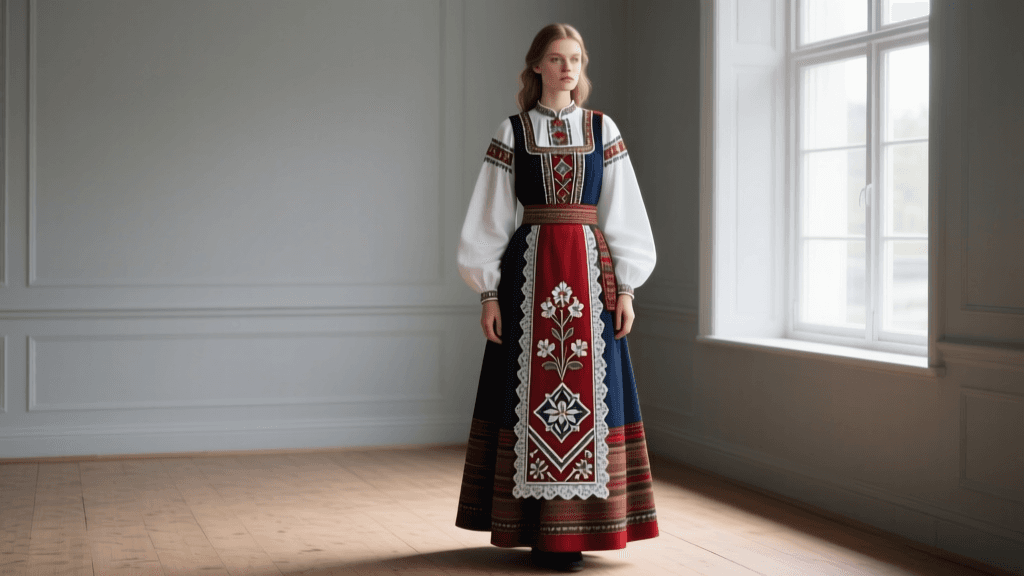
It is crucial to distinguish between a generic 'folkedrakt' (folk costume) and a 'Bunad.' While folkedrakt refers to the historical, everyday working garments of rural Norway from the 18th and 19th centuries, a Bunad is a formalized, reconstructed national costume based on those historical roots. The criteria for what constitutes an official Bunad are strictly overseen by the Bunad- og folkedraktrådet (The National Council for Folk Costumes). In 2026, the Council continues to enforce rigorous standards regarding fabric composition, embroidery patterns, and regional accuracy. A true Bunad must be constructed from natural fibers—primarily high-grade wool and linen—and feature historically accurate, region-specific embroidery. Mass-produced, synthetic 'festival costumes' sold online do not qualify and are widely rejected by Norwegian cultural institutions.
Regional Variations: A Comparative Breakdown
Norway boasts over 400 distinct Bunad variations, each tied to a specific valley, municipality, or region. The choice of Bunad is traditionally dictated by one's ancestral hometown or current place of residence. Below is a comparison of three of the most iconic and highly sought-after regional styles for 2026 commissions.
| Region | Base Material & Color | Embroidery Style | Silver Requirements | 2026 Est. Price (NOK) |
|---|---|---|---|---|
| Hardanger | Black wool with white linen apron | Cross-stitch and intricate whitework (Hardangersøm) | Oxidized silver, coral or glass beads | 35,000 - 45,000 |
| Telemark | Dark blue or black wool | Rich, colorful floral rosepath and wool thread embroidery | Heavy polished silver, elaborate filigree | 45,000 - 60,000 |
| Gudbrandsdalen | Wool (black, blue, or green) | Acanthus leaf carving motifs, silk and wool thread | Mixed polished and oxidized silver | 30,000 - 42,000 |
The Hardanger Bunad: The Mother of All Bunads
Originating from the Hardanger fjord region, this is arguably the most famous Norwegian Bunad. The defining feature is the exquisite 'Hardangersøm'—a form of drawn-thread whitework embroidery on the apron and linen shift. In 2026, the artisan waitlist for authentic hand-stitched Hardanger aprons can exceed fourteen months due to a shortage of master embroiderers. The accompanying silver is traditionally oxidized, giving it an antique, matte finish that contrasts beautifully with the stark white linen.
The Telemark Bunad: A Masterclass in Color and Silver
Telemark is renowned for its vibrant, asymmetric floral embroidery, which mimics the region's famous Rosemaling (wood painting) tradition. The Telemark Bunad is also the heaviest in terms of silver. A fully accessorized Telemark Bunad can feature up to two kilograms of solid sterling silver, including the iconic 'søljer' (brooches), cufflinks, and shoe buckles. The craftsmanship required for Telemark silver is highly specialized, making it one of the most expensive regional variations to commission.
Men's Bunads and Regional Menswear
While women's Bunads often dominate visual media, men's regional dress has seen a massive revival in the 2020s. The Valdres and Hallingdal men's Bunads are particularly prominent. Unlike the women's garments, which evolved from festive peasant wear, men's Bunads are often based on the military-influenced 'klaffestakk' or formal rural suits of the 18th century. A standard men's Bunad from Hallingdal features a wool waistcoat (vest) with intricate floral embroidery, paired with breeches, wool stockings, and a distinctive woven belt. In 2026, custom-tailored men's Bunads are increasingly popular for grooms, with pricing generally ranging from 25,000 to 35,000 NOK, excluding the silver and hand-woven accessories.
The 2026 Sourcing and Commissioning Timeline
If you intend to wear an authentic Bunad for Syttende Mai (May 17) or a late-summer wedding in 2026, advance planning is non-negotiable. The premier destination for sourcing authentic garments is Husfliden, the Norwegian craft association. They operate specialized boutiques across Norway and partner with vetted international agents.
Step-by-Step Commissioning Process:
- Initial Consultation (12-18 months prior): Visit a Husfliden retailer or an authorized Bunad consultant. You will need to provide documented proof of your ancestral connection to the specific region you wish to represent.
- Measurement and Fitting (9-12 months prior): Bunads are tailored to be form-fitting but allow for minor weight fluctuations. Measurements include bust, waist, hips, torso length, and shoulder width. A first fitting of the raw wool shell is usually scheduled six months before delivery.
- Embroidery and Assembly (6-9 months prior): The wool is sent to regional artisans for embroidery. This is the most time-consuming phase.
- Silver Procurement (3-6 months prior): Silver is often purchased separately from specialized silversmiths. It is highly recommended to buy vintage or antique silver from certified dealers, as newly minted 2026 silver can carry a premium.
- Final Alterations (1 month prior): The final fitting ensures the hem falls exactly at the ankle bone and the bodice provides the correct structural support.
The Crucial Role of Regional Silver (Søljer)
A common mistake made by international buyers is mixing silver from different regions. The rules governing Bunad silver are as strict as those for the textiles. A 'bringeklut' (chest piece) from Setesdal cannot be worn with a Bunad from Rogaland. The silver serves not just as decoration, but as a historical indicator of regional wealth and marital status. For instance, the large, dangling 'skjortesølje' (shirt brooch) was historically believed to ward off evil spirits and protect the wearer's heart. When sourcing silver in 2026, always look for the maker's mark and the Norwegian silver control stamp (a crown and 'S'), which guarantees the piece is at least 92.5% sterling silver.
Footwear, Outerwear, and Accessories
A Bunad is incomplete without the correct footwear and outerwear. Traditional Bunad shoes (Bunadsko) are black leather, often featuring a low heel and a silver buckle specific to the region. In 2026, several heritage cobblers in Norway offer custom-lasted Bunad shoes, which are highly recommended for comfort during long parade routes. For outerwear, the 'kappe' (cape) or a woven wool shawl is essential for the brisk Norwegian spring. The shawl must match the embroidery colors of the specific Bunad and is traditionally secured with a smaller silver brooch.
Preservation and Archival Storage
Given the significant financial investment—a complete ensemble can easily exceed $5,000 USD—proper archival storage is critical. The Norsk Folkemuseum (Norwegian Museum of Cultural History) provides extensive guidelines on textile preservation. Never store a Bunad on a wire hanger, as the heavy wool and silver will distort the shoulders. Instead, the garment should be gently folded with acid-free tissue paper to prevent hard creases in the embroidery. Silver must be removed before storage and kept in anti-tarnish cloth bags to prevent sulfur oxidation. The wool garment should be stored in a breathable cotton garment bag, ideally in a cedar-lined chest to naturally repel moths, which remain a primary threat to heritage woolens.
Contemporary Adaptations vs. Strict Traditionalism
As we move through 2026, a fascinating dialogue is occurring within the European folk dress community regarding adaptation. While the Bunad- og folkedraktrådet maintains strict historical boundaries for official Bunads, a new wave of designers is creating 'Bunad-inspired' modern fashion. These contemporary pieces utilize traditional regional embroidery motifs but apply them to modern silhouettes, everyday wool coats, and sustainable workwear. While purists argue that this dilutes the cultural significance of the original garments, proponents view it as a necessary evolution to keep the textile traditions alive and economically viable for a new generation of artisans. Ultimately, whether you are commissioning a strictly regulated Telemark Bunad or investing in a modern heritage-inspired piece, the dedication to natural materials, regional storytelling, and master craftsmanship remains the beating heart of European folk dress.