2026 Guide to 15th-Century Burgundian Court Dress Reconstruction
Introduction to Burgundian Court Fashion in 2026
As we navigate the historical reenactment and costuming landscape in 2026, the demand for museum-quality accuracy in European folk dress and historical fashion has never been higher. Among the most sought-after silhouettes is the 15th-century Burgundian court dress, characterized by its elegant, elongated lines, sweeping houppelandes, and the iconic, gravity-defying hennin. Reconstructing these garments requires more than just a passing familiarity with sewing; it demands a deep understanding of historical textiles, structural tailoring, and period-accurate construction techniques. According to the Victoria and Albert Museum's Medieval and Renaissance collections, the Burgundian court under the Valois dukes set the standard for luxury and sartorial innovation across Northern Europe, heavily influencing the broader trajectory of medieval fashion.
This comprehensive guide will walk you through the exact steps, materials, and 2026 market pricing required to recreate an authentic 15th-century Burgundian ensemble, from the foundational linen smock to the towering wire-framed hennin. Whether you are preparing for the upcoming 2026 summer reenactment season or building a portfolio piece for historical interpretation, understanding the nuances of these garments is essential.
Deconstructing the 15th-Century Silhouette
The Burgundian silhouette of the mid-to-late 1400s is defined by a high waistline, voluminous sleeves, and a distinctly elongated vertical profile. To achieve this, the wardrobe is built in distinct layers, each serving a specific structural and aesthetic purpose.
The Foundational Smock (Chemise)
The base layer is the linen smock, worn directly against the skin to protect the expensive outer wool and silk garments from body oils and sweat. In 2026, historical costumers prioritize unbleached or lightly bleached medium-weight linen (around 3.5 to 4.5 oz) for everyday wear, reserving finely woven, sheer linens for the visible cuffs and necklines of the nobility.
The Fitted Kirtle
Over the smock sits the kirtle, the primary supportive garment for women. Unlike modern corsetry, the 15th-century kirtle provides bust support and torso shaping through precise tailoring and the natural tension of woven wool. The Encyclopedia Britannica's overview of Medieval European dress notes that the transition from loose tunics to tightly fitted garments in the 14th and 15th centuries revolutionized European tailoring, introducing curved seams and complex lacing systems.
The Houppelande
The outermost layer is the houppelande, a massive, floor-sweeping gown with a high collar and enormous, often dagged, sleeves. This garment is where the wealthiest Burgundians displayed their status, utilizing yards of heavy silk velvet, damask, or finely fulled wool broadcloth, trimmed with fur or metallic brocades.
Sourcing Authentic Textiles in 2026
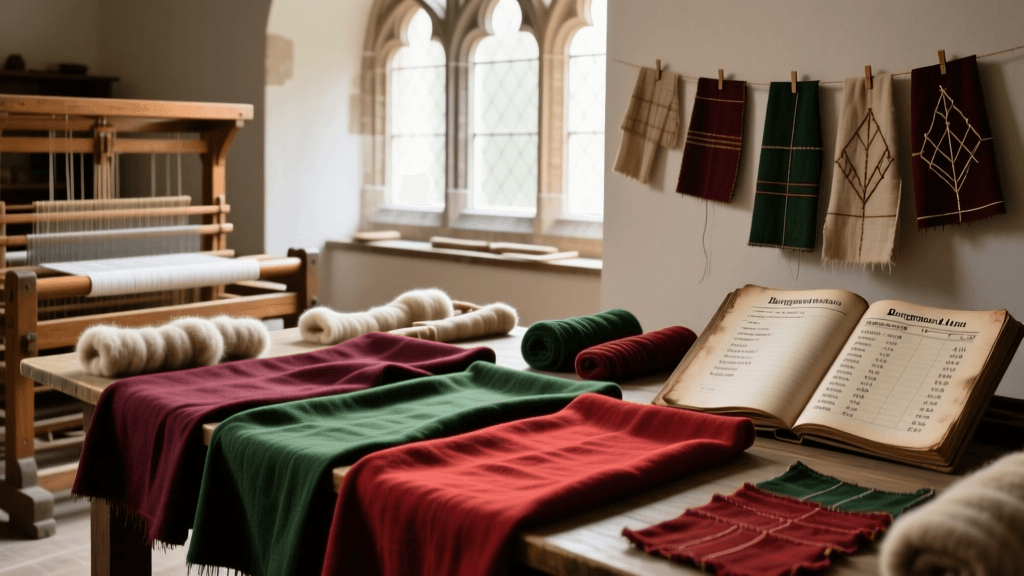
The most significant challenge for modern historical dressmakers is sourcing textiles that mimic the weave, weight, and drape of 15th-century fabrics. Modern commercial wools are often blended with synthetics or woven too loosely, while modern silks lack the heavy, metallic loom-state finish of historical brocades. Below is a comparison of the top historical textile suppliers and their 2026 pricing for period-accurate materials.
| Supplier (2026 Catalog) | Primary Fabric | Price per Yard (USD) | Best Application |
|---|---|---|---|
| Wm. Booth Draper | 100% Wool Broadcloth | $38.00 - $45.00 | Outer Kirtles, Houppelandes |
| Burnley & Trowbridge | Historical Linen (3.5oz) | $18.00 - $26.00 | Smocks, Veils, Linings |
| Renaissance Fabrics | Silk Velvet / Damask | $110.00 - $140.00 | Nobility Trims, Gown Panels |
| Historical Emporium | Worsted Wool Twill | $28.00 - $34.00 | Everywear Kirtles, Hoses |
When budgeting for a full Burgundian court gown, expect to spend between $350 and $800 on raw materials alone in 2026, depending on whether you are portraying a wealthy merchant class or high nobility. A standard houppelande requires between 8 to 12 yards of 60-inch wide fabric to achieve the proper volume and sleeve drape.
Pattern Drafting and Modern Resources
While commercial patterns exist, serious reenactors in 2026 rely heavily on custom draping and historical pattern drafting systems. The kirtle must be draped directly on the body or a custom dress form to ensure the bust support is achieved through the side and back seams rather than modern darts. The armscye (armhole) of a 15th-century kirtle is cut much higher and tighter into the armpit than modern sleeves, allowing for a full range of motion without the garment riding up.
For the houppelande, the pattern is largely geometric, consisting of large rectangular and triangular gores that create the sweeping hemline. The sleeves are cut from a single massive curve or built from multiple pieced sections to conserve fabric, a common practice even among the wealthy due to the high cost of broadcloth and silk.
Construction Techniques: Hand-Stitching vs. Machine
To achieve a truly authentic finish, the visible seams of your Burgundian garments should be hand-stitched. In 2026, the historical costuming community heavily favors the use of historically accurate threads, such as tightly spun silk thread for wool garments and fine linen thread for smocks. Machine sewing is generally accepted for internal structural seams and lining, provided the tension is adjusted to mimic a hand stitch and the final finishing is done by hand.
Essential Historical Stitches
- Running Stitch: Used for long, non-stress seams. When done in fine silk thread with a high stitch count (10-12 stitches per inch), it creates a nearly invisible, flexible seam.
- Backstitch: Essential for high-stress areas like the armholes and the fitted side seams of the kirtle. It provides the necessary tensile strength to support the weight of the heavy wool skirts.
- Felling (Hemming): All raw edges in 15th-century garments were enclosed. Flat-felling the seams ensures the garment is durable and prevents the wool from fraying over years of wear at reenactment events.
Accessorizing the Hennin and Kirtle
No Burgundian ensemble is complete without the proper headwear. The hennin, often mischaracterized in modern pop culture as a simple party hat, is a complex structural accessory. The towering conical or heart-shaped styles require an internal frame made of millinery wire, buckram, or stiffened linen. In 2026, millinery wire remains the most accessible and historically forgiving material for recreating these frames.
The veil draped over the hennin must be made of the finest, most sheer linen or silk organza available. It is pinned to the frame and often features a decorative frontlet (a band of velvet or embroidered fabric) that rests across the forehead. To complete the look, a wide, jewel-encrusted or metallic-woven belt is worn high on the natural waist, just under the bust, cinching the voluminous folds of the houppelande and creating the iconic high-waisted Burgundian profile.
Conclusion
Recreating 15th-century Burgundian court dress in 2026 is a rewarding endeavor that bridges the gap between historical research and tangible craftsmanship. By investing in period-accurate textiles from specialized suppliers, mastering historical tailoring techniques, and paying meticulous attention to the structural accessories like the hennin, modern costumers can bring the opulent world of the Valois dukes to life. As the historical reenactment community continues to prioritize education and authenticity, the garments we build serve not just as costumes, but as living, breathing extensions of European cultural heritage.