Alpine Tracht Guide 2026: Bavarian Dirndl vs Austrian Tyrolean Dress
The 2026 Renaissance of Alpine Tracht
As we navigate the fashion landscape of 2026, the European folk dress category has seen a massive resurgence in the appreciation for authentic, region-specific garments. Nowhere is this more evident than in the Alpine regions of Germany and Austria, where traditional Tracht has transcended seasonal festival wear to become a year-round expression of cultural heritage and sustainable slow fashion. While tourists often conflate all Alpine dress under the generic term "Dirndl," purists and textile historians know that the differences between a Bavarian Dirndl and an Austrian Tyrolean dress are profound, rooted in distinct historical, geographical, and material traditions.
In 2026, the shift away from mass-produced, synthetic "Landhausmode" (country-house fashion) has led to a booming demand for bespoke, historically accurate garments. Collectors and cultural enthusiasts are investing heavily in artisanal pieces that honor the strict regional codes of the Bavarian National Museum archives and the preservation efforts championed by the Tyrolean State Museums. This comprehensive guide breaks down the anatomical, material, and stylistic differences between these two iconic European folk costumes, providing actionable advice for sourcing and styling authentic Tracht today.
Decoding the Bavarian Dirndl: Beyond the Festival Tent
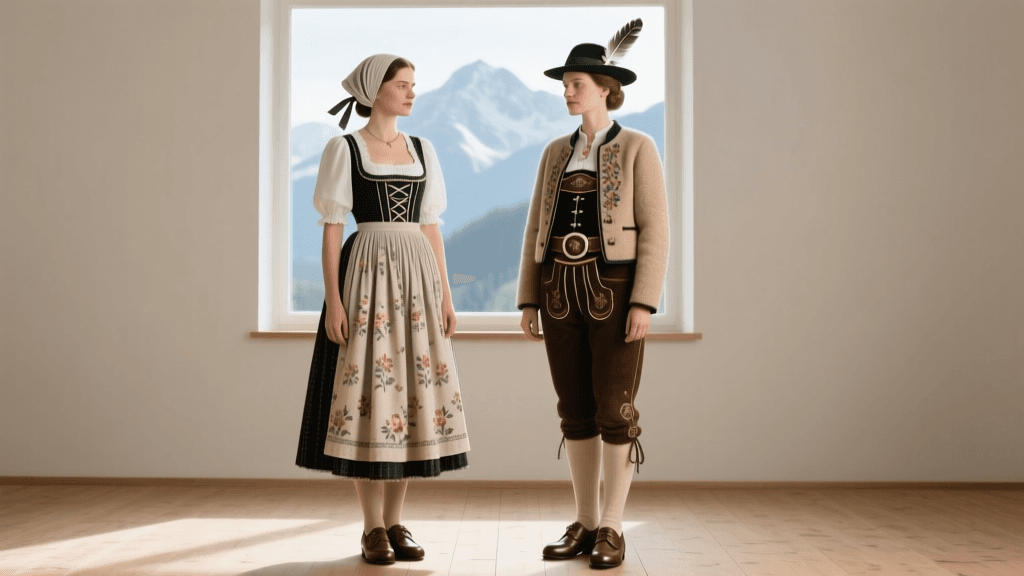
When discussing Bavarian folk dress, the gold standard is the Miesbacher Tracht, originating from the Miesbach district in Upper Bavaria. Recognized for its meticulous craftsmanship, the Miesbacher Dirndl is not merely a dress but a complex ensemble that communicates the wearer's regional origin, marital status, and even religious affiliation. In 2026, the Miesbacher style remains the pinnacle of Bavarian formal wear, heavily favored for weddings, church holidays, and elite cultural gatherings.
Anatomy of the Bavarian Ensemble
The authentic Bavarian Dirndl consists of four primary components, each governed by strict traditional rules:
- The Mieder (Bodice): Unlike the zipped or hook-and-eye closures of commercial dirndls, a traditional Bavarian Mieder is laced at the front or fastened with elaborate silver hooks (Haken) and chains. The 2026 trend heavily favors hand-embroidered floral motifs using locally sourced silk threads.
- The Rock (Skirt): The skirt is heavily pleated and attached to the bodice. In 2026, the traditional midi-length (falling just below the knee) has completely eclipsed the shorter, modernized hemlines of the previous decade. Artisans use up to eight meters of fabric to achieve the signature deep Falten (pleats).
- The Schürze (Apron): Made of fine silk, linen, or cotton, the apron is the most communicative piece of the ensemble. The placement of the bow remains a strict social code: left means single, right means married or taken, center front means virgin (traditionally), and center back means widowed or working as a server.
- The Bluse (Blouse): Typically white and made of cotton batiste or linen, featuring delicate lace or drawn-thread work (Ajourstickerei).
Austrian Tyrolean Dress: Rugged Elegance and Silver Filigree
Crossing the border into the Austrian Tyrol, the folk dress—often referred to broadly as Tiroler Tracht or specifically by valley names like the Zillertaler Tracht—takes on a different character. The Tyrolean landscape is more rugged, and historically, the textiles needed to withstand harsher alpine winters. Consequently, Tyrolean folk dress in 2026 is characterized by heavier, more durable fabrics, darker color palettes, and an emphasis on intricate silver and leather accessories.
The Tyrolean Dirndl vs. The Spölk
While the Tyrolean Dirndl shares the basic silhouette of its Bavarian cousin, the neckline (Ausschnitt) is often square or heart-shaped, framed by a contrasting silk ribbon or lace trim known as a Schalkragen. However, the true hallmark of Tyrolean heritage in 2026 is the revival of the Spölk—a traditional, durable work dress made from robust wool or linen blends, historically worn by alpine farmwomen. Modern sustainable fashion advocates have embraced the Spölk for its utilitarian elegance and zero-waste pattern cutting.
Accessories: Federkiel and Filigranschmuck
No Tyrolean ensemble is complete without its specific regional accessories. The Federkiel (peacock feather embroidery) is a highly specialized craft where split peacock feathers are used to embroider intricate patterns onto leather belts, shoes, and suspenders. Furthermore, Tyrolean silver filigree jewelry (Filigranschmuck), featuring elaborate chains, rosettes, and talismans like the edelweiss or alpine rose, remains a vital component of the Festtagstracht (festival dress). According to cultural heritage registries tracked by UNESCO's Intangible Cultural Heritage initiatives, the preservation of these specialized alpine metalworking and embroidery techniques is a major priority for European cultural grants in 2026.
Regional Showdown: Bavaria vs. Tyrol (2026 Data)
To understand the practical differences when sourcing or commissioning a garment, refer to the comparative breakdown below:
| Feature | Bavarian Miesbacher Tracht | Austrian Tyrolean Festtagstracht |
|---|---|---|
| Primary Bodice Closure | Front lacing with silk cord or silver hooks | Hidden hooks or decorative silver buttons |
| Skirt Fabric & Weight | Lightweight wool crepe or silk blends (4-6m width) | Heavyweight alpine Schurwolle (virgin wool) or loden |
| Color Palette (2026) | Vibrant: Royal blue, deep green, magenta, gold | Earthy & Dark: Forest green, charcoal, burgundy, black |
| Signature Accessory | Silk apron with hand-tied bow; pearl necklaces | Silver filigree belts; Federkiel leatherwork |
| Average Bespoke Cost (2026) | €2,200 - €4,500 | €1,800 - €3,800 |
| Artisan Waitlist | 8 - 14 months | 6 - 10 months |
2026 Sourcing Guide: Investing in Authentic Artisanal Tracht
If you are looking to acquire an authentic piece of European folk dress in 2026, avoiding fast-fashion imitations is paramount. True Tracht is an investment in heritage, often passed down through generations. Here is how to navigate the market this year.
Identifying Authentic Textiles
In 2026, the most sought-after Dirndls are crafted from GOTS-certified alpine sheep wool and peace silk. When examining a garment, check the Rock (skirt). An authentic hand-pleated skirt will have microscopic, irregular folds that drape dynamically, whereas machine-pleated synthetic skirts will appear stiff and uniform. The bodice should be heavily interfaced with natural linen to provide structure without the use of modern plastic boning.
Commissioning a Bespoke Garment
For a custom-fitted Miesbacher or Tyrolean Dirndl, you must engage a certified Trachtenschneiderin (traditional dressmaker). The measurement process is rigorous. Unlike standard fashion sizing, a Tracht maker will measure your underbust, natural waist, and the exact distance from your navel to the desired hemline. In 2026, the standard hemline rule is that the skirt should end exactly at the middle of the calf when wearing traditional Trachtenschuhe (low-heeled leather shoes with silver buckles). Expect to pay a deposit of 30% to 50% upfront, with final fittings scheduled at least three months before your intended wearing date to allow for the meticulous hand-stitching of the bodice and apron.
Care and Maintenance for Alpine Textiles
Proper storage is critical for preserving these garments. The heavy wools and natural silks used in 2026's top-tier Tracht are highly susceptible to moth damage and humidity fluctuations. Never store a Dirndl on a wire hanger; the weight of the pleated skirt will distort the bodice seams. Instead, use padded wooden hangers and store the ensemble in a breathable cotton garment bag alongside natural cedar blocks. Dry cleaning should be avoided unless absolutely necessary; instead, rely on professional textile steaming and spot-cleaning with specialized lanolin-based wool detergents to maintain the fabric's natural water-resistant properties.
Conclusion
The European folk dress landscape in 2026 is defined by a profound respect for regional authenticity. Whether you are drawn to the vibrant, silk-draped elegance of the Bavarian Miesbacher Tracht or the rugged, silver-adorned heritage of the Austrian Tyrolean dress, understanding these distinctions elevates your appreciation from mere costume to living history. By investing in artisanal craftsmanship and adhering to traditional styling codes, you participate in the vital preservation of Europe's most iconic textile traditions.