2026 Feria de Abril Flamenco Dresses: Dance Trends & Styling
The Heartbeat of Andalusia: Feria de Abril 2026
When the spring sun begins to warm the cobblestones of Seville, the city transforms into a kaleidoscope of color, rhythm, and profound cultural pride. The Feria de Abril, one of Europe's most iconic and vibrant festivals, is not merely a celebration of spring; it is a living, breathing exhibition of Andalusian folk dress and traditional dance. In 2026, the festival continues to be the ultimate showcase for the traje de flamenca (flamenco dress) and the traje corto (the traditional men's horseman suit), blending centuries-old heritage with contemporary fashion and functional dance wear.
Unlike many European folk costumes that are reserved strictly for stage performances or historical reenactments, the Andalusian festival dress is a dynamic, evolving garment. It is designed explicitly for movement, socializing, and dancing the Sevillanas—the traditional folk dance of the region. According to the official Spanish tourism portal, the Feria de Abril draws millions of locals and international visitors to the fairgrounds of Los Remedios, where over a thousand casetas (marquees) become stages for impromptu and choreographed folk dancing.
The 2026 SIMOF Runway: Silhouette Trends for Sevillanas
The global epicenter for flamenco fashion is the Salón Internacional de la Moda Flamenca (SIMOF), held annually at the FIBES Exhibition Center in Seville. The 2026 collections presented at SIMOF have set the definitive tone for what will be worn in the casetas this April. This year, designers are prioritizing a return to romanticism, heavily influenced by the need for fluid movement during folk dances.
The Canastero Revival
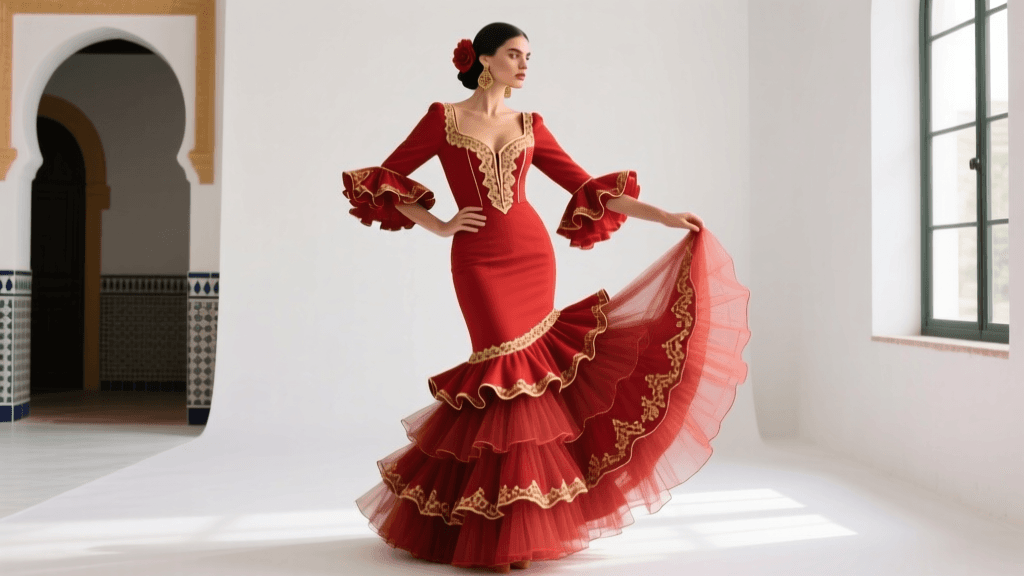
The canastero style, characterized by horizontal ruffles that cascade down the entirety of the skirt, is seeing a massive resurgence in 2026. However, unlike the heavy, stiff ruffles of the early 2000s, the 2026 iteration utilizes lightweight, bias-cut tulle and organic cotton blends. This allows the skirt to achieve maximum vuelo (flight) when the dancer executes the rapid turns and kicks inherent to the Sevillanas.
The Sirena (Mermaid) Cut
For those who prefer a more tailored look, the sirena silhouette remains a staple. Fitted tightly through the bodice and hips, it flares dramatically at the knee. In 2026, designers have introduced hidden stretch panels and ergonomic gussets in the hip area, ensuring that dancers are not restricted during the deep knee bends and cross-steps of the folk dance.
Engineering the Dress for Folk Dance: Fabric and Function
Dancing Sevillanas at the Feria is an athletic endeavor. The dance consists of four coplas (verses), each with intricate footwork (zapateado), clapping (palmas), and sweeping arm movements (braceo). The garment must withstand high temperatures, physical exertion, and constant friction. The Fundación Cristina Heeren de Arte Flamenco, a premier institution for flamenco arts, emphasizes that a true festival dress must balance aesthetic volume with structural integrity.
Below is a comparison of the most popular fabrics utilized by Seville's top ateliers for the 2026 festival season, specifically evaluated for their performance during folk dancing.
| Fabric Type | Weight & Drape | Dance Suitability | 2026 Trend Status |
|---|---|---|---|
| Andalusian Poplin | Medium weight, crisp drape, holds shape well. | Excellent. Provides structural volume for ruffles without collapsing during spins. | High. Available in sustainable, organic cotton variations this year. |
| Crepe de Chine | Lightweight, fluid drape, soft movement. | Very Good. Clings elegantly but requires weighted hems to prevent tangling during footwork. | Medium. Favored for evening events and older demographics. |
| Recycled Tulle | Ultra-lightweight, sheer, massive volume. | Superior for movement. Catches the air beautifully during turns and kicks. | Very High. The dominant choice for multi-layered ruffles in 2026. |
| Cotton Sateen | Heavy weight, slight sheen, structured. | Fair. Can become restrictive and hot during midday dancing; better for carriage rides. | Low. Mostly relegated to children's wear or vintage reproductions. |
The Anatomy of Movement: Ruffles, Hemlines, and Vuelos
The magic of the flamenco dress lies in its response to kinetic energy. In 2026, the placement of the volantes (ruffles) is meticulously calculated based on the dancer's height and the specific style of Sevillanas they perform.
- The Godet Insert: Many 2026 dresses feature triangular godet inserts hidden within the skirt panels. When the dancer is standing still, the dress appears sleek. The moment she begins the paseo (walking step) of the Sevillanas, the godets expand, creating a bell-like shape that accentuates the rhythm of the music.
- Hemline Heights: While stage flamenco dresses often feature long trains (bata de cola), the Feria de Abril dress is strictly floor-length or ankle-grazing. A train is a tripping hazard in the crowded, sawdust-covered streets of the fairground. The 2026 standard dictates that the hem should hover exactly one inch above the ground when the wearer is flat-footed, ensuring the ruffles sweep the dust without causing the dancer to stumble during complex footwork.
- Weighted Cording: To ensure the ruffles do not fly up inappropriately during high kicks, master tailors in the Triana neighborhood are sewing flexible, eco-friendly silicone cording into the bottom edges of the ruffles. This provides a beautiful, weighted swing that returns to place immediately after a spin.
Essential Accessories for the Casetas
No traditional European folk costume is complete without its accompanying accessories, and the Andalusian festival dress is no exception. The accessories are not merely decorative; they are deeply symbolic and serve practical purposes during the long days of the Feria.
The Mantón de Manila
The Mantón de Manila is a large, heavily embroidered silk shawl with long fringes. Originally imported from China via the Manila galleons in the 18th century, it is now an indispensable part of Andalusian heritage. In 2026, the trend favors vintage, upcycled mantones passed down through generations, featuring floral motifs embroidered in silk thread. During the dance, the bailaora (dancer) manipulates the heavy fringes of the shawl, snapping them in time with the guitar and castanets to create a secondary visual rhythm.
Footwear: Festival Shoes vs. Dance Shoes
While professional stage dancers wear shoes with nails driven into the toe and heel to amplify their zapateado, Feria attendees require a different approach. The 2026 market has seen a surge in specialized 'Feria Dance Shoes.' Brands like Bulería and Lunares have released lines featuring reinforced suede block heels (ranging from 4 to 6 centimeters), cushioned memory-foam insoles, and non-slip rubberized soles. These shoes allow for hours of folk dancing on uneven ground without the foot fatigue or joint damage associated with traditional stage heels.
Floral and Jewelry Adornments
A fresh flower, typically a rose, carnation, or jasmine blossom, is pinned securely to the side of the hair, complementing the peineta (decorative comb). The jewelry in 2026 leans towards statement pieces: large, lightweight hoop earrings made of resin or hollowed metals that mimic the look of heavy gold without weighing down the earlobes during vigorous head movements.
Men’s Traditional Garb: The Traje Corto
While the women's dresses often capture the visual spotlight, the men's traditional attire, the traje corto, is equally vital to the cultural tapestry of the Feria. Originating from the practical workwear of 19th-century Andalusian horsemen and cattle herders, the traje corto is the quintessential European equestrian folk costume.
The 2026 ensemble consists of:
- The Sombrero Cordobés: A wide-brimmed, flat-crowned hat that provides essential shade from the Andalusian sun.
- The Chaquetilla: A short, tightly fitted jacket, often adorned with subtle velvet trim or suede elbow patches. It is cut high under the arms to allow for complete freedom of movement when riding or raising the arms during the Sevillanas dance.
- The Pantalón: High-waisted, tight-fitting trousers that button at the mid-calf, allowing the leather riding boots (botas camperas) to be fully displayed.
- The Faja: A wide, woven sash wrapped tightly around the waist, providing lower back support during long hours of dancing and riding.
2026 Sourcing Guide: Where to Buy in Seville
Acquiring an authentic traje de flamenca is an investment in European textile heritage. In 2026, the demand for bespoke, ethically produced garments has shifted the market away from mass-produced imports and back to local artisans.
For the most authentic experience, visitors should cross the river to the historic neighborhood of Triana. Here, family-run ateliers such as Amparo Pardal and Yolanda Moda Flamenca offer custom tailoring. The process involves an initial consultation, a muslin fitting to ensure the bodice allows for deep breathing and arm extension, and a final fitting to adjust the hemline based on the exact heel height of the chosen dance shoes.
2026 Pricing Guide:
- Off-the-rack (El Corte Inglés / Local Boutiques): €120 - €250. Ideal for first-time attendees or those needing a last-minute outfit.
- Mid-Tier Ateliers (Semi-custom, select from existing patterns): €300 - €550. Offers better fabric quality and minor alterations for dance mobility.
- Bespoke Haute Flamenca (Fully custom, premium silks and vintage mantones): €800 - €2,500+. An heirloom-quality garment engineered specifically for the individual's dance style and body mechanics.
Conclusion: A Living Tradition
The Feria de Abril is a powerful reminder that traditional European folk dress is not a static relic to be kept behind museum glass. It is a vibrant, functional, and deeply emotional garment that moves, breathes, and dances with its wearer. As the 2026 festival approaches, the fusion of sustainable textiles, ergonomic dance engineering, and centuries-old Andalusian aesthetics ensures that the traje de flamenca will continue to captivate the world, one rhythmic stomp and sweeping ruffle at a time.