Viking Hangerock Apron Dress & Brooch Sizing Guide 2026
The Evolution of the Viking Hangerock in 2026
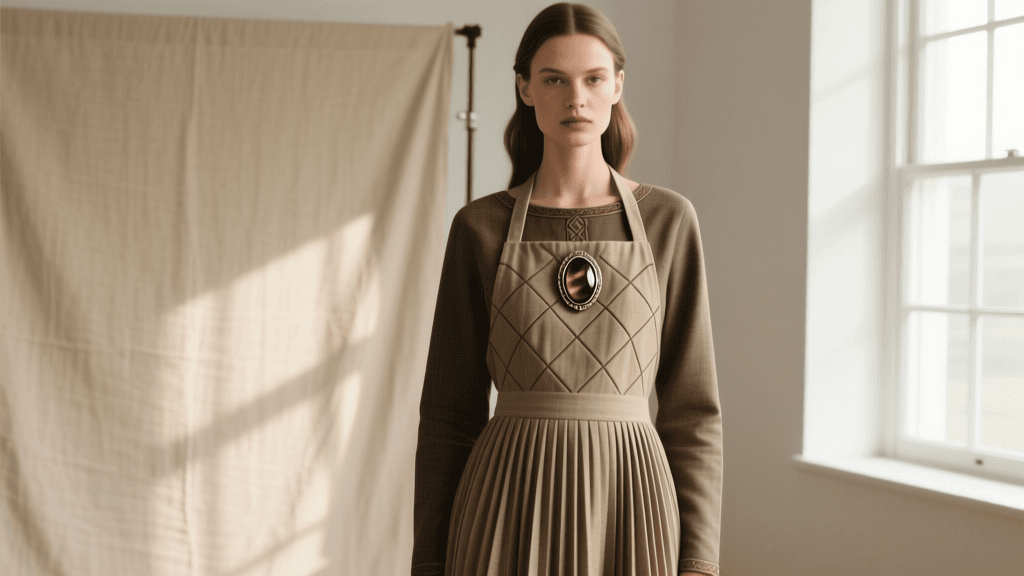
The Viking hangerock, universally recognized in modern reenactment as the apron dress, remains the most iconic and fiercely debated garment of the Norse wardrobe. As we navigate the 2026 historical reenactment season, the demand for archaeological accuracy has never been higher. Gone are the days of the simplistic, rectangular 'tea-towel' apron dresses of the early 2000s. Today, guided by recent textile analyses from Birka, Køge, and Adwick-le-Street, the modern Viking hangerock is a complex, beautifully draped garment that relies heavily on proper structural engineering and precise accessory sizing.
According to the National Museum of Denmark, Viking Age clothing was highly stratified and relied on sophisticated weaving techniques. The hangerock was not merely a protective apron; it was a canvas for displaying wealth through imported silks, intricate tablet-woven trims, and, most importantly, the paired oval tortoise brooches that anchored the garment to the shoulders. This comprehensive guide will walk you through the exact construction, material sourcing, and brooch sizing required to build a museum-quality hangerock for the 2026 season.
The Anatomy of the Authentic Hangerock
For decades, the 'tubular' dress theory dominated reenactment circles, suggesting the hangerock was a simple closed tube of fabric. However, current archaeological consensus heavily favors the 'wrapped' or 'partially pleated' front-panel model. This design allows for a snug fit across the back while providing a graceful, flaring drape at the front, which is essential for accommodating the movement required in daily camp life and combat-adjacent activities.
The primary fabric for a high-status hangerock is diamond twill wool. This specific weave structure creates a subtle, light-catching geometric pattern that was highly prized in the Viking Age. For a standard adult female hangerock, you will need approximately 2.5 to 3 meters of diamond twill wool, weighing between 250 and 300 grams per square meter. The top edge of the dress must be reinforced, historically achieved by folding the fabric over a sturdy tablet-woven band. This band not only prevents the heavy wool from sagging but also provides a robust anchor point for the linen loops that connect to the brooches.
Sizing and Positioning Oval Tortoise Brooches
The oval brooch, often colloquially called the tortoise brooch due to its domed, ornate shell-like appearance, is the structural keystone of the hangerock. These brooches are not merely decorative pins; they are load-bearing clasps that must support the weight of the wool dress, the underdress, and any suspended tools or keys. Choosing the correct size is critical for both historical accuracy and physical comfort. A brooch that is too small will tear through the fabric loops, while one that is too large will sit awkwardly on the collarbone and cause shoulder strain.
Below is the definitive 2026 sizing chart for pairing oval brooches with wearer measurements and strap configurations:
| Wearer Chest Circumference | Recommended Brooch Length | Brooch Width | Linen Loop Width | Pin Thickness Required |
|---|---|---|---|---|
| 75 - 85 cm (Small) | 7.0 - 8.5 cm | 5.0 - 6.0 cm | 2.0 cm | 3 mm |
| 86 - 100 cm (Medium) | 9.0 - 10.5 cm | 6.5 - 7.5 cm | 2.5 cm | 4 mm |
| 101 - 115 cm (Large) | 11.0 - 12.5 cm | 8.0 - 9.0 cm | 3.0 cm | 5 mm |
| 116+ cm (Extra Large) | 13.0 - 15.0 cm | 9.5 - 11.0 cm | 3.5 cm | 6 mm |
When positioning the brooches, they should sit squarely on the upper chest, just below the collarbone, rather than high up on the shoulders. The distance between the two brooches should roughly match the width of the wearer's sternum to ensure the front panel of the hangerock hangs straight without pulling outward.
The Pleated Linen Sark (Underdress)
No hangerock is complete without the sark, or linen underdress. In 2026, the standard plain linen shift has been largely superseded by the pleated linen underdress, inspired by the remarkable textile fragments found in the Køge burial and the Mammen grave. The pleating adds immense volume, warmth, and a striking visual texture that contrasts beautifully with the diamond twill wool of the outer dress.
To achieve authentic pleats, you must use 100% medium-weight linen (approx. 180 g/m²). The historical method involves wetting the linen, folding it into tight, uniform pleats (typically 1 to 1.5 cm wide), and binding the pleated bundle tightly with linen thread to dry. Once dry, the pleats are set. The neckline is often gathered using a drawstring or a woven cord, allowing for adjustable modesty and comfort. The sleeves of the sark should extend to the wrist, providing a layered look at the cuffs that was highly fashionable among wealthy Norse women.
2026 Material Sourcing and Cost Breakdown
Sourcing historically accurate materials can be challenging, but the 2026 market has seen a rise in specialized heritage weavers and casters. When purchasing oval brooches, ensure they are cast in lead-free bronze or brass, as modern health and safety regulations at major reenactment events now strictly prohibit lead alloys. The Swedish History Museum notes that original brooches were often gilded or silvered; while full gilding is expensive, a high-quality polished bronze finish is perfectly acceptable for most interpretations.
Here is a realistic cost breakdown for constructing a complete, high-accuracy hangerock ensemble in 2026:
| Component | Material Specification | Estimated 2026 Cost (USD) |
|---|---|---|
| Hangerock Fabric | 3m Diamond Twill Wool (280 g/m²) | $180 - $240 |
| Underdress Fabric | 4m Medium-Weight Bleached Linen | $90 - $120 |
| Oval Brooches (Pair) | Sand-cast Lead-Free Bronze (10cm) | $150 - $220 |
| Tablet-Woven Trim | 2m Wool/Silk Blend (Custom Woven) | $60 - $100 |
| Accessories & Notions | Linen thread, beeswax, bone needle | $25 - $40 |
| Total Estimated Cost | Complete Authentic Ensemble | $505 - $720 |
Tablet-Woven Trim and Edge Reinforcement
The top edge of the hangerock is a high-stress area. To prevent the wool from fraying and to provide a sturdy base for the suspension loops, a tablet-woven band is essential. In 2026, the most historically supported patterns for this trim are the 'snood' or simple diagonal stripe patterns, woven using 20 to 30 tablets. Using a blend of fine wool and spun silk for the trim elevates the garment, mimicking the luxury goods traded along the Volga and Dnieper river routes.
The linen loops should be sewn directly into the underside of this tablet-woven band. Use a heavy, waxed linen thread and a backstitch to secure the loops. Each loop should be approximately 5 to 7 cm long, allowing enough room for the thick pin of the tortoise brooch to pass through both the front and back loops without bunching the fabric.
Common Reenactment Mistakes to Avoid
Even experienced reenactors can fall into bad habits. As you finalize your kit for the 2026 season, ensure you are avoiding these common pitfalls:
- Using Cotton or Synthetic Blends: Never substitute wool or linen with cotton. Cotton absorbs moisture, dries slowly, and lacks the historical drape of wool. It is strictly forbidden in most high-authenticity camps.
- Visible Machine Stitching: While machine-sewing internal seams is a common time-saving compromise, all visible hems, especially the top edge of the hangerock and the neckline of the sark, must be finished by hand using a whipstitch or running stitch.
- Undersized Brooch Pins: Using a thin, flimsy pin on a heavy wool dress will result in the pin bending or snapping under the weight of the garment. Always verify the pin thickness against the sizing chart provided above.
- Incorrect Loop Placement: Placing the loops too far apart will cause the brooches to tilt forward, digging into the wearer's collarbone. The loops must align perfectly with the natural resting angle of the brooch on the chest.
- Ignoring the Apron String: Many hangerock designs feature a third loop or a string at the back to pull the dress in at the waist. Omitting this can result in a shapeless, sack-like silhouette that lacks the tailored look seen in historical artistic depictions.
Conclusion
Constructing a historically accurate Viking hangerock is a rewarding endeavor that bridges the gap between ancient textile engineering and modern craftsmanship. By focusing on the structural integrity of the diamond twill wool, mastering the wet-pleating techniques for the linen sark, and meticulously sizing your oval tortoise brooches, you can create a garment that is not only beautiful but deeply authentic. As the 2026 reenactment season unfolds, let your hangerock stand as a testament to the ingenuity and artistry of Norse women, honoring their legacy through every carefully placed stitch and woven thread.