Baltic Amber & Kokoshnik Headwear: 2026 Styling Guide
The 2026 Revival of Eastern European Folk Accessories
As we navigate through 2026, the global appreciation for authentic European folk dress has experienced a monumental surge, driven by a collective desire for tangible heritage and sustainable fashion. While the intricate embroidery and woven textiles of Slavic and Baltic garments often steal the spotlight, it is the accessories—specifically Baltic amber jewelry and structured traditional headwear—that truly complete the historical silhouette. This comprehensive guide explores the sourcing, authentication, and styling of these vital heritage pieces, offering actionable insights for collectors, cultural enthusiasts, and folk dress practitioners in the current market.
Sourcing and Authenticating Baltic Amber in 2026
Baltic amber, scientifically known as succinite, is fossilized tree resin dating back over 44 million years. Often referred to as the 'Gold of the North,' it has been a cornerstone of European folk jewelry for millennia, traded along the ancient Amber Road from the Baltic Sea to the Mediterranean. In 2026, the market is saturated with imitations, including copal (immature resin), glass, and advanced synthetic polymers. Authenticating your amber is paramount when building a traditional folk dress ensemble.
Practical Authentication Tests for Heritage Buyers
When sourcing amber for traditional multi-strand necklaces (often worn in heavy, graduated tiers across the chest in Polish and Ukrainian folk costumes), utilize these reliable, non-destructive tests:
- The Saltwater Buoyancy Test: Mix one part salt to two parts warm water. Genuine Baltic amber will float in this saturated solution, while most glass and heavy plastic imitations will sink. Copal may also float, so this test must be combined with others.
- The Electrostatic Test: Rub the amber bead vigorously against a natural wool cloth for 30 seconds. Authentic amber develops a negative electrostatic charge and will attract small pieces of tissue paper. Plastics and glass will not exhibit this property.
- The UV Light Test: Under ultraviolet light, genuine Baltic amber fluoresces a pale blue or milky green. Copal typically shows a chalky white fluorescence, while synthetic plastics remain inert.
For guaranteed authenticity, always purchase from artisans certified by the International Amber Association, which updated its hallmarking and ethical sourcing standards in early 2026 to combat the rise of lab-grown resin fakes.
The Architecture of Slavic Headwear: Kokoshnik and Vinok
Headwear in Eastern European folk dress is not merely decorative; it is a complex visual language denoting marital status, regional origin, and social standing. The two most iconic forms are the Russian Kokoshnik and the Ukrainian Vinok.
The Kokoshnik: Structure and Modern Adaptations
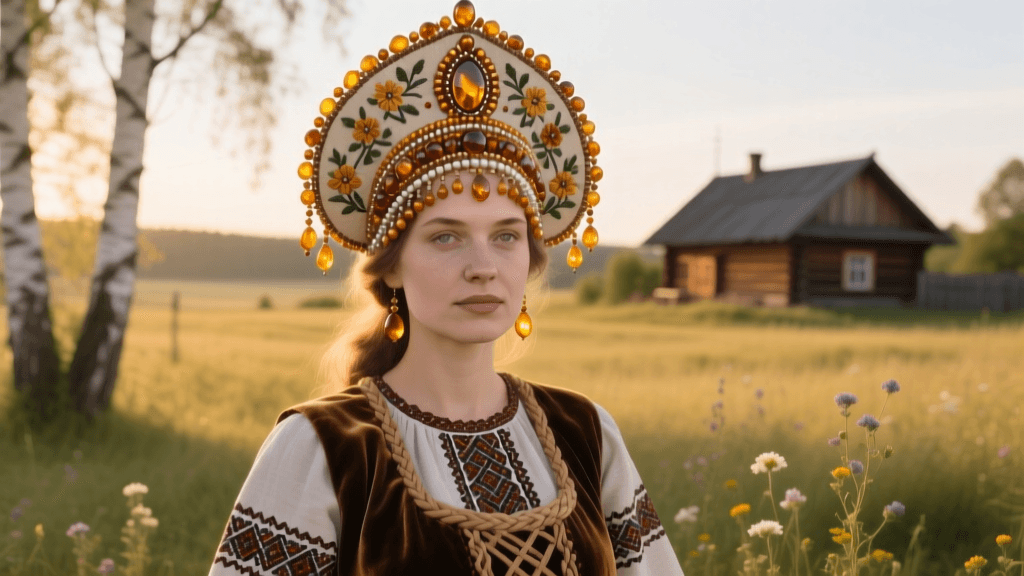
Traditionally worn by married women, the Kokoshnik is a crested headdress that frames the face. The word derives from the Old Slavic 'kokosh,' meaning hen, referencing the crest-like shape. Regional variations are vast: the saddle-shaped Kokoshnik of Vladimir, the horseshoe-shaped styles of Kostroma, and the cylindrical caps of Novgorod.
In 2026, modern heritage makers have revolutionized Kokoshnik construction. Historically built on heavy birch bark or buckram armatures, contemporary artisans now utilize lightweight, 3D-printed bio-resins and carbon-fiber mesh. This innovation allows the heavy velvet, goldwork embroidery, and freshwater pearl netting (podniz) to be worn comfortably during all-day folk festivals without causing neck strain, all while maintaining the rigid, historically accurate silhouette.
The Vinok: The Living Wreath
Conversely, the Ukrainian Vinok is a floral wreath worn by unmarried women. Recognized as a vital element of cultural identity and documented by UNESCO Intangible Cultural Heritage initiatives, the Vinok is composed of specific fresh or silk flowers, each carrying distinct symbolism. Cornflowers represent simplicity, while periwinkles denote eternal life and youth.
A crucial component of the Vinok is the 'strichky'—the long, multi-colored silk ribbons that flow down the wearer's back. In 2026, sourcing high-grade, colorfast silk ribbons from European mills is essential, as traditional fresh flowers are often replaced by preservation-treated silk for durability during outdoor dance performances and summer solstice (Ivan Kupala) celebrations.
2026 Comparison and Pricing Guide for Heritage Accessories
Understanding the current market value and application of these accessories is crucial for both casual enthusiasts and serious collectors. Below is a structured comparison of essential Slavic and Baltic folk accessories, including their traditional roots and current 2026 pricing.
| Accessory Type | Origin & Status | Traditional Material | 2026 Modern Alternative | Est. 2026 Price (USD) |
|---|---|---|---|---|
| Baltic Amber Beads (Multi-strand) | Baltics / Universal | Raw, unpolished succinite | Ethically sourced, certified raw nuggets | $150 - $450 |
| Kokoshnik (Crested) | Russia / Married | Birch bark, velvet, pearls | Bio-resin armature, silk, faux-pearl netting | $250 - $800 |
| Vinok (Floral Wreath) | Ukraine / Unmarried | Fresh wildflowers, ribbons | Preservation-treated silk, colorfast ribbons | $80 - $200 |
| Ochipok (Everyday Cap) | Slavic / Married | Linen, cotton, lace | Breathable organic cotton, bobbin lace | $45 - $120 |
| Korali (Coral & Amber Necklace) | Ukraine / Universal | Red Mediterranean coral, amber | Sustainably harvested bamboo coral, Baltic amber | $120 - $350 |
Symbolism and Cultural Significance
The integration of amber and specific headwear into European folk dress is deeply rooted in pre-Christian pagan beliefs that later merged with Orthodox and Catholic traditions. Amber was historically believed to possess healing properties and the power to ward off the evil eye. A graduated amber necklace, with the largest stones resting at the center of the collarbone, was thought to protect the wearer's heart and throat from malevolent spirits.
'The accessories of European folk dress are never merely ornamental; they are amulets, identifiers, and historical records woven into the very fabric of rural life. To wear them today is to participate in a living dialogue with the past.'
Similarly, the Kokoshnik served to conceal the hair of a married woman, a strict cultural imperative across Eastern Europe. The elaborate goldwork and pearl embroidery on the front of the Kokoshnik displayed the family's wealth and the artisan's skill, often serving as a dowry piece passed down through generations.
Care, Maintenance, and Storage for Heritage Pieces
Preserving these delicate accessories requires specific knowledge, especially given the organic nature of the materials involved.
Caring for Baltic Amber
Amber is remarkably soft, ranking only 2 to 2.5 on the Mohs hardness scale. It is highly susceptible to scratching and chemical damage.
- Cleaning: Never use ultrasonic cleaners, steamers, or harsh chemical jewelry dips. Simply wipe the beads with a soft, lint-free microfiber cloth dampened with lukewarm water.
- Wearing: Always put your amber jewelry on after applying perfumes, hairsprays, and lotions. The alcohol and chemicals in modern cosmetics can cause the surface of the amber to become cloudy and permanently etched over time.
- Storage: Store amber separately from metal jewelry and gemstones in a soft velvet pouch to prevent surface abrasion.
Storing Structured Headwear
The Kokoshnik and the Ochipok require careful storage to maintain their structural integrity and protect delicate embellishments.
- Humidity Control: Store headwear in a climate-controlled environment. Excess humidity can cause the velvet to mildew and the metal threads in goldwork embroidery to tarnish or rust.
- Stuffing and Shaping: Use acid-free archival tissue paper to stuff the crown of the Kokoshnik, ensuring it retains its rigid shape without putting stress on the seams.
- Protection from Light: Prolonged exposure to direct sunlight will fade the vibrant silk ribbons of the Vinok and the deep reds of traditional velvet headwear. Always store in opaque, breathable cotton hat boxes.
Embracing the Heritage in the Modern Era
Whether you are assembling a museum-quality reproduction of a 19th-century merchant's wife's ensemble from the Nizhny Novgorod region, or integrating a subtle strand of raw Baltic amber into a contemporary folk-inspired wardrobe, understanding the provenance and care of these items is essential. The 2026 market offers unprecedented access to ethically sourced materials and historically accurate construction techniques, allowing a new generation to keep the vibrant traditions of European folk dress alive, authentic, and beautifully preserved.